 Vorschau anzeigen
 Versenden
 Teilen
 Details anzeigen

 Herunterladen
 Ähnliche Objekte
 Röntgenaufnahme
 Diashow
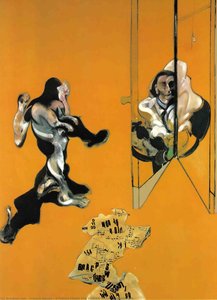
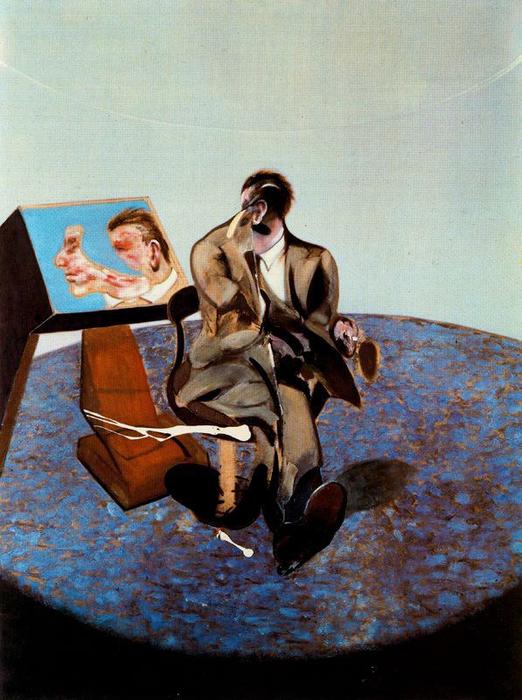
Retrato de George Dyer en un espejo

 Weiterlesen
Giclée / Kunstdruck
Giclée- oder Leinwanddruck in Museumsqualität mit schneller Produktion und flexiblen Veredelungsoptionen. ( Handgemalte Reproduktion bestellen Bild kaufen)




P118B $10

P118H $10

P118W $10

P438Z $10

P508JH $12

P508YH $12

P805H $10

P805Z $10

P919BZ $10

P919G $10

P919XJ $10

P959ZH $10

P968JZ $12

W106C $8

W218G $10

W218JH $8

W218Y $10

W307PJ $10

W316G $10

W316PJ $8

W316Y $10

W398PJ $8

W4111J $10

W500HY $15

W500JH $15

W692G $12

W849H $8

W940BG $15

W953PJ $8




Wählen Sie aus unseren vordefinierten Formaten, die den ursprünglichen Proportionen des Kunstwerks entsprechen.

Sie können Ihre eigenen Maße eingeben, um ein bestimmtes Format oder einen speziellen Platz einzupassen. Wenn das von Ihnen gewählte Format nicht den Proportionen des Originalbildes entspricht, werden wir das Kunstwerk entweder beschneiden oder das Bild mit einem gespiegelten oder einfarbigen Rand erweitern. Ein digitaler Entwurf wird Ihnen zur Genehmigung zugesandt, bevor die Produktion beginnt.
Bitte beachten Sie, dass die Vorschau auf dem Bildschirm nicht den tatsächlichen Zuschnitt oder die Erweiterung widerspiegelt. Nur der Entwurf zeigt die endgültige Komposition präzise an.
Obwohl Sondermaße verfügbar sind, empfehlen wir die Auswahl eines Maßes aus der vordefinierten Liste, um die ursprünglichen Proportionen zu bewahren.
Weltweiter Versand () innerhalb von 2 Wochen statt der üblichen 4/5 Wochen. (7 September)

Kostenloser weltweiter Expressversand

Hochwertige Leinenleinwand

Umfassender Versicherungsschutz beim Versand

Zollgebühren-Rückerstattungsgarantie

Garantie für exakte Farbtreue

100-Tage-Rückgaberecht (nur bei Mängeln)

100% Geld-zurück-Garantie

Mengenrabatt verfügbar
 Die Glasoption ist nur für Größen unter 110 cm verfügbar.

Retrato de George Dyer en un espejo
Giclée / Kunstdruck
Format der Reproduktion
-


Gesamtpreis
$ 62
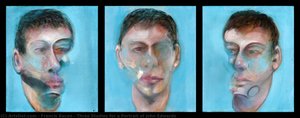
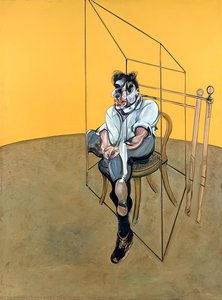
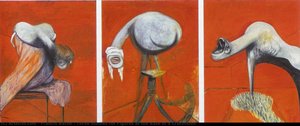
A Portrait Fragmented: Exploring Bacon’s “Three Studies for Portrait of George Dyer”
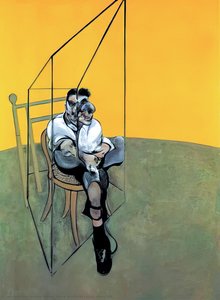
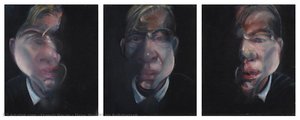
Francis Bacon's "Three Studies for Portrait of George Dyer" (c. 1966) isn’t merely a depiction of a man; it’s an excavation of psychological turmoil rendered in a strikingly unconventional style. Executed during Bacon’s prolific period in London, this trio of canvases represents a pivotal moment in his artistic evolution—a deliberate departure from the monumental scale and expressive brushstrokes that characterized much of his earlier work toward a more intimate yet profoundly unsettling exploration of human vulnerability. The painting itself is deceptively simple: three densely layered canvases depicting a man’s head and torso viewed from various angles, positioned against a stark white background. Yet within this apparent austerity lies an astonishing complexity—a testament to Bacon's mastery of Cubist principles combined with his signature Impasto technique.- Style & Technique: Bacon employs a fragmented Cubist approach, dissecting the human form into geometric planes that overlap and intersect, mirroring the fractured nature of consciousness itself. The thick impasto—a technique where paint is applied in heavily textured layers—creates palpable physicality, conveying not just visual information but also emotional intensity. Each canvas pulsates with energy, as if striving to capture a fleeting glimpse of inner experience.
- Historical Context: Created during the aftermath of World War II and amidst the burgeoning British Invasion movement, “Three Studies” reflects anxieties about identity and fragmentation—themes prevalent in existentialist philosophy at the time. Bacon’s preoccupation with confronting mortality and exploring the darker recesses of human psychology aligns perfectly with the intellectual currents shaping postwar Europe.
- Symbolism & Emotion: The stark white background serves as a void, emphasizing the isolation and vulnerability of Dyer's figure. Bacon deliberately obscures details—leaving portions of the torso and head unfinished—creating ambiguity and inviting contemplation about what lies beneath the surface. The painting evokes feelings of unease, disorientation, and perhaps even terror—a deliberate provocation designed to unsettle the viewer and force him to confront uncomfortable truths about human existence.
The Influence of Jessie Lightfoot: A Collaborative Vision
Bacon’s relationship with his nanny, Jessie Lightfoot, profoundly impacted his artistic process and worldview. Lightfoot served as a constant companion during Bacon's formative years, providing emotional support and fostering a deep connection to the natural world—a connection that would find its way into many of his paintings. The presence of Lightfoot in “Three Studies” is subtly suggested through the inclusion of a figure positioned on the left canvas—a deliberate nod to Bacon’s enduring fascination with female companionship and the transformative power of human relationships. This collaborative vision underscores Bacon's belief that art should grapple with complex emotional realities, mirroring the interwoven narratives of life itself.Beyond Representation: Exploring Texture and Emotion
Unlike traditional portraiture, which strives for accurate likeness, Bacon’s “Three Studies” prioritizes conveying emotion above all else—a radical departure from convention that cemented his reputation as one of the most daring and innovative artists of his generation. The relentless layering of paint—the almost sculptural quality of the impasto—creates a surface riddled with ridges and valleys that seem to writhe beneath the gaze of the viewer. This textural richness isn’t merely decorative; it serves as a conduit for psychological energy, mirroring the turbulent inner landscape of Dyer's psyche. Bacon sought not to depict what he saw but rather to express what he felt—a testament to his unwavering commitment to artistic integrity and his refusal to compromise on emotional truth.A Legacy of Unease: “Three Studies” Today
“Three Studies for Portrait of George Dyer” continues to resonate with audiences today, captivating viewers with its unsettling beauty and profound psychological depth. Its influence can be seen in countless subsequent artworks—artists who have embraced Bacon’s fragmented Cubist style and his uncompromising exploration of human emotion. The painting stands as a powerful reminder that art doesn't merely reflect reality; it actively shapes our understanding of it—challenging us to confront uncomfortable truths about ourselves and the complexities of human experience. Its enduring appeal lies in its ability to evoke visceral responses—a testament to Bacon’s genius and his unwavering conviction that art should unsettle, provoke, and ultimately transform the viewer's consciousness.Ähnliche Kunstwerke
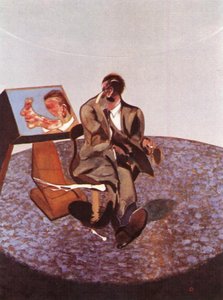
Über den Künstler
**frühes Leben und Karriere**
francis bacon, ein irisch-geborener britischer figurative Maler, wurde am 28. Oktober 1909 in Dublin, Irland, geboren. Sein frühes Leben war von einer Reihe von Umzügen geprägt, da seine Familie nach einem geeigneten Klima für die Gesundheit seiner Mutter suchte. Diese wandernde Kindheit würde Bacon später seinen Ansatz in der Kunst beeinflussen.**Künstlerischer Stil und Themen**
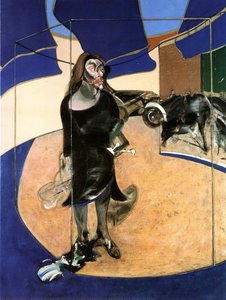
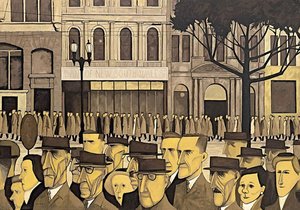
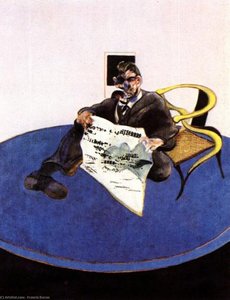
Bacon ist bekannt für sein mutiges, emotionales und oft groteskes Bildmaterial. Seine abstrahierten Figuren sind typischerweise in geometrischen, käfigartigen Räumen isoliert und stehen gegen flache, unauffällige Hintergründe. Dieser einzigartige Stil wurde sowohl gelobt als auch kritisiert von Kunstkritikern.- Portrait of Isabel Rawsthorne standing in a street in Soho, ein wegweisendes Werk, das Bacons Fähigkeit zeigt, die Essenz seiner Sujets in einer scheinbar abstrakten Umgebung einzufangen.
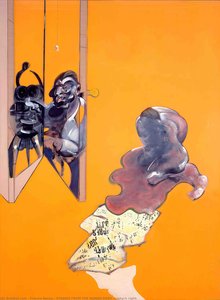
- Number vii from eight studies for a portrait, das die Erforschung der menschlichen Form durch eine Reihe von Studien des Künstlers veranschaulicht.
**Einflüsse und Vermächtnis**
Bacons Werk wurde von verschiedenen Quellen beeinflusst, darunter Maria Helena Vieira da Silva's Autoreportagen und der abstrakten Expressionismus von Piet Mondrian. Sein Vermächtnis inspiriert weiterhin neue Generationen von Künstlern, wobei sein mutiger, unerschrockener Stil ein Eckpfeiler der modernen Kunst bleibt.**Wichtige Ausstellungen und Sammlungen:**
- The Museum Fine Art Society (United Kingdom), das Bacons Werke neben anderen bedeutenden britischen Künstlern gezeigt hat. - Nationalgalerie (Norwegen), die eine umfassende Sammlung europäischer Kunst umfasst, darunter Werke von Bacon. **Wichtige Werke und Sammlungen:** - Francis Bacon: Portrait of Isabel Rawsthorne standing in a street in Soho - Francis Bacon: Number vii from eight studies for a portrait **Museen und Kunstgalerien:** - The Museum Fine Art Society (United Kingdom) - Nationalgalerie (Norwegen)**Fazit**
Bacons turbulentes Leben und sein innovativer Ansatz der figurativen Malerei haben einen unauslöschlichen Eindruck in der Kunstwelt hinterlassen. Sein Vermächtnis, das durch mutiges, emotionales Bildmaterial gekennzeichnet ist, inspiriert weiterhin zeitgenössische Künstler und fasziniert das Publikum gleichermaßen. **Empfohlene Literatur:** - Francis Bacons Biografie - Wikipedia: Francis Bacon (Künstler)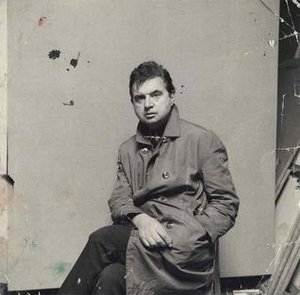
Francis Bacon
1909 - 1992 , Irland
Kurzinfos
- Beeinflusste Künstler:
- Pablo Picasso
- Egon Schiele
- Bemerkenswerte Werke:
- Drei Studien für Kreuzigung
- Porträt von Isabel Rawsthorne
- Studie nach Velázquez
- George Dyer im Spiegel
- Geburtsdatum: 28. Oktober 1909
- Geburtsort: Dublin, Irland
- Künstlerische Richtung: Figuration, Expressionismus
- Nationalität: Irisch-Britisch
- Todatum: April 1992
- Vollständiger Name: Francis Bacon
- Von Künstlern Beeinflusst:
- Maria Helena Vieira da Silva
- Piet Mondrian
Ähnliche Artikel

Abstrakter Expressionismus: Die 10 Meisterwerke, die eine Kunstbewegung prägten |
Entdecken Sie die 10 Meisterwerke des Abstrakten Expressionismus! Von Jackson Pollock bis Mark Rothko – erfahren Sie die Geschichten hinter ikonischen Gemälde und finden Sie hochwertige Reproduktionen für Ihr Zuhause. Jetzt bei entdecken!

Kandinsky: Die 25 Meisterwerke des Abstrakten – Kunst für Ihr Zuhause | ArtsDot
Entdecken Sie die 25 bedeutendsten Gemälde von Wassily Kandinsky! Tauchen Sie ein in die Welt der abstrakten Kunst, des Expressionismus und der Farbkomposition. Hochwertige Kunstdrucke & Inspiration für Ihr Zuhause auf ArtsDot.com.
Beyond Representation: Exploring the Emotional Landscape of Abstract Expressionism
Explore the profound emotional world of Abstract Expressionism with ArtsDot. Discover key artists like Pollock & Rothko, learn about collecting, and find museum-quality reproductions to inspire your space.

Geometrische Abstraktion: Die 10 Meisterwerke, die Kunstgeschichte prägten | ArtsDot.com
Entdecken Sie die 10 Meisterwerke der geometrischen Abstraktion! Von Kandinsky bis Mondrian – erleben Sie die Geschichte, Farben & Formen dieser revolutionären Kunstrichtung. Hochwertige Kunstreproduktionen auf ArtsDot.com
Navigieren der abstrakten Expression: Ein Leitfaden zu zeitgenössischen Strömungen für emotionale Resonanz in der Kunstauswahl
Entdecken Sie den Abstrakten Expressionismus! Expertenratgeber für Sammler: Rothko, Pollock & Hofmann verstehen, wertvolle Kunst auswählen und Ihre emotionale Verbindung finden. Jetzt lesen!