 Vorschau anzeigen
 Versenden
 Teilen
 Details anzeigen

 Herunterladen
 Ähnliche Objekte
 Röntgenaufnahme
 Diashow
 Stats
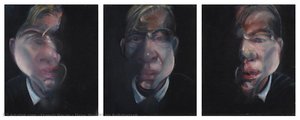
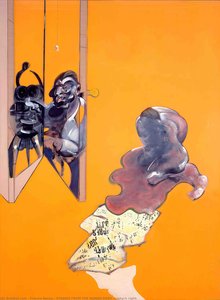
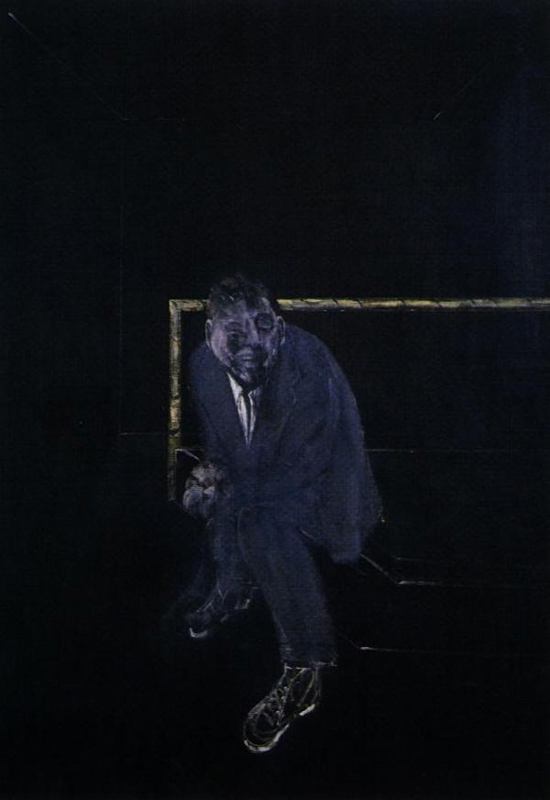
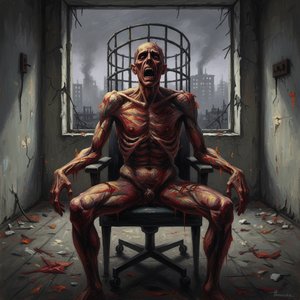
StatsSelf Portrait 1

 Weiterlesen
Giclée / Kunstdruck
Giclée- oder Leinwanddruck in Museumsqualität mit schneller Produktion und flexiblen Veredelungsoptionen. ( Handgemalte Reproduktion bestellen Switch to Digital Image)




P118B $10

P118H $10

P118W $10

P438Z $10

P508JH $12

P508YH $12

P805H $10

P805Z $10

P919BZ $10

P919G $10

P919XJ $10

P959ZH $10

P968JZ $12

W106C $8

W218G $10

W218JH $8

W218Y $10

W307PJ $10

W316G $10

W316PJ $8

W316Y $10

W398PJ $8

W4111J $10

W500HY $15

W500JH $15

W692G $12

W849H $8

W940BG $15

W953PJ $8




Wählen Sie aus unseren vordefinierten Formaten, die den ursprünglichen Proportionen des Kunstwerks entsprechen.

Sie können Ihre eigenen Maße eingeben, um ein bestimmtes Format oder einen speziellen Platz einzupassen. Wenn das von Ihnen gewählte Format nicht den Proportionen des Originalbildes entspricht, werden wir das Kunstwerk entweder beschneiden oder das Bild mit einem gespiegelten oder einfarbigen Rand erweitern. Ein digitaler Entwurf wird Ihnen zur Genehmigung zugesandt, bevor die Produktion beginnt.
Bitte beachten Sie, dass die Vorschau auf dem Bildschirm nicht den tatsächlichen Zuschnitt oder die Erweiterung widerspiegelt. Nur der Entwurf zeigt die endgültige Komposition präzise an.
Obwohl Sondermaße verfügbar sind, empfehlen wir die Auswahl eines Maßes aus der vordefinierten Liste, um die ursprünglichen Proportionen zu bewahren.
Weltweiter Versand () innerhalb von 2 Wochen statt der üblichen 4/5 Wochen. (8 September)

Kostenloser weltweiter Expressversand

Hochwertige Leinenleinwand

Umfassender Versicherungsschutz beim Versand

Zollgebühren-Rückerstattungsgarantie

Garantie für exakte Farbtreue

100-Tage-Rückgaberecht (nur bei Mängeln)

100% Geld-zurück-Garantie

Mengenrabatt verfügbar
 Die Glasoption ist nur für Größen unter 110 cm verfügbar.

Self Portrait 1
Giclée / Kunstdruck
Format der Reproduktion
-


Gesamtpreis
$ 62
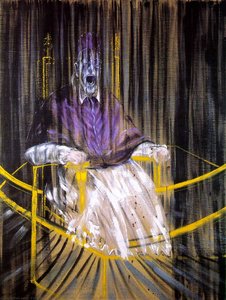
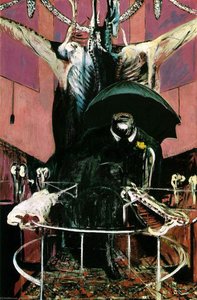
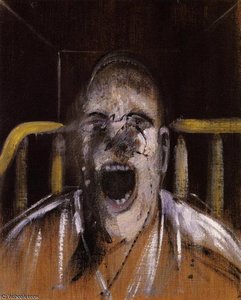
A Portrait of Existential Angst: Exploring Francis Bacon’s “Study After Velázquez”
Francis Bacon’s “Study After Velázquez,” completed in 1953, stands as one of the most unsettling and psychologically astute paintings of its era. It's not merely a depiction of a figure; it’s an excavation into the depths of human consciousness—a visceral confrontation with fear, vulnerability, and the inescapable awareness of mortality.
The painting draws heavily from Diego Velázquez’s “Las Meninas,” arguably one of the greatest portraits in Western art history. Bacon doesn't attempt to recreate Velázquez’s masterpiece faithfully; instead, he fragments it, distorting and fracturing the image into a series of grotesque, overlapping forms. This deliberate departure from realism is central to Bacon’s artistic vision—he sought not to represent what he saw but to express what he felt.
- Style: Bacon's style is characterized by its brutal honesty and uncompromising exploration of psychological torment. He eschewed traditional techniques, favoring a method he termed “intuitive painting,” where he allowed subconscious impulses to guide his brushstrokes.
- Technique: Bacon employed a distinctive layering technique—applying paint in multiple thin glazes over a textured surface created with collage materials like gauze and burlap. This process produced a disconcerting sense of depth and movement, mirroring the turbulent inner life he sought to portray.
Historically, “Study After Velázquez” emerged during the bleak aftermath of World War II—a period marked by disillusionment and anxiety about the future. Bacon’s preoccupation with themes of death and decay reflects the pervasive anxieties of his time, mirroring the existential concerns articulated by philosophers like Sartre and Camus.
Symbolism: The figure in “Study After Velázquez” is deliberately ambiguous—its face obscured, its body contorted into grotesque poses. This anonymity serves as a conduit for universal human experience—representing not an individual but rather the collective struggle against fear and despair. The fragmented composition symbolizes the disintegration of identity and the breakdown of rational thought.
Emotional Impact: Viewing “Study After Velázquez” is undeniably disturbing—it confronts the viewer with uncomfortable truths about the human condition. Yet, it’s precisely this unsettling quality that elevates the painting to its enduring significance. Bacon compels us to confront our own mortality and to grapple with the darker aspects of our psyche—leaving an indelible mark on anyone who dares to contemplate its profound emotional resonance.
The Collage Technique: A Gateway to Inner Turmoil
Bacon’s innovative use of collage – incorporating materials like gauze, burlap, and even fragments of newspaper – wasn't simply a stylistic choice; it was an integral component of his artistic process. These textured surfaces served as a springboard for expressive brushstrokes, amplifying the painting’s unsettling atmosphere.
Influences Beyond Velázquez
While “Study After Velázquez” undeniably serves as the foundational image for Bacon’s work, his artistic sensibilities extended far beyond the confines of Baroque painting. He drew inspiration from Surrealist artists like Salvador Dalí and René Magritte—embracing dreamlike imagery and challenging viewers' perceptions of reality.
A Legacy of Discomforting Beauty
"Study After Velázquez" remains a cornerstone of modern art, continuing to provoke debate and inspire awe. Its enduring power lies in its ability to capture the essence of human vulnerability—forcing us to confront our fears and anxieties without offering easy answers or comforting illusions.
Ähnliche Kunstwerke
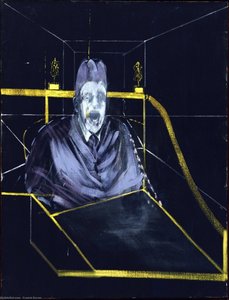
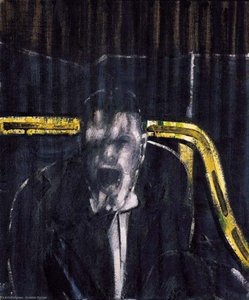
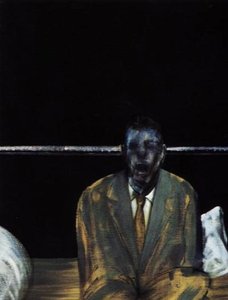
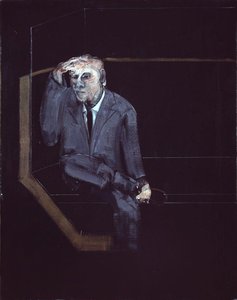
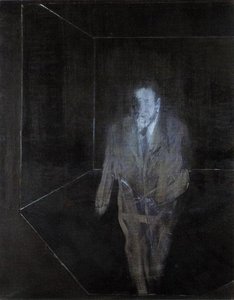
Über den Künstler
**frühes Leben und Karriere**
francis bacon, ein irisch-geborener britischer figurative Maler, wurde am 28. Oktober 1909 in Dublin, Irland, geboren. Sein frühes Leben war von einer Reihe von Umzügen geprägt, da seine Familie nach einem geeigneten Klima für die Gesundheit seiner Mutter suchte. Diese wandernde Kindheit würde Bacon später seinen Ansatz in der Kunst beeinflussen.**Künstlerischer Stil und Themen**
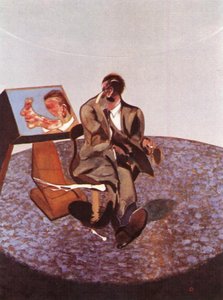
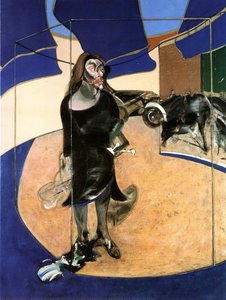
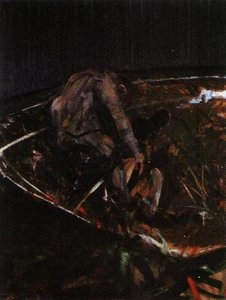
Bacon ist bekannt für sein mutiges, emotionales und oft groteskes Bildmaterial. Seine abstrahierten Figuren sind typischerweise in geometrischen, käfigartigen Räumen isoliert und stehen gegen flache, unauffällige Hintergründe. Dieser einzigartige Stil wurde sowohl gelobt als auch kritisiert von Kunstkritikern.- Portrait of Isabel Rawsthorne standing in a street in Soho, ein wegweisendes Werk, das Bacons Fähigkeit zeigt, die Essenz seiner Sujets in einer scheinbar abstrakten Umgebung einzufangen.
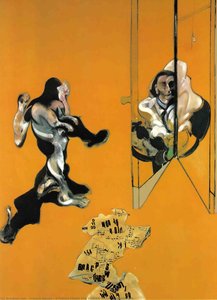
- Number vii from eight studies for a portrait, das die Erforschung der menschlichen Form durch eine Reihe von Studien des Künstlers veranschaulicht.
**Einflüsse und Vermächtnis**
Bacons Werk wurde von verschiedenen Quellen beeinflusst, darunter Maria Helena Vieira da Silva's Autoreportagen und der abstrakten Expressionismus von Piet Mondrian. Sein Vermächtnis inspiriert weiterhin neue Generationen von Künstlern, wobei sein mutiger, unerschrockener Stil ein Eckpfeiler der modernen Kunst bleibt.**Wichtige Ausstellungen und Sammlungen:**
- The Museum Fine Art Society (United Kingdom), das Bacons Werke neben anderen bedeutenden britischen Künstlern gezeigt hat. - Nationalgalerie (Norwegen), die eine umfassende Sammlung europäischer Kunst umfasst, darunter Werke von Bacon. **Wichtige Werke und Sammlungen:** - Francis Bacon: Portrait of Isabel Rawsthorne standing in a street in Soho - Francis Bacon: Number vii from eight studies for a portrait **Museen und Kunstgalerien:** - The Museum Fine Art Society (United Kingdom) - Nationalgalerie (Norwegen)**Fazit**
Bacons turbulentes Leben und sein innovativer Ansatz der figurativen Malerei haben einen unauslöschlichen Eindruck in der Kunstwelt hinterlassen. Sein Vermächtnis, das durch mutiges, emotionales Bildmaterial gekennzeichnet ist, inspiriert weiterhin zeitgenössische Künstler und fasziniert das Publikum gleichermaßen. **Empfohlene Literatur:** - Francis Bacons Biografie - Wikipedia: Francis Bacon (Künstler)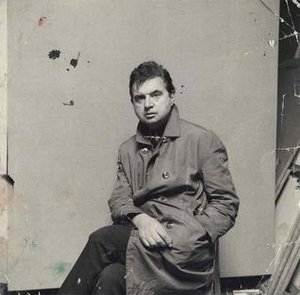
Francis Bacon
1909 - 1992 , Irland
Kurzinfos
- Beeinflusste Künstler:
- Pablo Picasso
- Egon Schiele
- Bemerkenswerte Werke:
- Drei Studien für Kreuzigung
- Porträt von Isabel Rawsthorne
- Studie nach Velázquez
- George Dyer im Spiegel
- Geburtsdatum: 28. Oktober 1909
- Geburtsort: Dublin, Irland
- Künstlerische Richtung: Figuration, Expressionismus
- Nationalität: Irisch-Britisch
- Todatum: April 1992
- Vollständiger Name: Francis Bacon
- Von Künstlern Beeinflusst:
- Maria Helena Vieira da Silva
- Piet Mondrian
Ähnliche Artikel

Die Top 10 berühmter Gemälde im Reich der dunklen Töne |
Entdecken Sie die Top 10 berühmter Gemälde, beherrscht von dunklen Tönen! Von Caravaggio bis Manet – erfahren Sie die Geschichten hinter Meisterwerken der Kunstgeschichte. Finden Sie Ihre perfekte Reproduktion auf .

Weiße Meisterwerke: Die Top 10 berühmtesten Gemälde und ihre zeitlose Eleganz
Entdecken Sie die Top 10 berühmter Gemälde, dominiert von Weiß! Von Malewitsch bis Rothko – erfahren Sie Geschichten hinter ikonischen Kunstwerke und lassen Sie sich für Ihre Wohnraumgestaltung inspirieren. Kunstreproduktionen in Museumsqualiät auf
Francis Bacon: Die 25 Meisterwerke des existentiellen Schmerzes | ArtsDot
Entdecken Sie die 25 Meisterwerke von Francis Bacon! Erleben Sie existenzielle Schmerz, expressive Porträts & dunkle Farben. Kunstreproduktionen in Museumsqualiät auf ArtsDot.com – für Ihre Wanddekoration.

Monochrome Visions: Exploring the Aesthetic & Historical Significance of Black & White Photography
Explore the rich history & artistic power of black and white photography. From early techniques to iconic masters like Ansel Adams, discover why monochrome continues to captivate art lovers today. Expert insights for collectors.
Francis Bacons Existenzielle Angst: Trauma, Form und die Nachkriegszeit
Erforschen Sie Francis Bacons tiefgründige Auseinandersetzung mit existenzieller Angst und Trauma. Analyse seiner formalen Innovationen, seines Einflusses auf die Neue Figuration und seines philosophischen Weltbilds. Jetzt lesen!