 Vorschau anzeigen
 Versenden
 Teilen
 Details anzeigen

 Herunterladen
 Ähnliche Objekte
 Röntgenaufnahme
 Diashow
 Statistiken
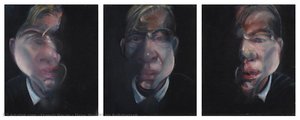
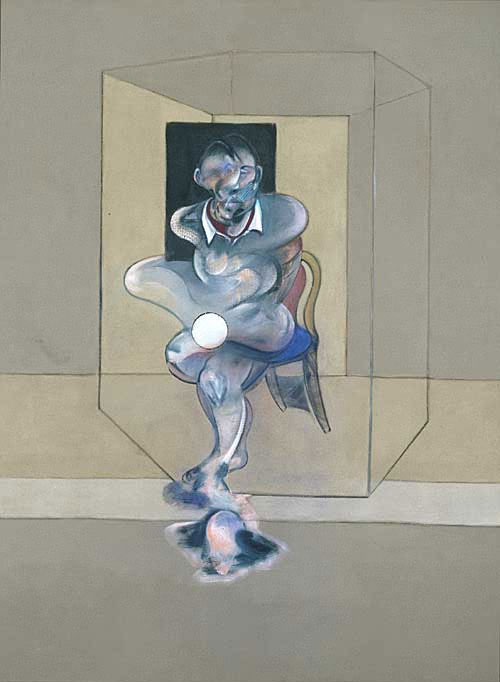
self portrait, 1976


 Weiterlesen
Giclée / Kunstdruck
Giclée- oder Leinwanddruck in Museumsqualität mit schneller Produktion und flexiblen Veredelungsoptionen. ( Handgemalte Reproduktion bestellen Zum digitalen Bild wechseln)




P118B $10

P118H $10

P118W $10

P438Z $10

P508JH $12

P508YH $12

P805H $10

P805Z $10

P919BZ $10

P919G $10

P919XJ $10

P959ZH $10

P968JZ $12

W106C $8

W218G $10

W218JH $8

W218Y $10

W307PJ $10

W316G $10

W316PJ $8

W316Y $10

W398PJ $8

W4111J $10

W500HY $15

W500JH $15

W692G $12

W849H $8

W940BG $15

W953PJ $8




Wählen Sie aus unseren vordefinierten Formaten, die den ursprünglichen Proportionen des Kunstwerks entsprechen.

Sie können Ihre eigenen Maße eingeben, um ein bestimmtes Format oder einen speziellen Platz einzupassen. Wenn das von Ihnen gewählte Format nicht den Proportionen des Originalbildes entspricht, werden wir das Kunstwerk entweder beschneiden oder das Bild mit einem gespiegelten oder einfarbigen Rand erweitern. Ein digitaler Entwurf wird Ihnen zur Genehmigung zugesandt, bevor die Produktion beginnt.
Bitte beachten Sie, dass die Vorschau auf dem Bildschirm nicht den tatsächlichen Zuschnitt oder die Erweiterung widerspiegelt. Nur der Entwurf zeigt die endgültige Komposition präzise an.
Obwohl Sondermaße verfügbar sind, empfehlen wir die Auswahl eines Maßes aus der vordefinierten Liste, um die ursprünglichen Proportionen zu bewahren.
Weltweiter Versand () innerhalb von 2 Wochen statt der üblichen 4/5 Wochen. (9 September)

Kostenloser weltweiter Expressversand

Hochwertige Leinenleinwand

Umfassender Versicherungsschutz beim Versand

Zollgebühren-Rückerstattungsgarantie

Garantie für exakte Farbtreue

100-Tage-Rückgaberecht (nur bei Mängeln)

100% Geld-zurück-Garantie

Mengenrabatt verfügbar
 Die Glasoption ist nur für Größen unter 110 cm verfügbar.

self portrait, 1976
Giclée / Kunstdruck
Format der Reproduktion
-


Gesamtpreis
$ 62
A Portrait of Existential Anguish: Francis Bacon’s ‘Self Portrait, 1976’
Francis Bacon's 'Self Portrait, 1976' isn't merely a depiction of a man in a chair; it is a raw, unflinching confrontation with the anxieties and isolation inherent within the human condition. Painted in the twilight years of his career, this work embodies the core tenets of Bacon’s artistic philosophy – a relentless exploration of pain, vulnerability, and the grotesque beauty found within suffering. The figure, rendered in his signature style of distorted anatomy and unsettling color palettes, sits hunched forward, arms crossed defensively, a tennis ball clutched tightly to his chest—a seemingly innocuous object imbued with an almost unbearable significance.
- Subject & Composition: The central subject is undeniably the artist himself, presented in a state of profound introspection. The composition, dominated by the figure’s slumped posture and averted gaze, immediately establishes a sense of unease and detachment. The presence of two indistinct figures in the background—likely Bacon's companions—further emphasizes the theme of isolation, suggesting an awareness of being observed yet unable to truly connect.
- Style & Technique: Bacon’s technique is characterized by its brutal honesty and rejection of traditional representational methods. He employs thick impasto layers of paint, applied with a violent energy that conveys a sense of physical struggle. The distorted forms, the elongated limbs, and the exaggerated features are not intended to be realistic but rather symbolic representations of inner turmoil. The use of vibrant, clashing colors – predominantly blues, reds, and yellows – amplifies this emotional intensity, creating a visually jarring effect.
Echoes of Trauma and the Post-War Landscape
Created in 1976, ‘Self Portrait’ reflects the profound impact of Bacon's life experiences. Born in Dublin in 1909, his early years were marked by instability and a deep sense of displacement, stemming from his mother’s chronic illness and frequent relocations. This instability undoubtedly informed his artistic vision, fueling his fascination with themes of alienation, mortality, and the breakdown of societal norms. The painting resonates powerfully within the context of post-war Britain – a period characterized by disillusionment, psychological trauma, and a questioning of traditional values. Bacon’s work can be seen as a visual manifestation of this collective anxiety, capturing the sense of unease that permeated European society in the aftermath of World War II.
- Historical Context: The late 1970s were a time of significant social and political upheaval. Bacon’s work aligns with the broader artistic trends of the era – a move away from representational art towards abstraction and expressionism, reflecting a desire to grapple with complex emotional realities.
- Symbolic Elements: The tennis ball itself is a particularly potent symbol. Often interpreted as representing the fragility of life, the object’s grip suggests an attempt to hold onto something precious in the face of inevitable loss or decay. It could also be seen as a reference to Bacon's earlier fascination with horse racing, a world of intense competition and ultimately, death.
Emotional Resonance and Artistic Legacy
'Self Portrait, 1976’ is not a comfortable image; it demands engagement and invites contemplation. It forces the viewer to confront uncomfortable truths about human existence – our vulnerability, our fears, and our capacity for suffering. Bacon's ability to translate these profound emotions onto canvas with such visceral intensity has cemented his place as one of the most important and influential artists of the 20th century. This reproduction offers a unique opportunity to experience the full force of Bacon’s artistic vision, bringing this iconic work into your home or studio.
- Intended Impact: The painting's enduring power lies in its ability to evoke a deeply personal response from each viewer. It is a testament to Bacon’s genius that he could create art that is both profoundly disturbing and undeniably beautiful.
- Perfect for: This artwork would be ideally suited for spaces where contemplation and emotional depth are valued, such as studies, living rooms, or galleries. Its powerful imagery will undoubtedly serve as a focal point within any interior design scheme.
Ähnliche Kunstwerke
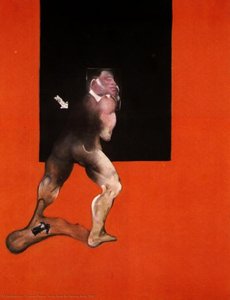
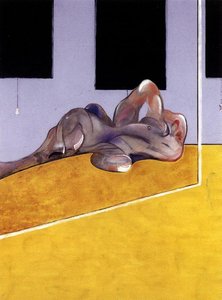
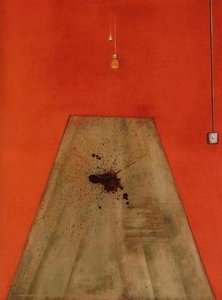
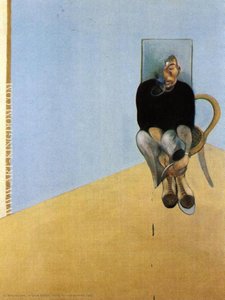
Über den Künstler
**frühes Leben und Karriere**
francis bacon, ein irisch-geborener britischer figurative Maler, wurde am 28. Oktober 1909 in Dublin, Irland, geboren. Sein frühes Leben war von einer Reihe von Umzügen geprägt, da seine Familie nach einem geeigneten Klima für die Gesundheit seiner Mutter suchte. Diese wandernde Kindheit würde Bacon später seinen Ansatz in der Kunst beeinflussen.**Künstlerischer Stil und Themen**
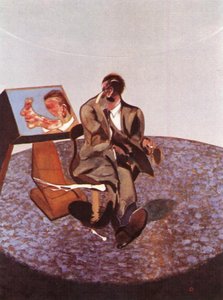
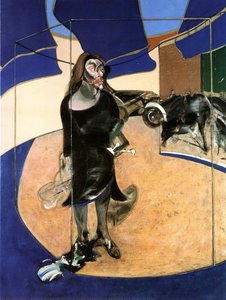
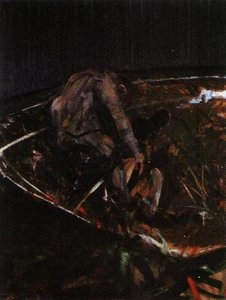
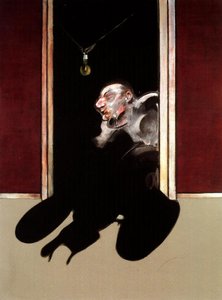
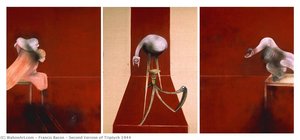
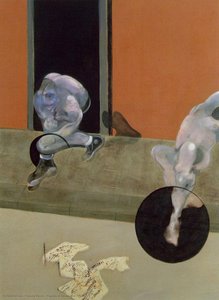
Bacon ist bekannt für sein mutiges, emotionales und oft groteskes Bildmaterial. Seine abstrahierten Figuren sind typischerweise in geometrischen, käfigartigen Räumen isoliert und stehen gegen flache, unauffällige Hintergründe. Dieser einzigartige Stil wurde sowohl gelobt als auch kritisiert von Kunstkritikern.- Portrait of Isabel Rawsthorne standing in a street in Soho, ein wegweisendes Werk, das Bacons Fähigkeit zeigt, die Essenz seiner Sujets in einer scheinbar abstrakten Umgebung einzufangen.
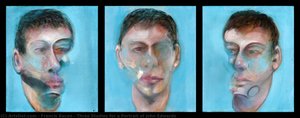
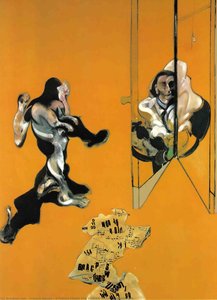
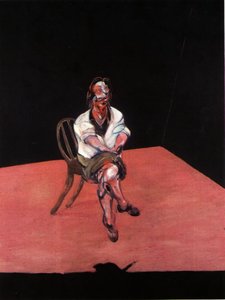
- Number vii from eight studies for a portrait, das die Erforschung der menschlichen Form durch eine Reihe von Studien des Künstlers veranschaulicht.
**Einflüsse und Vermächtnis**
Bacons Werk wurde von verschiedenen Quellen beeinflusst, darunter Maria Helena Vieira da Silva's Autoreportagen und der abstrakten Expressionismus von Piet Mondrian. Sein Vermächtnis inspiriert weiterhin neue Generationen von Künstlern, wobei sein mutiger, unerschrockener Stil ein Eckpfeiler der modernen Kunst bleibt.**Wichtige Ausstellungen und Sammlungen:**
- The Museum Fine Art Society (United Kingdom), das Bacons Werke neben anderen bedeutenden britischen Künstlern gezeigt hat. - Nationalgalerie (Norwegen), die eine umfassende Sammlung europäischer Kunst umfasst, darunter Werke von Bacon. **Wichtige Werke und Sammlungen:** - Francis Bacon: Portrait of Isabel Rawsthorne standing in a street in Soho - Francis Bacon: Number vii from eight studies for a portrait **Museen und Kunstgalerien:** - The Museum Fine Art Society (United Kingdom) - Nationalgalerie (Norwegen)**Fazit**
Bacons turbulentes Leben und sein innovativer Ansatz der figurativen Malerei haben einen unauslöschlichen Eindruck in der Kunstwelt hinterlassen. Sein Vermächtnis, das durch mutiges, emotionales Bildmaterial gekennzeichnet ist, inspiriert weiterhin zeitgenössische Künstler und fasziniert das Publikum gleichermaßen. **Empfohlene Literatur:** - Francis Bacons Biografie - Wikipedia: Francis Bacon (Künstler)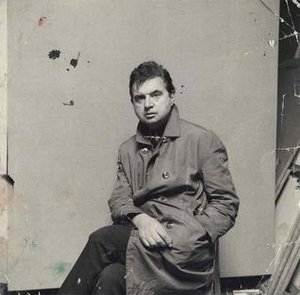
Francis Bacon
1909 - 1992 , Irland
Kurzinfos
- Beeinflusste Künstler:
- Pablo Picasso
- Egon Schiele
- Bemerkenswerte Werke:
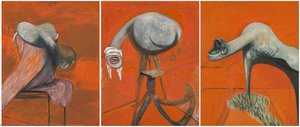
- Drei Studien für Kreuzigung
- Porträt von Isabel Rawsthorne
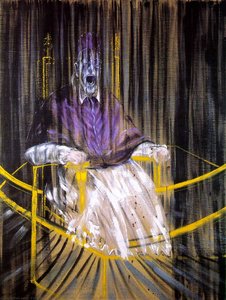
- Studie nach Velázquez
- George Dyer im Spiegel
- Geburtsdatum: 28. Oktober 1909
- Geburtsort: Dublin, Irland
- Künstlerische Richtung: Figuration, Expressionismus
- Nationalität: Irisch-Britisch
- Todatum: April 1992
- Vollständiger Name: Francis Bacon
- Von Künstlern Beeinflusst:
- Maria Helena Vieira da Silva
- Piet Mondrian
Ähnliche Artikel
Francis Bacon: Die 25 Meisterwerke des existentiellen Schmerzes | ArtsDot
Entdecken Sie die 25 Meisterwerke von Francis Bacon! Erleben Sie existenzielle Schmerz, expressive Porträts & dunkle Farben. Kunstreproduktionen in Museumsqualiät auf ArtsDot.com – für Ihre Wanddekoration.
Kandinsky: Die 25 Meisterwerke des Abstrakten – Kunst für Ihr Zuhause | ArtsDot
Entdecken Sie die 25 bedeutendsten Gemälde von Wassily Kandinsky! Tauchen Sie ein in die Welt der abstrakten Kunst, des Expressionismus und der Farbkomposition. Hochwertige Kunstdrucke & Inspiration für Ihr Zuhause auf ArtsDot.com.
Beyond Representation: Exploring the Emotional Landscape of Abstract Expressionism
Explore the profound emotional world of Abstract Expressionism with ArtsDot. Discover key artists like Pollock & Rothko, learn about collecting, and find museum-quality reproductions to inspire your space.

Geometrische Abstraktion: Die 10 Meisterwerke, die Kunstgeschichte prägten | ArtsDot.com
Entdecken Sie die 10 Meisterwerke der geometrischen Abstraktion! Von Kandinsky bis Mondrian – erleben Sie die Geschichte, Farben & Formen dieser revolutionären Kunstrichtung. Hochwertige Kunstreproduktionen auf ArtsDot.com
Abstrakter Expressionismus: Die 10 Meisterwerke, die eine Kunstbewegung prägten |
Entdecken Sie die 10 Meisterwerke des Abstrakten Expressionismus! Von Jackson Pollock bis Mark Rothko – erfahren Sie die Geschichten hinter ikonischen Gemälde und finden Sie hochwertige Reproduktionen für Ihr Zuhause. Jetzt bei entdecken!