 Vorschau anzeigen
 Versenden
 Teilen
 Details anzeigen

 Herunterladen
 Ähnliche Objekte
 Röntgenaufnahme
 Diashow
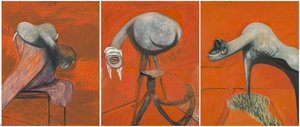
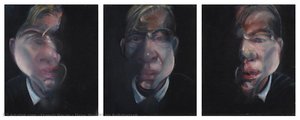
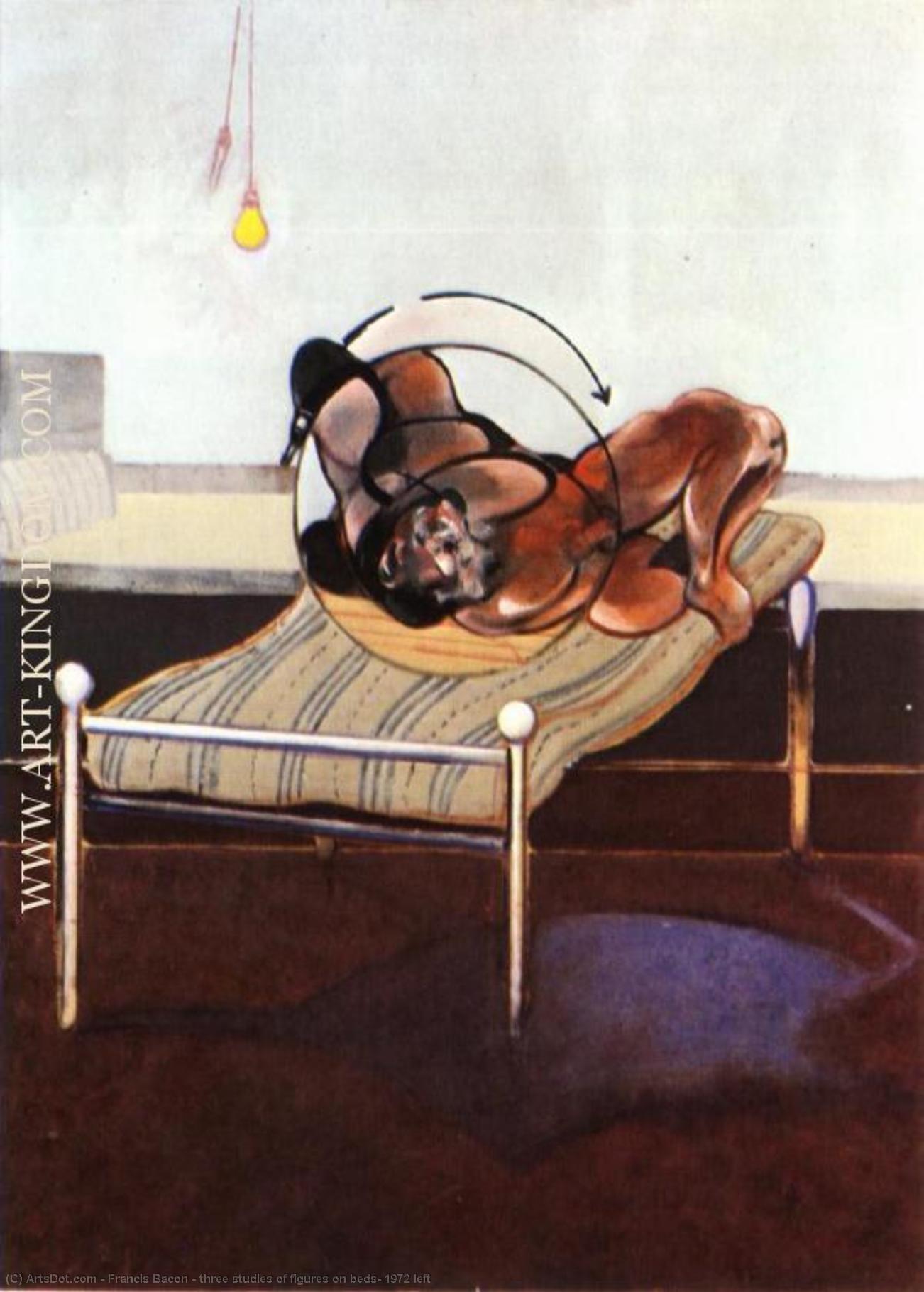
three studies of figures on beds, 1972 left

 Weiterlesen
Giclée / Kunstdruck
Giclée- oder Leinwanddruck in Museumsqualität mit schneller Produktion und flexiblen Veredelungsoptionen. ( Handgemalte Reproduktion bestellen Bild kaufen)




P118B $10

P118H $10

P118W $10

P438Z $10

P508JH $12

P508YH $12

P805H $10

P805Z $10

P919BZ $10

P919G $10

P919XJ $10

P959ZH $10

P968JZ $12

W106C $8

W218G $10

W218JH $8

W218Y $10

W307PJ $10

W316G $10

W316PJ $8

W316Y $10

W398PJ $8

W4111J $10

W500HY $15

W500JH $15

W692G $12

W849H $8

W940BG $15

W953PJ $8




Wählen Sie aus unseren vordefinierten Formaten, die den ursprünglichen Proportionen des Kunstwerks entsprechen.

Sie können Ihre eigenen Maße eingeben, um ein bestimmtes Format oder einen speziellen Platz einzupassen. Wenn das von Ihnen gewählte Format nicht den Proportionen des Originalbildes entspricht, werden wir das Kunstwerk entweder beschneiden oder das Bild mit einem gespiegelten oder einfarbigen Rand erweitern. Ein digitaler Entwurf wird Ihnen zur Genehmigung zugesandt, bevor die Produktion beginnt.
Bitte beachten Sie, dass die Vorschau auf dem Bildschirm nicht den tatsächlichen Zuschnitt oder die Erweiterung widerspiegelt. Nur der Entwurf zeigt die endgültige Komposition präzise an.
Obwohl Sondermaße verfügbar sind, empfehlen wir die Auswahl eines Maßes aus der vordefinierten Liste, um die ursprünglichen Proportionen zu bewahren.
Weltweiter Versand () innerhalb von 2 Wochen statt der üblichen 4/5 Wochen. (20 August)

Kostenloser weltweiter Expressversand

Hochwertige Leinenleinwand

Umfassender Versicherungsschutz beim Versand

Zollgebühren-Rückerstattungsgarantie

Garantie für exakte Farbtreue

60 Tage Rückgaberecht (nur bei Mängeln)

100% Geld-zurück-Garantie

Mengenrabatt verfügbar
 Die Glasoption ist nur für Größen unter 110 cm verfügbar.

three studies of figures on beds, 1972 left
Giclée / Kunstdruck
Format der Reproduktion
-


Gesamtpreis
$ 62
Sammlerstück-Beschreibung
A Portrait of Existential Angst: Three Studies of Figures on Beds
Francis Bacon’s “Three Studies of Figures on Beds,” completed in 1972, stands as one of the artist's most iconic and unsettling depictions of human vulnerability. More than just a visual record of a bedridden man—though the figure sprawled across the mattress is undeniably central to the composition—it embodies a profound exploration of psychological torment and the disintegration of identity.
- Subject Matter: The painting portrays a nude male torso lying on a bed, his head turned sideways. Alongside him are two additional figures – one positioned near the upper left corner and another resting on the bed’s right side – creating a claustrophobic tableau that amplifies the sense of isolation.
- Style: Bacon's signature style is characterized by brutal realism blended with expressive abstraction. He eschewed traditional representation, opting instead for distorted forms and grotesque imagery to convey inner turmoil rather than literal observation.
Technique: Bacon employed a distinctive method of applying paint—often described as “dripping”—to create textured surfaces that resemble flesh wounds. Thick layers of oil paint were poured onto the canvas, allowing drips and splatters to cascade downwards, resulting in canvases riddled with holes and fissures. This technique wasn’t merely accidental; it was deliberately chosen to mimic the physicality of suffering and to disrupt any semblance of idealized beauty.
Historical Context: The Shadow of Trauma
Created during the height of Bacon's artistic output, “Three Studies” emerged from a period marked by personal tragedy. Bacon’s nanny, Jessie Lightfoot, whom he considered a maternal figure and confidante, died in 1973 – an event that profoundly impacted him emotionally and artistically. This loss served as catalyst for revisiting themes of mortality, grief, and the inescapable confrontation with one's own psychological demons.
Symbolism: Flesh Wound Metaphor
The painting’s imagery is laden with symbolic significance. The bed itself represents confinement and vulnerability—a space where physical and emotional boundaries blur. More crucially, the figure’s torso – riddled with holes and covered in viscous paint – functions as a powerful metaphor for wounded flesh, symbolizing not only physical injury but also psychological trauma and the erosion of selfhood. Bacon deliberately disrupted conventional artistic conventions to convey these profound ideas.
Emotional Impact: Confronting Darkness
"Three Studies of Figures on Beds" doesn’t offer comfort or reassurance; it compels viewers to confront the darkest recesses of human experience. The painting's unsettling juxtaposition of form and texture evokes feelings of anxiety, despair, and unease—yet simultaneously possesses a haunting beauty that transcends mere shock value. It remains a testament to Bacon’s unwavering commitment to exploring the complexities of consciousness and capturing the visceral reality of suffering.
- Interior Designers Note: Consider incorporating elements of textural contrast into interior spaces to evoke similar feelings of vulnerability and contemplation.
Ähnliche Kunstwerke
Über den Künstler
**frühes Leben und Karriere**
francis bacon, ein irisch-geborener britischer figurative Maler, wurde am 28. Oktober 1909 in Dublin, Irland, geboren. Sein frühes Leben war von einer Reihe von Umzügen geprägt, da seine Familie nach einem geeigneten Klima für die Gesundheit seiner Mutter suchte. Diese wandernde Kindheit würde Bacon später seinen Ansatz in der Kunst beeinflussen.**Künstlerischer Stil und Themen**
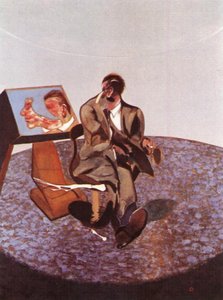
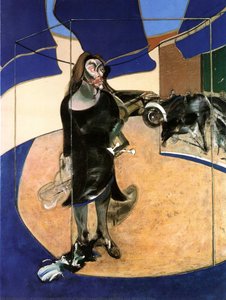
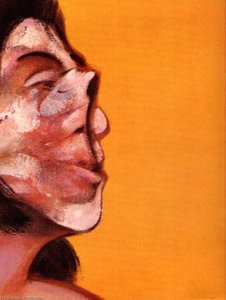
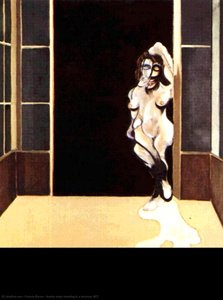
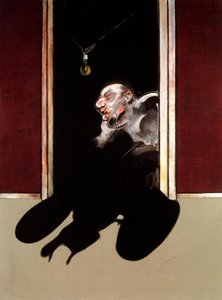
Bacon ist bekannt für sein mutiges, emotionales und oft groteskes Bildmaterial. Seine abstrahierten Figuren sind typischerweise in geometrischen, käfigartigen Räumen isoliert und stehen gegen flache, unauffällige Hintergründe. Dieser einzigartige Stil wurde sowohl gelobt als auch kritisiert von Kunstkritikern.- Portrait of Isabel Rawsthorne standing in a street in Soho, ein wegweisendes Werk, das Bacons Fähigkeit zeigt, die Essenz seiner Sujets in einer scheinbar abstrakten Umgebung einzufangen.
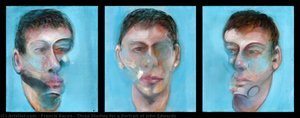
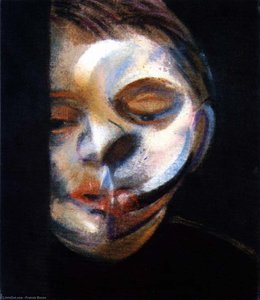
- Number vii from eight studies for a portrait, das die Erforschung der menschlichen Form durch eine Reihe von Studien des Künstlers veranschaulicht.
**Einflüsse und Vermächtnis**
Bacons Werk wurde von verschiedenen Quellen beeinflusst, darunter Maria Helena Vieira da Silva's Autoreportagen und der abstrakten Expressionismus von Piet Mondrian. Sein Vermächtnis inspiriert weiterhin neue Generationen von Künstlern, wobei sein mutiger, unerschrockener Stil ein Eckpfeiler der modernen Kunst bleibt.**Wichtige Ausstellungen und Sammlungen:**
- The Museum Fine Art Society (United Kingdom), das Bacons Werke neben anderen bedeutenden britischen Künstlern gezeigt hat. - Nationalgalerie (Norwegen), die eine umfassende Sammlung europäischer Kunst umfasst, darunter Werke von Bacon. **Wichtige Werke und Sammlungen:** - Francis Bacon: Portrait of Isabel Rawsthorne standing in a street in Soho - Francis Bacon: Number vii from eight studies for a portrait **Museen und Kunstgalerien:** - The Museum Fine Art Society (United Kingdom) - Nationalgalerie (Norwegen)**Fazit**
Bacons turbulentes Leben und sein innovativer Ansatz der figurativen Malerei haben einen unauslöschlichen Eindruck in der Kunstwelt hinterlassen. Sein Vermächtnis, das durch mutiges, emotionales Bildmaterial gekennzeichnet ist, inspiriert weiterhin zeitgenössische Künstler und fasziniert das Publikum gleichermaßen. **Empfohlene Literatur:** - Francis Bacons Biografie - Wikipedia: Francis Bacon (Künstler)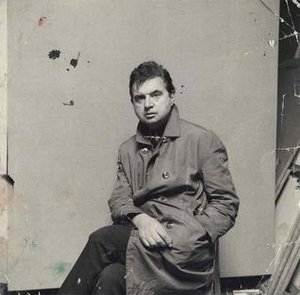
Francis Bacon
1909 - 1992 , Irland
Kurzinfos
- Beeinflusste Künstler:
- Pablo Picasso
- Egon Schiele
- Bemerkenswerte Werke:
- Drei Studien für Kreuzigung
- Porträt von Isabel Rawsthorne
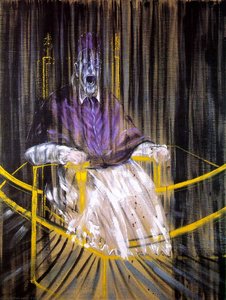
- Studie nach Velázquez
- George Dyer im Spiegel
- Geburtsdatum: 28. Oktober 1909
- Geburtsort: Dublin, Irland
- Künstlerische Richtung: Figuration, Expressionismus
- Nationalität: Irisch-Britisch
- Todatum: April 1992
- Vollständiger Name: Francis Bacon
- Von Künstlern Beeinflusst:
- Maria Helena Vieira da Silva
- Piet Mondrian
Ähnliche Artikel
Francis Bacon: Die 25 Meisterwerke des existentiellen Schmerzes | ArtsDot
Entdecken Sie die 25 Meisterwerke von Francis Bacon! Erleben Sie existenzielle Schmerz, expressive Porträts & dunkle Farben. Kunstreproduktionen in Museumsqualiät auf ArtsDot.com – für Ihre Wanddekoration.
Francis Bacons Existenzielle Angst: Trauma, Form und die Nachkriegszeit
Erforschen Sie Francis Bacons tiefgründige Auseinandersetzung mit existenzieller Angst und Trauma. Analyse seiner formalen Innovationen, seines Einflusses auf die Neue Figuration und seines philosophischen Weltbilds. Jetzt lesen!

René Magritte: Die 25 Meisterwerke des Surrealismus für Ihr Zuhause | ArtsDot
Entdecken Sie die 25 ikonischsten Gemälde von René Magritte! Tauchen Sie ein in die surreale Welt des belgischen Künstlers – von 'Der verlorene Jockey' bis 'Golconda'. Hochwertige Reproduktionen & Kunst für Ihr Zuhause auf ArtsDot.com.
Leonardo da Vinci: Die 25 Meisterwerke für Ihr Zuhause | ArtsDot
Entdecken Sie die 25 Meisterwerke von Leonardo da Vinci! Erfahren Sie faszinierende Geschichten hinter Gemälden wie der Mona Lisa & Das letzte Abendmahl. Hochwertige Reproduktionen für Ihr Zuhause – jetzt bei ArtsDot entdecken!
Expressionismus: Die 10 Meisterwerke, die eine Kunstepoche prägten | ArtsDot
Entdecken Sie die 10 prägendsten Meisterwerke des Expressionismus! Von Munchs Schrei bis Kandinskys Abstraktionen – erfahren Sie die Geschichten berühmter Maler und ihre emotionale Farbgebung. Kunstreproduktionen in Museumsqualiät auf ArtsDot.com.