

 Vorschau anzeigen
 Versenden
 Teilen
 Details anzeigen

 Herunterladen
 Ähnliche Objekte
 Röntgenaufnahme
 Diashow
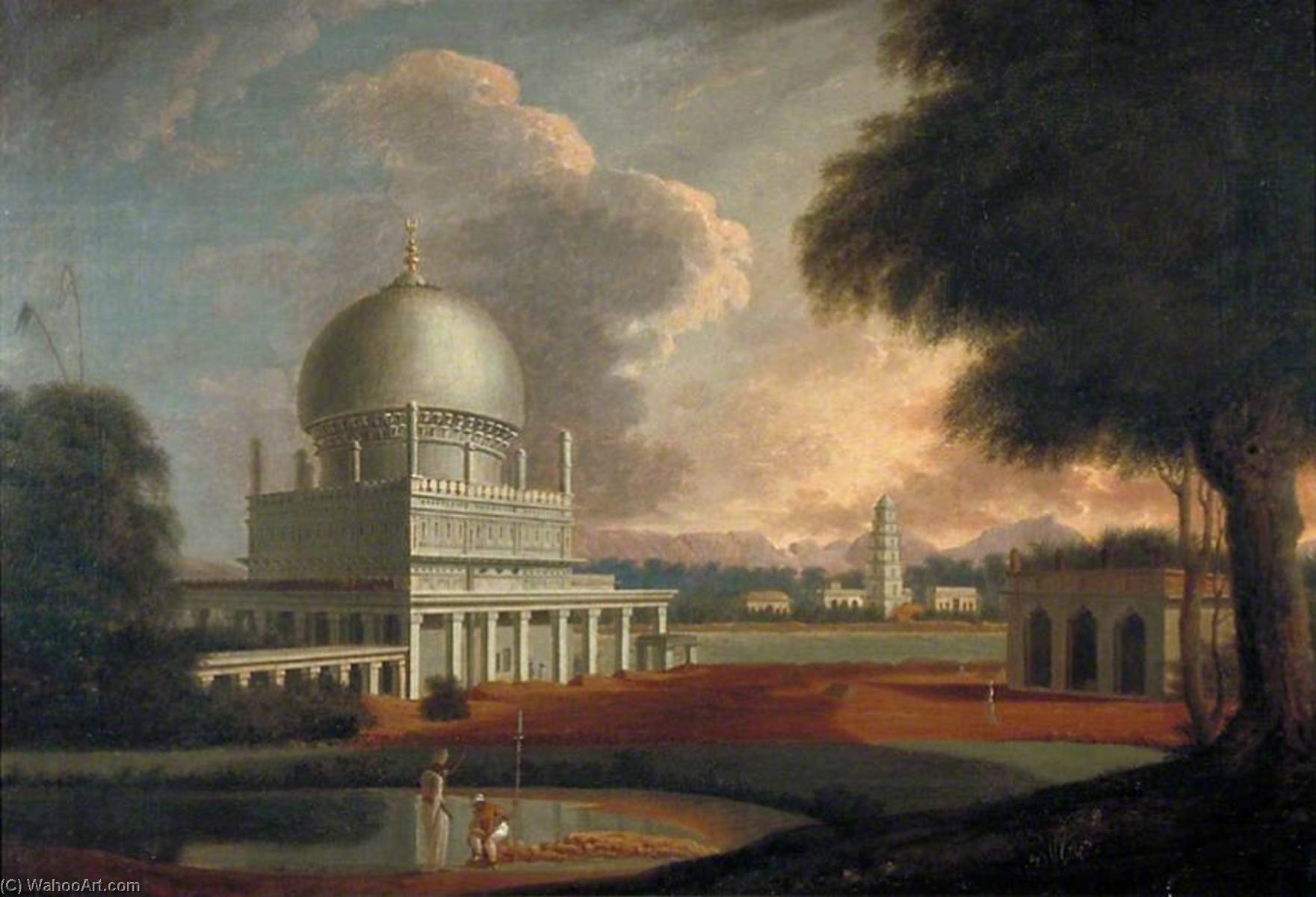
The Tomb of Nathar Shah near Trichinopoly
 1782
1782 53.0 x 77.0 cm
 Government Art Collection
 Weiterlesen
Handgefertigte Ölreproduktion
Handgemaltes Ölgemälde auf Leinwand in Ihrer Wunschgröße und mit Rahmen, auf Bestellung von unseren Künstlern angefertigt. ( Druck bestellen Bild kaufen)




































Wählen Sie aus unseren vordefinierten Formaten, die den ursprünglichen Proportionen des Kunstwerks entsprechen.

Sie können Ihre eigenen Maße eingeben, um einen bestimmten Rahmen oder Platz auszufüllen. Wenn die gewählte Größe nicht den Proportionen des Originalbildes entspricht, werden wir das Kunstwerk entweder beschneiden oder das Gemälde durch zusätzliche, handgemalte Elemente erweitern. Ein digitales Mockup wird Ihnen zur Genehmigung zugesandt, bevor die Produktion beginnt.
Bitte beachten Sie, dass die Bildschirmvorschau nicht die tatsächliche Beschneidung oder Erweiterung widerspiegelt. Nur das Mockup zeigt die endgültige Komposition exakt an.
Obwohl Sondermaße verfügbar sind, empfehlen wir, eine Größe aus der vordefinierten Liste zu wählen, um die ursprünglichen Proportionen beizubehalten.
Nach der Bestellung wird das ArtsDot.com-Team dem Kunden Anweisungen per E-Mail zusenden und eine Mockup-Vorschau bereitstellen.
Weltweiter Versand () in nur 3 bis 4 Wochen statt der üblichen 5 Wochen. (4 September). Keine Kompromisse bei der Qualität.

Kostenloser weltweiter Expressversand

Hochwertige Leinenleinwand

Umfassender Versicherungsschutz beim Versand

Zollgebühren-Rückerstattungsgarantie

Garantie für exakte Farbtreue

60 Tage Rückgaberecht (nur bei Mängeln)

100% Geld-zurück-Garantie

Mengenrabatt verfügbar
 Die Glasoption ist nur für Größen unter 110 cm verfügbar.

The Tomb of Nathar Shah near Trichinopoly
Art der Reproduktion
Format der Reproduktion
-


Gesamtpreis
$ 263
Artistic Style and Composition
The painting depicts a mosque with a large dome in the center, surrounded by several smaller domes and buildings. The artist's use of color and light creates a sense of depth and atmosphere, drawing the viewer into the scene. The composition is well-balanced, with the main mosque dominating the center of the canvas. Key Features of the painting include:- The intricate details of the mosque's architecture
- The use of light and shadow to create a sense of depth
- The presence of a figure in the background, adding a sense of scale and human presence
Artist and Historical Context
Francis Swain Ward was a British artist known for his landscapes and architectural paintings. His work often featured scenes from India, where he traveled during his lifetime. The Tomb of Nathar Shah near Trichinopoly is one such example, showcasing the artist's ability to capture the beauty and grandeur of foreign landscapes. Other notable artists from the same period include John Simpson, known for his portraits, and Jonathan Richardson The Elder, who painted Sir James Burrow (1701–1782), Editor of Law Reports. For more information on these artists, visit https://ArtsDot.com/@/John-Simpson and /art/list/?Filter=AQSGJJ-Jonathan-Richardson-The-Elder-Sir-James-Burrow-(1701-1782)-Editor-of-Law-Re..The Government Art Collection in London, where the painting is housed, features a wide range of artworks from various artists. To learn more about the collection and its history, visit /art/list/?Filter=A@D3B5MP-The-Islington-Local-History-Centre-and-Museum-(London-United-Kingdom).
Ähnliche Kunstwerke









Über den Künstler
The Serene Landscapes of Francis Swain Ward
Francis Swain Ward, a name perhaps less heralded than some of his contemporaries, nevertheless holds a significant place in the history of American landscape painting during the late 18th and early 19th centuries. Born in London in 1734, Ward’s artistic journey began not with formal training but through a life steeped in military service and a deep connection to the natural world. His formative years were spent in the British Army, an experience that profoundly shaped his perspective – instilling discipline, observation skills, and a profound appreciation for the subtle beauty of the English countryside. It was during this period, amidst campaigns and strategic deployments, that Ward’s artistic sensibilities began to blossom, fueled by a desire to capture the fleeting moments of light and atmosphere he encountered on the march. Ward's relocation to America in 1769 marked a pivotal shift in his life and career. He quickly established himself as an artist and engraver in Philadelphia, a burgeoning center for artistic activity during that era. His early works were largely influenced by the British landscape tradition, particularly the detailed renderings of Claude Gillbert and Thomas Girtler. However, Ward soon began to develop a distinctly American style, characterized by a softer palette, looser brushwork, and an emphasis on capturing the mood and atmosphere of the New England countryside. He wasn’t simply replicating what he saw; he was translating his emotional response to the landscape onto canvas. His subjects were predominantly rural scenes – rolling hills, meandering rivers, quiet farms, and glimpses of woodland – all rendered with a remarkable sensitivity to light and color.Technique and Style
Ward’s technical skill lay in his masterful use of watercolor. He was particularly adept at capturing the ephemeral qualities of light, employing delicate washes and subtle gradations to create an illusion of depth and atmosphere. Unlike some of his contemporaries who favored a more precise and detailed approach, Ward embraced a looser, more expressive style. His brushstrokes were often visible, contributing to the sense of spontaneity and immediacy in his paintings. He frequently worked *en plein air*, directly from nature, allowing him to capture the nuances of light and shadow with unparalleled accuracy. His compositions are generally balanced and harmonious, reflecting a deep understanding of perspective and spatial relationships. The influence of John Constable is subtly present in Ward’s ability to convey atmospheric effects through color and brushwork.Key Works and Recognition
Among Ward's most celebrated works are his depictions of the Brandywine River Valley, particularly scenes around Wilmington, Delaware. These paintings capture the region’s pastoral beauty with a quiet dignity and understated charm. “View of the Brandywine” (circa 1790) is often cited as one of his finest achievements, showcasing his mastery of light and color and his ability to evoke a sense of tranquility and serenity. Other notable works include scenes of farms in Massachusetts and New Hampshire, each imbued with a distinct regional character. While Ward enjoyed considerable success during his lifetime, he never achieved the widespread fame or recognition afforded to some of his more prominent contemporaries. He was a member of the Society of Artists in Philadelphia and served as Secretary from 1771 to 1772.Legacy and Historical Significance
Francis Swain Ward’s contribution to American landscape painting is often overlooked, yet it's significant nonetheless. He represents a crucial bridge between the British landscape tradition and the emerging American school of art. His work embodies the Romantic sensibility – an appreciation for nature, a focus on emotion, and a rejection of rigid academic conventions. Ward’s paintings offer a valuable glimpse into the visual culture of early America, capturing the beauty and tranquility of the rural landscape during a period of rapid transformation. He demonstrated that American landscapes could be rendered with both technical skill and emotional depth, laying the groundwork for future generations of landscape artists. His legacy resides not in grand monuments or public acclaim, but in the quiet beauty of his paintings – serene reminders of a bygone era and a testament to the enduring power of nature.Further Resources
- ArtsDot.com: https://ArtsDot.com/en/@/Francis%20Swain%20Ward?srsltid=AfmBOort7HntI7Mh7Tt_rbX4gwWs18Eh8PcZLhLNbx8dClHusvXAmmzg
- Royal Academy of Arts: https://www.royalacademy.org.uk/art-artists/name/francis-swain-ward
francis swain ward
1734 - 1805
Kurzinfos
- Artistic Movement Or Style: Watercolorist
- Artists Or Movements Influenced By This Artist: ['Romanticism']
- Artists Who Influenced This Artist:
- Turner
- Constable
- Date Of Birth: 1734
- Date Of Death: 1805
- Full Name: Francis Swain Ward
- Nationality: British
- Notable Artworks:
- River Scene
- Landscape with Trees
- Coastal View
- Place Of Birth: London, England

