

 Vorschau anzeigen
 Versenden
 Teilen
 Details anzeigen

 Herunterladen
 Ähnliche Objekte
 Röntgenaufnahme
 Diashow
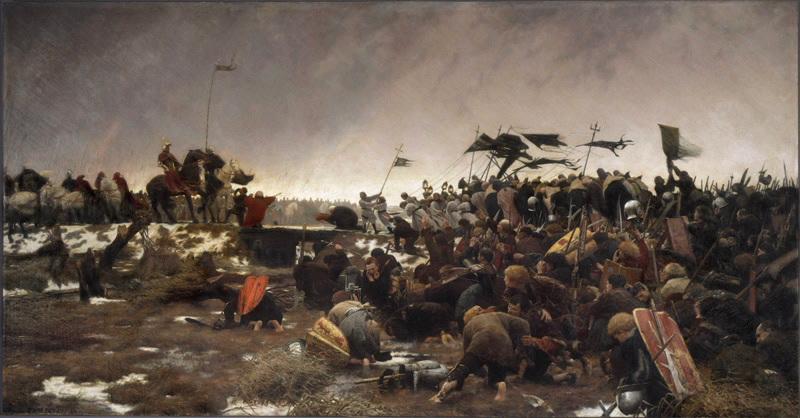
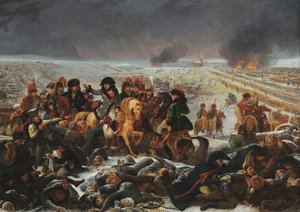
Les Cassellois dans le marais de Saint Omer se rendant à la merci du duc Philippe le Bon le 04 janvier 1430 La Soumission des Cassellois se rendant à la merci au duc de Bourgogne en 1430 (ancien titre)

 Weiterlesen
Handgefertigte Ölreproduktion
Handgemaltes Ölgemälde auf Leinwand in Ihrer Wunschgröße und mit Rahmen, auf Bestellung von unseren Künstlern angefertigt. ( Druck bestellen Bild kaufen)




P118B $10

P118H $10

P118W $10

P438Z $10

P508JH $12

P508YH $12

P805H $10

P805Z $10

P919BZ $10

P919G $10

P919XJ $10

P959ZH $10

P968JZ $12

W106C $8

W218G $10

W218JH $8

W218Y $10

W307PJ $10

W316G $10

W316PJ $8

W316Y $10

W398PJ $8

W4111J $10

W500HY $15

W500JH $15

W692G $12

W849H $8

W940BG $15

W953PJ $8




Wählen Sie aus unseren vordefinierten Formaten, die den ursprünglichen Proportionen des Kunstwerks entsprechen.

Sie können Ihre eigenen Maße eingeben, um einen bestimmten Rahmen oder Platz auszufüllen. Wenn die gewählte Größe nicht den Proportionen des Originalbildes entspricht, werden wir das Kunstwerk entweder beschneiden oder das Gemälde durch zusätzliche, handgemalte Elemente erweitern. Ein digitales Mockup wird Ihnen zur Genehmigung zugesandt, bevor die Produktion beginnt.
Bitte beachten Sie, dass die Bildschirmvorschau nicht die tatsächliche Beschneidung oder Erweiterung widerspiegelt. Nur das Mockup zeigt die endgültige Komposition exakt an.
Obwohl Sondermaße verfügbar sind, empfehlen wir, eine Größe aus der vordefinierten Liste zu wählen, um die ursprünglichen Proportionen beizubehalten.
Nach der Bestellung wird das ArtsDot.com-Team dem Kunden Anweisungen per E-Mail zusenden und eine Mockup-Vorschau bereitstellen.
Weltweiter Versand () in nur 3 bis 4 Wochen statt der üblichen 5 Wochen. (28 August). Keine Kompromisse bei der Qualität.

Kostenloser weltweiter Expressversand

Hochwertige Leinenleinwand

Umfassender Versicherungsschutz beim Versand

Zollgebühren-Rückerstattungsgarantie

Garantie für exakte Farbtreue

60 Tage Rückgaberecht (nur bei Mängeln)

100% Geld-zurück-Garantie

Mengenrabatt verfügbar
 Die Glasoption ist nur für Größen unter 110 cm verfügbar.

Les Cassellois dans le marais de Saint Omer se rendant à la merci du duc Philippe le Bon le 04 janvier 1430 La Soumission des Cassellois se rendant à la merci au duc de Bourgogne en 1430 (ancien titre)
Art der Reproduktion
Format der Reproduktion
-


Gesamtpreis
$ 263
Ähnliche Kunstwerke
![Leben Des Heiligen Franziskus - [01] - Stigmatiisierung Des Heiligen Franziskus — Giotto Di Bondone, Frührenaissance](/media/artworks/images-thumb/fd/6a/fd6ae2a8f5e88e0ace6b86a21d020ded.jpg)
![Legende Von St Franz - [11] - St Franz Vor Dem Sultan (feuerprobe) — Giotto Di Bondone, Early Renaissance](/media/artworks/images-thumb/0d/32/0d328acfb6c90f7ef32707586e86044b.jpg)
![Legende Des Heiligen Franziskus – [24] – Krönung Des Heiligen Franziskus — Giotto Di Bondone, Gothic/proto-renaissance](/media/artworks/images-thumb/81/9b/819b5f0656848eb5cb3fcd40fd5756aa.jpg)
![Leben Des Heiligen Franziskus - [04] - Tod Und Himmelfahrt Des Hl. Franziskus — Giotto Di Bondone, Italienische Renaissance](/media/artworks/images-thumb/08/8b/088b102b13c1a379233690905590f156.jpg)
![Legende Des Heiligen Franziskus - [20] - Tod Und Auferstehung Des Heiligen Franziskus — Giotto Di Bondone, Gotische Kunst](/media/artworks/images-thumb/9f/06/9f06c3a24fd2644cb73ccf76b03d9a70.jpg)
![Legende Des Heiligen Franziskus – [12] – Ekstase Des Heiligen Franziskus — Giotto Di Bondone, Proto-renaissance](/media/artworks/images-thumb/04/ab/04abd6d876609c25d110143ce0fae9c5.jpg)
Über den Künstler
The Painter of Wissant’s Coastal Soul
Francis Tattegrain, a name synonymous with the salt-sprayed landscapes of northern France, lived a life defined by a profound duality between rigorous intellect and sensory devotion. Born on October 11, 1852, in Péronne, his early years were shaped by a family steeped in legal tradition. His father, the President of the Court of Amiens, initially required that Francis pursue a law degree alongside his artistic ambitions—a promise the artist kept, eventually earning a doctorate. Yet, beneath this academic discipline beat the heart of a Naturalist. The seeds of his maritime obsession were sown in 1865, when his family built a summer cottage in the seaside village of Berck. It was here, amidst the shifting tides and the rhythmic labor of local fishermen, that Tattegrain discovered his true vocation.
His formal artistic journey led him to the prestigious Académie Julian in Paris in 1877, where he studied under the masters Jules Lefebvre and Gustave Boulanger. While these mentors provided him with a foundation in traditional academic precision, Tatte and his contemporaries were increasingly drawn to the atmospheric freedoms of Impressionism. This tension between classical structure and modern light would become a hallmark of his style. Encouraged by figures such as the sculptor Georges Tattegrain and the painter Ludovic-Napoléon Lepic, he moved beyond the confines of the studio to embrace the raw, unvarnished reality of the coast.
The Spirit of the École de Berck
Tattegrain’s most enduring contribution to art history lies in his leadership within the École de Berck, a collective of painters dedicated to capturing the authentic essence of the maritime world. Establishing a studio in Wissant Bay, he worked alongside artists like Henri and Marie Duhem to create a movement that prioritized direct observation over idealized scenery. His canvases became windows into the daily struggles and triumphs of coastal life, focusing on the heavy labor of fishermen hauling nets, the graceful movement of sailboats against turbulent seas, and the dramatic interplay of light upon the shoreline.
His technique was characterized by an evocative use of color and a brushwork that could shift from precise realism to loose, impressionistic strokes. In works such as Retour de la pêche à Berck, one can feel the weight of the spray and the tension of the wind. He possessed a rare ability to imbue even the most mundane coastal scenes with a sense of monumental importance, treating the weathered faces of elderly fishermen—as seen in Groslu, Berckois—with the same dignity as historical subjects. This commitment to Naturalism allowed him to document not just a landscape, but a vanishing way of life.
Legacy and a Final Sketch
The recognition of Tattegrain’s talent was widespread throughout his lifetime. He became a celebrated figure in the French art scene, earning a knighthood in the Légion d'honneur in 1889 and receiving prestigious commissions for the 1900 Exposition Universelle. His ability to translate the fleeting moments of nature into enduring art even reached the masses through widely circulated postcards, making his coastal visions accessible to a global audience. Beyond the canvas, he demonstrated a versatile creative spirit, providing illustrations for legendary authors such as Alexandre Dumas and Edmond Rostand.
Tragically, Tattegrain’s life ended with the same intensity with which he lived. He passed away on January 1, 1915, during the tumult of the First World War. Legend holds that he died "palette in hand," caught in the crossfire while attempting to sketch the belfry of Arras under heavy bombardment. This final, heroic act—placing his devotion to art above his own safety—serves as a poignant coda to a life dedicated to capturing the truth of the world around him. Today, his works remain vital testaments to the rugged beauty of the French coast and the enduring power of the Naturalist vision.
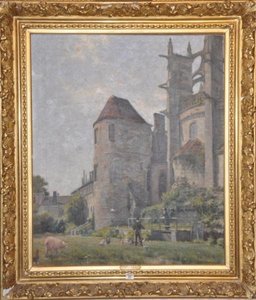
francis tattegrain
1852 - 1915
Kurzinfos
- Artistic Movement Or Style: Naturalism
- Artists Or Movements Influenced By This Artist: ['École de Berck']
- Artists Who Influenced This Artist:
- Ludovic-Napoléon Lepic
- Georges Tattegrain
- Date Of Birth: October 11, 1852
- Date Of Death: January 1, 1915
- Full Name: Francis Tattegrain
- Nationality: French
- Notable Artworks:
- Groslu, Berckois
- Place du parvis Notre Dame à Senlis
- Place Of Birth: Péronne, France
Ähnliche Artikel
Francis Bacon: Die 25 Meisterwerke des existentiellen Schmerzes | ArtsDot
Entdecken Sie die 25 Meisterwerke von Francis Bacon! Erleben Sie existenzielle Schmerz, expressive Porträts & dunkle Farben. Kunstreproduktionen in Museumsqualiät auf ArtsDot.com – für Ihre Wanddekoration.
Meisterwerke des Hochmittelalters: 10 Kunstwerke für Ihr Zuhause | ArtsDot
Entdecken Sie die 10 bedeutendsten Meisterwerke des Hochmittelalters! Erfahren Sie Geschichten von Romanik, Gotik & berühmten Künstlern. Finden Sie hochwertige Reproduktionen für Ihr Zuhause auf ArtsDot.com.
Spätmittelalterliche Meisterwerke: 10 Kunstwerke für Ihr Zuhause | ArtsDot
Entdecken Sie die 10 bedeutendsten Meisterwerke des Spätmittelalters! Erfahren Sie die Geschichten hinter Jan van Eyck, Rogier van der Weyden & mehr. Hochwertige Kunst Reproduktionen für Ihr Zuhause – jetzt auf ArtsDot.com!
Timeless Elegance: How to Integrate High Medieval Art into Your Modern Interior Design
Discover how to infuse your modern home with the divine light of High Medieval art. From gilded illuminated manuscripts to Gothic-inspired textures, learn expert tips for integrating timeless elegance and historical grandeur into contemporary interior design.

John Francis Sartorius II: Equestrian Elegance & the Rise of British Portraiture
Explore the captivating world of Francis Sartorius II (1734-1804), a leading British painter renowned for his exquisite equestrian portraits and hunting scenes. Discover his life, techniques & enduring legacy.

