 Vorschau anzeigen
 Versenden
 Teilen
 Details anzeigen

 Herunterladen
 Ähnliche Objekte
 Röntgenaufnahme
 Diashow
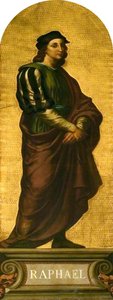
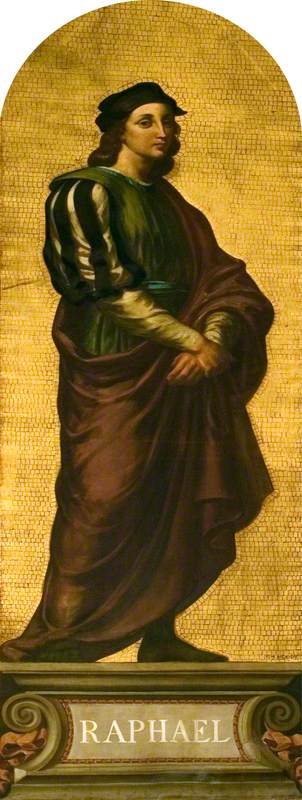
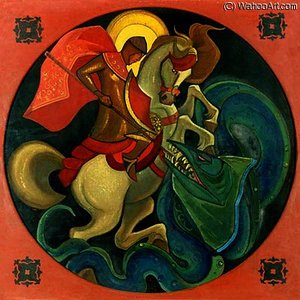
Raphael (1483–1520) (design for a mosaic in the Victoria and Albert Museum)
 1860
1860 265.0 x 89.0 cm
 Weiterlesen
Erwerben Sie ein hochauflösendes, optimiertes digitales Bild, das der Online-Vorschau weit überlegen ist.
Jede Datei wird von unseren hauseigenen Spezialisten mit modernsten Werkzeugen und fachmännischer manueller Retusche sorgfältig vorbereitet. Wir stellen sicher, dass jedes Bild eine außergewöhnliche Klarheit, präzise Farbgenauigkeit und feinste Details aufweist.
Die endgültige Datei wird innerhalb von 72 Stunden per E-Mail zugestellt und ist für den sofortigen Einsatz in professionellen, redaktionellen und Druckumgebungen optimiert. Es handelt sich um dieselbe Qualität, der führende Designstudios, Verlage und Galerien vertrauen.
Digitales Bild
Laden Sie eine hochauflösende Datei für die persönliche Präsentation, den Druck und kreative Projekte herunter. ( Druck bestellen Handgemalte Reproduktion bestellen)
In jeder Bestellung digitaler Bilder enthalten
Professionelle digitale Bereitstellung, garantiert
Wenn Sie sich für ArtsDot.com entscheiden, erhalten Sie nicht nur ein Bild – Sie erhalten ein professionell aufbereitetes digitales Kunstwerk, das mit höchster Präzision erstellt und durch eine Zufriedenheitsgarantie abgesichert wird. Hier ist alles, was automatisch mit Ihrer Bestellung geliefert wird:

Schnelle E-Mail-Zustellung
Ihre hochauflösende digitale Bilddatei wird Ihnen innerhalb von 72 Stunden nach der Bestellung per E-Mail zugestellt – bereit zur sofortigen Verwendung.

KI-optimierte digitale Datei
Ihre Kunstwerke werden professionell mithilfe fortschrittlicher KI-Tools und manueller Bearbeitung optimiert, um maximale Detailtreue, Klarheit und Farbgenauigkeit zu gewährleisten.

Lebenslanger kostenloser Neudruckservice
Datei versehentlich gelöscht oder verloren? Keine Sorge – wir senden sie Ihnen jederzeit kostenlos erneut zu.

Keine Einfuhrgebühren – jemals
Genießen Sie Ihr Kunstwerk sofort ohne Zollgebühren, Einfuhrabgaben oder Versandkosten – digitale Downloads sind immer steuerfrei.

Garantierte Farbtreue
Wir garantieren, dass Ihr digitales Bild mithilfe professioneller Werkzeuge und Farbmanagement die Originalfarben so präzise wie möglich wiedergibt.

60-Tage-Zufriedenheitsgarantie
Sollten Sie mit Ihrem digitalen Bild nicht zufrieden sein, werden wir es überarbeiten oder Ihnen innerhalb von 60 Tagen 100% erstatten – ohne Wenn und Aber.

100% Geld-zurück-Garantie
Nicht zufrieden? Erhalten Sie innerhalb von 60 Tagen nach Erhalt Ihrer digitalen Datei eine vollständige Rückerstattung – ohne Angabe von Gründen.

Rabatte bei Großbestellungen
3 Bilder kaufen, 10% sparen – 5 Bilder kaufen, 15% sparen – Ab 10 Bildern 20% sparen. Ideal für kreative Projekte, Galerien und Agenturen.
Ähnliche Kunstwerke



Biografie des Künstlers
A Vision in Fragments: The World of Francis Wollaston Moody
Francis Wollaston Moody is an artist whose work feels simultaneously ancient and utterly contemporary, a testament to his unique vision and meticulous technique. While biographical details remain intentionally sparse – Moody prefers the dialogue between artwork and viewer – his artistic journey has been one of profound engagement with Renaissance masters and a deep connection to the landscapes that inspire him. He isn’t simply replicating historical styles; he is *reimagining* them, breathing new life into traditions of mosaic art through a distinctly personal lens. His pieces are not merely decorative panels but portals to another time, imbued with a quiet intensity and a palpable sense of place. Moody's work has garnered attention for its exquisite detail, the subtle interplay of light and shadow, and an almost hypnotic quality that draws viewers into their intricate depths.Early Influences & The Allure of Mosaic
Moody’s fascination with the Renaissance began early, sparked by a profound admiration for Jan van Eyck's groundbreaking realism and Lancelot Blondeel’s mastery of mosaic. He wasn’t drawn to the grand narratives often associated with the period but rather to the meticulous craftsmanship, the symbolic language embedded within seemingly simple objects, and the sheer dedication required to create such enduring works. The allure of mosaic, in particular, proved irresistible. Unlike painting, which allows for fluidity and immediate correction, mosaic demands a deliberate, painstaking process – each tessera carefully placed, its color and angle considered with unwavering precision. This inherent slowness, this commitment to building an image fragment by fragment, resonated deeply with Moody’s artistic temperament. He saw in it not a limitation but a unique opportunity to explore texture, light, and the very nature of perception. The challenge wasn't just about replicating images; it was about understanding how individual components could coalesce into a unified whole, creating something greater than the sum of its parts.Technique & Materials: A Modern Renaissance
Moody’s technique is a fascinating blend of traditional methods and modern innovation. He begins with detailed studies – often landscapes observed during his travels – which are then translated into intricate designs. While he honors the historical use of materials like glass, stone, and smalti (a vibrant, opaque glass), Moody also incorporates contemporary elements, experimenting with different textures and finishes to achieve unique effects. His process is remarkably hands-on; he cuts each tessera himself, meticulously arranging them on a substrate before embedding them in resin. This allows for an unparalleled level of control over color, light, and composition. The result is not simply a mosaic *in the style* of Van Eyck or Blondeel but something entirely new – a contemporary artwork that echoes the spirit of the Renaissance while possessing its own distinct voice. The luminosity of his mosaics is particularly striking; the carefully chosen tesserae seem to radiate light from within, creating an almost ethereal glow.Landscapes & Symbolism: Echoes of Munduk and Tamblingan
A recurring theme in Moody’s work is the landscape – specifically, the lush, verdant landscapes of Bali, particularly around the lakes of Munduk and Tamblingan. These aren't idealized depictions but rather intimate portraits of specific places, imbued with a sense of quiet reverence. The temples nestled amongst the rice paddies, the mist-shrouded mountains, the intricate patterns of vegetation – all are rendered with painstaking detail, capturing not just their visual appearance but also their atmosphere and spiritual energy. His mosaics often incorporate subtle symbolic elements, drawing on both Renaissance iconography and Balinese traditions. A carefully placed flower might represent a specific virtue, while a particular arrangement of stones could evoke ancient myths or legends. These symbols are never overt or didactic; they are woven into the fabric of the artwork, inviting viewers to engage in their own interpretations. The lakes themselves – Munduk and Tamblingan – become metaphors for inner landscapes, reflecting themes of tranquility, reflection, and the interconnectedness of all things.Historical Significance & Contemporary Relevance
Francis Wollaston Moody’s work occupies a unique position within contemporary art. He isn't simply reviving a lost technique; he is demonstrating its enduring power and relevance in the 21st century. By engaging with the legacy of Renaissance masters, he challenges conventional notions of originality and authorship, prompting viewers to consider the relationship between past and present.- His mosaics offer a powerful counterpoint to the fast-paced, ephemeral nature of modern life.
- They remind us of the value of craftsmanship, patience, and meticulous attention to detail.
- The incorporation of Balinese landscapes adds another layer of complexity, exploring themes of cultural exchange and environmental awareness.