

 Vorschau anzeigen
 Versenden
 Teilen
 Details anzeigen

 Herunterladen
 Ähnliche Objekte
 Röntgenaufnahme
 Diashow
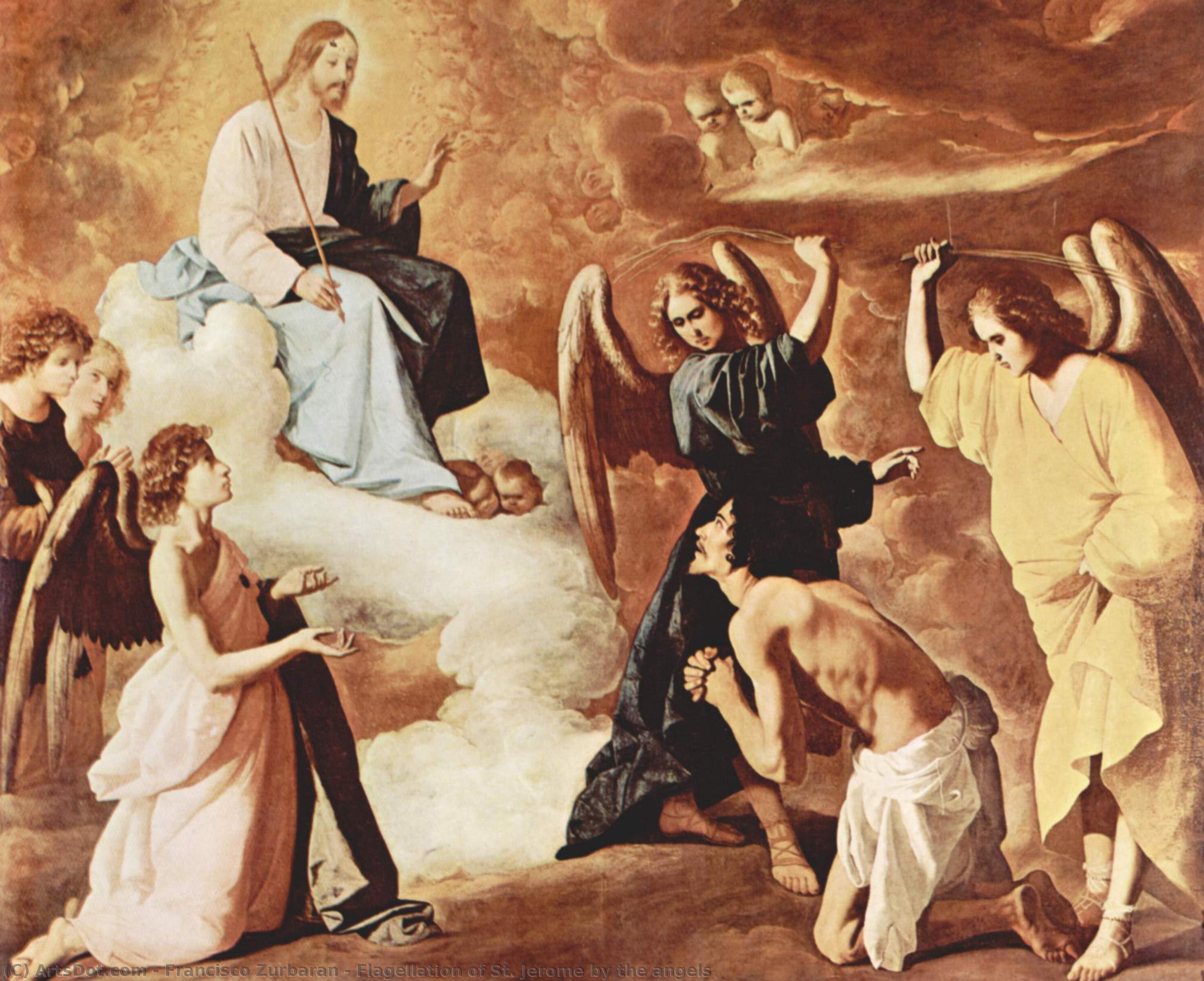
Flagellation of St. Jerome by the angels
 Acrylic On Canvas
- WallArt
- Spanish Baroque
 1639
1639 235.0 x 290.0 cm
 Weiterlesen
Erwerben Sie ein hochauflösendes, optimiertes digitales Bild, das der Online-Vorschau weit überlegen ist.
Jede Datei wird von unseren hauseigenen Spezialisten mit modernsten Werkzeugen und fachmännischer manueller Retusche sorgfältig vorbereitet. Wir stellen sicher, dass jedes Bild eine außergewöhnliche Klarheit, präzise Farbgenauigkeit und feinste Details aufweist.
Die endgültige Datei wird innerhalb von 72 Stunden per E-Mail zugestellt und ist für den sofortigen Einsatz in professionellen, redaktionellen und Druckumgebungen optimiert. Es handelt sich um dieselbe Qualität, der führende Designstudios, Verlage und Galerien vertrauen.
Digitales Bild
Laden Sie eine hochauflösende Datei für die persönliche Präsentation, den Druck und kreative Projekte herunter. ( Druck bestellen Handgemalte Reproduktion bestellen)
In jeder Bestellung digitaler Bilder enthalten
Professionelle digitale Bereitstellung, garantiert
Wenn Sie sich für ArtsDot.com entscheiden, erhalten Sie nicht nur ein Bild – Sie erhalten ein professionell aufbereitetes digitales Kunstwerk, das mit höchster Präzision erstellt und durch eine Zufriedenheitsgarantie abgesichert wird. Hier ist alles, was automatisch mit Ihrer Bestellung geliefert wird:

Schnelle E-Mail-Zustellung
Ihre hochauflösende digitale Bilddatei wird Ihnen innerhalb von 72 Stunden nach der Bestellung per E-Mail zugestellt – bereit zur sofortigen Verwendung.

KI-optimierte digitale Datei
Ihre Kunstwerke werden professionell mithilfe fortschrittlicher KI-Tools und manueller Bearbeitung optimiert, um maximale Detailtreue, Klarheit und Farbgenauigkeit zu gewährleisten.

Lebenslanger kostenloser Neudruckservice
Datei versehentlich gelöscht oder verloren? Keine Sorge – wir senden sie Ihnen jederzeit kostenlos erneut zu.

Keine Einfuhrgebühren – jemals
Genießen Sie Ihr Kunstwerk sofort ohne Zollgebühren, Einfuhrabgaben oder Versandkosten – digitale Downloads sind immer steuerfrei.

Garantierte Farbtreue
Wir garantieren, dass Ihr digitales Bild mithilfe professioneller Werkzeuge und Farbmanagement die Originalfarben so präzise wie möglich wiedergibt.

60-Tage-Zufriedenheitsgarantie
Sollten Sie mit Ihrem digitalen Bild nicht zufrieden sein, werden wir es überarbeiten oder Ihnen innerhalb von 60 Tagen 100% erstatten – ohne Wenn und Aber.

100% Geld-zurück-Garantie
Nicht zufrieden? Erhalten Sie innerhalb von 60 Tagen nach Erhalt Ihrer digitalen Datei eine vollständige Rückerstattung – ohne Angabe von Gründen.

Rabatte bei Großbestellungen
3 Bilder kaufen, 10% sparen – 5 Bilder kaufen, 15% sparen – Ab 10 Bildern 20% sparen. Ideal für kreative Projekte, Galerien und Agenturen.
Details zum Sammlerstück
The Agony and Grace of Faith: Francisco de Zurbarán’s *Flagellation of St. Jerome*
Francisco de Zurbarán's 1639 painting, *Flagellation of St. Jerome*, is not merely a depiction of a biblical scene; it’s an intensely felt meditation on suffering, penitence, and the raw vulnerability of faith. This arresting work, measuring a substantial 235 x 290 cm, transcends simple narrative to become a profound exploration of the human condition within a deeply religious context. Born in Fuente de Cantos, Extremadura, in 1598, Zurbarán’s artistic journey was shaped by the austere landscapes and fervent spirituality of his homeland – qualities that would profoundly inform his distinctive style, often described as “Spanish Caravaggio” due to his masterful use of dramatic chiaroscuro.
The scene itself is brutally direct. St. Jerome, identifiable by his tonsure and the chains binding him, is subjected to a harrowing ordeal orchestrated by angels. The figures are rendered with an almost photographic realism – every ripple in the fabric, every bead of sweat on Jerome’s brow, every strained muscle is meticulously observed and depicted. This commitment to naturalism isn't simply about accuracy; it serves to heighten the emotional impact, forcing the viewer to confront the visceral reality of the suffering being portrayed. The angels, positioned above and flanking the scene, are not figures of benevolent intervention but rather agents of a painful purification, their faces etched with solemnity and an almost detached observation.
The Language of Light and Shadow: Zurbarán’s Technique
Zurbarán's genius lies in his manipulation of light and shadow – a technique known as *tenebrism*. He employs a stark contrast between intensely illuminated areas and deep, enveloping darkness. The figures are bathed in a cool, almost ethereal light that seems to emanate from an unseen source, highlighting their physical forms while simultaneously obscuring the background. This dramatic lighting isn’t merely aesthetic; it serves to draw attention to the central drama of the scene and imbue it with a sense of heightened intensity. The use of white drapery is particularly noteworthy – Zurbarán's mastery in depicting these fabrics, rendered with an almost luminous quality, adds to the overall sense of otherworldly grace amidst the suffering.
His approach involved working directly from life, often utilizing a *lay-figure* to study the folds and textures of clothing. This dedication to observation is evident in the incredibly realistic depiction of Jerome’s garments, which appear almost tangible. Furthermore, Zurbarán's meticulous attention to detail extends beyond mere representation; he imbues each element with symbolic weight, contributing to the painting’s complex theological layers.
Symbolism and Spiritual Depth
The *Flagellation of St. Jerome* is a powerful allegory for repentance and spiritual purification. Jerome, known for his own intense self-flagellation as penance for betraying Christ, serves as a potent symbol of human fallibility and the arduous path to redemption. The act of scourging itself represents a stripping away of worldly attachments and a surrender to divine will. The angels, traditionally associated with divine justice and punishment, here function as instruments of God’s mercy, administering a painful but ultimately transformative experience.
Beyond the immediate narrative, the painting resonates with broader themes of suffering, humility, and faith. The starkness of the composition – the limited palette, the absence of extraneous details – reinforces the sense of austerity and devotion that characterized Zurbarán’s work. The birds subtly placed in the corners—one near the top left, another at the bottom right—could be interpreted as symbols of hope or divine observation, adding layers of complexity to the scene.
A Legacy of Dramatic Realism
*Flagellation of St. Jerome* is a cornerstone of Spanish Baroque art and a testament to Zurbarán’s unique artistic vision. His ability to fuse meticulous realism with profound spiritual depth continues to captivate viewers centuries after its creation. Reproductions, such as those offered by ArtsDot.com, allow us to experience the power and emotional resonance of this extraordinary painting in our own homes, bringing a touch of dramatic intensity and contemplative beauty to any space.
Ähnliche Kunstwerke
Biografie des Künstlers
frühes Leben und Ausbildung
Francisco de Zurbarán, ein bedeutender spanischer Maler, wurde 1598 in Extremadura, Spanien, geboren. Seine künstlerische Reise begann unter der Anleitung von Alejandro de la Mina, doch es war seine Zeit mit Alonso de Najera, der seinen barocken Stil wirklich prägte.Künstlerische Karriere und bedeutende Werke
Zurbaráns Werk ist durch die dramatische Verwendung von Licht und Schatten gekennzeichnet, eine Technik, die als Tenebrismus bekannt ist. Dies kann in das Sudarium der Heiligen Veronika gesehen werden, einem Gemälde, das seine Meisterschaft über das Medium demonstriert. *- Unbefleckte Empfängnis (ca. 1635), ein herausragendes Beispiel für Zurbaráns frühe Arbeit, befindet sich im Museo de Bellas Artes, Bilbao.
- Agnus Dei (ca. 1640), ein kraftvolles Symbol religiöser Hingabe, ist Teil der Sammlung des Metropolitan Museum of Art.
- Das apokryphe Motiv der Erscheinung der Jungfrau vor Johannes dem Baptist, ein weiteres bemerkenswertes Werk, demonstriert seine Fähigkeit, Licht und Dunkelheit auszubalancieren.
Vermächtnis und Einfluss
Zurbaráns Einfluss auf den spanischen Barock ist unbestreitbar. Seine Verwendung von Chiaroscuro hat Generationen von Künstlern inspiriert. Der Kreis um Francisco de Zurbarán, eine Gruppe von Künstlern, die von seinem Werk beeinflusst wurden, setzte die Grenzen des Tenebrismus weiter aus. * Schlüsselpunkte: * Aktiv in Sevilla, Spanien, ab 1614. * Bekannt für dramatische Beleuchtung und intensive emotionale Tiefe. * Hat zahlreiche spanische Barockmaler beeinflusst.Fazit
Francisco Zurbaráns Vermächtnis ist ein Beweis für die dauernde Kraft der Barockkunst. Seine innovative Verwendung von Licht und Schatten hat einen unauslöschlichen Eindruck auf die Kunstwelt hinterlassen und unzählige Künstler inspiriert und seinen Platz in der Geschichte gesichert. * Weitere Lektüre: * [https://ArtsDot.com/@/francisco-zurbaran](https://ArtsDot.com/@/francisco-zurbaran) - Entdecken Sie mehr von Zurbaráns Werken auf ArtsDot. * [https://wikipedia.org/wiki/francisco_de_zurbarán](https://wikipedia.org/wiki/francisco_de_zurbarán) - Tauchen Sie ein in das Leben und die Einflüsse des Künstlers.
Francisco de Zurbarán
1598 - 1664 , Spanien
Kurzinfos
- Artistic Movement Or Style: Barock
- Artists Or Movements Influenced By This Artist: Der Kreis um Zurbarán
- Artists Who Influenced This Artist:
- Alejandro de la Mina
- Alonso de Najera
- Juan Sánchez Cotán
- Date Of Birth: 1598
- Date Of Death: 1664
- Full Name: Francisco de Zurbarán
- Nationality: Spanisch
- Notable Artworks:
- Unbefleckte Empfängnis
- Agnus Dei
- Sudarium der Heiligen Veronika
- Place Of Birth: Fuente de Cantos, Spanien

