 Vorschau anzeigen
 Versenden
 Teilen
 Details anzeigen

 Herunterladen
 Ähnliche Objekte
 Röntgenaufnahme
 Diashow
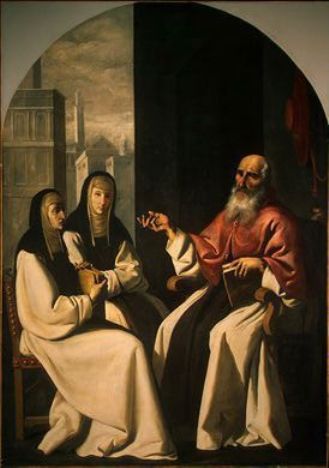
San Jerónimo con Santa Paula y San Eustaquio

 Weiterlesen
Handgefertigte Ölreproduktion
Handgemaltes Ölgemälde auf Leinwand in Ihrer Wunschgröße und mit Rahmen, auf Bestellung von unseren Künstlern angefertigt. ( Druck bestellen Bild kaufen)




P118B $10

P118H $10

P118W $10

P438Z $10

P508JH $12

P508YH $12

P805H $10

P805Z $10

P919BZ $10

P919G $10

P919XJ $10

P959ZH $10

P968JZ $12

W106C $8

W218G $10

W218JH $8

W218Y $10

W307PJ $10

W316G $10

W316PJ $8

W316Y $10

W398PJ $8

W4111J $10

W500HY $15

W500JH $15

W692G $12

W849H $8

W940BG $15

W953PJ $8




Wählen Sie aus unseren vordefinierten Formaten, die den ursprünglichen Proportionen des Kunstwerks entsprechen.

Sie können Ihre eigenen Maße eingeben, um einen bestimmten Rahmen oder Platz auszufüllen. Wenn die gewählte Größe nicht den Proportionen des Originalbildes entspricht, werden wir das Kunstwerk entweder beschneiden oder das Gemälde durch zusätzliche, handgemalte Elemente erweitern. Ein digitales Mockup wird Ihnen zur Genehmigung zugesandt, bevor die Produktion beginnt.
Bitte beachten Sie, dass die Bildschirmvorschau nicht die tatsächliche Beschneidung oder Erweiterung widerspiegelt. Nur das Mockup zeigt die endgültige Komposition exakt an.
Obwohl Sondermaße verfügbar sind, empfehlen wir, eine Größe aus der vordefinierten Liste zu wählen, um die ursprünglichen Proportionen beizubehalten.
Nach der Bestellung wird das ArtsDot.com-Team dem Kunden Anweisungen per E-Mail zusenden und eine Mockup-Vorschau bereitstellen.
Weltweiter Versand () in nur 3 bis 4 Wochen statt der üblichen 5 Wochen. (1 September). Keine Kompromisse bei der Qualität.

Kostenloser weltweiter Expressversand

Hochwertige Leinenleinwand

Umfassender Versicherungsschutz beim Versand

Zollgebühren-Rückerstattungsgarantie

Garantie für exakte Farbtreue

60 Tage Rückgaberecht (nur bei Mängeln)

100% Geld-zurück-Garantie

Mengenrabatt verfügbar
 Die Glasoption ist nur für Größen unter 110 cm verfügbar.

San Jerónimo con Santa Paula y San Eustaquio
Art der Reproduktion
Format der Reproduktion
-


Gesamtpreis
$ 263
A Moment of Devotion: San Jerónimo con Santa Paula y San Eustaquio by Francisco de Zurbarán
Francisco de Zurbarán’s “San Jerónimo con Santa Paula y San Eustaquio” offers a poignant glimpse into the heart of Spanish Baroque religious art, circa 1640. This captivating portrait isn't merely a depiction of three saints; it’s an embodiment of faith, contemplation, and the quiet dignity of monastic life. The painting’s power resides in Zurbarán’s masterful ability to translate spiritual essence into tangible form, creating an image that resonates with profound emotional depth.
Subject Matter and Composition
The scene unfolds within a modestly furnished room, dominated by the solemn presence of Saint Jerome, identified by his cowl and scroll – symbols of his dedication to prayer and biblical scholarship. Beside him sit Saint Paula and Saint Eustace, their postures reflecting a shared devotion. The composition is remarkably naturalistic for its time, eschewing grand gestures or dramatic poses in favor of an intimate tableau. The arrangement around the table suggests a moment of fellowship, perhaps a private devotional gathering within a monastery. The inclusion of everyday objects – the bowl, the chairs – subtly anchors the scene in a relatable reality while simultaneously elevating it to a realm of spiritual significance.
Zurbarán’s Technique: Chiaroscuro and Realism
Zurbarán was renowned for his almost brutal realism, achieved through an unparalleled understanding of light and shadow – a technique known as *chiaroscuro*. He employed a limited palette dominated by earthy browns, ochres, and blacks, intensifying the dramatic effect. The figures are rendered with astonishing detail: the texture of the monk’s robes, the wrinkles on Jerome's face, the weariness in his posture. This meticulous attention to detail wasn’t simply about accuracy; it was a deliberate strategy to convey the weight of their faith and the passage of time. His use of *tenebrism*, where dark shadows engulf most of the scene with only a few areas illuminated, heightens the sense of solemnity and draws the viewer's eye directly to the figures, emphasizing their spiritual importance.
Symbolic Resonance and Historical Context
Painted during the Spanish Golden Age, “San Jerónimo con Santa Paula y San Eustaquio” reflects the Counter-Reformation’s emphasis on religious devotion and the power of saints as models for piety. Saint Jerome, the patron saint of translators and scholars, was particularly revered at this time. The inclusion of Saint Paula, a pioneer in female monasticism, and Saint Eustace, known for his conversion after saving a wounded stag, further reinforces the painting’s message of redemption and spiritual transformation. Zurbarán's work aligns with the broader artistic trends of the Baroque period, characterized by emotional intensity, dramatic lighting, and a focus on religious themes – all intended to inspire faith and devotion in the viewer.
Emotional Impact and Artistic Value
The enduring power of this painting lies in its ability to evoke a sense of quiet contemplation. The figures’ expressions are not overtly ecstatic, but rather convey a deep inner peace and unwavering faith. Zurbarán's masterful manipulation of light and shadow creates an atmosphere of profound solemnity, inviting the viewer to share in their spiritual experience. A hand-painted reproduction offers a unique opportunity to possess a piece of this remarkable artwork, bringing its beauty and emotional resonance into your home or office – a testament to Zurbarán’s genius and the enduring power of faith.
Ähnliche Kunstwerke
Über den Künstler
frühes Leben und Ausbildung
Francisco de Zurbarán, ein bedeutender spanischer Maler, wurde 1598 in Extremadura, Spanien, geboren. Seine künstlerische Reise begann unter der Anleitung von Alejandro de la Mina, doch es war seine Zeit mit Alonso de Najera, der seinen barocken Stil wirklich prägte.Künstlerische Karriere und bedeutende Werke
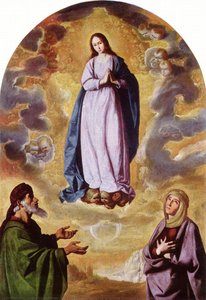
Zurbaráns Werk ist durch die dramatische Verwendung von Licht und Schatten gekennzeichnet, eine Technik, die als Tenebrismus bekannt ist. Dies kann in das Sudarium der Heiligen Veronika gesehen werden, einem Gemälde, das seine Meisterschaft über das Medium demonstriert. *- Unbefleckte Empfängnis (ca. 1635), ein herausragendes Beispiel für Zurbaráns frühe Arbeit, befindet sich im Museo de Bellas Artes, Bilbao.
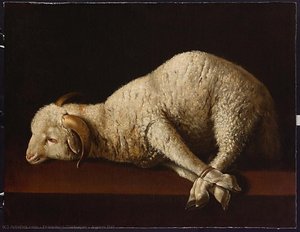
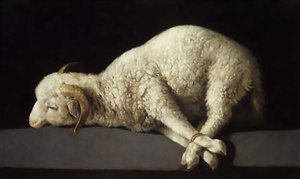
- Agnus Dei (ca. 1640), ein kraftvolles Symbol religiöser Hingabe, ist Teil der Sammlung des Metropolitan Museum of Art.
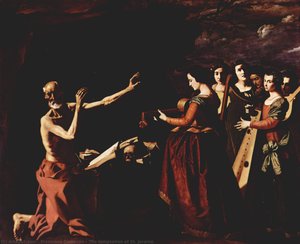
- Das apokryphe Motiv der Erscheinung der Jungfrau vor Johannes dem Baptist, ein weiteres bemerkenswertes Werk, demonstriert seine Fähigkeit, Licht und Dunkelheit auszubalancieren.
Vermächtnis und Einfluss
Zurbaráns Einfluss auf den spanischen Barock ist unbestreitbar. Seine Verwendung von Chiaroscuro hat Generationen von Künstlern inspiriert. Der Kreis um Francisco de Zurbarán, eine Gruppe von Künstlern, die von seinem Werk beeinflusst wurden, setzte die Grenzen des Tenebrismus weiter aus. * Schlüsselpunkte: * Aktiv in Sevilla, Spanien, ab 1614. * Bekannt für dramatische Beleuchtung und intensive emotionale Tiefe. * Hat zahlreiche spanische Barockmaler beeinflusst.Fazit
Francisco Zurbaráns Vermächtnis ist ein Beweis für die dauernde Kraft der Barockkunst. Seine innovative Verwendung von Licht und Schatten hat einen unauslöschlichen Eindruck auf die Kunstwelt hinterlassen und unzählige Künstler inspiriert und seinen Platz in der Geschichte gesichert. * Weitere Lektüre: * [https://ArtsDot.com/@/francisco-zurbaran](https://ArtsDot.com/@/francisco-zurbaran) - Entdecken Sie mehr von Zurbaráns Werken auf ArtsDot. * [https://wikipedia.org/wiki/francisco_de_zurbarán](https://wikipedia.org/wiki/francisco_de_zurbarán) - Tauchen Sie ein in das Leben und die Einflüsse des Künstlers.
Francisco de Zurbarán
1598 - 1664 , Spanien
Kurzinfos
- Artistic Movement Or Style: Barock
- Artists Or Movements Influenced By This Artist: Der Kreis um Zurbarán
- Artists Who Influenced This Artist:
- Alejandro de la Mina
- Alonso de Najera
- Juan Sánchez Cotán
- Date Of Birth: 1598
- Date Of Death: 1664
- Full Name: Francisco de Zurbarán
- Nationality: Spanisch
- Notable Artworks:
- Unbefleckte Empfängnis
- Agnus Dei
- Sudarium der Heiligen Veronika
- Place Of Birth: Fuente de Cantos, Spanien
Ähnliche Artikel

The Golden Age Reforged: Dramatic Realism & Religious Zeal in Spanish Baroque Art
Explore the dramatic world of Spanish Baroque art! Discover masters like Zurbarán & the powerful influence of religious zeal on painting techniques – a guide for collectors and enthusiasts.

Weiße Meisterwerke: Die Top 10 berühmtesten Gemälde und ihre zeitlose Eleganz
Entdecken Sie die Top 10 berühmter Gemälde, dominiert von Weiß! Von Malewitsch bis Rothko – erfahren Sie Geschichten hinter ikonischen Kunstwerke und lassen Sie sich für Ihre Wohnraumgestaltung inspirieren. Kunstreproduktionen in Museumsqualiät auf

The Dramatic Flourish: Exploring the Baroque Movement's Enduring Legacy in Art History
Explore the dramatic world of Baroque art! Discover iconic artists like Caravaggio & Rubens, defining techniques, and its lasting impact on art history. Expert insights for collectors & enthusiasts at ArtsDot.
Francisco de Zurbarán: Mystik, Realismus und das goldene Zeitalter der spanischen Malerei
Entdecken Sie das faszinierende Werk von Francisco de Zurbarán! Erfahren Sie mehr über den Meister des spanischen Barock, seine religiösen Gemälde und den Einfluss Caravaggios. Kunstgeschichte pur – jetzt lesen!
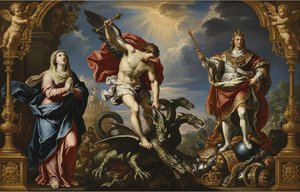
The Dramatic Flourish: Exploring Themes of Power, Faith & Emotion in Baroque Artworks
Explore the dramatic world of Baroque art! Discover masters like Zurbarán & the powerful influence of religious zeal on painting techniques. Expert insights for collectors and enthusiasts.