 Vorschau anzeigen
 Versenden
 Teilen
 Details anzeigen

 Herunterladen
 Ähnliche Objekte
 Röntgenaufnahme
 Diashow
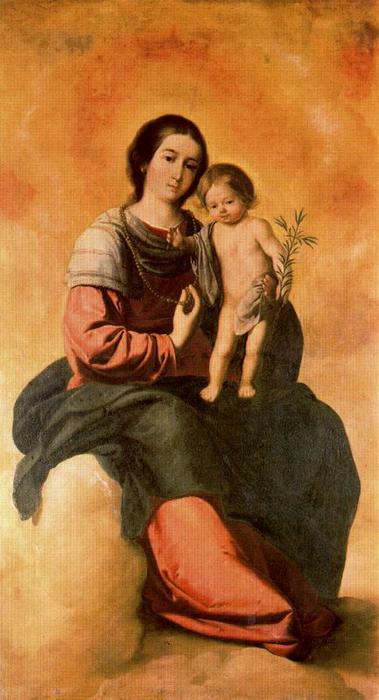
Virgen del Rosario

 Weiterlesen
Handgefertigte Ölreproduktion
Handgemaltes Ölgemälde auf Leinwand in Ihrer Wunschgröße und mit Rahmen, auf Bestellung von unseren Künstlern angefertigt. ( Druck bestellen Bild kaufen)




P118B $10

P118H $10

P118W $10

P438Z $10

P508JH $12

P508YH $12

P805H $10

P805Z $10

P919BZ $10

P919G $10

P919XJ $10

P959ZH $10

P968JZ $12

W106C $8

W218G $10

W218JH $8

W218Y $10

W307PJ $10

W316G $10

W316PJ $8

W316Y $10

W398PJ $8

W4111J $10

W500HY $15

W500JH $15

W692G $12

W849H $8

W940BG $15

W953PJ $8




Wählen Sie aus unseren vordefinierten Formaten, die den ursprünglichen Proportionen des Kunstwerks entsprechen.

Sie können Ihre eigenen Maße eingeben, um einen bestimmten Rahmen oder Platz auszufüllen. Wenn die gewählte Größe nicht den Proportionen des Originalbildes entspricht, werden wir das Kunstwerk entweder beschneiden oder das Gemälde durch zusätzliche, handgemalte Elemente erweitern. Ein digitales Mockup wird Ihnen zur Genehmigung zugesandt, bevor die Produktion beginnt.
Bitte beachten Sie, dass die Bildschirmvorschau nicht die tatsächliche Beschneidung oder Erweiterung widerspiegelt. Nur das Mockup zeigt die endgültige Komposition exakt an.
Obwohl Sondermaße verfügbar sind, empfehlen wir, eine Größe aus der vordefinierten Liste zu wählen, um die ursprünglichen Proportionen beizubehalten.
Nach der Bestellung wird das ArtsDot.com-Team dem Kunden Anweisungen per E-Mail zusenden und eine Mockup-Vorschau bereitstellen.
Weltweiter Versand () in nur 3 bis 4 Wochen statt der üblichen 5 Wochen. (24 August). Keine Kompromisse bei der Qualität.

Kostenloser weltweiter Expressversand

Hochwertige Leinenleinwand

Umfassender Versicherungsschutz beim Versand

Zollgebühren-Rückerstattungsgarantie

Garantie für exakte Farbtreue

60 Tage Rückgaberecht (nur bei Mängeln)

100% Geld-zurück-Garantie

Mengenrabatt verfügbar
 Die Glasoption ist nur für Größen unter 110 cm verfügbar.

Virgen del Rosario
Art der Reproduktion
Format der Reproduktion
-


Gesamtpreis
$ 263
Beschreibung des Kunstwerks
The Virgin of Rosario: A Glimpse of Devotion in Baroque Spain
Francisco de Zurbarán’s “Virgen del Rosario” is not merely a portrait; it's a profound distillation of 17th-century Spanish religious fervor, rendered with an almost unsettling realism and imbued with a palpable sense of serenity. Painted around 1638-1639, this work offers a rare intimate glimpse into the heart of Catholic devotion during the Golden Age of Spanish painting. The composition centers on the Virgin Mary, cradling the infant Jesus in her arms – a scene universally recognized as representing the Rosary, a cornerstone of Marian piety. Yet, Zurbarán elevates this familiar image through his masterful manipulation of light and shadow, a technique known as tenebrism, which dominates the canvas and draws the viewer’s eye directly to the figures at its core.
The Virgin herself is depicted with an austere beauty—a deliberate choice that reflects the prevailing spiritual climate of the time. Her dress, a simple, flowing garment, emphasizes her modesty and humility, while the subtle details – the delicate folds of fabric, the gentle curve of her hands – reveal Zurbarán’s extraordinary attention to anatomical accuracy and his ability to capture the texture of materials with breathtaking precision. The baby Jesus, rendered in youthful innocence, appears utterly trusting and vulnerable within her embrace. The color palette is restrained—primarily deep blues, reds, and browns—creating a sense of solemnity and gravity. These colors are not vibrant or flamboyant; instead, they contribute to an atmosphere of quiet contemplation.
Zurbarán’s Baroque Vision: Tenebrism and Spiritual Intensity
Francisco de Zurbarán was a pivotal figure in the development of Spanish Baroque painting, often considered alongside Caravaggio as a master of tenebrism. Unlike the brighter, more opulent styles prevalent elsewhere in Europe, Zurbarán favored a dramatic contrast between light and dark, using intense illumination to highlight key elements within his compositions—in this case, the Virgin and Child. This technique wasn’t simply an aesthetic choice; it served a deeply spiritual purpose. The strong contrasts were intended to draw attention to the divine presence, emphasizing the sacredness of the scene and evoking a sense of awe and reverence in the viewer.
His background in Extremadura, a region known for its austere landscapes and devout religious communities, profoundly shaped his artistic vision. Zurbarán’s paintings often depict monks, saints, and still lifes—subjects that reflect the simplicity and austerity of monastic life. He sought to capture not just the outward appearance of these figures but also their inner spirituality, imbuing them with a sense of profound devotion and humility. This is evident in the Virgin's gaze – it’s not one of grandiosity or power, but rather a quiet acceptance and love.
Symbolism and Context: The Rosary and Carmelite Influence
The title “Virgen del Rosario” directly references the central theme of the painting—the Rosary. This devotion, centered around reciting prayers in honor of Mary and the Blessed Virgin, was gaining immense popularity during Zurbarán’s time, particularly within the Carmelite Order. The Carmelite friars were instrumental in promoting the practice of praying the Rosary, and their influence is clearly reflected in this artwork. The presence of two cartouches (small shields) depicted on the background walls subtly reinforces this connection to the Carmelite tradition.
Furthermore, the setting—likely within a Carmelite monastery—adds another layer of meaning. The muted colors and simple architecture contribute to a sense of monastic seclusion and spiritual contemplation. The painting can be interpreted as a visual representation of the Rosary’s power to connect individuals with the divine, offering solace and guidance in times of uncertainty.
A Masterpiece of Spanish Devotion: Reproduction and Appreciation
Reproductions of “Virgen del Rosario” offer an exceptional opportunity to experience the profound beauty and spiritual depth of Zurbarán's work. ArtsDot’s hand-painted reproductions meticulously recreate the artist’s masterful techniques, capturing the nuances of light, shadow, and color with remarkable fidelity. By commissioning a reproduction, you not only acquire a stunning piece of art but also connect with a rich artistic tradition that continues to inspire awe and reverence centuries later. The painting's enduring appeal lies in its ability to evoke a sense of peace, humility, and profound connection—qualities that resonate deeply within the human spirit.
Ähnliche Kunstwerke
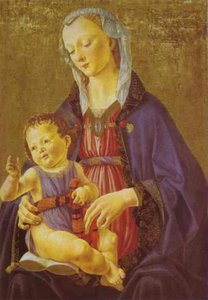
Über den Künstler
frühes Leben und Ausbildung
Francisco de Zurbarán, ein bedeutender spanischer Maler, wurde 1598 in Extremadura, Spanien, geboren. Seine künstlerische Reise begann unter der Anleitung von Alejandro de la Mina, doch es war seine Zeit mit Alonso de Najera, der seinen barocken Stil wirklich prägte.Künstlerische Karriere und bedeutende Werke
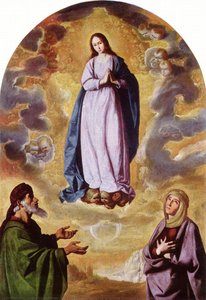
Zurbaráns Werk ist durch die dramatische Verwendung von Licht und Schatten gekennzeichnet, eine Technik, die als Tenebrismus bekannt ist. Dies kann in das Sudarium der Heiligen Veronika gesehen werden, einem Gemälde, das seine Meisterschaft über das Medium demonstriert. *- Unbefleckte Empfängnis (ca. 1635), ein herausragendes Beispiel für Zurbaráns frühe Arbeit, befindet sich im Museo de Bellas Artes, Bilbao.
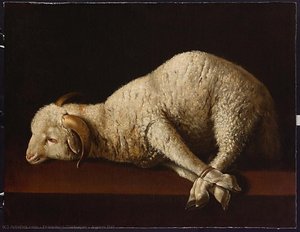
- Agnus Dei (ca. 1640), ein kraftvolles Symbol religiöser Hingabe, ist Teil der Sammlung des Metropolitan Museum of Art.
- Das apokryphe Motiv der Erscheinung der Jungfrau vor Johannes dem Baptist, ein weiteres bemerkenswertes Werk, demonstriert seine Fähigkeit, Licht und Dunkelheit auszubalancieren.
Vermächtnis und Einfluss
Zurbaráns Einfluss auf den spanischen Barock ist unbestreitbar. Seine Verwendung von Chiaroscuro hat Generationen von Künstlern inspiriert. Der Kreis um Francisco de Zurbarán, eine Gruppe von Künstlern, die von seinem Werk beeinflusst wurden, setzte die Grenzen des Tenebrismus weiter aus. * Schlüsselpunkte: * Aktiv in Sevilla, Spanien, ab 1614. * Bekannt für dramatische Beleuchtung und intensive emotionale Tiefe. * Hat zahlreiche spanische Barockmaler beeinflusst.Fazit
Francisco Zurbaráns Vermächtnis ist ein Beweis für die dauernde Kraft der Barockkunst. Seine innovative Verwendung von Licht und Schatten hat einen unauslöschlichen Eindruck auf die Kunstwelt hinterlassen und unzählige Künstler inspiriert und seinen Platz in der Geschichte gesichert. * Weitere Lektüre: * [https://ArtsDot.com/@/francisco-zurbaran](https://ArtsDot.com/@/francisco-zurbaran) - Entdecken Sie mehr von Zurbaráns Werken auf ArtsDot. * [https://wikipedia.org/wiki/francisco_de_zurbarán](https://wikipedia.org/wiki/francisco_de_zurbarán) - Tauchen Sie ein in das Leben und die Einflüsse des Künstlers.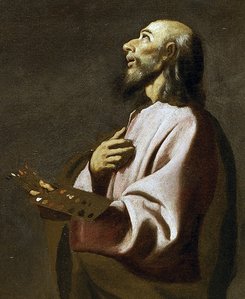
Francisco de Zurbarán
1598 - 1664 , Spanien
Kurzinfos
- Artistic Movement Or Style: Barock
- Artists Or Movements Influenced By This Artist: Der Kreis um Zurbarán
- Artists Who Influenced This Artist:
- Alejandro de la Mina
- Alonso de Najera
- Juan Sánchez Cotán
- Date Of Birth: 1598
- Date Of Death: 1664
- Full Name: Francisco de Zurbarán
- Nationality: Spanisch
- Notable Artworks:
- Unbefleckte Empfängnis
- Agnus Dei
- Sudarium der Heiligen Veronika
- Place Of Birth: Fuente de Cantos, Spanien
Ähnliche Artikel
The Golden Age Reforged: Dramatic Realism & Religious Zeal in Spanish Baroque Art
Explore the dramatic world of Spanish Baroque art! Discover masters like Zurbarán & the powerful influence of religious zeal on painting techniques – a guide for collectors and enthusiasts.
Francisco de Zurbarán: Mystik, Realismus und das goldene Zeitalter der spanischen Malerei
Entdecken Sie das faszinierende Werk von Francisco de Zurbarán! Erfahren Sie mehr über den Meister des spanischen Barock, seine religiösen Gemälde und den Einfluss Caravaggios. Kunstgeschichte pur – jetzt lesen!

The Dramatic Flourish: Exploring the Baroque Movement's Enduring Legacy in Art History
Explore the dramatic world of Baroque art! Discover iconic artists like Caravaggio & Rubens, defining techniques, and its lasting impact on art history. Expert insights for collectors & enthusiasts at ArtsDot.
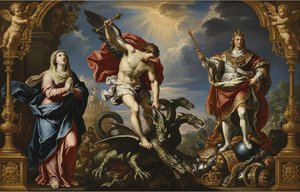
The Dramatic Flourish: Exploring Themes of Power, Faith & Emotion in Baroque Artworks
Explore the dramatic world of Baroque art! Discover masters like Zurbarán & the powerful influence of religious zeal on painting techniques. Expert insights for collectors and enthusiasts.
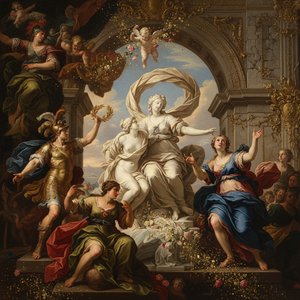
Theatricality & Triumph: Baroque Drama in Painting & Sculpture
Explore the dramatic world of Baroque art! Discover its history, defining characteristics, & lasting influence on painting & sculpture. Expert insights into Caravaggio, Zurbarán, and Bernini – plus high-quality reproductions at ArtsDot.