

 Vorschau anzeigen
 Versenden
 Teilen
 Details anzeigen

 Herunterladen
 Ähnliche Objekte
 Röntgenaufnahme
 Diashow
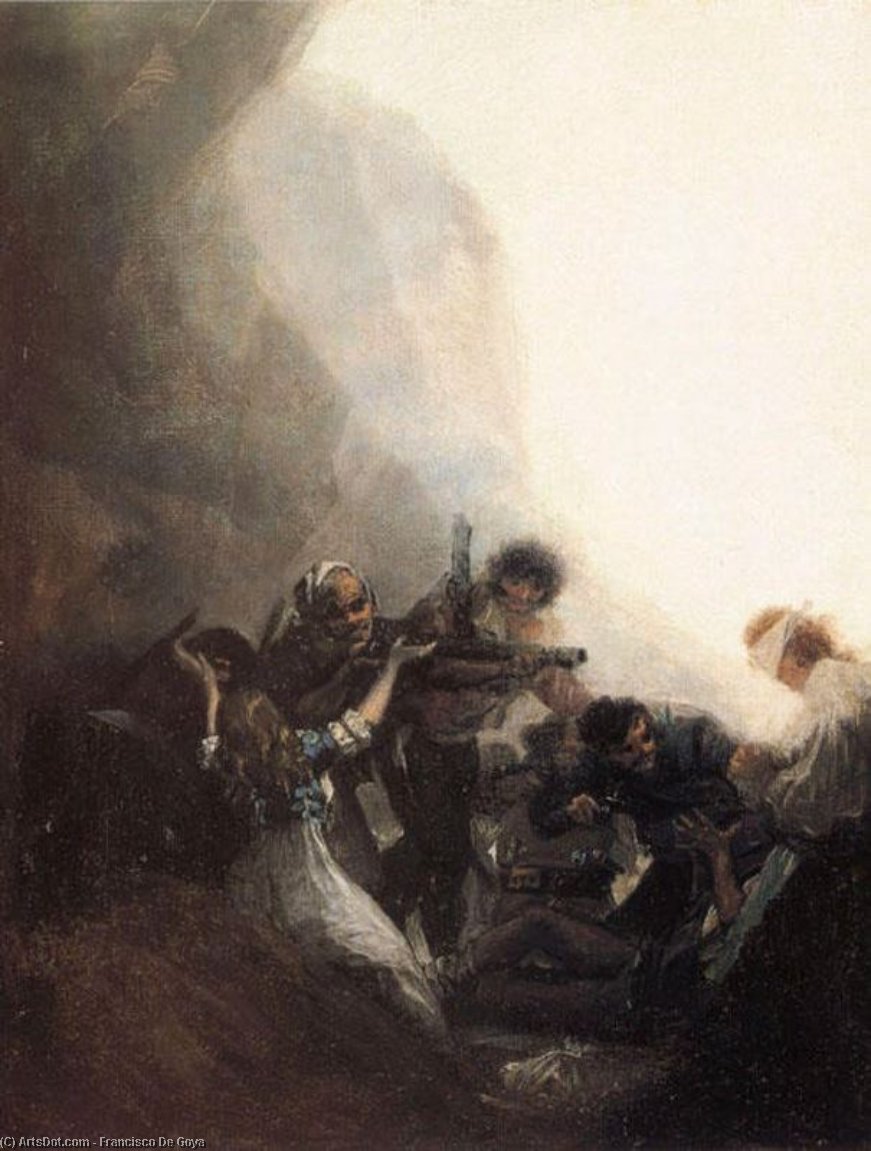
Banditen schießen auf Gefangene

 Weiterlesen
Erwerben Sie ein hochauflösendes, optimiertes digitales Bild, das der Online-Vorschau weit überlegen ist.
Jede Datei wird von unseren hauseigenen Spezialisten mit modernsten Werkzeugen und fachmännischer manueller Retusche sorgfältig vorbereitet. Wir stellen sicher, dass jedes Bild eine außergewöhnliche Klarheit, präzise Farbgenauigkeit und feinste Details aufweist.
Die endgültige Datei wird innerhalb von 72 Stunden per E-Mail zugestellt und ist für den sofortigen Einsatz in professionellen, redaktionellen und Druckumgebungen optimiert. Es handelt sich um dieselbe Qualität, der führende Designstudios, Verlage und Galerien vertrauen.
Digitales Bild
Laden Sie eine hochauflösende Datei für die persönliche Präsentation, den Druck und kreative Projekte herunter. ( Druck bestellen Handgemalte Reproduktion bestellen)
In jeder Bestellung digitaler Bilder enthalten
Professionelle digitale Bereitstellung, garantiert
Wenn Sie sich für ArtsDot.com entscheiden, erhalten Sie nicht nur ein Bild – Sie erhalten ein professionell aufbereitetes digitales Kunstwerk, das mit höchster Präzision erstellt und durch eine Zufriedenheitsgarantie abgesichert wird. Hier ist alles, was automatisch mit Ihrer Bestellung geliefert wird:

Schnelle E-Mail-Zustellung
Ihre hochauflösende digitale Bilddatei wird Ihnen innerhalb von 72 Stunden nach der Bestellung per E-Mail zugestellt – bereit zur sofortigen Verwendung.

KI-optimierte digitale Datei
Ihre Kunstwerke werden professionell mithilfe fortschrittlicher KI-Tools und manueller Bearbeitung optimiert, um maximale Detailtreue, Klarheit und Farbgenauigkeit zu gewährleisten.

Lebenslanger kostenloser Neudruckservice
Datei versehentlich gelöscht oder verloren? Keine Sorge – wir senden sie Ihnen jederzeit kostenlos erneut zu.

Keine Einfuhrgebühren – jemals
Genießen Sie Ihr Kunstwerk sofort ohne Zollgebühren, Einfuhrabgaben oder Versandkosten – digitale Downloads sind immer steuerfrei.

Garantierte Farbtreue
Wir garantieren, dass Ihr digitales Bild mithilfe professioneller Werkzeuge und Farbmanagement die Originalfarben so präzise wie möglich wiedergibt.

60-Tage-Zufriedenheitsgarantie
Sollten Sie mit Ihrem digitalen Bild nicht zufrieden sein, werden wir es überarbeiten oder Ihnen innerhalb von 60 Tagen 100% erstatten – ohne Wenn und Aber.

100% Geld-zurück-Garantie
Nicht zufrieden? Erhalten Sie innerhalb von 60 Tagen nach Erhalt Ihrer digitalen Datei eine vollständige Rückerstattung – ohne Angabe von Gründen.

Rabatte bei Großbestellungen
3 Bilder kaufen, 10% sparen – 5 Bilder kaufen, 15% sparen – Ab 10 Bildern 20% sparen. Ideal für kreative Projekte, Galerien und Agenturen.
Details zum Sammlerstück
A Moment Frozen in Darkness: Analyzing Goya’s “Bandits Shooting at Prisoners”
Francisco José de Goya y Lucientes, a titan amongst Romantic painters, bequeathed to us not merely images but profound meditations on human cruelty and the crumbling edifice of aristocratic idealism. His canvas, "Bandits Shooting at Prisoners," painted circa 1806 during his tumultuous exile from Spain following Napoleon’s invasion, transcends mere depiction; it confronts viewers with an unsettling tableau that encapsulates the anxieties of its time while simultaneously establishing Goya as a herald of modern artistic expression. This artwork isn't simply a scene of violence; it’s a meticulously crafted psychological drama rendered in oil on canvas—a testament to Goya’s unparalleled ability to distill emotion into visual form.- Subject Matter: The painting portrays a brutal confrontation between armed bandits and kneeling prisoners, capturing the grim realities of political repression prevalent in Spain under Napoleonic rule.
- Style: Belonging firmly within the Romantic movement, “Bandits Shooting at Prisoners” eschews idealized beauty for unflinching realism—a characteristic hallmark of the era’s reaction against Neoclassical formalism.
Technique and Composition: Mastery of Dramatic Lighting
Goya's masterful technique is immediately apparent upon observation. He employs chiaroscuro – dramatic contrasts between light and dark – to heighten the tension and emphasize the figures’ expressions. The harsh illumination spotlights the bandits, casting them in grotesque relief against the shadowy backdrop, while simultaneously illuminating the faces of the prisoners with palpable fear and despair. This deliberate manipulation of light serves not only aesthetic purpose but also underscores the psychological impact of the scene—creating a visceral experience for the viewer that mirrors the terror felt by those depicted. The composition itself is carefully considered: the bandits dominate the left side of the canvas, positioned as aggressors, while the prisoners are huddled on the right, vulnerable and powerless. This asymmetrical arrangement reinforces the imbalance of power inherent in the confrontation.Historical Context and Symbolism: Reflections of Political Turmoil
Painted during Goya's exile in Bordeaux, France, “Bandits Shooting at Prisoners” reflects the pervasive disillusionment felt by intellectuals and artists grappling with the collapse of traditional values. The painting serves as a scathing critique of the Spanish monarchy’s weakness and complicity in supporting Napoleon—a commentary on the moral decay plaguing European society. Furthermore, the depiction of the prisoners embodies the suffering endured by ordinary citizens under oppressive regimes—a timeless symbol of vulnerability and resistance. The bandits themselves are portrayed with unsettling detail, highlighting their barbarity and dehumanization – a deliberate provocation intended to shock viewers into confronting uncomfortable truths about human nature. Considerations for Reproduction:- Color Palette: Reproductions strive to faithfully recreate Goya’s muted palette of browns, grays, and ochres, capturing the somber mood of the original painting.
- Resolution: High-resolution reproductions ensure that subtle nuances in texture and shading are preserved—allowing collectors and interior designers alike to appreciate the artistry of Goya's technique.
Emotional Resonance: A Portrait of Human Degradation
Ultimately, “Bandits Shooting at Prisoners” transcends its historical context to deliver a profoundly disturbing emotional experience. It confronts viewers with the brutal realities of violence and oppression—forcing them to contemplate the darkest aspects of human behavior. Goya’s unflinching gaze compels us to confront our own capacity for cruelty and complicity—leaving an indelible mark on anyone who engages with this masterpiece of Romantic horror. Its enduring power lies in its ability to provoke contemplation about justice, morality, and the consequences of unchecked ambition.Ähnliche Kunstwerke
Biografie des Künstlers
Francisco José de Goya y Lucientes
Francisco José de Goya y Lucientes, a name synonymous with both the grandeur of Old Master tradition and the unsettling premonitions of modern art, remains one of history’s most compelling and enigmatic figures. Born in 1746 in Fuendetodos, Spain, his journey from aspiring provincial artist to court painter, and ultimately, to a visionary chronicler of human suffering and societal decay, is a testament to both his extraordinary talent and the turbulent times he inhabited. Goya’s early training began at age fourteen under José Luzán y Martinez, laying a foundation in traditional techniques before he moved to Madrid and refined his skills with Anton Raphael Mengs, then the dominant artistic force at the Spanish court. This initial period instilled in him a mastery of form and composition, evident in his early commissions – designs for tapestries that showcased lively scenes of everyday life, reflecting a Rococo sensibility tempered by a distinctly Spanish realism. Marriage to Josefa Bayeu, sister of another painter within the royal circle, further cemented his position within the artistic establishment. These early works, while charming and skillfully executed, offered little hint of the profound emotional depth and unsettling darkness that would come to define his later oeuvre.Early Training and Career
Goya’s ascent through the ranks of the Spanish court was steady. He became a painter to the Royal Chamber in 1786, securing a stream of portrait commissions from the aristocracy and royalty. These portraits are remarkable not merely for their technical brilliance – Goya possessed an uncanny ability to capture likeness with unflinching honesty – but also for their psychological insight. He didn’t simply paint what his sitters *looked* like; he revealed something of their character, their vulnerabilities, and even their hidden anxieties. However, beneath the veneer of courtly success, a transformation was brewing within Goya. In 1793, a severe illness left him profoundly deaf, an event that irrevocably altered his perception of the world and, consequently, his art. This affliction plunged him into a period of intense introspection and isolation, severing his connection to the social life he once enjoyed and forcing him inward, towards a darker, more subjective reality. The shift in his artistic style was dramatic. Gone were the bright colors and cheerful scenes; in their place emerged a brooding palette, loose brushwork, and compositions charged with emotional intensity. He began to explore themes of madness, violence, and the irrational, foreshadowing the anxieties that would grip Europe in the coming decades.Los Caprichos, Disasters, and Black Paintings: A Descent into Darkness
This period of artistic ferment culminated in some of Goya’s most iconic works. Los Caprichos, a series of eighty etchings published in 1799, are a scathing satire of Spanish society – its follies, superstitions, and moral corruption laid bare with unflinching wit and biting irony. The images are grotesque yet captivating, populated by witches, monsters, and caricatures of the aristocracy, all rendered with a masterful command of etching techniques. They are not heroic depictions of battle; they are unflinching portrayals of its horrors, devoid of any romanticism or glorification. Perhaps most unsettling of all were The Black Paintings, a series of fourteen murals Goya painted directly onto the walls of his house, “Quinta del Sordo” (the Deaf Man’s Villa), between 1819 and 1823. These works – including the terrifying *Saturn Devouring His Son* and the haunting *Asmodea* – are a descent into the darkest recesses of the human psyche, expressing themes of despair, madness, and existential dread with unparalleled intensity.Legacy: A Bridge Between Worlds
In 1824, disillusioned by political unrest in Spain, Goya sought exile in Bordeaux, France, where he continued to work until his death in 1828. His final years were marked by a renewed focus on printmaking, culminating in the *La Tauromaquia* series, which explored the spectacle and brutality of bullfighting. Francisco Goya’s legacy is immense and far-reaching. He stands as a pivotal figure in art history, bridging the gap between the Old Masters and the modern movement. His influence can be seen in the works of countless artists who followed – from Édouard Manet and Pablo Picasso to Francis Bacon – all drawn to his expressive brushwork, psychological depth, and willingness to confront uncomfortable truths. He challenged artistic conventions, embraced innovation, and dared to explore the darker aspects of human experience, leaving behind a body of work that continues to resonate with audiences today. Goya wasn’t merely painting pictures; he was holding up a mirror to society, forcing us to confront our own flaws and vulnerabilities, and reminding us of the enduring power – and fragility – of the human spirit.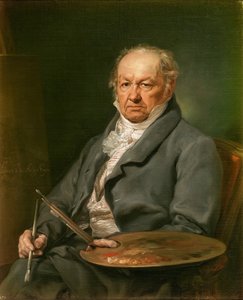
Francisco José de Goya y Lucientes
1746 - 1828 , Spanien
Kurzinfos
- Artistic Movement Or Style: Romantik
- Artists Who Influenced This Artist:
- Diego Velázquez
- Giovanni Battista Tiepolo
- Anton Raphael Mengs
- Date Of Birth: 30 März 1746
- Full Name: Francisco José de Goya y Lucientes
- Nationality: Spanisch
- Notable Artworks:
- Los Caprichos
- Die Katastrophen des Krieges
- Die Maja Desnuda
- Die schwarzen Gemälde
- Place Of Birth: Fuendetodos, Spanien

