 Versenden
 Teilen
 Details anzeigen

 Herunterladen
 Ähnliche Objekte
 Diashow
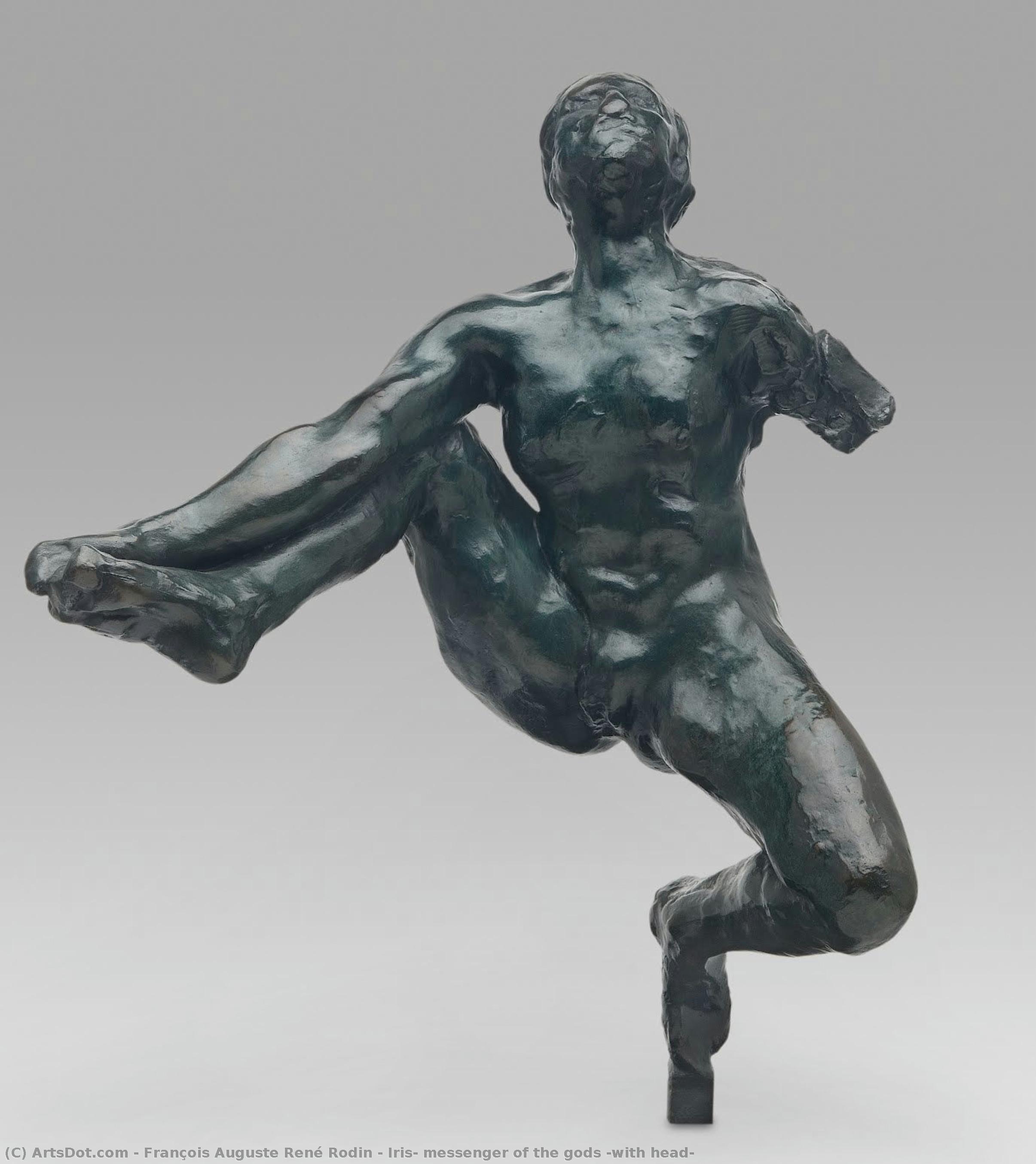
Iris, messenger of the gods (with head)


 Weiterlesen
Giclée / Kunstdruck
Giclée- oder Leinwanddruck in Museumsqualität mit schneller Produktion und flexiblen Veredelungsoptionen. ( Handgemalte Reproduktion bestellen Bild kaufen)




































Wählen Sie aus unseren vordefinierten Formaten, die den ursprünglichen Proportionen des Kunstwerks entsprechen.

Sie können Ihre eigenen Maße eingeben, um ein bestimmtes Format oder einen speziellen Platz einzupassen. Wenn das von Ihnen gewählte Format nicht den Proportionen des Originalbildes entspricht, werden wir das Kunstwerk entweder beschneiden oder das Bild mit einem gespiegelten oder einfarbigen Rand erweitern. Ein digitaler Entwurf wird Ihnen zur Genehmigung zugesandt, bevor die Produktion beginnt.
Bitte beachten Sie, dass die Vorschau auf dem Bildschirm nicht den tatsächlichen Zuschnitt oder die Erweiterung widerspiegelt. Nur der Entwurf zeigt die endgültige Komposition präzise an.
Obwohl Sondermaße verfügbar sind, empfehlen wir die Auswahl eines Maßes aus der vordefinierten Liste, um die ursprünglichen Proportionen zu bewahren.
Weltweiter Versand () innerhalb von 2 Wochen statt der üblichen 4/5 Wochen. (23 August)

Kostenloser weltweiter Expressversand

Hochwertige Leinenleinwand

Umfassender Versicherungsschutz beim Versand

Zollgebühren-Rückerstattungsgarantie

Garantie für exakte Farbtreue

60 Tage Rückgaberecht (nur bei Mängeln)

100% Geld-zurück-Garantie

Mengenrabatt verfügbar
 Die Glasoption ist nur für Größen unter 110 cm verfügbar.

Iris, messenger of the gods (with head)
Giclée / Kunstdruck
Format der Reproduktion
-


Gesamtpreis
$ 62
Sammlerstück-Beschreibung
A Glimpse of Divine Messenger: Rodin’s *Iris, Messenger of the Gods*
Auguste Rodin's *Iris, Messenger of the Gods*, a bronze sculpture born from a complex interplay of mythology, personal experience, and artistic rebellion, remains one of the most arresting and debated works in his oeuvre. More than simply a depiction of the Greek goddess who carried messages between the gods and mortals, it’s an embodiment of dynamism, sensual power, and a profound exploration of the human condition. Created during a pivotal period in Rodin's career – 1891-1894 – this sculpture transcends its initial commission as a monument to Victor Hugo, evolving into a potent symbol of modernity and artistic freedom.
The genesis of *Iris* is inextricably linked to Rodin’s tumultuous relationship with his sister, Marie, whose untimely death profoundly impacted the artist. This personal grief fueled a desire to capture movement and vitality, rejecting the rigid formality of academic sculpture in favor of a more expressive and emotionally charged approach. The initial concept for the Hugo monument demanded a figure conveying both divine authority and human vulnerability; Rodin, however, found himself drawn to a radically different interpretation – a dynamic, almost aggressively sensual representation of Iris herself. This shift reflects a broader artistic trend at the time, challenging traditional notions of beauty and embracing a more naturalistic portrayal of the female form.
The Sculptor’s Technique: A Masterclass in Texture
Rodin's mastery of bronze casting is immediately apparent in *Iris*. He didn’t simply sculpt; he coaxed the metal into existence, meticulously building up layers of wax to create a surface of astonishing complexity. The sculpture’s skin isn’t smooth or polished; instead, it’s a landscape of deeply etched wrinkles, bulging muscles, and subtly shifting planes – a testament to Rodin's relentless pursuit of capturing the essence of human movement and emotion. This technique, honed through years of working with stone and clay, is particularly evident in the depiction of Iris’s legs, which seem to ripple with contained energy, poised for flight. The use of *repoussé* – hammering metal from the front to create relief on the back – further enhances the sculpture's three-dimensionality, adding a tactile quality that invites close examination.
The choice of bronze itself is significant. Bronze’s inherent malleability allowed Rodin to achieve the desired level of detail and expressiveness, while its durability ensured the sculpture’s longevity. The casting process was painstaking, involving multiple iterations and adjustments until the final form captured the artist's vision. Notably, the work was cast by Alexis Rudier, a renowned Parisian foundryman who collaborated closely with Rodin on numerous projects.
Symbolism and Interpretation: A Fragment of Eternity
*Iris* is rich in symbolic meaning, drawing upon both classical mythology and contemporary anxieties. As the messenger of the gods, Iris traditionally carried divine decrees and facilitated communication between the mortal realm and Olympus. However, Rodin’s interpretation transcends this traditional role, transforming her into a figure of potent energy and primal force. The sculpture's open pose – with legs spread wide and genitalia exposed – is deliberately provocative, challenging conventional notions of modesty and inviting viewers to confront their own desires and anxieties. Some scholars interpret the work as an allegory for the spirit of the 19th century, embodying both its dynamism and its underlying tensions.
The deliberate removal of Iris’s head and one arm – a later alteration made in 1894 – adds another layer of complexity to the sculpture's meaning. These omissions create a sense of fragmentation and vulnerability, suggesting that even the divine messenger is subject to earthly limitations. The remaining torso becomes a powerful symbol of embodied experience, stripped bare of adornment and presented with raw honesty.
A Legacy of Boldness: Rodin’s Enduring Influence
*Iris, Messenger of the Gods* stands as a testament to Rodin's revolutionary approach to sculpture. It broke from the conventions of academic art, embracing naturalism, emotional intensity, and a willingness to confront uncomfortable truths. The sculpture’s enduring appeal lies in its ability to evoke a wide range of emotions – sensuality, vulnerability, power, and mystery. It continues to fascinate and provoke viewers today, cementing Rodin's place as one of the most important figures in modern art.
Reproductions of *Iris* offer a remarkable opportunity to experience this iconic work firsthand, capturing its dynamic energy and profound symbolism. Whether displayed in a private collection or a public space, this sculpture serves as a powerful reminder of Rodin’s artistic vision and his enduring legacy.
Ähnliche Kunstwerke
Über den Künstler
Frühe Jahre und Ausbildung
François Auguste René Rodin, ein französischer Bildhauer, wurde am 12. November 1840 in Paris, Frankreich, geboren. Er gilt weithin als der Begründer der modernen Skulptur. Trotz seiner traditionellen Schulbildung war Rodins Ansatz zur Kunst innovativ und unkonformistisch. Seine frühen Jahre waren von einem starken Wunsch geprägt, etwas zu erschaffen, was ihn dazu veranlasste, die Petite École zu besuchen, eine Schule, die sich auf Kunst und Mathematik spezialisiert hatte.Künstlerische Karriere
Rodins künstlerische Karriere ist durch seine einzigartige Fähigkeit gekennzeichnet, komplexe, turbulente Oberflächen in Ton zu modellieren. Viele seiner bemerkenswertesten Skulpturen wurden zu Lebzeiten kritisiert, da sie von traditionellen figurativen Bildhauertraditionen abwichen. Rodins Beharrlichkeit und Hingabe an sein Handwerk führten jedoch letztendlich zu seiner Anerkennung als der bedeutendste französische Bildhauer seiner Zeit.- Der Denker (1880-1882), eine seiner berühmtesten Skulpturen, ist ein Paradebeispiel für seinen innovativen Ansatz zur Kunst.
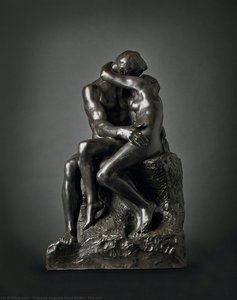
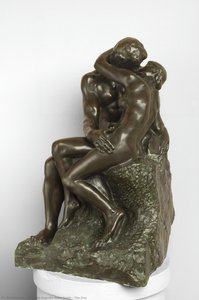
- Der Kuss (1886-1898), eine weitere ikonische Skulptur, zeigt Rodins Fähigkeit, das Wesen menschlicher Emotionen einzufangen.
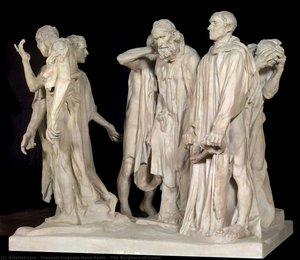
- Die Bürger von Calais (1884-1895), eine kraftvolle und bewegende Skulptur, erinnert an das Leid und die Opferbereitschaft der sechs Bürger von Calais während des Hundertjährigen Krieges.
Museen und Sammlungen
Heute sind Rodins Werke in verschiedenen Museen auf der ganzen Welt zu finden, darunter:- Musée Rodin, Paris – widmet sich der Präsentation von Rodins Skulpturen, Zeichnungen und anderen Werken.
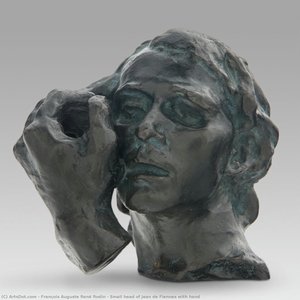
- ArtsDot.com – bietet eine umfangreiche Sammlung von Rodins Gemälden und Skulpturen, einschließlich Kleiner Kopf des Jean de Fiennes mit Hand.
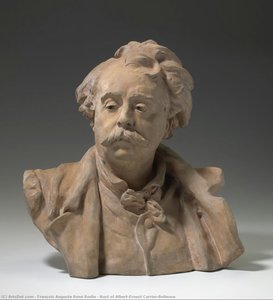
- Cantor Arts Center an der Stanford University, Kalifornien – beherbergt mehrere Werke von Rodin, darunter denBusten von Albert-Ernest Carrier-Belleuse.
Einfluss und Vermächtnis
Rodins Einfluss auf die moderne Skulptur ist unbestreitbar. Sein unkonventioneller Ansatz zur Kunst hat Generationen von Künstlern inspiriert und seinen Platz in der Kunstgeschichte gefestigt. Als eine herausragende Figur bei der Entwicklung der modernen Skulptur wird Rodins Vermächtnis weiterhin durch seine Werke gefeiert, die in Museen und Sammlungen auf der ganzen Welt zu finden sind. Empfohlene Lektüre: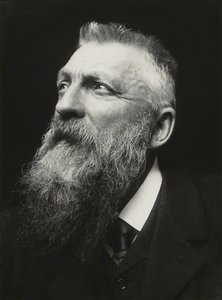
François Auguste René Rodin
1840 - 1917 , Frankreich
Kurzinfos
- Beeinflusste Künstler:
- Camille Claudel
- Moderne Bildhauer
- Bemerkenswerte Werke:
- Der Denker
- Der Kuss
- Die Bürger von Calais
- Einflüsse:
- Michelangelo
- Donatello
- Geburtsdatum: 12. November 1840
- Geburtsort: Paris, Frankreich
- Künstlerische Richtung: Impressionismus, Moderne Skulptur
- Nationalität: Französisch
- Sterbedatum: 7. November 1917
- Vollständiger Name: François Auguste René Rodin
Ähnliche Artikel

Die 10 legendärsten Bronzestatuen: Meisterwerke, die Kunstgeschichte schrieben | ArtsDot
Entdecken Sie die 10 legendärsten Bronzestatuen der Kunstgeschichte! Von Rodin bis Michelangelo – erfahren Sie die Geschichten hinter ikonischen Skulpturen und finden Sie hochwertige Reproduktionen für Ihr Zuhause. Jetzt bei ArtsDot entdecken!

Bronze-Meisterwerke: Die 10 Skulpturen, die Kunstgeschichte schrieben | ArtsDot
Entdecken Sie die 10 legendärsten Bronze Skulpturen der Kunstgeschichte! Von Michelangelo bis Rodin – erfahren Sie die Geschichten hinter den Meisterwerken und lassen Sie sich von Wanddeko-Ideen inspirieren. Hochwertige Kunstdrucke auf ArtsDot.com.

The Enduring Legacy of Bronze: A Historical & Artistic Exploration for the Collector
Explore the rich history & enduring appeal of bronze sculpture with expert insights for collectors at ArtsDot. Learn about casting techniques, iconic artists, collecting tips & contemporary interpretations.
The Enduring Legacy of Bronze: History, Technique & Artistic Expression for the Collector
Explore the rich history & enduring appeal of bronze sculpture with expert insights for collectors at ArtsDot. Learn about casting techniques, iconic artists, and collecting tips.

The Enduring Legacy of Bronze Sculpture: A Collector's Guide to Form & Cultural Significance
Explore the rich history & enduring appeal of bronze sculpture with expert insights for collectors at ArtsDot. Learn about casting techniques, iconic artists, and collecting tips to build a discerning art collection.