 Versenden
 Teilen
 Details anzeigen

 Herunterladen
 Ähnliche Objekte
 Diashow
The Age of Bronze (L
 Bronze
- Sculpture
- Neoclassicism
 181.0 x 54.0 cm
 Legion der Ehren
 Weiterlesen
Handgefertigte Ölreproduktion
Handgemaltes Ölgemälde auf Leinwand in Ihrer Wunschgröße und mit Rahmen, auf Bestellung von unseren Künstlern angefertigt. ( Druck bestellen Bild kaufen)




































Wählen Sie aus unseren vordefinierten Formaten, die den ursprünglichen Proportionen des Kunstwerks entsprechen.

Sie können Ihre eigenen Maße eingeben, um einen bestimmten Rahmen oder Platz auszufüllen. Wenn die gewählte Größe nicht den Proportionen des Originalbildes entspricht, werden wir das Kunstwerk entweder beschneiden oder das Gemälde durch zusätzliche, handgemalte Elemente erweitern. Ein digitales Mockup wird Ihnen zur Genehmigung zugesandt, bevor die Produktion beginnt.
Bitte beachten Sie, dass die Bildschirmvorschau nicht die tatsächliche Beschneidung oder Erweiterung widerspiegelt. Nur das Mockup zeigt die endgültige Komposition exakt an.
Obwohl Sondermaße verfügbar sind, empfehlen wir, eine Größe aus der vordefinierten Liste zu wählen, um die ursprünglichen Proportionen beizubehalten.
Nach der Bestellung wird das ArtsDot.com-Team dem Kunden Anweisungen per E-Mail zusenden und eine Mockup-Vorschau bereitstellen.
Weltweiter Versand () in nur 3 bis 4 Wochen statt der üblichen 5 Wochen. (21 August). Keine Kompromisse bei der Qualität.

Kostenloser weltweiter Expressversand

Hochwertige Leinenleinwand

Umfassender Versicherungsschutz beim Versand

Zollgebühren-Rückerstattungsgarantie

Garantie für exakte Farbtreue

60 Tage Rückgaberecht (nur bei Mängeln)

100% Geld-zurück-Garantie

Mengenrabatt verfügbar
 Die Glasoption ist nur für Größen unter 110 cm verfügbar.

The Age of Bronze (L
Art der Reproduktion
Format der Reproduktion
-


Gesamtpreis
$ 263
Beschreibung des Kunstwerks
The Weight of Bronze: Rodin’s “The Age of Bronze”
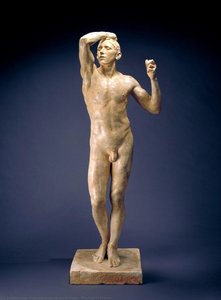
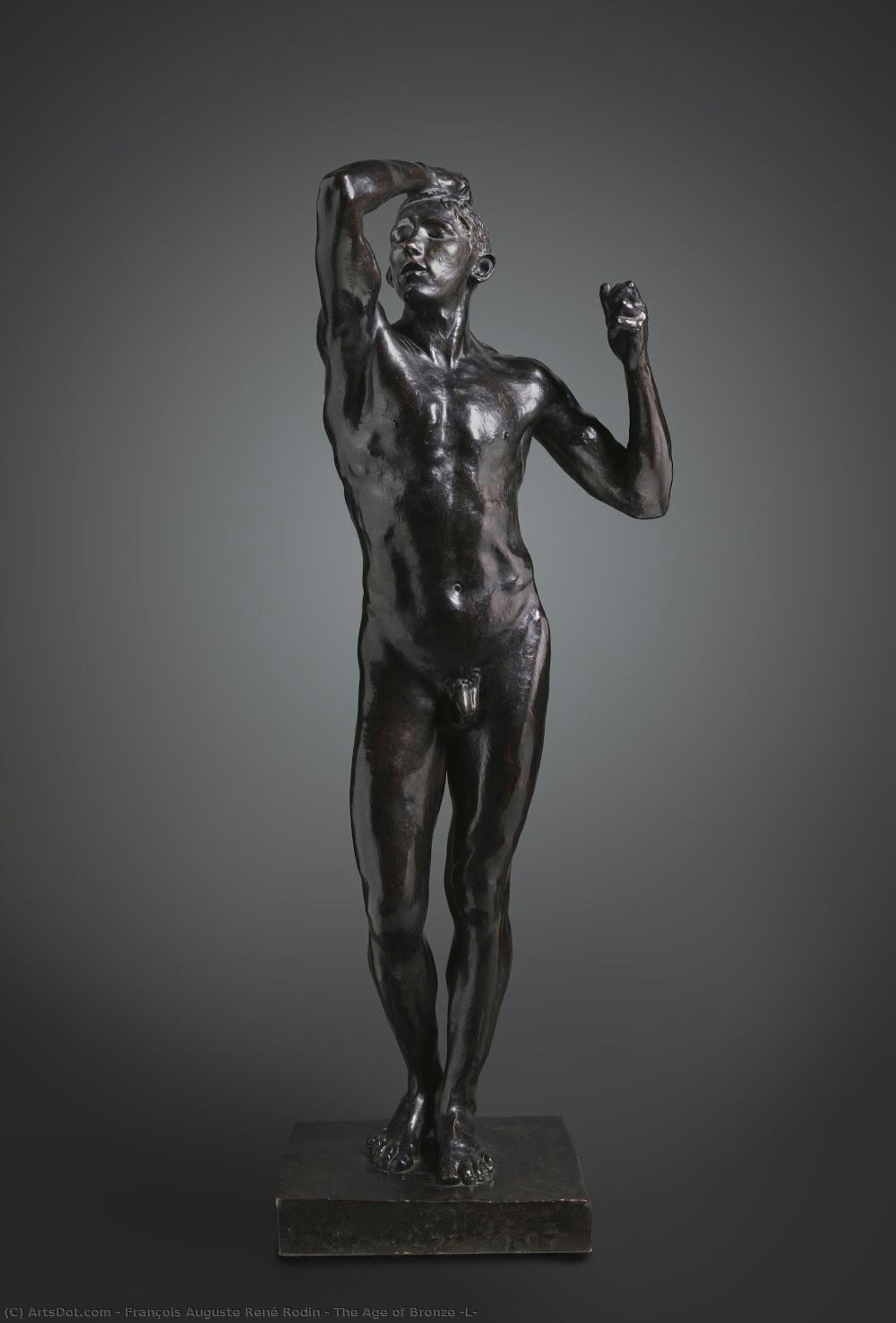
François Auguste René Rodin's "The Age of Bronze" isn’t merely a sculpture; it’s a visceral embodiment of awakening, a silent drama etched in the cool, enduring surface of bronze. Completed in 1876 and initially presented as “The Conquered Man,” this monumental work immediately captivated – and scandalized – its audience with its startlingly realistic depiction of a nude male figure caught in a moment of profound transition. More than just an anatomical study, it’s a meditation on the human condition, grappling with themes of vulnerability, nascent strength, and the unsettling beauty of transformation.
The genesis of this powerful piece lies within Rodin's early apprenticeship as a stonemason, a period where he honed his technical skills while simultaneously developing an intensely personal approach to form. This experience instilled in him a profound understanding of material – its texture, weight, and capacity for capturing the nuances of human emotion. The choice of bronze itself is crucial; it lends the sculpture an inherent gravitas, mirroring the subject’s weighty presence and suggesting an enduring quality that transcends time.
A Study in Naturalism and Ambiguity
What immediately draws the eye is Rodin's masterful rendering of musculature. The figure isn’t idealized; it possesses a raw, almost brutal honesty. Every vein, every ripple of muscle, is meticulously sculpted, conveying both vulnerability and latent power. Yet, the sculpture deliberately resists easy interpretation. Initially presented as “The Conquered Man,” Rodin later shifted the title to "The Age of Bronze," recognizing that the figure’s ambiguous posture – a partially raised arm, a gaze directed inward – invited multiple readings. Is he rising from defeat? Emerging into a new era? Or perhaps simply contemplating his own mortality?
This deliberate ambiguity was revolutionary for its time. Contemporary critics, shocked by the sculpture's realism and perceived lack of traditional heroic symbolism, accused Rodin of using a life cast – a practice considered deeply unethical at the time. Rodin vehemently defended his process, insisting on the rigorous study of anatomy and profile observation as the foundation of his work. The scandal, however, served to elevate Rodin’s reputation, establishing him as a bold innovator willing to challenge artistic conventions.
Technique and Material – A Masterclass in Bronze Casting
The creation of “The Age of Bronze” exemplifies Rodin's mastery of the lost-wax casting technique. This intricate process involved creating a wax model, encasing it in plaster, melting out the wax to create a mold, and then pouring molten bronze into the cavity. The resulting surface is remarkably smooth and polished, reflecting light with an almost luminous quality. The subtle variations in tone – darker areas suggesting shadow and depth, lighter areas highlighting contours – are achieved through careful manipulation of the patina, a protective layer applied after casting. Rodin’s signature reddish-brown patina, often referred to as “crushed grape,” adds warmth and richness to the bronze, further enhancing its dramatic effect.
The sculpture's substantial size—measuring 180.5 cm in height—contributes significantly to its impact. It commands attention, inviting viewers to step closer and contemplate its complexities. The scale emphasizes the figure’s physicality and reinforces the sense of a monumental event unfolding within a single, frozen moment.
Symbolism and Emotional Resonance
Beyond its technical brilliance, “The Age of Bronze” resonates deeply with universal themes of transformation, resilience, and the search for meaning. The figure's posture suggests a struggle – a battle fought and perhaps won – but also an acceptance of whatever lies ahead. There’s a palpable sense of vulnerability, yet simultaneously, a quiet dignity. It speaks to the inherent contradictions within the human experience: our capacity for both destruction and creation, despair and hope.
Rodin's work continues to captivate audiences today because it taps into these fundamental emotions with remarkable power. “The Age of Bronze” is not simply a sculpture; it’s an invitation to contemplate our own journeys of transformation and the enduring beauty found within the face of adversity – a timeless testament to the artist’s profound understanding of the human spirit.
Ähnliche Kunstwerke
Über den Künstler
Frühe Jahre und Ausbildung
François Auguste René Rodin, ein französischer Bildhauer, wurde am 12. November 1840 in Paris, Frankreich, geboren. Er gilt weithin als der Begründer der modernen Skulptur. Trotz seiner traditionellen Schulbildung war Rodins Ansatz zur Kunst innovativ und unkonformistisch. Seine frühen Jahre waren von einem starken Wunsch geprägt, etwas zu erschaffen, was ihn dazu veranlasste, die Petite École zu besuchen, eine Schule, die sich auf Kunst und Mathematik spezialisiert hatte.Künstlerische Karriere
Rodins künstlerische Karriere ist durch seine einzigartige Fähigkeit gekennzeichnet, komplexe, turbulente Oberflächen in Ton zu modellieren. Viele seiner bemerkenswertesten Skulpturen wurden zu Lebzeiten kritisiert, da sie von traditionellen figurativen Bildhauertraditionen abwichen. Rodins Beharrlichkeit und Hingabe an sein Handwerk führten jedoch letztendlich zu seiner Anerkennung als der bedeutendste französische Bildhauer seiner Zeit.- Der Denker (1880-1882), eine seiner berühmtesten Skulpturen, ist ein Paradebeispiel für seinen innovativen Ansatz zur Kunst.
- Der Kuss (1886-1898), eine weitere ikonische Skulptur, zeigt Rodins Fähigkeit, das Wesen menschlicher Emotionen einzufangen.
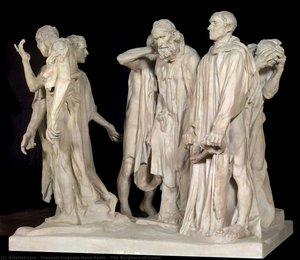
- Die Bürger von Calais (1884-1895), eine kraftvolle und bewegende Skulptur, erinnert an das Leid und die Opferbereitschaft der sechs Bürger von Calais während des Hundertjährigen Krieges.
Museen und Sammlungen
Heute sind Rodins Werke in verschiedenen Museen auf der ganzen Welt zu finden, darunter:- Musée Rodin, Paris – widmet sich der Präsentation von Rodins Skulpturen, Zeichnungen und anderen Werken.
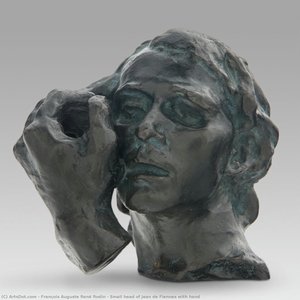
- ArtsDot.com – bietet eine umfangreiche Sammlung von Rodins Gemälden und Skulpturen, einschließlich Kleiner Kopf des Jean de Fiennes mit Hand.
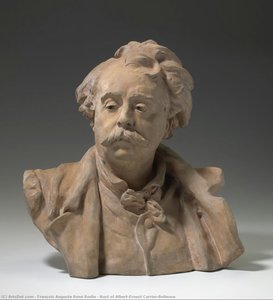
- Cantor Arts Center an der Stanford University, Kalifornien – beherbergt mehrere Werke von Rodin, darunter denBusten von Albert-Ernest Carrier-Belleuse.
Einfluss und Vermächtnis
Rodins Einfluss auf die moderne Skulptur ist unbestreitbar. Sein unkonventioneller Ansatz zur Kunst hat Generationen von Künstlern inspiriert und seinen Platz in der Kunstgeschichte gefestigt. Als eine herausragende Figur bei der Entwicklung der modernen Skulptur wird Rodins Vermächtnis weiterhin durch seine Werke gefeiert, die in Museen und Sammlungen auf der ganzen Welt zu finden sind. Empfohlene Lektüre: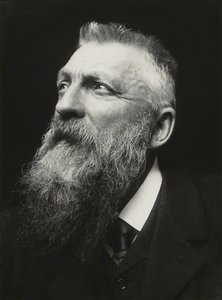
François Auguste René Rodin
1840 - 1917 , Frankreich
Kurzinfos
- Beeinflusste Künstler:
- Camille Claudel
- Moderne Bildhauer
- Bemerkenswerte Werke:
- Der Denker
- Der Kuss
- Die Bürger von Calais
- Einflüsse:
- Michelangelo
- Donatello
- Geburtsdatum: 12. November 1840
- Geburtsort: Paris, Frankreich
- Künstlerische Richtung: Impressionismus, Moderne Skulptur
- Nationalität: Französisch
- Sterbedatum: 7. November 1917
- Vollständiger Name: François Auguste René Rodin
Ähnliche Artikel

Die 10 legendärsten Bronzestatuen: Meisterwerke, die Kunstgeschichte schrieben | ArtsDot
Entdecken Sie die 10 legendärsten Bronzestatuen der Kunstgeschichte! Von Rodin bis Michelangelo – erfahren Sie die Geschichten hinter ikonischen Skulpturen und finden Sie hochwertige Reproduktionen für Ihr Zuhause. Jetzt bei ArtsDot entdecken!

Bronze-Meisterwerke: Die 10 Skulpturen, die Kunstgeschichte schrieben | ArtsDot
Entdecken Sie die 10 legendärsten Bronze Skulpturen der Kunstgeschichte! Von Michelangelo bis Rodin – erfahren Sie die Geschichten hinter den Meisterwerken und lassen Sie sich von Wanddeko-Ideen inspirieren. Hochwertige Kunstdrucke auf ArtsDot.com.

The Enduring Legacy of Bronze: A Historical & Artistic Exploration for the Collector
Explore the rich history & enduring appeal of bronze sculpture with expert insights for collectors at ArtsDot. Learn about casting techniques, iconic artists, collecting tips & contemporary interpretations.
The Enduring Legacy of Bronze: History, Technique & Artistic Expression for the Collector
Explore the rich history & enduring appeal of bronze sculpture with expert insights for collectors at ArtsDot. Learn about casting techniques, iconic artists, and collecting tips.
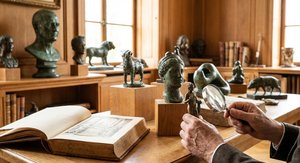
The Enduring Legacy of Bronze Sculpture: A Collector's Guide to Form & Cultural Significance
Explore the rich history & enduring appeal of bronze sculpture with expert insights for collectors at ArtsDot. Learn about casting techniques, iconic artists, and collecting tips to build a discerning art collection.