 Vorschau anzeigen
 Versenden
 Teilen
 Details anzeigen

 Herunterladen
 Ähnliche Objekte
 Röntgenaufnahme
 Diashow
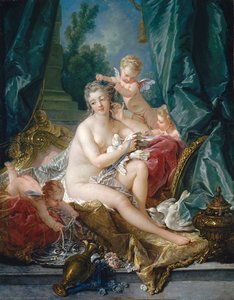
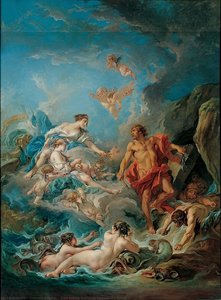
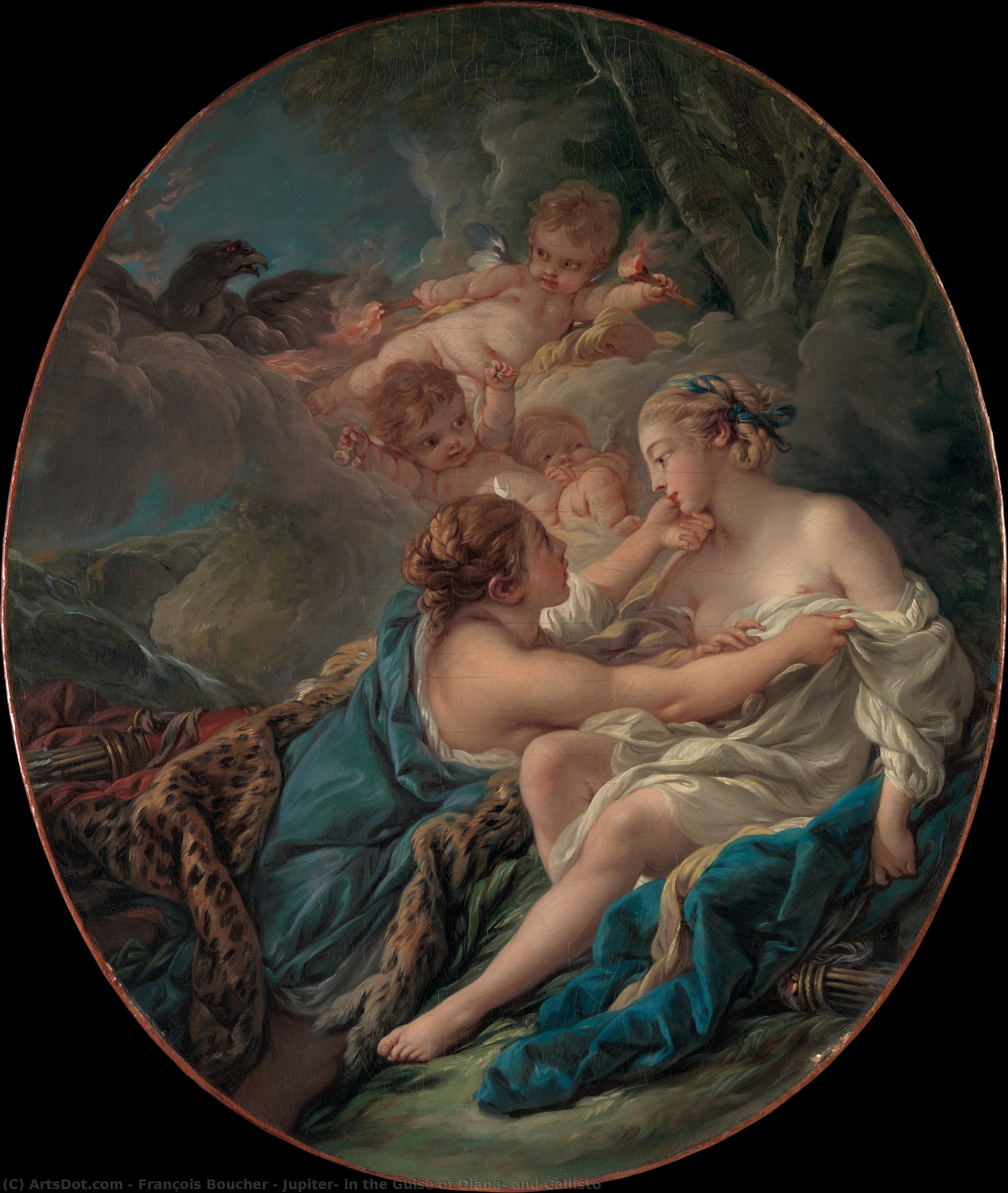
Jupiter, in the Guise of Diana, and Callisto
 Rococo
 1763
1763 65.0 x 55.0 cm
 Metropolitan Museum of Art
 Weiterlesen
Handgefertigte Ölreproduktion
Handgemaltes Ölgemälde auf Leinwand in Ihrer Wunschgröße und mit Rahmen, auf Bestellung von unseren Künstlern angefertigt. ( Druck bestellen Bild kaufen)




P118B $10

P118H $10

P118W $10

P438Z $10

P508JH $12

P508YH $12

P805H $10

P805Z $10

P919BZ $10

P919G $10

P919XJ $10

P959ZH $10

P968JZ $12

W106C $8

W218G $10

W218JH $8

W218Y $10

W307PJ $10

W316G $10

W316PJ $8

W316Y $10

W398PJ $8

W4111J $10

W500HY $15

W500JH $15

W692G $12

W849H $8

W940BG $15

W953PJ $8




Wählen Sie aus unseren vordefinierten Formaten, die den ursprünglichen Proportionen des Kunstwerks entsprechen.

Sie können Ihre eigenen Maße eingeben, um einen bestimmten Rahmen oder Platz auszufüllen. Wenn die gewählte Größe nicht den Proportionen des Originalbildes entspricht, werden wir das Kunstwerk entweder beschneiden oder das Gemälde durch zusätzliche, handgemalte Elemente erweitern. Ein digitales Mockup wird Ihnen zur Genehmigung zugesandt, bevor die Produktion beginnt.
Bitte beachten Sie, dass die Bildschirmvorschau nicht die tatsächliche Beschneidung oder Erweiterung widerspiegelt. Nur das Mockup zeigt die endgültige Komposition exakt an.
Obwohl Sondermaße verfügbar sind, empfehlen wir, eine Größe aus der vordefinierten Liste zu wählen, um die ursprünglichen Proportionen beizubehalten.
Nach der Bestellung wird das ArtsDot.com-Team dem Kunden Anweisungen per E-Mail zusenden und eine Mockup-Vorschau bereitstellen.
Weltweiter Versand () in nur 3 bis 4 Wochen statt der üblichen 5 Wochen. (28 August). Keine Kompromisse bei der Qualität.

Kostenloser weltweiter Expressversand

Hochwertige Leinenleinwand

Umfassender Versicherungsschutz beim Versand

Zollgebühren-Rückerstattungsgarantie

Garantie für exakte Farbtreue

60 Tage Rückgaberecht (nur bei Mängeln)

100% Geld-zurück-Garantie

Mengenrabatt verfügbar
 Die Glasoption ist nur für Größen unter 110 cm verfügbar.

Jupiter, in the Guise of Diana, and Callisto
Art der Reproduktion
Format der Reproduktion
-


Gesamtpreis
$ 263
A Vision of Divine Desire: François Boucher’s “Jupiter, in the Guise of Diana, and Callisto”
François Boucher's "Jupiter, in the Guise of Diana, and Callisto," painted in 1763, is more than just a beautiful depiction; it’s a shimmering embodiment of the Rococo era’s fascination with mythology, sensuality, and the delicate dance between illusion and reality. Created during a period of opulent excess and refined taste within the French court, this oval painting transcends mere illustration, becoming a carefully constructed tableau designed to evoke both pleasure and contemplation. The scene unfolds on a verdant hillside, bathed in a soft, diffused light that seems to emanate from an unseen source – a hallmark of Boucher’s signature style, prioritizing atmosphere and mood over stark realism.
At the heart of the composition lies Jupiter, transformed into Diana, the goddess of the hunt. His eagle form subtly suggests his divine nature, while his gesture—a graceful sweep of his hand towards Callisto—hints at a carefully orchestrated seduction. Callisto, depicted as a young maiden, is caught in a moment of startled beauty, her expression a mixture of surprise and vulnerability. The inclusion of the nymph Angélique, positioned slightly to the left, adds another layer of intrigue, suggesting a secondary narrative within the larger mythological framework. The figures are not presented as engaged in a dramatic struggle, but rather as participants in a delicately staged encounter, emphasizing the painting’s inherent theatricality.
The Language of Rococo: Technique and Composition
Boucher's mastery lies not only in his subject matter but also in his technical execution. The painting is executed with exquisite detail, employing a technique known as *sfumato* – a subtle blurring of lines and edges that creates an ethereal quality. The drapery, particularly the voluminous folds of Diana’s gown and Callisto's flowing garments, appears to ripple and move with an almost palpable grace. This masterful use of texture is further enhanced by Boucher’s skillful handling of color; he employs a palette dominated by soft pinks, blues, and greens, creating a harmonious and visually soothing effect. The composition itself is carefully balanced, utilizing the oval format to create a sense of depth and movement. The figures are strategically placed within the landscape, drawing the viewer's eye through the scene with an effortless flow.
Notably, Boucher deliberately destabilizes spatial perspective. Bodies bisecting the oval format, clouds swirling in the background, and the elaborate rush of draperies contribute to a sense of visual ambiguity—a characteristic feature of Rococo art that challenges traditional notions of realism. This instability is not merely decorative; it reflects the era’s fascination with illusion and the blurring of boundaries between reality and fantasy.
Mythological Echoes: Ovid and the *Metamorphoses*
“Jupiter, in the Guise of Diana, and Callisto” draws heavily from Ovid's *Metamorphoses*, a collection of mythological tales that served as a primary source of inspiration for artists during the 18th century. The story depicted here is one of transformation and desire—Jupiter’s disguise as Diana to seduce Callisto, ultimately leading to her becoming a bear. This narrative explores themes of power, deception, and the capricious nature of the gods. Boucher skillfully translates this complex myth into a visually arresting scene, prioritizing the emotional impact over strict adherence to Ovid's original text. The painting’s beauty lies in its ability to evoke the spirit of the *Metamorphoses* while simultaneously existing as a self-contained work of art.
A Legacy of Sensuality and Grace
“Jupiter, in the Guise of Diana, and Callisto” remains a quintessential example of Boucher’s artistic genius. It exemplifies the Rococo style's emphasis on beauty, elegance, and sensual pleasure—qualities that resonated deeply with the French court and continue to captivate viewers today. Reproductions of this painting offer a glimpse into a world of refined taste and mythological intrigue, inviting us to contemplate the timeless themes of love, desire, and transformation. Its delicate balance of form and color, combined with its evocative narrative, solidifies Boucher’s place as one of the most celebrated artists of his era.
Ähnliche Kunstwerke
Über den Künstler
François Boucher: Ein Leben im Rokoko
François Boucher (1703–1770) war eine zentrale Figur der französischen Kunst des 18. Jahrhunderts und gilt als einer der bekanntesten Maler der Epoche des Rokoko. Seine Werke verkörpern die Eleganz, Sinnlichkeit und verspielte Stimmung, die diesen einflussreichen Stil definierten.
Frühes Leben und Ausbildung
François Boucher wurde am 29. September 1703 in Paris, Frankreich, geboren. Seine künstlerische Reise begann unter der Anleitung seines Vaters, Jean Boucher, selbst Maler. Im Alter von siebzehn Jahren erregte er die Aufmerksamkeit von François Lemoyne, was zu einer kurzen, aber wirkungsvollen Lehrlingszeit führte. Er verbesserte seine Fähigkeiten weiter mit dem Radierer Jean-François Cars, bevor er einen bedeutenden Meilenstein erreichte: den Gewinn des prestigeträchtigen Grand Prix de Rome im Jahr 1720.
Aufstieg und künstlerische Entwicklung
Bouchers Zeit in Italien nach seinem Gewinn beim Grand Prix erwies sich als prägend. Nach seiner Rückkehr nach Frankreich wurde er 1731 in die
- Académie Royale de Peinture et de Sculpture
Hauptwerke und Themen
Bouchers Œuvre ist bemerkenswert vielfältig und umfasst Mythologie, Porträts, Genreszenen und dekorative Künste. Zu seinen bekanntesten Werken gehören:
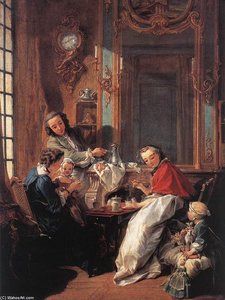
- „Das Frühstück“ (1739): Eine charmante Darstellung des häuslichen Lebens mit seiner Frau und seinen Kindern.
- „Der Triumph der Venus“ (1740–1751): Eine Reihe von Gemälden, die Bouchers Meisterschaft in mythologischen Erzählungen zeigen.
- Zahlreiche Porträts von Madame de Pompadour, der einflussreichen Geliebten des Königs Ludwig XV., festigten seine Position am Hof.
- Landschaftsbilder wie „Der Sonnenuntergang“, die eine lyrische und idyllische Vision der Natur demonstrieren.
Wiederkehrende Themen in Bouchers Werk sind Liebe, Schönheit, Freizeit und die idealisierte Welt der Mythologie. Seine Gemälde erwecken oft ein Gefühl von verspielter Erotik und raffinierter Eleganz.
Einfluss und Vermächtnis
Bouchers Einfluss reichte weit über die Malerei hinaus. Er entwarf Kostüme und Bühnenbilder für das Theater, schuf Wandteppiche für die Werkstätten von Beauvais und arbeitete mit der Gobelins Manufaktur zusammen. Seine Ernennung zum *Premier Peintre du Roi* im Jahr 1765 festigte seinen Status als führender Künstler des französischen Rokoko.
Obwohl spätere Kritiker die vermeintliche Oberflächlichkeit der Rokokokunst in Frage stellten, ist Bouchers Einfluss auf nachfolgende Generationen unbestreitbar. Er beeinflusste Künstler wie Jean-Honoré Fragonard und trug durch seine Schüler wesentlich zur Entwicklung des Neoklassizismus bei.
Historische Bedeutung
Bouchers Werk bietet einen wertvollen Einblick in den Geschmack und die Werte der französischen Gesellschaft des 18. Jahrhunderts. Seine Gemälde spiegeln die aristokratische Kultur der Epoche wider, die durch Luxus, Raffinesse und das Streben nach Vergnügen gekennzeichnet war. Er bleibt eine bedeutende Figur in der Kunstgeschichte, gefeiert für seine technische Fertigkeit, künstlerische Innovation und seinen bleibenden Beitrag zum Rokoko-Stil.
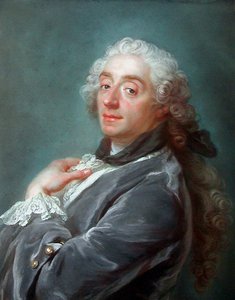
François Boucher
1703 - 1770 , Frankreich
Kurzinfos
- Beeinflusste Kunstrichtungen:
- Neoklassizismus
- Jean-Honoré Fragonard
- Beeinflusste Künstler:
- François Lemoyne
- Jean-François Cars
- Bemerkenswerte Werke:
- Rinaldo und Armida
- Das Frühstück
- Der Triumph der Venus
- Die Sonnenuntergang
- Geburtsdatum: 29. September 1703
- Geburtsort: Paris, Frankreich
- Künstlerischer Stil: Rokoko
- Nationalität: Französisch
- Sterbedatum: 30. Mai 1770
- Vollständiger Name: François Boucher
- Von Künstlern Beeinflusst:
- Tizian
- Veronese
- Tintoretto
Ähnliche Artikel
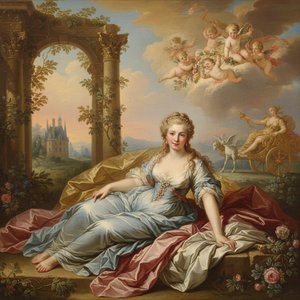
François Boucher: Rokoko-Meister von Mythos, Sinnlichkeit und dem französischen Hofleben
Entdecken Sie François Boucher, den Meister des Rokoko! Erfahren Sie mehr über sein Leben, seine sinnlichen Gemälde und seinen Einfluss auf die französische Hofkunst. Jetzt lesen!

The Rococo Aesthetic: Opulence, Rebellion & the Pursuit of Pleasure in 18th-Century Art
Explore the opulent world of Rococo art! Discover its origins, key artists like Watteau & Boucher, and lasting influence on design. Expert insights for collectors & enthusiasts.

Rococo Meisterwerke: Die Top 10, die eine Epoche prägten |
Entdecken Sie die Top 10 Rokoko Meisterwerke von Watteau, Boucher & Fragonard! Erfahren Sie die Geschichten hinter diesen ikonischen Gemälden und lassen Sie sich für Ihre Inneneinrichtung inspirieren. Hochwertige Kunstdrucke auf .
The Allure of Elegance in Art: A Historical & Aesthetic Exploration of Refinement & Grace
Explore the exquisite world of Rococo art! Discover its history, masters (Watteau, Boucher & more), and defining elegance. Expert insights for collectors seeking museum-quality reproductions & custom portraits.
The Rococo Style: Aristocratic Leisure & the Pursuit of Delight in 18th-Century Art
Explore the opulent world of Rococo art! Discover Watteau, Boucher & Nattier's masterpieces. Expert insights for collectors seeking museum-quality reproductions and custom portraits at ArtsDot.