

 Versenden
 Teilen
 Details anzeigen

 Herunterladen
 Ähnliche Objekte
 Diashow
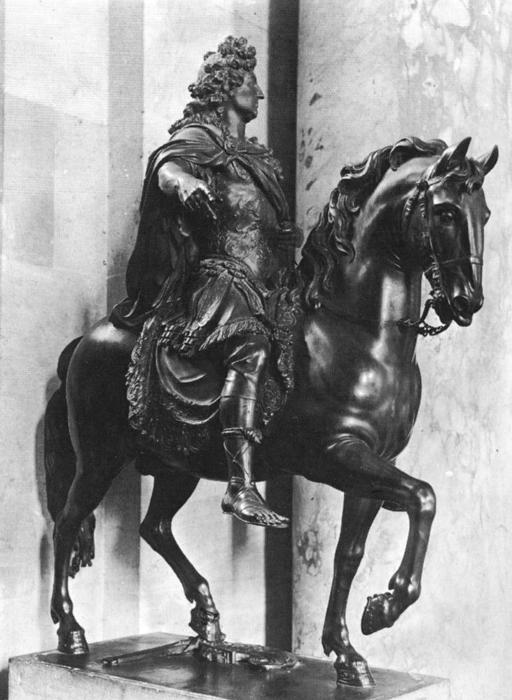
Equestrian Statue of Louis XIV


 Weiterlesen
Erwerben Sie ein hochauflösendes, optimiertes digitales Bild, das der Online-Vorschau weit überlegen ist.
Jede Datei wird von unseren hauseigenen Spezialisten mit modernsten Werkzeugen und fachmännischer manueller Retusche sorgfältig vorbereitet. Wir stellen sicher, dass jedes Bild eine außergewöhnliche Klarheit, präzise Farbgenauigkeit und feinste Details aufweist.
Die endgültige Datei wird innerhalb von 72 Stunden per E-Mail zugestellt und ist für den sofortigen Einsatz in professionellen, redaktionellen und Druckumgebungen optimiert. Es handelt sich um dieselbe Qualität, der führende Designstudios, Verlage und Galerien vertrauen.
Digitales Bild
Laden Sie eine hochauflösende Datei für die persönliche Präsentation, den Druck und kreative Projekte herunter. ( Druck bestellen Handgemalte Reproduktion bestellen)
In jeder Bestellung digitaler Bilder enthalten
Professionelle digitale Bereitstellung, garantiert
Wenn Sie sich für ArtsDot.com entscheiden, erhalten Sie nicht nur ein Bild – Sie erhalten ein professionell aufbereitetes digitales Kunstwerk, das mit höchster Präzision erstellt und durch eine Zufriedenheitsgarantie abgesichert wird. Hier ist alles, was automatisch mit Ihrer Bestellung geliefert wird:

Schnelle E-Mail-Zustellung
Ihre hochauflösende digitale Bilddatei wird Ihnen innerhalb von 72 Stunden nach der Bestellung per E-Mail zugestellt – bereit zur sofortigen Verwendung.

KI-optimierte digitale Datei
Ihre Kunstwerke werden professionell mithilfe fortschrittlicher KI-Tools und manueller Bearbeitung optimiert, um maximale Detailtreue, Klarheit und Farbgenauigkeit zu gewährleisten.

Lebenslanger kostenloser Neudruckservice
Datei versehentlich gelöscht oder verloren? Keine Sorge – wir senden sie Ihnen jederzeit kostenlos erneut zu.

Keine Einfuhrgebühren – jemals
Genießen Sie Ihr Kunstwerk sofort ohne Zollgebühren, Einfuhrabgaben oder Versandkosten – digitale Downloads sind immer steuerfrei.

Garantierte Farbtreue
Wir garantieren, dass Ihr digitales Bild mithilfe professioneller Werkzeuge und Farbmanagement die Originalfarben so präzise wie möglich wiedergibt.

60-Tage-Zufriedenheitsgarantie
Sollten Sie mit Ihrem digitalen Bild nicht zufrieden sein, werden wir es überarbeiten oder Ihnen innerhalb von 60 Tagen 100% erstatten – ohne Wenn und Aber.

100% Geld-zurück-Garantie
Nicht zufrieden? Erhalten Sie innerhalb von 60 Tagen nach Erhalt Ihrer digitalen Datei eine vollständige Rückerstattung – ohne Angabe von Gründen.

Rabatte bei Großbestellungen
3 Bilder kaufen, 10% sparen – 5 Bilder kaufen, 15% sparen – Ab 10 Bildern 20% sparen. Ideal für kreative Projekte, Galerien und Agenturen.
Details zum Sammlerstück
The Apex of Royal Power: An Encounter with Louis XIV
To stand before an equestrian monument such as this is to confront the very embodiment of absolute monarchy. This depiction of Louis XIV, astride his magnificent steed, transcends mere sculpture; it is a carefully orchestrated tableau vivant capturing the zenith of French royal ambition during the Baroque era. The sheer scale and dynamism inherent in the composition immediately command reverence. One cannot help but feel the weight of history pressing down, witnessing not just a man on a horse, but an ideology—the divine right to rule rendered in enduring stone or bronze.
Baroque Grandeur and Sculptural Mastery
The style is unmistakably Baroque, characterized by its dramatic energy, emotional intensity, and overwhelming sense of movement. The artist, François Girardon, a master whose hand shaped the very splendor of Versailles, understood how to translate raw power into polished form. Observe the musculature of the horse; it is not static but poised in an eternal moment of controlled action. This fluidity contrasts beautifully with the king’s upright, almost immutable posture. The drapery of Louis XIV's garments flows with a theatrical grace, caught by an unseen wind that seems to ripple through the centuries. Girardon utilized these sweeping lines and powerful diagonals—the sweep of the horse's neck, the curve of the king's mantle—to guide the viewer’s eye in a continuous narrative arc of authority.
Symbolism Woven into Stone
Every element here speaks volumes. Louis XIV himself was the Sun King, and this statue serves as his ultimate visual metaphor: radiant, central, and all-encompassing. The horse, historically associated with military might and nobility, anchors this symbolism in earthly power. Yet, it is the king’s bearing—the confident gaze, the regal accoutrements—that elevates the piece beyond mere portraiture into the realm of mythic leadership. It speaks to themes of dominion, unwavering will, and the glorious weight of statecraft. For the modern collector or designer, this piece offers an unparalleled conduit to understanding historical narratives of supreme authority.
A Study in Texture and Light
Even viewing a reproduction captures the technical brilliance evident in the original medium. The interplay between textures is mesmerizing: the presumed smoothness of highly polished metal against the implied roughness of the background, or the intricate detailing of the king's wig juxtaposed with the taut skin of the steed. The lighting, even as captured in monochrome photography, suggests a masterful handling of shadow and highlight. These subtle gradations—the deep blacks pooling in the recesses versus the bright grays catching the highest points—give the sculpture an almost living dimensionality. It is this technical virtuosity that makes such works timeless focal points for any grand interior space.
Ähnliche Kunstwerke
Biografie des Künstlers
François Girardon: Sculptor of Royal Grandeur
François Girardon (1628 – 1715) stands as a pivotal figure in French Baroque and Neoclassical sculpture, embodying the artistic spirit of his era and leaving an indelible mark on Versailles’s architectural splendor. Born in Troyes, France, he began his artistic journey under the tutelage of Baudesson, a joiner and woodcarver who instilled in him foundational skills—a craftsmanship that would inform his later monumental endeavors. His early exposure to the Château de Liebault, where chancellor Séguier championed his talent, foreshadowed a trajectory toward Parisian artistic circles and the mentorship of François Anguier, establishing him firmly within the influential milieu of the time.- Early Training & Influence: Baudesson’s workshop provided Girardon with invaluable experience in woodworking and carving techniques—skills he would later utilize to create breathtaking sculptures that captured the grandeur of royal patronage.
- Rome & Artistic Transformation: Encouraged by Séguier, Girardon traveled to Rome in 1652, immersing himself in the artistic fervor of the Baroque period. This formative experience profoundly impacted his stylistic sensibilities, exposing him to Mannerist influences and fostering a fascination with dramatic composition.
- Collaboration with Le Brun: Upon returning to France, Girardon entered into an uneasy alliance with Charles Le Brun, the court painter—a partnership marked by both creative synergy and professional rivalry. Le Brun’s designs dictated much of Girardon's output, resulting in sculptures that skillfully conveyed Le Brun’s distinctive aesthetic—characterized by monumental scale and expressive dynamism.
Versailles & The Patronage of Louis XIV
Girardon ascended to prominence during Louis XIV’s reign, becoming the foremost sculptor tasked with embellishing Versailles – a project that cemented his reputation as the architect of royal magnificence. His commissions included colossal figures for the Baths d'Apollon and numerous decorative sculptures adorning the château’s interiors—works that exemplify the Baroque ideal of grandeur and theatrical spectacle. Notably, Louis XIV personally bestowed upon him a substantial sum of money in recognition of his contribution to the baths project – a testament to the king’s admiration for Girardon’s artistic prowess.- The Baths d'Apollon: Girardon’s sculptures for the Baths d'Apollon are considered masterpieces of Baroque sculpture, showcasing Le Brun’s influence and capturing the essence of mythological narrative with breathtaking realism.
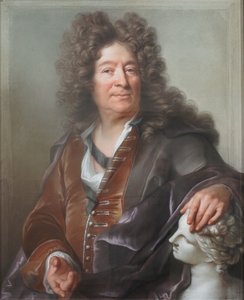
François Girardon
1628 - 1715 , Frankreich
Kurzinfos
- Artistic Movement Or Style: Barock und Neoklassik
- Artists Or Movements Influenced By This Artist: ['Charles Le Brun']
- Artists Who Influenced This Artist: ['François Anguier']
- Date Of Birth: 1628
- Date Of Death: 1715
- Full Name: François Girardon
- Nationality: Französisch
- Notable Artworks:
- Monument von Richelieu (13)
- Allegorische Figur
- Monument von Richelieu (10)
- Place Of Birth: Troyes, Frankreich

