

 Vorschau anzeigen
 Versenden
 Teilen
 Details anzeigen

 Herunterladen
 Ähnliche Objekte
 Röntgenaufnahme
 Diashow
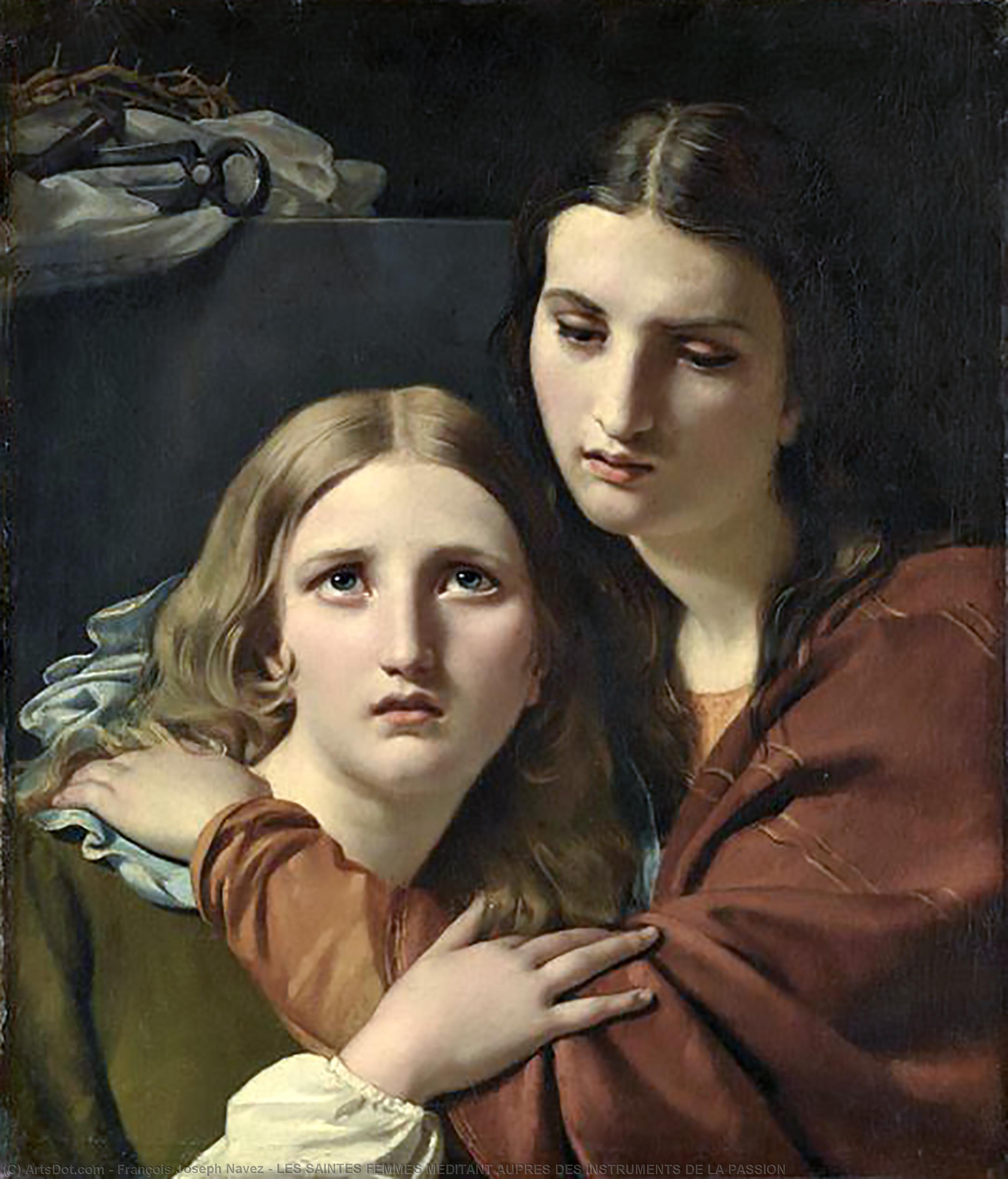
LES SAINTES FEMMES MEDITANT AUPRES DES INSTRUMENTS DE LA PASSION


 Weiterlesen
Giclée / Kunstdruck
Giclée- oder Leinwanddruck in Museumsqualität mit schneller Produktion und flexiblen Veredelungsoptionen. ( Handgemalte Reproduktion bestellen Bild kaufen)




P118B $10

P118H $10

P118W $10

P438Z $10

P508JH $12

P508YH $12

P805H $10

P805Z $10

P919BZ $10

P919G $10

P919XJ $10

P959ZH $10

P968JZ $12

W106C $8

W218G $10

W218JH $8

W218Y $10

W307PJ $10

W316G $10

W316PJ $8

W316Y $10

W398PJ $8

W4111J $10

W500HY $15

W500JH $15

W692G $12

W849H $8

W940BG $15

W953PJ $8




Wählen Sie aus unseren vordefinierten Formaten, die den ursprünglichen Proportionen des Kunstwerks entsprechen.

Sie können Ihre eigenen Maße eingeben, um ein bestimmtes Format oder einen speziellen Platz einzupassen. Wenn das von Ihnen gewählte Format nicht den Proportionen des Originalbildes entspricht, werden wir das Kunstwerk entweder beschneiden oder das Bild mit einem gespiegelten oder einfarbigen Rand erweitern. Ein digitaler Entwurf wird Ihnen zur Genehmigung zugesandt, bevor die Produktion beginnt.
Bitte beachten Sie, dass die Vorschau auf dem Bildschirm nicht den tatsächlichen Zuschnitt oder die Erweiterung widerspiegelt. Nur der Entwurf zeigt die endgültige Komposition präzise an.
Obwohl Sondermaße verfügbar sind, empfehlen wir die Auswahl eines Maßes aus der vordefinierten Liste, um die ursprünglichen Proportionen zu bewahren.
Weltweiter Versand () innerhalb von 2 Wochen statt der üblichen 4/5 Wochen. (27 August)

Kostenloser weltweiter Expressversand

Hochwertige Leinenleinwand

Umfassender Versicherungsschutz beim Versand

Zollgebühren-Rückerstattungsgarantie

Garantie für exakte Farbtreue

60 Tage Rückgaberecht (nur bei Mängeln)

100% Geld-zurück-Garantie

Mengenrabatt verfügbar
 Die Glasoption ist nur für Größen unter 110 cm verfügbar.

LES SAINTES FEMMES MEDITANT AUPRES DES INSTRUMENTS DE LA PASSION
Giclée / Kunstdruck
Format der Reproduktion
-


Gesamtpreis
$ 62
Sammlerstück-Beschreibung
A Portrait of Faith and Reflection: Exploring François Joseph Navez’s “Les Saintes Femmes Méditant Aupres des Instruments de la Passion”
“Les Saintes Femmes Méditant Aupres des Instruments de la Passion,” painted by François Joseph Navez in 1822, stands as a testament to the enduring influence of Neoclassical ideals and a poignant meditation on Christian piety. This captivating portrait transcends mere representation; it embodies an aspiration for spiritual contemplation within the framework of artistic excellence.Subject Matter and Composition
Navez’s subject matter centers around two women—likely idealized depictions inspired by biblical narratives—seated beside musical instruments, primarily a violin and guitar. The positioning is deliberate: the woman on the left leans slightly towards her companion, conveying intimacy and shared devotion, while the woman on the right gazes upwards with serene contemplation. This dynamic interplay of posture reflects the broader humanist ethos prevalent in Romantic art, albeit filtered through the disciplined lens of Neoclassicism. The inclusion of instruments serves not merely as decorative elements but symbolizes harmony and spiritual resonance—the pursuit of divine beauty mirroring the artistry of musical expression.Style and Technique: Embracing Classical Precision
Navez’s artistic style adheres rigorously to the precepts of Jacques-Louis David, his mentor during a formative period in Rome. Like David, Navez championed meticulous detail and idealized form, prioritizing clarity and balance over expressive distortion. The painting employs smooth brushstrokes and subtle tonal gradations—characteristic techniques of Neoclassical painters—to achieve an ethereal luminescence that illuminates the faces of the women. Careful attention to anatomical accuracy underscores the artist’s commitment to portraying human beauty with reverence and intellectual rigor.Historical Context: Romantic Aspirations Within Classical Boundaries
Painted during a period marked by burgeoning Romantic sentiment, “Les Saintes Femmes Méditant Aupres des Instruments de la Passion” represents an intriguing convergence of artistic movements. While David's influence instilled a profound respect for classical tradition—evident in the composition and stylistic choices—the painting nevertheless captures the yearning for spiritual transcendence that defined the Romantic era. The depiction aligns with broader discussions about feminine virtue and contemplation, reflecting societal anxieties surrounding female piety during the early 19th century.Symbolism: Echoes of Biblical Narrative and Spiritual Reflection
The central symbolism resides in the contemplative gaze of the women and their association with musical instruments. These instruments symbolize harmony, divine beauty, and the pursuit of spiritual enlightenment—mirroring the artist’s own intellectual convictions. The woman on the right's upward glance evokes images of Mary contemplating the crucifixion, referencing a prominent devotional motif within Christian iconography. This subtle allusion elevates the portrait beyond mere visual pleasure, inviting viewers to engage in introspection and contemplate the profound mysteries of faith.Emotional Impact: A Momentary Pause for Contemplation
Ultimately, “Les Saintes Femmes Méditant Aupres des Instruments de la Passion” succeeds in conveying a palpable sense of serenity and spiritual contemplation. The luminous palette and harmonious composition instill tranquility, while the expressive faces capture the inner depths of faith—creating an artwork that resonates with viewers on an emotional level. It serves as a poignant reminder of the enduring power of art to inspire reflection and elevate the human spirit.Ähnliche Kunstwerke
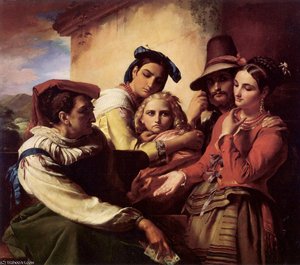
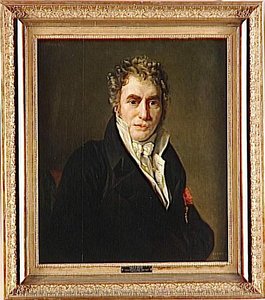
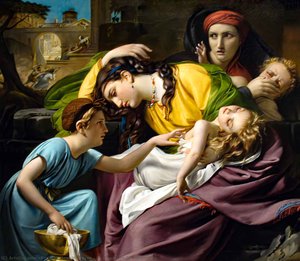
Über den Künstler
François-Joseph Navez: Ein Leben in der Neoklassischen Kunst
Frühes Leben und Ausbildung
- Geboren: Charleroi, Belgien, 16. November 1787.
- Navez stammte aus einer privilegierten Familie, die ihm ermöglichte, sich von Kindheit an voll und ganz der künstlerischen Tätigkeit zu widmen.
- Er begann seine formale Ausbildung an der Königlichen Akademie für Bildende Künste in Brüssel von 1803 bis 1808 unter Pierre Joseph Célestin François.
- Im Jahr 1810 gründete er mit, zusammen mit anderen, die “Société des amateurs d'arts”, was sein frühes Engagement für die Förderung einer künstlerischen Gemeinschaft demonstrierte.
Paris und Rom: Einflüsse und Entwicklung
- Navez erhielt 1812 den ersten Preis für Historienmalerei, der ihm eine Reise nach Paris ermöglichte.
- Schlüssel-Einfluss: Von 1813 bis 1816 studierte er bei Jacques-Louis David, einer zentralen Figur der Neoklassischen Kunst. Diese Mentorschaft prägte seinen Stil und seine Herangehensweise maßgeblich.
- Er setzte seine künstlerische Reise von 1817 bis 1822 in Rom fort, wo er auf Jean-Auguste-Dominique Ingres traf und seine Fähigkeiten innerhalb der klassischen Tradition weiter verfeinerte.
- Seine Zeit in Italien verlieh ihm eine tiefe Wertschätzung für klassische Formen und Themen, die zu den Markenzeichen seiner Werke wurden.
Karriere und Künstlerischer Stil
- Nach seiner Rückkehr nach Belgien gründete Navez ein erfolgreiches Atelier und erlangte schnell als talentierter Porträtist Anerkennung.
- Künstlerische Schwerpunkte: Er zeichnete sich durch Porträts, historische Szenen und mythologische Themen aus, die mit akribischer Detailgenauigkeit und eleganter Komposition ausgeführt wurden.
- Sein Stil war durch Klarheit der Form, ausgewogene Kompositionen und eine zurückhaltende emotionale Ausdruckskraft gekennzeichnet – Markenzeichen des Neoklassizismus.
- Er beherrschte das Festhalten des Aussehens und Charakters seiner Modelle in Porträts.
Führung an der Königlichen Akademie
- Navez’s Einfluss erstreckte sich über seine eigene künstlerische Praxis hinaus. Er wurde Direktor der Académie Royale des Beaux-Arts in Brüssel zwischen 1835 und 1862.
- Bildungswirkung: In dieser Funktion spielte er eine entscheidende Rolle bei der Gestaltung der nächsten Generation belgischer Künstler.
- Zu seinen bemerkenswerten Schülern gehörten Jean-François Portaels (der auch sein Schwiegerschwager wurde) und Jean Carolus.
Wichtige Werke und Vermächtnis
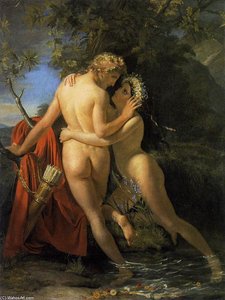
- Bekannte Gemälde: Zu seinen bekanntesten Werken gehören “Massaker der Unschuldigen”, “Die Nymphe Salmacis und Hermaphroditus”, “Frauen, die in Fondi spinnen” und sein Porträt von Jacques-Louis David.
- Seine Gemälde werden in bedeutenden Museumssammlungen ausgestellt und zeigen ihren dauerhaften künstlerischen Wert.
- Historische Bedeutung: Navez gilt als eine führende Figur der belgischen Neoklassischen Malerei. Er schloss die Lücke zwischen der klassischen Tradition und den aufkommenden romantischen Tendenzen des 19. Jahrhunderts.
- Er starb in Brüssel am 12. Oktober 1869 und hinterließ ein reiches künstlerisches Vermächtnis, das bis heute inspiriert und fesselt.
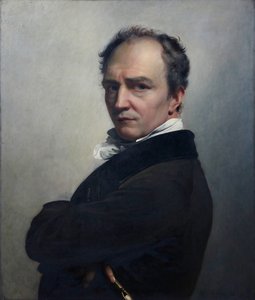
François Joseph Navez
1787 - 1869 , Belgien
Kurzinfos
- Artistic Movement Or Style: Neoklassizismus
- Artists Or Movements Influenced By This Artist: ['Jean Carolus']
- Artists Who Influenced This Artist: ['Jacques-Louis David']
- Date Of Birth: 1787
- Date Of Death: 1869
- Full Name: François Joseph Navez
- Nationality: Belgien
- Notable Artworks:
- Massacre der Unschuldigen
- Die Nymphe Salmacis und Hermaphroditus
- Place Of Birth: Charleroi, Belgien
Ähnliche Artikel
Jacques-Louis David: Neoklassizistische Ideale und der Geist einer Revolution – Leben, Werk und Vermächtnis eines Meistermalers
Entdecken Sie das Leben und Werk von Jacques-Louis David, dem führenden Maler des Neoklassizismus! Erfahren Sie mehr über seine Rolle in der Französischen Revolution und sein bleibendes Vermächtnis für die Kunstgeschichte. Expertenwissen & detaillierte Analysen.
The Revival of Antiquity: Exploring Ideals of Beauty & Power in Neoclassical Portraiture
Explore the captivating world of Neoclassical portraiture! Discover the power & ideals behind masterpieces by David, Girodet & more. Expert analysis, custom reproductions & art appraisal at ArtsDot.
Neoklassizismus: Die 10 Meisterwerke, die eine Epoche prägten – Kunst für Ihr Zuhause
Entdecken Sie die 10 prägendsten Meisterwerke des Neoklassizismus! Von David bis Canova – erfahren Sie die Geschichten hinter ikonischen Gemälden & Skulpturen. Finden Sie hochwertige Reproduktionen für Ihr Zuhause auf
The Enduring Legacy of Neoclassical Art: Order, Reason & Antiquity's Revival
Explore the enduring legacy of Neoclassical art! Discover masterpieces by David, Girodet & Garnier. Expert analysis, custom reproductions & art appraisal at ArtsDot.

The Revival of Antiquity: Exploring Neoclassical Art's Ideals & Enduring Legacy
Explore the revival of classical ideals in Neoclassical art! Discover Jacques-Louis David & the movement's impact on painting, sculpture & architecture. Expert insights & high-quality reproductions at ArtsDot.

