 Vorschau anzeigen
 Versenden
 Teilen
 Details anzeigen

 Herunterladen
 Ähnliche Objekte
 Röntgenaufnahme
 Diashow
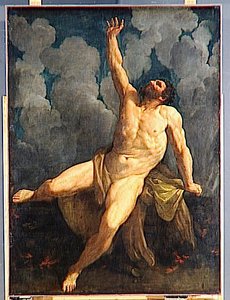
HERCULE ET OMPHALE


 Weiterlesen
Giclée / Kunstdruck
Giclée- oder Leinwanddruck in Museumsqualität mit schneller Produktion und flexiblen Veredelungsoptionen. ( Handgemalte Reproduktion bestellen Bild kaufen)




P118B $10

P118H $10

P118W $10

P438Z $10

P508JH $12

P508YH $12

P805H $10

P805Z $10

P919BZ $10

P919G $10

P919XJ $10

P959ZH $10

P968JZ $12

W106C $8

W218G $10

W218JH $8

W218Y $10

W307PJ $10

W316G $10

W316PJ $8

W316Y $10

W398PJ $8

W4111J $10

W500HY $15

W500JH $15

W692G $12

W849H $8

W940BG $15

W953PJ $8




Wählen Sie aus unseren vordefinierten Formaten, die den ursprünglichen Proportionen des Kunstwerks entsprechen.

Sie können Ihre eigenen Maße eingeben, um ein bestimmtes Format oder einen speziellen Platz einzupassen. Wenn das von Ihnen gewählte Format nicht den Proportionen des Originalbildes entspricht, werden wir das Kunstwerk entweder beschneiden oder das Bild mit einem gespiegelten oder einfarbigen Rand erweitern. Ein digitaler Entwurf wird Ihnen zur Genehmigung zugesandt, bevor die Produktion beginnt.
Bitte beachten Sie, dass die Vorschau auf dem Bildschirm nicht den tatsächlichen Zuschnitt oder die Erweiterung widerspiegelt. Nur der Entwurf zeigt die endgültige Komposition präzise an.
Obwohl Sondermaße verfügbar sind, empfehlen wir die Auswahl eines Maßes aus der vordefinierten Liste, um die ursprünglichen Proportionen zu bewahren.
Weltweiter Versand () innerhalb von 2 Wochen statt der üblichen 4/5 Wochen. (19 August)

Kostenloser weltweiter Expressversand

Hochwertige Leinenleinwand

Umfassender Versicherungsschutz beim Versand

Zollgebühren-Rückerstattungsgarantie

Garantie für exakte Farbtreue

60 Tage Rückgaberecht (nur bei Mängeln)

100% Geld-zurück-Garantie

Mengenrabatt verfügbar
 Die Glasoption ist nur für Größen unter 110 cm verfügbar.

HERCULE ET OMPHALE
Giclée / Kunstdruck
Format der Reproduktion
-


Gesamtpreis
$ 62
Sammlerstück-Beschreibung
A Dance of Strength and Subversion: François Lemoyne’s “Hercules et Omphale”
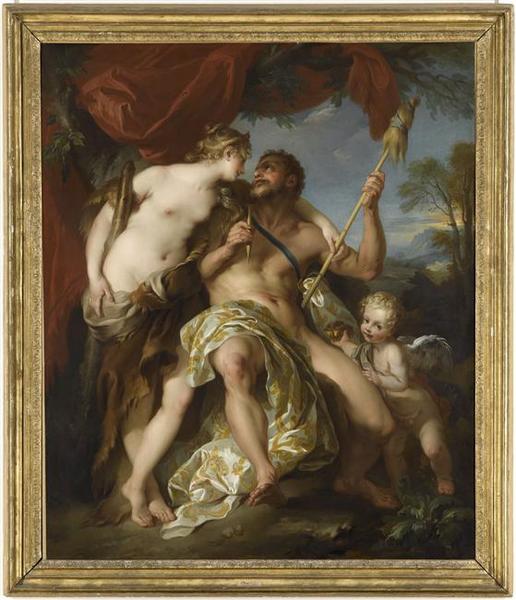
François Lemoyne's "Hercules et Omphale," painted circa 1724, isn’t merely a depiction of a myth; it’s a carefully constructed tableau brimming with the sensual allure and intellectual complexities characteristic of Rococo art. Held within the hallowed halls of the Louvre Museum, this painting offers a captivating glimpse into a world where heroic strength is playfully inverted, gender roles are subtly challenged, and the very notion of servitude becomes a site of unexpected intimacy. Lemoyne, a key figure in reviving the grand allegorical traditions of his predecessors, masterfully blends classical restraint with the exuberant spirit of the era, creating an image that continues to resonate with its layered meanings.
The scene unfolds within a richly detailed landscape—a backdrop of rolling hills and distant mountains—that anchors the narrative. At the heart of this composition stands Hercules, rendered in the robust physicality typical of Rubens’ influence, yet subtly softened by Lemoyne's delicate brushwork. He is presented not as a conquering warrior, but as a figure engaged in an almost domestic activity: spinning wool alongside Omphale, the Lydian queen who, through a twist of fate and divine decree, held him captive for a year. This seemingly simple act—a hero performing a traditionally feminine task—immediately establishes the painting’s central tension. The arrangement is carefully pyramidal, with Hercules as its apex, drawing the eye to his powerful form while simultaneously highlighting Omphale's seated position, inviting the viewer into their shared space.
The Language of Gesture and Symbol
Lemoyne’s skill lies not just in depicting physical forms but also in conveying emotion through subtle gestures and carefully chosen symbols. Hercules’ posture—relaxed yet alert—suggests a willingness to engage with this unconventional arrangement, while Omphale's gaze is both curious and possessive. The inclusion of Cupid, perched at Hercules’ foot, adds an element of playful mischief, hinting at the erotic undertones that permeate the scene. The contrast between their clothing – Hercules in a flowing robe reminiscent of a woman’s garment, Omphale adorned with his lion skin—is particularly striking, visually embodying the reversal of roles and challenging conventional notions of masculinity and femininity. The lion's skin itself is a potent symbol, representing both power and vulnerability, strength and captivity.
Rococo Refinement: Technique and Color
The painting’s aesthetic is firmly rooted in the Rococo style—characterized by its elegance, sensuality, and lavish ornamentation. Lemoyne employs a masterful use of glazing techniques to create smooth transitions between colors and achieve a remarkably realistic rendering of textures. The warm palette—dominated by reds, golds, and browns—evokes a sense of opulence and luxury, while cooler greens and blues in the background provide visual contrast and depth. The artist’s attention to detail is evident in every brushstroke, from the meticulously rendered folds of fabric to the subtle shading on the figures' skin. The use of linear perspective creates a convincing illusion of space, drawing the viewer into the scene and emphasizing the intimacy of the interaction between Hercules and Omphale.
A Legacy of Subverted Expectations
"Hercules et Omphale" is more than just a beautiful painting; it’s a complex meditation on power, gender, and the nature of desire. It reflects a broader trend in 18th-century art—a willingness to explore unconventional themes and challenge established norms. The story itself, rooted in Greek mythology, has been interpreted through various lenses throughout history, often serving as a metaphor for social and political upheaval. Lemoyne’s version, however, transcends mere allegory, offering a captivating glimpse into a world where the boundaries of identity are blurred and the familiar is playfully subverted. Reproductions of this iconic work continue to captivate audiences today, reminding us of the enduring power of art to provoke thought and inspire emotion.
Ähnliche Kunstwerke
Über den Künstler
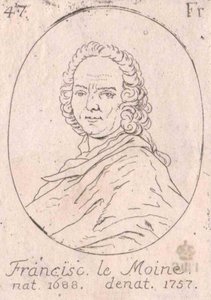
François Lemoyne: Ein Leben im Rokoko
- Geboren: Paris, Frankreich (1688)
- Gestorben: 4. Juni 1737
François Lemoyne war ein bedeutender französischer Rokokomaler des frühen bis mittleren 18. Jahrhunderts. Er ist bekannt für seine großartigen allegorischen Deckenfresken und mythologischen Szenen und leistete damit einen wesentlichen Beitrag zur künstlerischen Landschaft unter der Herrschaft von Ludwig XV. Obwohl er oft im Schatten seiner Zeitgenossen wie Boucher und Watteau stand, bemühte sich Lemoyne, sich als Erbe Charles Le Bruns zu etablieren, einer führenden Figur in der französischen Kunstgeschichte.
Frühes Leben und Ausbildung
- Ausbildung: Lemoyne studierte zunächst bei seinem Stiefvater Robert le Vrac.
- Académie Royale: Er absolvierte von 1701 an eine formelle Ausbildung an der Académie Royale de peinture et de sculpture, wo er bei Louis Galloche und später unter der Leitung von Pierre-Jacques Cazes studierte. Der Einfluss von Cazes ist besonders in Lemoynes Farbgebung zu bemerken.
- Prix de Rome: 1711 erreichte er einen bedeutenden Meilenstein, indem er den Prix de Rome gewann, eine Auszeichnung, die typischerweise eine Reise nach Italien für künstlerische Studien gewährte. Aufgrund finanzieller Einschränkungen konnte er diese Gelegenheit jedoch nicht sofort nutzen.
Künstlerische Entwicklung und Einflüsse
- Italienischer Einfluss: Lemoynes spätere Reise nach Italien im Jahr 1723/24, begleitet von François Berger, erwies sich als entscheidend. Er studierte die Werke von Raphael, Correggio und Tizian und absorbierte italienische künstlerische Techniken und Ästhetik.
- Rubens' Einfluss: Ein starker Einfluss auf Lemoyne war das Werk von Peter Paul Rubens, insbesondere in seiner lebhaften Farbgebung und dynamischen Kompositionen deutlich erkennbar.
- Venetianische Schule: Die Auseinandersetzung mit der venezianischen Malerei, insbesondere innerhalb der Sammlung von Pierre Crozat, prägte seine künstlerische Stilrichtung weiter.
- Rokoko-Stil: Obwohl er von früheren Meistern beeinflusst war, gehörte Lemoynes Werk fest zur Rokoko-Periode, die durch Eleganz, Ornamentik und einen Fokus auf dekorative Schönheit gekennzeichnet ist.
Wichtige Werke und Errungenschaften
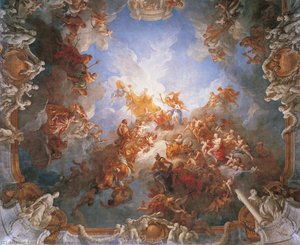
- Deckenfresken: Lemoyne ist am besten bekannt für seine monumentalen Deckenfresken, insbesondere L'Apothéose d'Hercule (Die Apotheose des Herkules) im Salon d’Hercule im Schloss Versailles. Diese Arbeit demonstrierte seine Meisterschaft in illusionistischen Techniken und wurde von Zeitgenossen wie Voltaire und Kardinal Fleury hoch gelobt.
- Religiöse Gemälde: Er schuf auch bedeutende religiöse Werke, wie Die Verklärung im Chor der Jacobin Kirche (heute Parish Church of St. Thomas d’Aquin) in Paris.
- Premier peintre du Roi: 1736 erreichte Lemoyne den Höhepunkt seiner Karriere, indem er zum Premier peintre du roi (Erster Maler des Königs) unter Ludwig XV ernannt wurde.
Historische Bedeutung und Vermächtnis
François Lemoyne spielte eine entscheidende Rolle bei der Gestaltung der französischen Rokoko-Malerei. Sein Ziel war es, die Tradition großformatiger allegorischer Deckenfresken wiederzubeleben, die aus dem Mode gekommen waren. Obwohl seine Karriere durch seinen Selbstmord im Jahr 1737 tragisch beendet wurde, hinterließ sein Werk einen bleibenden Eindruck auf nachfolgende Generationen von Künstlern.
- Einfluss auf Schüler: Lemoyne unterrichtete bedeutende Künstler wie Charles-Joseph Natoire und François Boucher und vermittelte so sein künstlerisches Wissen und beeinflusste ihre Entwicklung.
- Niedergang der Deckenmalerei: Sein Tod markierte das Ende einer Ära, die mit dem Rückgang der Beliebtheit großer allegorischer Deckenfresken zusammenfiel.
- Anerkennung heute: Obwohl er vielleicht nicht so bekannt ist wie einige seiner Zeitgenossen, werden Lemoynes Beiträge zur französischen Rokoko-Kunst zunehmend für seine technische Fertigkeit und künstlerische Ambition geschätzt.
François Lemoyne
1688 - 1737 , Frankreich
Kurzinfos
- Beeinflusste Künstler:
- Charles Le Brun
- Peter Paul Rubens
- Bemerkenswerte Werke:
- L'Apothéose d'Hercule
- Die Verklärung
- Geburtsdatum: 1688
- Geburtsort: Paris, Frankreich
- Künstlerische Richtung: Rokoko-Malerei
- Nationalität: Französisch
- Todatum: 1737
- Vollständiger Name: François Lemoyne
- Von Künstlern Beeinflusst:
- François Boucher
- Charles-Joseph Natoire
Ähnliche Artikel

Rococo Meisterwerke: Die Top 10, die eine Epoche prägten |
Entdecken Sie die Top 10 Rokoko Meisterwerke von Watteau, Boucher & Fragonard! Erfahren Sie die Geschichten hinter diesen ikonischen Gemälden und lassen Sie sich für Ihre Inneneinrichtung inspirieren. Hochwertige Kunstdrucke auf .
Echoes of Olympus: Mythological Narratives in Western Art Through the Ages
Explore the captivating history of mythological narratives in Western art! From ancient Greece to modern masterpieces, discover iconic artworks & symbolism. Expert analysis and high-quality reproductions at ArtsDot.

The Rococo Aesthetic: Opulence, Rebellion & the Pursuit of Pleasure in 18th-Century Art
Explore the opulent world of Rococo art! Discover its origins, key artists like Watteau & Boucher, and lasting influence on design. Expert insights for collectors & enthusiasts.
The Allure of Elegance in Art: A Historical & Aesthetic Exploration of Refinement & Grace
Explore the exquisite world of Rococo art! Discover its history, masters (Watteau, Boucher & more), and defining elegance. Expert insights for collectors seeking museum-quality reproductions & custom portraits.
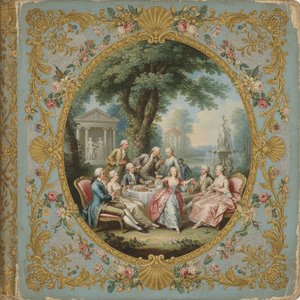
The Rococo Style: Aristocratic Leisure & the Pursuit of Delight in 18th-Century Art
Explore the opulent world of Rococo art! Discover Watteau, Boucher & Nattier's masterpieces. Expert insights for collectors seeking museum-quality reproductions and custom portraits at ArtsDot.