

 Vorschau anzeigen
 Versenden
 Teilen
 Details anzeigen

 Herunterladen
 Ähnliche Objekte
 Röntgenaufnahme
 Diashow
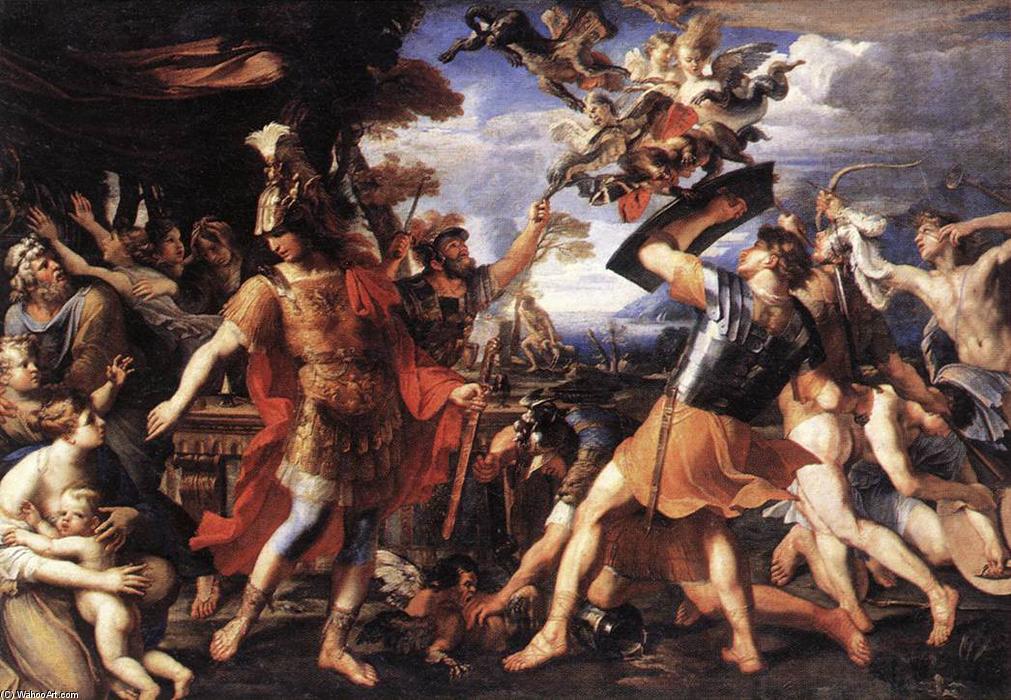
Aeneas and his Companions Fighting the Harpies


 Weiterlesen
Handgefertigte Ölreproduktion
Handgemaltes Ölgemälde auf Leinwand in Ihrer Wunschgröße und mit Rahmen, auf Bestellung von unseren Künstlern angefertigt. ( Druck bestellen Bild kaufen)




































Wählen Sie aus unseren vordefinierten Formaten, die den ursprünglichen Proportionen des Kunstwerks entsprechen.

Sie können Ihre eigenen Maße eingeben, um einen bestimmten Rahmen oder Platz auszufüllen. Wenn die gewählte Größe nicht den Proportionen des Originalbildes entspricht, werden wir das Kunstwerk entweder beschneiden oder das Gemälde durch zusätzliche, handgemalte Elemente erweitern. Ein digitales Mockup wird Ihnen zur Genehmigung zugesandt, bevor die Produktion beginnt.
Bitte beachten Sie, dass die Bildschirmvorschau nicht die tatsächliche Beschneidung oder Erweiterung widerspiegelt. Nur das Mockup zeigt die endgültige Komposition exakt an.
Obwohl Sondermaße verfügbar sind, empfehlen wir, eine Größe aus der vordefinierten Liste zu wählen, um die ursprünglichen Proportionen beizubehalten.
Nach der Bestellung wird das ArtsDot.com-Team dem Kunden Anweisungen per E-Mail zusenden und eine Mockup-Vorschau bereitstellen.
Weltweiter Versand () in nur 3 bis 4 Wochen statt der üblichen 5 Wochen. (25 August). Keine Kompromisse bei der Qualität.

Kostenloser weltweiter Expressversand

Hochwertige Leinenleinwand

Umfassender Versicherungsschutz beim Versand

Zollgebühren-Rückerstattungsgarantie

Garantie für exakte Farbtreue

60 Tage Rückgaberecht (nur bei Mängeln)

100% Geld-zurück-Garantie

Mengenrabatt verfügbar
 Die Glasoption ist nur für Größen unter 110 cm verfügbar.

Aeneas and his Companions Fighting the Harpies
Art der Reproduktion
Format der Reproduktion
-


Gesamtpreis
$ 263
Ähnliche Kunstwerke








Über den Künstler
François Perrier: The Architect of Roman Baroque in France
François Perrier (1594 – 1649) stands as a pivotal figure in the artistic landscape of seventeenth-century France, credited with introducing the grandeur and dynamism of the Roman Baroque into Parisian ateliers. More than just a painter, he was a meticulous draftsman and printmaker whose legacy extends far beyond his canvases—primarily through his groundbreaking collections of prints after antique sculptures that profoundly impacted European art production for decades to come. This article delves into Perrier’s life, artistic endeavors, influences, and enduring significance within the broader context of Baroque aesthetics.Early Life and Artistic Formation
Born in Pontarlier, France, François Perrier's formative years coincided with a period of significant intellectual ferment fueled by humanist scholarship and rediscovery of classical antiquity. His training initially centered around Fontainebleau, where he absorbed the stylistic precepts championed by Francesco Francia and Jean Fouquet—artists who epitomized the prevailing Mannerist tendencies prevalent at the time. This exposure instilled in him a deep appreciation for meticulous detail and expressive handling of pigment, qualities that would characterize his subsequent artistic output. Notably, Perrier’s father was a Huguenot minister, shaping his worldview and fostering an environment conducive to intellectual curiosity. He demonstrated exceptional talent from a young age, mastering drawing techniques and honing his observational skills—preparing him for the challenges of pursuing a career in art.Rome: Embracing Academic Baroque
Between 1620 and 1625, Perrier embarked on a transformative journey to Rome—a pilgrimage for aspiring artists seeking inspiration from the epicenter of artistic innovation. There, he encountered Giovanni Lanfranco, a leading proponent of academic baroque classicism, whose influence profoundly shaped Perrier’s stylistic sensibilities. Lanfranco's emphasis on idealized forms and harmonious compositions served as a crucial catalyst in shaping Perrier’s approach to painting—particularly evident in his monumental frescoes adorning the dome of Saint Andrew’s Basilica. This immersive experience solidified Perrier’s commitment to mastering the techniques of illusionistic painting, mirroring the ambitious grandeur of Roman Baroque architecture. He diligently studied the works of Michelangelo and Raphael, absorbing their mastery of perspective and anatomical accuracy – skills that would become indispensable for his future artistic endeavors.The Dome of Saint Andrew's and Artistic Collaboration
Perrier’s involvement in the decoration of Saint Andrew’s Basilica represents a landmark achievement in architectural history and exemplifies his artistic prowess. Collaborating closely with Giovanni Lanfranco and Alessandro Galli Bibiena, he spearheaded the creation of one of Rome’s earliest examples of Baroque ceiling fresco—a breathtaking spectacle of color, perspective, and sculptural illusionism. This project showcased Perrier's ability to synthesize classical ideals with innovative visual strategies, establishing him as a visionary artist at the forefront of his time. Furthermore, his partnership with Charles Le Brun fostered an environment for artistic experimentation and cemented Le Brun’s position as a prominent figure in the burgeoning Parisian Baroque scene. The basilica’s dome became a testament to Perrier's dedication to elevating art beyond mere representation—aiming instead to evoke awe and inspire contemplation through masterful illusionistic techniques.Prints After Antique Sculptures: A Legacy of Classical Inspiration
Perhaps Perrier's most enduring contribution to art history lies in his two monumental printmaking projects—Segmenta nobilium signorum et statuarum quae temporis dentem invidium evasere (Paris, 1638) and Icones et segmenta...quae Romae adhuc extant (Paris, 1645). These meticulously crafted engravings after antique sculptures constituted a veritable visual encyclopedia for European artists—providing models of idealized beauty and anatomical precision that served as invaluable references across disciplines. Perrier’s prints weren't merely reproductions; they were interpretations imbued with stylistic refinements characteristic of the Baroque aesthetic—demonstrating his mastery of engraving technique and his profound understanding of classical art principles. He painstakingly reproduced sculptures from antiquity, utilizing innovative printing methods to achieve unprecedented levels of detail and tonal gradation – a feat that astonished contemporaries and profoundly influenced subsequent printmakers. These collections profoundly influenced generations of painters, sculptors, and architects, shaping the visual vocabulary of European baroque art for decades to come.Later Years and Artistic Influence
Returning to Paris in 1630, Perrier established himself within Simon Vouet’s influential circle—a bastion of academic Baroque style. He continued to refine his artistic vision, mentoring Charles Le Brun and fostering a new generation of painters committed to upholding classical ideals while embracing the expressive dynamism of baroque aesthetics. His work on the Galerie de l'amour in Hôtel Lambert alongside Eustache le Sueur exemplifies this stylistic convergence—demonstrating Perrier’s ability to synthesize humanist scholarship with innovative artistic techniques. Finally, he played a crucial role in founding the Académie Royale de peinture et de sculpture in 1648—a cornerstone of French artistic education and institutional reform that ensured the continuation of baroque traditions into the eighteenth century. François Perrier's legacy endures as an architect of Baroque art in France, securing his place among the most influential painters of his era.
François Perrier
1594 - 1649 , Frankreich
Kurzinfos
- Artistic Movement Or Style: Roman Barock
- Artists Or Movements Influenced By This Artist: ['Simon Vouet']
- Artists Who Influenced This Artist: ['Giovanni Lanfranco']
- Date Of Birth: 1594 Pontarlier Frankreich
- Date Of Death: 1649
- Full Name: François Perrier
- Nationality: Französisch
- Notable Artworks:
- Aeneas und seine Gefährten kämpfen gegen die Harpyien
- Das Opfer Iphigenie
- Place Of Birth: Pontarlier Frankreich

