


 Versenden als Grußkarte
 Teilen
 Details anzeigen

 Herunterladen
 Ähnliche Objekte
 Diashow
 Besucherstatistiken
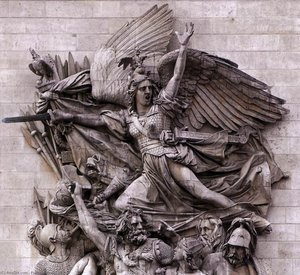
March of the Volunteers of 1792 (detail)


 Mehr anzeigen
Giclée / Kunstdruck
Giclée- oder Leinwanddruck in Museumsqualität mit schneller Produktion und flexiblen Veredelungsoptionen. ( Handgemalte Reproduktion kaufen Zum digitalen Bild wechseln)




































Wählen Sie aus unseren vordefinierten Formaten, die den ursprünglichen Proportionen des Kunstwerks entsprechen.

Sie können Ihre eigenen Maße eingeben, um ein bestimmtes Format oder einen speziellen Platz einzupassen. Wenn das von Ihnen gewählte Format nicht den Proportionen des Originalbildes entspricht, werden wir das Kunstwerk entweder beschneiden oder das Bild mit einem gespiegelten oder einfarbigen Rand erweitern. Ein digitaler Entwurf wird Ihnen zur Genehmigung zugesandt, bevor die Produktion beginnt.
Bitte beachten Sie, dass die Vorschau auf dem Bildschirm nicht den tatsächlichen Zuschnitt oder die Erweiterung widerspiegelt. Nur der Entwurf zeigt die endgültige Komposition präzise an.
Obwohl Sondermaße verfügbar sind, empfehlen wir die Auswahl eines Maßes aus der vordefinierten Liste, um die ursprünglichen Proportionen zu bewahren.
Weltweiter Versand () innerhalb von 2 Wochen statt der üblichen 4/5 Wochen. (15 September)

Kostenloser weltweiter Expressversand

Hochwertige Leinenleinwand

Vollständiger Versicherungsschutz beim Versand

Zollgebühren-Rückerstattungsgarantie

Garantie für exakte Farbtreue

100-tägiges Rückgaberecht (nur bei Mängeln)

100% Geld-zurück-Garantie

Angebot für Mengenrabatt
 Die Glasoption ist nur für Größen unter 110 cm verfügbar.

March of the Volunteers of 1792 (detail)
Giclée / Kunstdruck
Format der Reproduktion
-


Gesamtpreis
$ 62
A Cry for Liberty: Deciphering François Rude’s “March of the Volunteers of 1792”
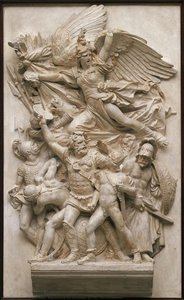
François Rude's "March of the Volunteers of 1792 (detail)" isn’t merely a sculpture; it’s a visceral embodiment of revolutionary fervor, a frozen moment of defiant hope carved from stone. Completed in 1835-36 for the monumental Arc de Triomphe at the Étoile in Paris, this plaster relief—a preparatory model for the colossal work that graces the arch today—captures the raw energy and passionate commitment of France’s citizen army during the tumultuous years of the Revolution. More than a historical record, it's a potent allegory of liberty itself, radiating an intensity that continues to resonate centuries later.
Rude, born in Dijon in 1784, was deeply immersed in the artistic and political currents of his time. His early training under François Devosges instilled a grounding in classical forms, while his subsequent apprenticeship with Pierre Cartellier exposed him to the burgeoning Romantic movement. His relocation to Brussels following the Napoleonic Wars provided fertile ground for experimentation, culminating in a style that masterfully blended Neoclassical precision with the dramatic emotionalism characteristic of Romantic sculpture. This synthesis is powerfully evident in “March of the Volunteers,” where idealized figures are imbued with an almost palpable sense of urgency and determination.
The Anatomy of Emotion: Form, Technique, and Composition
The sculpture’s power lies not just in its subject matter but also in Rude's masterful manipulation of form and technique. Carved from plaster, the relief depicts a diverse group of men – young and old, armed with muskets and sabers – surging forward with unwavering resolve. Rude employs a dynamic pyramidal composition, drawing the viewer’s eye towards the central figure, a woman embodying Liberty herself. Her winged torso, reminiscent of classical goddesses, elevates her above the throng, symbolizing freedom's guiding force. Note the meticulous detail in the rendering of musculature and drapery, reflecting Rude’s deep understanding of anatomy and his commitment to realistic representation. The use of *chiaroscuro* – a dramatic contrast between light and shadow – further enhances the sculpture’s three-dimensionality, creating a sense of depth and movement.
The figures are not static; they appear caught in a perpetual state of forward motion. Rude achieves this through carefully sculpted gestures—raised arms, clenched fists, determined expressions—that convey both strength and vulnerability. The use of strong diagonal lines directs the viewer’s gaze across the composition, reinforcing the sense of momentum and urgency. The inclusion of details like the Phrygian cap worn by some of the figures – a symbol of liberation from slavery in ancient Rome – adds layers of symbolic meaning to the work.
Symbolism and Historical Context: A Revolution Frozen in Stone
“March of the Volunteers of 1792” is inextricably linked to the pivotal events of the French Revolution. It commemorates the Battle of Valmy, a crucial victory for the French army against Prussian forces in 1792 – a moment that effectively halted Napoleon’s invasion and secured France's independence. The sculpture celebrates not just military prowess but also the spirit of civic engagement and patriotic duty that fueled the revolution. The choice of Liberty as the central figure is deliberate, aligning with the revolutionary ideals of equality, fraternity, and liberty.
Interestingly, the work was commissioned during a period of political instability in France, following the restoration of the Bourbon monarchy. The Arc de Triomphe itself became a canvas for competing ideologies – the sculpture on the east face (depicting Napoleon’s triumph) stood in stark contrast to Rude's depiction of revolutionary fervor. This juxtaposition highlights the complex and often contradictory nature of French history during this era.
A Legacy of Inspiration: From Relief to Reproduction
“March of the Volunteers of 1792” has become one of the most recognizable sculptures in the world, largely due to its prominent placement on the Arc de Triomphe. However, the plaster relief itself remains a powerful testament to Rude’s artistic vision and his ability to capture the spirit of an era. Today, high-quality reproductions offer art lovers and interior designers alike the opportunity to experience this iconic work firsthand, bringing its message of liberty and revolution into homes and spaces around the globe.
Ähnliche Kunstwerke
Biografie des Künstlers
Frühe Jahre und Ausbildung
- François Rude wurde am 4. Januar 1784 in Dijon, Frankreich, als Sohn eines Kupfer- und Schlossers geboren.
- Seine frühen Jahre beinhalteten die Unterstützung des Handwerks seines Vaters, bevor er künstlerisches Talent zeigte.
- Er besuchte die École de Dessin von François Devosges in Dijon und demonstrierte dabei seine aufkeimenden Fähigkeiten.
- Unter der Schirmherrschaft von Louis Frémiet begann er 1805 mit dem Studium bei Pierre Cartellier in Paris im Atelier von Edme Gaulle.
- Im Jahr 1809 erlangte seine Arbeit Anerkennung und erhielt mehrere Auszeichnungen.
- Er gewann 1812 den Prix de Rome, konnte aber aufgrund politischer Umstände nicht reisen.
Brüsseler Periode und Heirat
- Im Jahr 1815 verließ Rude Paris in Richtung Rom, landete jedoch aufgrund politischer Umstände mit den Frémiets in Brüssel.
- Er heiratete Sophie Frémiet, eine talentierte Malerin, und bildete so eine formidable künstlerische Partnerschaft.
- Während seines Aufenthalts in Brüssel schuf er sein erstes Bust von Louis David, was ihm bedeutende Aufmerksamkeit einbrachte.
Rückkehr nach Paris und Hauptwerke
- Rude und seine Frau kehrten 1827 nach Paris zurück, wo sie bis zu seinem Tod blieben.
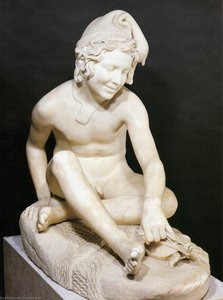
- Zu seinen bemerkenswertesten Werken gehört die Statue eines neapolitanischen Fischersjungen, der mit einer Schildkröte spielt (1831-33), die im Louvre ausgestellt ist.
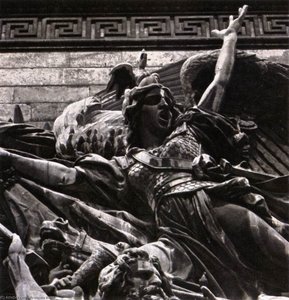
- Er erhielt den Auftrag für den Arc de Triomphe und schuf dort die ikonische Skulptur „La Marseillaise“ (Die Abreise der Freiwilligen von 1792), die 1836 fertiggestellt wurde. Dies ist wohl sein berühmtestes und bedeutendstes Werk.
- Weitere wichtige Skulpturen sind:
- Büste von Jacques-Louis David
- Statue des Grafen Maurice von Sachsen
- Kopf Christi (Gipsabguss)
- Büste von James de Montry
- Gegen Ende seiner Karriere beauftragte Dijon eine Marmorstatue, die Hebe, die griechische Göttin der Jugend, darstellt. Rude schuf das Modell im Jahr 1852, starb aber vor dessen Fertigstellung; sein Neffe vollendete es.
Stil und Einflüsse
- Rudes Stil verband Neoklassizismus und Romantik.
- Während er anfänglich von neoklassischen Prinzipien beeinflusst war, nahm er zunehmend einen dynamischen und emotionalen Stil an.
- Seine Arbeit drückte oft patriotische Themen aus, was das politische Klima seiner Zeit widerspiegelte.
- Er wurde von früheren Bildhauern wie Pierre Cartellier und Edme Gaulle beeinflusst.
- Die Schirmherrschaft von Louis Frémiet spielte eine entscheidende Rolle bei seiner frühen Entwicklung.
Späteres Leben und Vermächtnis
- François Rude starb am 3. November 1855 in Paris.
- Er wird für seine kraftvollen und ausdrucksstarken Skulpturen, insbesondere „La Marseillaise“, erinnert, die bis heute ein Symbol der französischen nationalen Identität ist.
- Seine Arbeit stellt einen Übergang von der starren Formalität des Neoklassizismus zu dem emotionaleren und dramatischeren Stil der Romantik dar.
- Zahlreiche Büsten und Abgüsse seiner Werke befinden sich in Museen wie dem Musée Rude, dem Musée des Beaux-Arts de Dijon und dem Louvre.
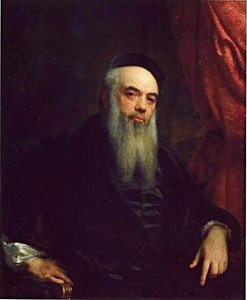
François Rude
1784 - 1855 , Frankreich
Eckdaten zum Künstler
- Artistic Movement Or Style: Neoklassizismus & Romantik
- Artists Who Influenced This Artist:
- Pierre Cartellier
- Edme Gaulle
- Date Of Birth: 4. Januar 1784
- Date Of Death: 3. November 1855
- Full Name: François Rude
- Nationality: Französisch
- Notable Artworks:
- La Marseillaise
- Neapolitanischer Fischerjunge
- Büste von Jacques-Louis David
- Place Of Birth: Dijon, Frankreich
Verwandte Artikel

The Enduring Form: Sculpture Across History, Technique & Emotional Resonance
Explore the rich history of sculpture with ArtsDot. Discover key techniques, influential artists & investment potential for discerning collectors. Expert insights into valuing and collecting timeless masterpieces.
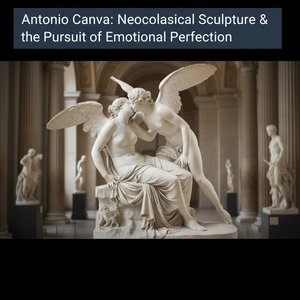
Antonio Canova: Neoklassizistische Skulptur und die Suche nach emotionaler Vollendung
Entdecken Sie das Werk von Antonio Canova – Meister des Neoklassizismus! Erfahren Sie mehr über seine Skulpturen, Techniken und seinen bleibenden Einfluss auf die Kunstgeschichte. Hochwertige Reproduktionen bei ArtsDot.

The Enduring Form: Exploring Themes & Techniques in Sculpture Across Historical Periods
Explore the rich history of sculpture from ancient masterpieces to contemporary innovations. Discover key techniques, influential artists & investment potential for discerning art collectors.

Bronze-Meisterwerke: Die 10 Skulpturen, die Kunstgeschichte schrieben | ArtsDot
Entdecken Sie die 10 legendärsten Bronze Skulpturen der Kunstgeschichte! Von Michelangelo bis Rodin – erfahren Sie die Geschichten hinter den Meisterwerken und lassen Sie sich von Wanddeko-Ideen inspirieren. Hochwertige Kunstdrucke auf ArtsDot.com.

Die 10 legendärsten Bronzestatuen: Meisterwerke, die Kunstgeschichte schrieben | ArtsDot
Entdecken Sie die 10 legendärsten Bronzestatuen der Kunstgeschichte! Von Rodin bis Michelangelo – erfahren Sie die Geschichten hinter ikonischen Skulpturen und finden Sie hochwertige Reproduktionen für Ihr Zuhause. Jetzt bei ArtsDot entdecken!