

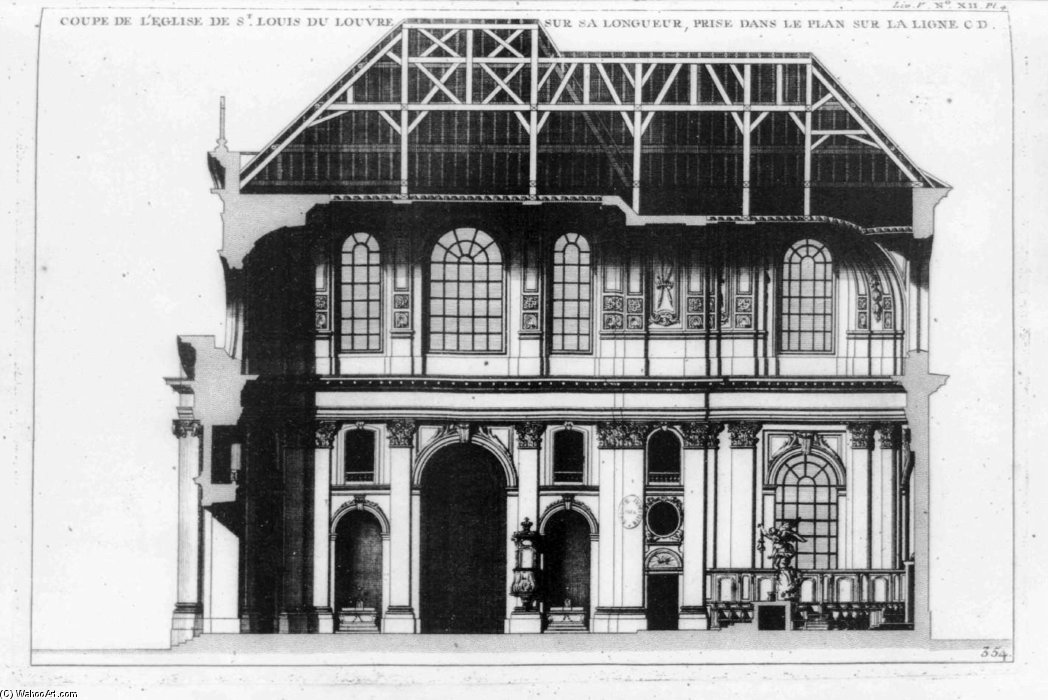
 Vorschau anzeigen
 Versenden
 Teilen
 Details anzeigen

 Herunterladen
 Ähnliche Objekte
 Röntgenaufnahme
 Diashow
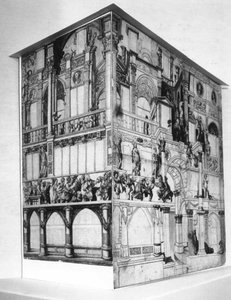
Cross Section Of The Church Saint-louis-du-louvre In The Book Architecture Françoise
 Weiterlesen
Erwerben Sie ein hochauflösendes, optimiertes digitales Bild, das der Online-Vorschau weit überlegen ist.
Jede Datei wird von unseren hauseigenen Spezialisten mit modernsten Werkzeugen und fachmännischer manueller Retusche sorgfältig vorbereitet. Wir stellen sicher, dass jedes Bild eine außergewöhnliche Klarheit, präzise Farbgenauigkeit und feinste Details aufweist.
Die endgültige Datei wird innerhalb von 72 Stunden per E-Mail zugestellt und ist für den sofortigen Einsatz in professionellen, redaktionellen und Druckumgebungen optimiert. Es handelt sich um dieselbe Qualität, der führende Designstudios, Verlage und Galerien vertrauen.
Digitales Bild
Laden Sie eine hochauflösende Datei für die persönliche Präsentation, den Druck und kreative Projekte herunter. ( Druck bestellen Handgemalte Reproduktion bestellen)
In jeder Bestellung digitaler Bilder enthalten
Professionelle digitale Bereitstellung, garantiert
Wenn Sie sich für ArtsDot.com entscheiden, erhalten Sie nicht nur ein Bild – Sie erhalten ein professionell aufbereitetes digitales Kunstwerk, das mit höchster Präzision erstellt und durch eine Zufriedenheitsgarantie abgesichert wird. Hier ist alles, was automatisch mit Ihrer Bestellung geliefert wird:

Schnelle E-Mail-Zustellung
Ihre hochauflösende digitale Bilddatei wird Ihnen innerhalb von 72 Stunden nach der Bestellung per E-Mail zugestellt – bereit zur sofortigen Verwendung.

KI-optimierte digitale Datei
Ihre Kunstwerke werden professionell mithilfe fortschrittlicher KI-Tools und manueller Bearbeitung optimiert, um maximale Detailtreue, Klarheit und Farbgenauigkeit zu gewährleisten.

Lebenslanger kostenloser Neudruckservice
Datei versehentlich gelöscht oder verloren? Keine Sorge – wir senden sie Ihnen jederzeit kostenlos erneut zu.

Keine Einfuhrgebühren – jemals
Genießen Sie Ihr Kunstwerk sofort ohne Zollgebühren, Einfuhrabgaben oder Versandkosten – digitale Downloads sind immer steuerfrei.

Garantierte Farbtreue
Wir garantieren, dass Ihr digitales Bild mithilfe professioneller Werkzeuge und Farbmanagement die Originalfarben so präzise wie möglich wiedergibt.

60-Tage-Zufriedenheitsgarantie
Sollten Sie mit Ihrem digitalen Bild nicht zufrieden sein, werden wir es überarbeiten oder Ihnen innerhalb von 60 Tagen 100% erstatten – ohne Wenn und Aber.

100% Geld-zurück-Garantie
Nicht zufrieden? Erhalten Sie innerhalb von 60 Tagen nach Erhalt Ihrer digitalen Datei eine vollständige Rückerstattung – ohne Angabe von Gründen.

Rabatte bei Großbestellungen
3 Bilder kaufen, 10% sparen – 5 Bilder kaufen, 15% sparen – Ab 10 Bildern 20% sparen. Ideal für kreative Projekte, Galerien und Agenturen.
Ähnliche Kunstwerke
Biografie des Künstlers
The Silver Legacy of François Thomas Germain
In the glittering landscape of eighteenth-century France, few names evoke the opulence and technical virtuosity of the Rococo era quite like François Thomas Germain. Born in 1726 in Cherbourg, Normandy, Germain was destined to inherit a legacy of excellence. As the son of the renowned silversmith Thomas Germain, he did not merely follow in his father's footsteps; he ascended to the heights of royal prestige, eventually holding the esteemed title of royal silversmith and sculptor to the King of France. His life, spanning from the mid-century splendor to the transformative years ending in 1791, was a masterclass in navigating the delicate balance between inherited tradition and individual innovation.
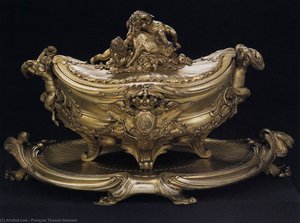
Germain’s artistry was characterized by an extraordinary command over precious metals, a skill that allowed him to capture the very essence of the French court's grandeur. His work was not merely functional but deeply allegorical, often transforming cold silver into fluid, living scenes. One might gaze upon his Terrine and Salver, created in 1758, and find oneself lost in a labyrinth of intricate motifs, where fluted edges and oval forms meet elaborate floral patterns and delicate scrollwork. Such pieces were more than tableware; they were symbols of status and sophisticated taste, designed to dazzle the eyes of the European elite during the most formal of banquets.
A Master of Royal Commissions
The reach of Germain’s talent extended far beyond the borders of France, touching the most powerful courts in Europe. His reputation as a premier metalworker made him a sought-after figure for monarchs seeking to manifest their power through exquisite craftsmanship. He received significant commissions from Empress Elizabeth of Russia and played a vital role in decorating the Portuguese court. Perhaps his most monumental achievement in silver was the creation of the Germain Service, an astounding collection of over a thousand pieces of cast and chased silver commissioned by Joseph I of Portugal in 1756. This massive undertaking, intended to restore the splendor of the Portuguese court following the devastating Lisbon earthquake, remains one of the most significant examples of eighteenth-century silverware in existence.
Beyond the grand services, Germain’s ability to manipulate light and shadow through metalwork is evident in his smaller, more intimate masterpieces. His silver coffee pots, such as the celebrated example housed in the Metropolitan Museum of Art, serve as quintessential relics of French Rococo dining. These objects reflect a period when the rise of coffee culture among the wealthy necessitated new forms of luxury goods—items that were as much about the spectacle of the ritual as they were about the beverage itself. Through his meticulous use of chasing and embossing, Germain breathed life into every curve of his vessels.
Artistic Vision and Historical Significance
The development of Germain’s style was deeply rooted in the technical rigor passed down through his lineage, yet it was infused with a unique sense of movement and drama. While some historians focus on his architectural contributions to the landscape of Cherbourg, his true historical significance lies in his role as a custodian of the Rococo spirit. He mastered the art of rocaille—the shell-like, asymmetrical ornamentation that defined the era—yet he applied it with a precision and structural integrity that hinted at the classical discipline of his upbringing.
To study the work of François Thomas Germain is to witness the pinnacle of French silversmithing. His ability to weave together complex narratives—such as the allegorical scenes of Bacchus and Love found in his centerpieces—ensured that his work would endure long after the era of absolute monarchy had faded. He left behind a legacy where metal was no longer just a medium for utility, but a canvas for the highest expressions of human imagination, leaving an indelible mark on the history of decorative arts.
François Thomas Germain
1726 - 1791

