 Vorschau anzeigen
 Versenden
 Teilen
 Details anzeigen

 Herunterladen
 Ähnliche Objekte
 Röntgenaufnahme
 Diashow
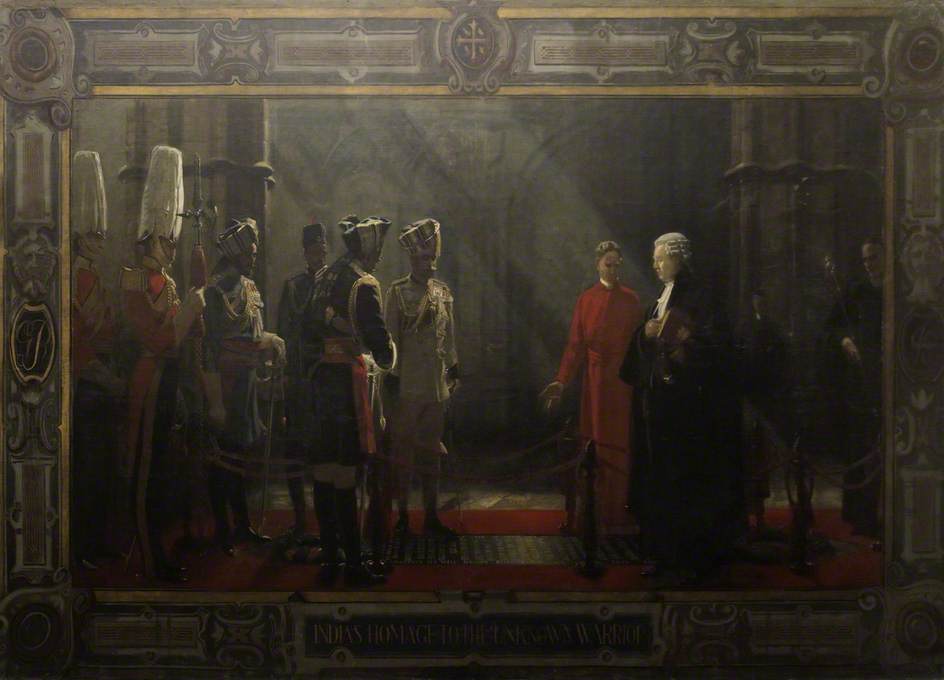
India's Homage to the Tomb of the Unknown Warrior in Westminster Abbey
 Acrylic On Canvas
- WallArt
- Conservative Academic Painting
 1924
1924- Modern
 305.0 x 488.0 cm
 British Library
 Weiterlesen
Giclée / Kunstdruck
Giclée- oder Leinwanddruck in Museumsqualität mit schneller Produktion und flexiblen Veredelungsoptionen. ( Handgemalte Reproduktion bestellen Bild kaufen)




P118B $10

P118H $10

P118W $10

P438Z $10

P508JH $12

P508YH $12

P805H $10

P805Z $10

P919BZ $10

P919G $10

P919XJ $10

P959ZH $10

P968JZ $12

W106C $8

W218G $10

W218JH $8

W218Y $10

W307PJ $10

W316G $10

W316PJ $8

W316Y $10

W398PJ $8

W4111J $10

W500HY $15

W500JH $15

W692G $12

W849H $8

W940BG $15

W953PJ $8




Wählen Sie aus unseren vordefinierten Formaten, die den ursprünglichen Proportionen des Kunstwerks entsprechen.

Sie können Ihre eigenen Maße eingeben, um ein bestimmtes Format oder einen speziellen Platz einzupassen. Wenn das von Ihnen gewählte Format nicht den Proportionen des Originalbildes entspricht, werden wir das Kunstwerk entweder beschneiden oder das Bild mit einem gespiegelten oder einfarbigen Rand erweitern. Ein digitaler Entwurf wird Ihnen zur Genehmigung zugesandt, bevor die Produktion beginnt.
Bitte beachten Sie, dass die Vorschau auf dem Bildschirm nicht den tatsächlichen Zuschnitt oder die Erweiterung widerspiegelt. Nur der Entwurf zeigt die endgültige Komposition präzise an.
Obwohl Sondermaße verfügbar sind, empfehlen wir die Auswahl eines Maßes aus der vordefinierten Liste, um die ursprünglichen Proportionen zu bewahren.
Weltweiter Versand () innerhalb von 2 Wochen statt der üblichen 4/5 Wochen. (31 August)

Kostenloser weltweiter Expressversand

Hochwertige Leinenleinwand

Umfassender Versicherungsschutz beim Versand

Zollgebühren-Rückerstattungsgarantie

Garantie für exakte Farbtreue

60 Tage Rückgaberecht (nur bei Mängeln)

100% Geld-zurück-Garantie

Mengenrabatt verfügbar
 Die Glasoption ist nur für Größen unter 110 cm verfügbar.

India's Homage to the Tomb of the Unknown Warrior in Westminster Abbey
Giclée / Kunstdruck
Format der Reproduktion
-


Gesamtpreis
$ 62
A Homage in Stone and Shadow: Salisbury’s Westminster Vision
Frank O. Salisbury's “India’s Homage to the Tomb of the Unknown Warrior in Westminster Abbey” is more than just a painting; it’s a poignant meditation on sacrifice, remembrance, and the enduring spirit of military service. Completed in 1924, this large-scale oil on canvas captures a solemn gathering of British officers and men assembled before the newly constructed memorial to those lost during World War I. Salisbury, already established as “Britain's Painter Laureate” – a title earned through his meticulous portraits of royalty and historical figures – here demonstrates a remarkable ability to convey both formal grandeur and quiet contemplation. The scene unfolds within the hallowed halls of Westminster Abbey, lending an immediate sense of weight and significance to the event depicted. Notice the careful attention to detail: the uniforms, rendered with painstaking accuracy reflecting the period, the subtle expressions on the men’s faces – a mixture of respect, grief, and perhaps even a touch of melancholy – all contribute to a powerfully evocative atmosphere. The inclusion of a loyal dog further humanizes the scene, adding an element of warmth amidst the formality.The Context of Remembrance: A Nation Mourning
To fully appreciate Salisbury’s work, it's crucial to understand the historical backdrop against which it was created. Following the devastating losses of World War I, Britain grappled with a profound sense of national mourning and a desperate need for a tangible way to honor its fallen soldiers. The concept of an “Unknown Warrior” – a single unidentified soldier whose remains would be interred in a prominent location – emerged as a powerful symbol of unity and remembrance. This initiative was spearheaded by Lord Montagu, the then-Secretary of State for War, who sought to create a focal point for national grief and a testament to the sacrifices made during the conflict. Salisbury’s painting directly reflects this sentiment, serving as a visual representation of the nation's collective mourning and its desire to acknowledge the anonymity of those lost in battle. The Abbey itself, steeped in centuries of history and religious significance, provided an ideal setting for such a solemn occasion.Salisbury’s Style: Conservative Grandeur
Salisbury’s artistic style is characterized by a steadfast conservatism, a hallmark of his oeuvre. He eschewed the radical experimentation that defined much of early 20th-century art, instead favoring a meticulously detailed and classically informed approach. This is evident in the painting's composition – a balanced arrangement of figures within a clearly defined space – and its use of rich, muted colors. His training at the Royal Academy Schools instilled in him a deep appreciation for technique and craftsmanship, qualities that are abundantly displayed here. The brushwork is smooth and controlled, creating a sense of solidity and permanence. While some critics might have considered his style somewhat traditional, it’s precisely this unwavering adherence to established conventions that lends the painting its dignified and timeless quality. Salisbury's focus was not on capturing fleeting moments or expressing subjective emotion; rather, he aimed to create an image of enduring significance – a visual record of a pivotal moment in British history.Symbolism and Emotional Resonance
Beyond its historical context, “India’s Homage” is rich in symbolic meaning. The gathering itself represents the collective mourning of a nation, united in grief over the loss of countless young men. The presence of the dog can be interpreted as a symbol of loyalty and companionship – qualities deeply valued by soldiers during wartime. The act of standing together, engaged in quiet conversation or greeting one another, suggests a shared sense of purpose and solidarity. The painting’s subdued palette—dominated by browns, grays, and blues—evokes a mood of solemnity and reflection. It's not a scene of exuberant celebration; rather, it is a quietly powerful depiction of remembrance and respect. The overall effect is profoundly moving, inviting the viewer to contemplate the sacrifices made in the name of duty and honor.A Reproduction for Your Space: Bringing History Home
ArtsDot offers meticulously hand-painted reproductions of “India’s Homage to the Tomb of the Unknown Warrior in Westminster Abbey,” allowing you to bring this significant artwork into your home or office. Our skilled artists replicate Salisbury's meticulous detail and evocative atmosphere with exceptional accuracy, ensuring that your reproduction captures the painting's full emotional impact. Available in a range of sizes, our reproductions are printed on high-quality canvas using archival inks, guaranteeing their longevity and beauty for generations to come. This piece is not merely a decoration; it’s a window into history—a tangible reminder of Britain’s wartime past and its enduring commitment to honoring the memory of those who served. Consider this artwork as a powerful statement of respect, remembrance, and the profound value of human sacrifice.Ähnliche Kunstwerke
Über den Künstler
Frank Owen Salisbury: Ein Leben in Porträts und Prunk
- Geboren: Harpenden, Großbritannien (18. Dezember 1874)
- Gestorben: 31. August 1962
- Bekannt als "Britanniens Malerkünstler-Laureat"
Frühes Leben und Ausbildung
- Salisburys frühes Leben war geprägt von brüchiger Gesundheit, was zu einer hausbezogenen Bildung führte, die hauptsächlich von seiner Schwester Emilie beaufsichtigt wurde.
- Er begann in der Fahrradwerkstatt seines Vaters zu arbeiten und reparierte Fahrräder.
- Im Alter von 15 Jahren wurde er an seinen Bruder Henry James Salisbury ausgebildet, der eine Glaserei in St Albans leitete. Diese Lehre vermittelte ihm wertvolle Fähigkeiten im Malen und in Detailarbeiten, die für die Bleiverglasung unerlässlich waren.
- Er besuchte Heatherley’s School of Art und gewann später Stipendien an der Royal Academy Schools (1892-1897), wo er hervorragende Leistungen zeigte und zwei Silbermedaillen sowie das Landseer-Stipendium erhielt, das eine Reise nach Italien im Jahr 1896 ermöglichte.
Künstlerische Entwicklung und Stil
- Salisburys Stil war durch einen standhaften konservativen Ansatz gekennzeichnet, der in traditionellen Techniken und Sujets verwurzelt war. Er bevorzugte großformatige Leinwände mit historischen Ereignissen und zeremoniellen Anlässen.
- Seine frühen Arbeiten umfassten Porträts des lokalen Adels und Mitglieder der Harpenden Methodist Church.
- Eine entscheidende Begegnung mit Lord Wakefield führte ihn in die Gesellschaftsporträtmalerei ein, was zu Aufträgen von prominenten Persönlichkeiten führte.
- Er entwickelte eine schnelle Maltechnik, die angeblich durch tägliches Üben des Malens seiner Zwillings-Töchter für eine Stunde jeden Morgen verfeinert wurde.
- Seine Arbeit wurde von Renaissance-Fresken und dem Wunsch beeinflusst, die Pracht der Zeremonien festzuhalten.
Wichtige Errungenschaften und bemerkenswerte Werke
- Königliche Porträts: Salisbury erlangte bedeutende Anerkennung für seine Porträts der britischen Königsfamilie, darunter fünfundzwanzig Mitglieder des Hauses Windsor, und war der erste Künstler, der HM Queen Elizabeth II malte.
- Winston Churchill: Er malte Winston Churchill häufiger als jeder andere Künstler und schuf ikonische Bilder wie die, die ihn in einem Sirenenanzug und während der Rede "Blood, Sweat and Tears" zeigen.
- Amerikanische Präsidenten: Salisburys Ruf erstreckte sich auf die Vereinigten Staaten, wo er sechs US-Präsidenten malte, darunter Franklin D. Roosevelt (dessen Porträt das offizielle Porträt im Weißen Haus ist).
- Bemerkenswerte Modelle: Zu den anderen bedeutenden Porträts gehören diejenigen von Richard Burton, Andrew Carnegie, Sir Alan Cobham, Sir Robert Ludvig Mond, Maria Montessori, Montgomery of Alamein, Earl Mountbatten of Burma, Benito Mussolini, John Player, Lord Rank, Jan-Christiaan Smuts und Sir Henry Wood.
- Wandgemälde für die Royal Exchange: Im Jahr 1919 malte er ein großes Wandgemälde für die Royal Exchange in London zur Erinnerung an den Nationalen Friedensgottesdienst.
Historische Bedeutung und Vermächtnis
- Salisbury erzielte sowohl auf beiden Seiten des Atlantiks beträchtlichen finanziellen Erfolg und verkörperte das, was als der "amerikanische Traum" galt.
- Trotz seines umfangreichen Werks und seiner Popularität wurde er nie zum Mitglied der Royal Academy gewählt, was für ihn eine Enttäuschung war.
- Er kritisierte modernistische Kunstrichtungen wie Kubismus und Surrealismus scharf und spiegelte damit eine Vorliebe für traditionelle künstlerische Werte wider.
- Sein Vermächtnis liegt in seiner Fähigkeit, das Wesen bedeutender Persönlichkeiten und historischer Momente durch einen klassischen und würdevollen Stil einzufangen und seine Position als einer der führenden Gesellschaftskünstler seiner Generation zu festigen.
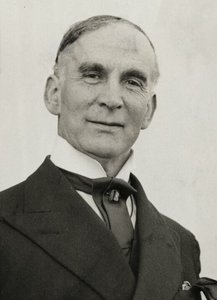
Frank Owen Salisbury
1874 - 1962 , Vereinigtes Königreich
Kurzinfos
- Beeinflusste Künstler: ['Renaissance-Künstler']
- Bemerkenswerte Werke:
- Das Boy Cornwell
- Winston Churchill Porträts
- Queen Elizabeth II Porträt
- Royal Exchange Wandbild
- Geburtsdatum: 18. Dezember 1874
- Geburtsort: Harpenden, Vereinigtes Königreich
- Künstlerischer Stil: Konservativer Realismus
- Nationalität: Englisch
- Sterbedatum: 31. August 1962
- Vollständiger Name: Frank Owen Salisbury
Ähnliche Artikel
Frank O. Salisbury: Capturing an Era Through Victorian Portraiture & Atmospheric Realism
Explore the life & work of Frank O. Salisbury, Britain's celebrated 'Painter Laureate'. Discover his masterful Victorian portraits, atmospheric realism, and captivating historical murals. A deep dive into a remarkable artistic legacy.
Utagawa Kuniyoshi: Narrative Innovation und die Verschmelzung von Tradition mit Populärkultur – Eine Studie zum Meister des japanischen Ukiyo-e
Entdecken Sie Utagawa Kuniyoshi, den Meister des japanischen Ukiyo-e! Erfahren Sie mehr über seine narrative Innovation, die Verschmelzung von Tradition und Populärkultur sowie seine einzigartige Technik. Jetzt lesen!
Josep Cusachs i: Exploring Catalan Modernism Through Social Commentary & Artistic Innovation
Explore the captivating world of Josep Cusachs i, a key figure in Catalan Modernism. Discover his realist paintings, social commentary, and influence on 19th-century Spanish art. Hand-painted reproductions available at ArtsDot.
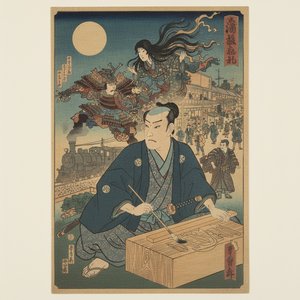
Tsukioka Yoshitoshi: Der letzte Glanz des Ukiyo-e – Narrative, Innovation und der Wandel im Meiji-Zeitalter
Entdecken Sie das faszinierende Werk von Tsukioka Yoshitoshi, dem letzten Meister des Ukiyo-e. Erfahren Sie mehr über seine Innovationen, den Einfluss der Meiji-Zeit und die bleibende Bedeutung seiner Kunst.

Charting Unknown Territories: A Visual Exploration of Human Discovery in Art History
Explore the history of artistic exploration! Discover iconic landscape paintings & artists who charted new territories – from Romantic visions of the West to modern abstract interpretations. Learn more at ArtsDot.