

 Vorschau anzeigen
 Versenden
 Teilen
 Details anzeigen

 Herunterladen
 Ähnliche Objekte
 Röntgenaufnahme
 Diashow
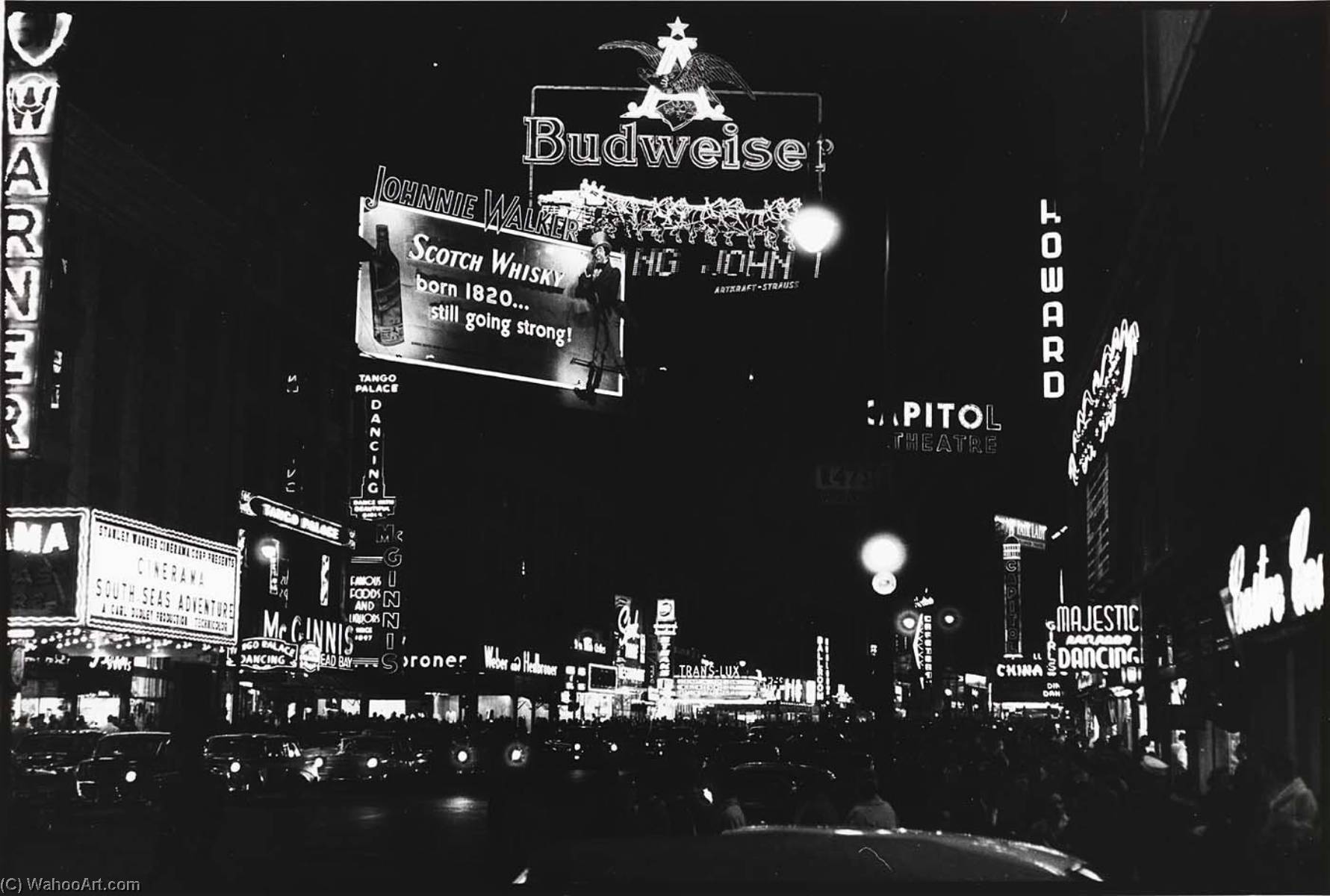
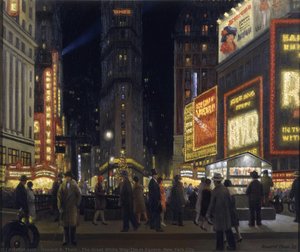
Times Square (Budweiser)
 Contemporary Realism
 1956
1956 28.0 x 35.0 cm
 Weiterlesen
Erwerben Sie ein hochauflösendes, optimiertes digitales Bild, das der Online-Vorschau weit überlegen ist.
Jede Datei wird von unseren hauseigenen Spezialisten mit modernsten Werkzeugen und fachmännischer manueller Retusche sorgfältig vorbereitet. Wir stellen sicher, dass jedes Bild eine außergewöhnliche Klarheit, präzise Farbgenauigkeit und feinste Details aufweist.
Die endgültige Datei wird innerhalb von 72 Stunden per E-Mail zugestellt und ist für den sofortigen Einsatz in professionellen, redaktionellen und Druckumgebungen optimiert. Es handelt sich um dieselbe Qualität, der führende Designstudios, Verlage und Galerien vertrauen.
Digitales Bild
Laden Sie eine hochauflösende Datei für die persönliche Präsentation, den Druck und kreative Projekte herunter. ( Druck bestellen Handgemalte Reproduktion bestellen)
In jeder Bestellung digitaler Bilder enthalten
Professionelle digitale Bereitstellung, garantiert
Wenn Sie sich für ArtsDot.com entscheiden, erhalten Sie nicht nur ein Bild – Sie erhalten ein professionell aufbereitetes digitales Kunstwerk, das mit höchster Präzision erstellt und durch eine Zufriedenheitsgarantie abgesichert wird. Hier ist alles, was automatisch mit Ihrer Bestellung geliefert wird:

Schnelle E-Mail-Zustellung
Ihre hochauflösende digitale Bilddatei wird Ihnen innerhalb von 72 Stunden nach der Bestellung per E-Mail zugestellt – bereit zur sofortigen Verwendung.

KI-optimierte digitale Datei
Ihre Kunstwerke werden professionell mithilfe fortschrittlicher KI-Tools und manueller Bearbeitung optimiert, um maximale Detailtreue, Klarheit und Farbgenauigkeit zu gewährleisten.

Lebenslanger kostenloser Neudruckservice
Datei versehentlich gelöscht oder verloren? Keine Sorge – wir senden sie Ihnen jederzeit kostenlos erneut zu.

Keine Einfuhrgebühren – jemals
Genießen Sie Ihr Kunstwerk sofort ohne Zollgebühren, Einfuhrabgaben oder Versandkosten – digitale Downloads sind immer steuerfrei.

Garantierte Farbtreue
Wir garantieren, dass Ihr digitales Bild mithilfe professioneller Werkzeuge und Farbmanagement die Originalfarben so präzise wie möglich wiedergibt.

100-Tage-Zufriedenheitsgarantie
Wenn Sie mit Ihrem digitalen Bild nicht zufrieden sind, werden wir es überarbeiten oder 100% innerhalb von 100 Tagen erstatten – ohne Wenn und Aber.

100% Geld-zurück-Garantie
Nicht zufrieden? Erhalten Sie innerhalb von 100 Tagen nach Erhalt Ihrer digitalen Datei eine vollständige Rückerstattung – ohne Wenn und Aber.

Rabatte bei Großbestellungen
3 Bilder kaufen, 10% sparen – 5 Bilder kaufen, 15% sparen – Ab 10 Bildern 20% sparen. Ideal für kreative Projekte, Galerien und Agenturen.
Ähnliche Kunstwerke
Biografie des Künstlers
Frank Paulin: A Street Photographer’s Urban Symphony
Frank Paulin, born in Pittsburgh in 1926 and passing away in 2016, wasn't merely a photographer; he was an astute observer of the human condition as it unfolded within the vibrant, often chaotic, tapestry of twentieth-century cities. His legacy rests not just on a collection of striking images, but on his ability to capture fleeting moments of everyday life—a street fair bustling with activity, a solitary figure passing a bank on Easter morning, a parking lot reflecting the urban landscape—transforming these commonplace scenes into powerful narratives imbued with both realism and an undeniable emotional resonance. Paulin’s work offers a unique window into the soul of New York City, Chicago, and beyond, revealing a deep understanding of light, composition, and the subtle stories embedded within the urban environment.Early Years and Artistic Foundations
Paulin's artistic journey began unexpectedly at the age of sixteen when he apprenticed as a photographer’s assistant in Chicago’s Whittaker-Christiansen Studio. This early exposure to the technical aspects of photography—the mechanics, the chemistry, the darkroom process—laid the groundwork for his later work. Following this initial training, Paulin served with the Army Signal Corps during World War II, an experience that profoundly shaped his artistic perspective. Assigned to photograph the devastation in German cities after the war, he developed a keen eye for detail and a sensitivity to the human cost of conflict—a sensibility that would inform his later documentation of urban life. Crucially, Paulin’s formal education extended beyond practical skills; he studied at the Chicago Art Institute and the Institute of Design, where he was mentored by influential figures like Harry Callahan and Laszlo Moholy-Nagy. This exposure to avant-garde ideas and design principles significantly influenced his approach to composition and storytelling, moving him away from purely documentary representation towards a more considered and evocative style.The Rise of Street Photography and New York
Returning to New York City in 1953, Paulin embraced the burgeoning field of street photography, quickly establishing himself as a distinctive voice within the city’s artistic community. He began working as a freelance fashion illustrator, but simultaneously dedicated himself to documenting the rhythms and textures of urban life—walking the streets at night, patiently waiting for the perfect moment to capture a scene. His early exhibitions at Limelight Gallery, a pioneering space for avant-garde photography, brought him critical acclaim and established his reputation as an artist deeply attuned to the energy and complexity of New York City. Paulin’s photographic style was characterized by its directness, honesty, and remarkable ability to convey atmosphere—the interplay of light and shadow, the movement of people, the subtle details that reveal a place's character. He eschewed elaborate staging or manipulation, preferring to capture reality as it unfolded before his lens.Key Themes and Techniques
Paulin’s work is defined by several recurring themes: the everyday lives of ordinary people, the dynamism of urban spaces, and the interplay between light and shadow. He was particularly drawn to capturing moments of interaction—a street fair, a passerby, a glimpse into a shop window—creating images that felt both intimate and expansive. His technical mastery is evident in his use of black-and-white photography, where he skillfully manipulated contrast and tone to create mood and depth. He frequently employed a shallow depth of field, drawing the viewer’s attention to specific elements within the frame while blurring the background, creating a sense of immediacy and intimacy. Furthermore, Paulin's work demonstrates an acute awareness of composition—the use of lines, shapes, and patterns to guide the eye and create visual harmony.Legacy and Influence
Frank Paulin’s contribution to photography extends beyond his individual body of work; he helped shape the development of street photography as a distinct genre. His images continue to resonate with viewers today, offering a timeless perspective on urban life and reminding us of the beauty and complexity that can be found in the most ordinary moments. His photographs are held in numerous collections around the world—from the Smithsonian American Art Museum to the Lowe Art Museum—testament to their enduring artistic merit. Paulin’s legacy is one of quiet observation, technical skill, and a profound understanding of the human experience within the urban landscape. He remains an important figure in 20th-century photography, whose work continues to inspire artists and viewers alike.
frank paulin
1926 - 2016
Kurzinfos
- Artistic Movement Or Style: Street photography, Documentary
- Artists Or Movements Influenced By This Artist:
- Harry Callahan
- Laszlo Moholy-Nagy
- Artists Who Influenced This Artist: ['Henri Cartier-Bresson']
- Date Of Birth: August 3, 1926
- Date Of Death: June 11, 2016
- Full Name: Frank Paulin
- Nationality: American
- Notable Artworks:
- Street Fair with Buildings
- Easter, Man passing The Hanover Bank
- Volkswagen Reflection
- Place Of Birth: Pittsburgh, USA