

 Vorschau anzeigen
 Versenden
 Teilen
 Details anzeigen

 Herunterladen
 Ähnliche Objekte
 Röntgenaufnahme
 Diashow
 Statistiken
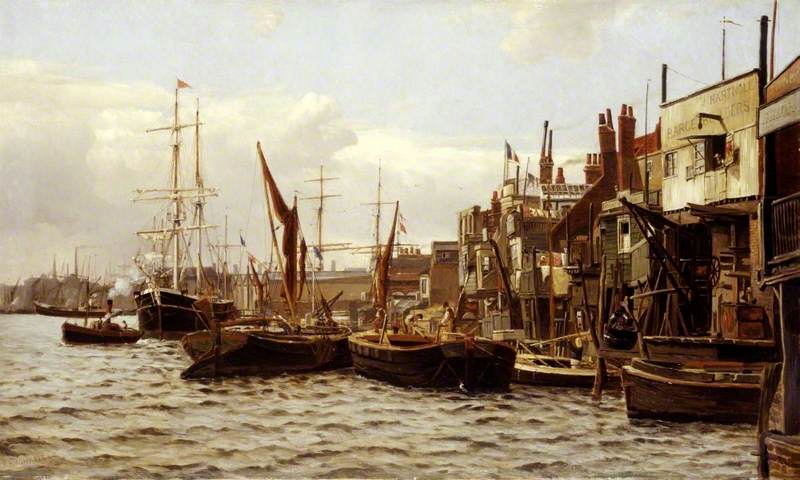
The Riverside at Limehouse, London
 1890
1890 40.0 x 50.0 cm
 Weiterlesen
Giclée / Kunstdruck
Giclée- oder Leinwanddruck in Museumsqualität mit schneller Produktion und flexiblen Veredelungsoptionen. ( Handgemalte Reproduktion bestellen Zum digitalen Bild wechseln)




































Wählen Sie aus unseren vordefinierten Formaten, die den ursprünglichen Proportionen des Kunstwerks entsprechen.

Sie können Ihre eigenen Maße eingeben, um ein bestimmtes Format oder einen speziellen Platz einzupassen. Wenn das von Ihnen gewählte Format nicht den Proportionen des Originalbildes entspricht, werden wir das Kunstwerk entweder beschneiden oder das Bild mit einem gespiegelten oder einfarbigen Rand erweitern. Ein digitaler Entwurf wird Ihnen zur Genehmigung zugesandt, bevor die Produktion beginnt.
Bitte beachten Sie, dass die Vorschau auf dem Bildschirm nicht den tatsächlichen Zuschnitt oder die Erweiterung widerspiegelt. Nur der Entwurf zeigt die endgültige Komposition präzise an.
Obwohl Sondermaße verfügbar sind, empfehlen wir die Auswahl eines Maßes aus der vordefinierten Liste, um die ursprünglichen Proportionen zu bewahren.
Weltweiter Versand () innerhalb von 2 Wochen statt der üblichen 4/5 Wochen. (8 September)

Kostenloser weltweiter Expressversand

Hochwertige Leinenleinwand

Umfassender Versicherungsschutz beim Versand

Zollgebühren-Rückerstattungsgarantie

Garantie für exakte Farbtreue

100-Tage-Rückgaberecht (nur bei Mängeln)

100% Geld-zurück-Garantie

Mengenrabatt verfügbar
 Die Glasoption ist nur für Größen unter 110 cm verfügbar.

The Riverside at Limehouse, London
Giclée / Kunstdruck
Format der Reproduktion
-


Gesamtpreis
$ 62
Ähnliche Kunstwerke









Über den Künstler
Frederic Almore Winkfield: Bridging Victorian London and Romantic Landscape
Frederic Almore Winkfield (born circa 1860, died 1937) emerged as a prominent British watercolorist during the late Victorian era, capturing the serene beauty of the Thames River and its environs with meticulous detail and imbued with a palpable sense of atmosphere. While biographical information remains somewhat sparse—a testament to the often elusive nature of artistic lives—Winkfield’s oeuvre speaks volumes about his artistic vision and reflects the broader trends shaping British art at the turn of the century. His formative years were spent in Fulham, London, where he absorbed the influences of Romantic landscape painting championed by artists like Turner and Constable. These masters instilled in Winkfield a profound appreciation for capturing fleeting moments of sublime grandeur—the dramatic interplay of light and shadow across water surfaces—a technique that would become central to his artistic practice. Early works demonstrate a masterful command of watercolor pigments, skillfully blended to achieve luminous tonal gradations and conveying the subtle nuances of color observed in nature. He was particularly drawn to Constable’s dedication to portraying rural England with uncompromising realism, recognizing its importance in conveying the spiritual essence of the natural world. Winkfield’s artistic career gained considerable momentum through exhibitions at the Royal Watercolour Society (RWS) and other prestigious venues. He consistently pursued landscapes depicting sections of the Thames River—particularly Fulham Bridge—presenting them with remarkable accuracy and capturing the essence of riverside life. These paintings aren't merely topographical representations; they are imbued with a contemplative spirit, inviting viewers to contemplate the passage of time and the enduring power of natural beauty. The artist’s meticulous attention to detail extends beyond mere visual fidelity; he strives to convey not only what is seen but also how it feels—the coolness of the river breeze, the dappled sunlight filtering through the foliage. His paintings often depict scenes bathed in soft, diffused light, reminiscent of Turner's atmospheric landscapes, creating a sense of ethereal grandeur. A significant contribution to Winkfield’s artistic legacy lies in his exploration of symbolism within landscape imagery. Recurring motifs—such as weeping willows and reflections on water—often carry connotations of melancholy and remembrance, reflecting a broader Victorian preoccupation with mortality and spiritual contemplation. These symbolic elements elevate Winkfield’s paintings beyond mere visual pleasure, prompting viewers to engage in deeper introspection about the human condition. He believed that art could serve as a conduit for conveying profound truths about existence, mirroring the philosophical debates prevalent during his time. Despite his considerable success during his lifetime, Winkfield remained largely unrecognized by posterity until recent scholarship revived interest in his work. Today, Frederic Almore Winkfield's paintings are celebrated for their exquisite watercolor technique and their evocative portrayal of Victorian London’s riverside landscapes—a testament to an artist who successfully blended Romantic idealism with meticulous observation, securing a place among the finest practitioners of British watercolor painting. His most famous works include “Old Fulham Bridge,” “Old Toll House, Fulham Bridge” and “Towed down the River,” each demonstrating his unparalleled ability to capture the atmosphere and beauty of the Thames Estuary.
Kurzinfos
- Artistic Movement Or Style: Romantic Landscape
- Date Of Birth: circa 1860
- Date Of Death: 1937
- Full Name: Frederic Almore Winkfield
- Nationality: British
- Notable Artworks:
- Old Fulham Bridge
- Old Toll House, Fulham Bridge
- Towed down the River
- Place Of Birth: Fulham Bridge