 Vorschau anzeigen
 Versenden
 Teilen
 Details anzeigen

 Herunterladen
 Ähnliche Objekte
 Röntgenaufnahme
 Diashow
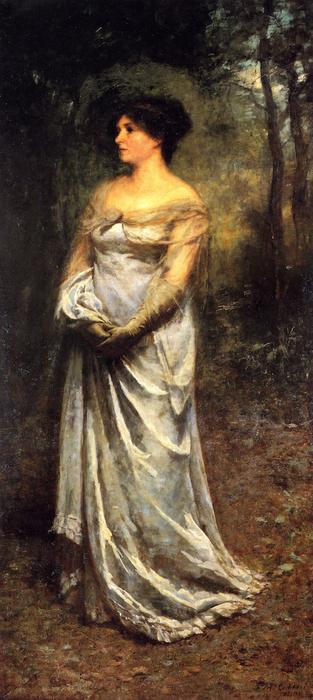
A Lady in Grey (also known as Portrait of Mrs. McCubbin)


 Weiterlesen
Giclée / Kunstdruck
Giclée- oder Leinwanddruck in Museumsqualität mit schneller Produktion und flexiblen Veredelungsoptionen. ( Handgemalte Reproduktion bestellen Bild kaufen)




P118B $10

P118H $10

P118W $10

P438Z $10

P508JH $12

P508YH $12

P805H $10

P805Z $10

P919BZ $10

P919G $10

P919XJ $10

P959ZH $10

P968JZ $12

W106C $8

W218G $10

W218JH $8

W218Y $10

W307PJ $10

W316G $10

W316PJ $8

W316Y $10

W398PJ $8

W4111J $10

W500HY $15

W500JH $15

W692G $12

W849H $8

W940BG $15

W953PJ $8




Wählen Sie aus unseren vordefinierten Formaten, die den ursprünglichen Proportionen des Kunstwerks entsprechen.

Sie können Ihre eigenen Maße eingeben, um ein bestimmtes Format oder einen speziellen Platz einzupassen. Wenn das von Ihnen gewählte Format nicht den Proportionen des Originalbildes entspricht, werden wir das Kunstwerk entweder beschneiden oder das Bild mit einem gespiegelten oder einfarbigen Rand erweitern. Ein digitaler Entwurf wird Ihnen zur Genehmigung zugesandt, bevor die Produktion beginnt.
Bitte beachten Sie, dass die Vorschau auf dem Bildschirm nicht den tatsächlichen Zuschnitt oder die Erweiterung widerspiegelt. Nur der Entwurf zeigt die endgültige Komposition präzise an.
Obwohl Sondermaße verfügbar sind, empfehlen wir die Auswahl eines Maßes aus der vordefinierten Liste, um die ursprünglichen Proportionen zu bewahren.
Weltweiter Versand () innerhalb von 2 Wochen statt der üblichen 4/5 Wochen. (25 August)

Kostenloser weltweiter Expressversand

Hochwertige Leinenleinwand

Umfassender Versicherungsschutz beim Versand

Zollgebühren-Rückerstattungsgarantie

Garantie für exakte Farbtreue

60 Tage Rückgaberecht (nur bei Mängeln)

100% Geld-zurück-Garantie

Mengenrabatt verfügbar
 Die Glasoption ist nur für Größen unter 110 cm verfügbar.

A Lady in Grey (also known as Portrait of Mrs. McCubbin)
Giclée / Kunstdruck
Format der Reproduktion
-


Gesamtpreis
$ 62
Sammlerstück-Beschreibung
A Lady in Grey: A Portrait of Victorian Contemplation
Frederick McCubbin’s “A Lady in Grey,” painted in 1900, is more than just a portrait; it's a carefully constructed tableau of late Victorian sensibilities and the burgeoning spirit of Australian Impressionism. The painting depicts a woman, likely Mrs. McCubbin (Frederick’s wife), standing beneath a solitary tree against a backdrop of muted, atmospheric hills. Her posture—slightly turned towards the viewer, one hand resting gently on her skirt—conveys an air of quiet contemplation, a subtle blend of vulnerability and resilience that resonates deeply with viewers even today.
McCubbin’s style leans heavily into the principles of Impressionism, yet he grounds it firmly within the Australian landscape. He employs loose brushstrokes, prioritizing capturing fleeting light and atmosphere over meticulous detail. The palette is dominated by cool greys, blues, and browns—a deliberate choice that evokes a sense of melancholy and the quiet beauty of the natural world. Notice how the artist uses broken color to suggest depth and texture in the foliage, creating an illusion of movement and airiness. This technique was heavily influenced by his travels through Europe where he encountered the works of J.M.W Turner and the French Impressionists.
The Heidelberg School and Australian Identity
“A Lady in Grey” is a quintessential example of work produced by the Heidelberg School, a group of Australian artists who sought to capture the essence of their homeland—its rugged landscapes, pioneering spirit, and evolving identity. Unlike earlier colonial art that often romanticized European ideals, the Heidelberg School focused on depicting everyday Australian life with honesty and realism. McCubbin’s paintings frequently explored themes of rural existence, family relationships, and the challenges faced by settlers in a new land. The inclusion of the tree—a common motif in his work—symbolizes both strength and vulnerability, mirroring the enduring spirit of Australia itself.
The painting's setting, reminiscent of the Burnley quarry near Melbourne, was a favored subject for McCubbin. He frequently depicted this area, using it as a backdrop to explore themes of isolation, nostalgia, and the connection between humanity and nature. The woman’s attire—a simple grey dress—further reinforces this sense of understated elegance and connection to the land. It speaks to a time when practicality and modesty were valued, yet there's an undeniable grace in her presence.
Symbolism and Emotional Resonance
Beyond its surface depiction, “A Lady in Grey” is rich with symbolic meaning. The grey color itself represents ambiguity, introspection, and perhaps even the complexities of a woman’s role within Victorian society. Her gaze—directed slightly off-camera—suggests a thoughtful awareness of her surroundings and a quiet strength of character. The solitary tree serves as a visual anchor, grounding the figure in the landscape and emphasizing her connection to the natural world.
The painting evokes a powerful sense of nostalgia and melancholy, inviting viewers to contemplate themes of memory, loss, and the passage of time. It’s not merely a portrait; it's a meditation on the human condition—a poignant reminder of the beauty and fragility of life in the Australian bush. It remains a beloved work, frequently reproduced and admired for its evocative atmosphere and timeless appeal.
A Legacy of Australian Art
Frederick McCubbin’s “A Lady in Grey” stands as a cornerstone of Australian art history, representing a pivotal moment in the development of Impressionism within the country. His ability to seamlessly blend European artistic techniques with distinctly Australian themes has cemented his place as one of the nation's most celebrated painters. Reproductions of this work continue to resonate with audiences today, offering a glimpse into a bygone era and reminding us of the enduring power of art to capture the spirit of a land and its people.
Ähnliche Kunstwerke
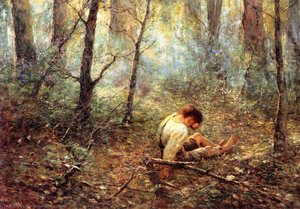
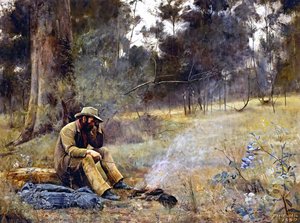
Über den Künstler
Frederick McCubbin: Ein Pionier der australischen Impressionismus
- Geboren: Melbourne, Australien (25. Februar 1855)
- Gestorben: 20. Dezember 1917
Frederick McCubbin gilt als eine zentrale Figur in der australischen Kunstgeschichte und ist bekannt für seine Beiträge zur Heidelberg School Bewegung und seine eindringlichen Darstellungen des australischen Lebens. Geboren in einer Familie von Bäckern, war sein frühes Leben von vielfältigen Erfahrungen geprägt – vom Arbeiten als Anwaltsgehilfe bis zum Brot austragen –, bevor er sich ganz der Malerei widmete.
Frühes Leben und künstlerische Ausbildung
- Frühzeitige Bildung: Besuchte die West Melbourne Common School von William Willmett und die St. Paul’s School.
- Künstlerische Anfänge: Zeigte schon früh eine Begabung für das Zeichnen, was zu kurzen Tätigkeiten in verschiedenen Berufen führte, bevor er sich an der National Gallery of Victoria's School of Design einschrieb.
- Mentorenschaft: Studierte unter namhaften Künstlern wie Eugene von Guerard und George Folingsby und verbesserte so seine Fähigkeiten im Landschaftsmalen.
- Zusammenarbeit mit Tom Roberts: Eine entscheidende Freundschaft entwickelte sich zu dem Künstler Tom Roberts, was zur Gründung des Box Hill Artists' Camp im Jahr 1885 führte – einem Eckpfeiler der Heidelberg School Bewegung.
Die Heidelberg School und nationale Erzählungen
- Heidelberg School Bewegung: McCubbin spielte eine zentrale Rolle in dieser Plein-Air-Kunstbewegung, die versuchte, das Wesen des australischen Lebens und der Landschaften einzufangen.
- Fokus auf australische Identität: Seine Werke aus dieser Zeit, wie Down on His Luck (1889), On the Wallaby Track (1896) und The Pioneer (1904), sind ikonische Darstellungen des Pionierlebens und der Interaktion zwischen europäischen Siedlern und dem australischen Busch.
- Themen der Melancholie: McCubbins Gemälde erforschten oft Themen wie Einsamkeit, Härte und die Herausforderungen, denen sich frühe Siedler in einer weiten und unversöhnlichen Landschaft stellten.
Entwicklung des Stils und spätere Werke
- Europäischer Einfluss (1907): Eine Reise nach Europa führte ihn mit den Werken von J.M.W. Turner und französischen Impressionisten in Kontakt, was zu einer Verschiebung hin zu freieren Pinselstrichen und helleren Farben führte.
- Technikwechsel: Seine späteren Gemälde zeigten einen abstrakteren Stil, der sich in Werken wie An Interior zeigt, das von vielen Kritikern als eine seiner stärksten künstlerischen Leistungen angesehen wird.
- Fortsetzung der Themenerkundung: Trotz der stilistischen Veränderungen setzte McCubbin seine Erkundung der australischen Identität und des menschlichen Zustands fort.
Vermächtnis und Einfluss
- Anerkennung und Museen: Seine Werke befinden sich in renommierten Sammlungen, darunter die National Gallery of Victoria und die Art Gallery of Ballarat.
- Einfluss auf die australische Kunst: McCubbins Beitrag zur Etablierung einer unverwechselbaren australischen künstlerischen Identität ist unbestreitbar und hat Generationen von Künstlern beeinflusst.
- Bleibende Bedeutung: Er wird weiterhin als einer der wichtigsten und beliebtesten Maler Australiens gefeiert, dessen Werke bis heute bei einem Publikum Anklang finden.
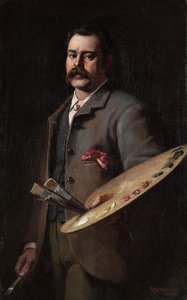
Frederick McCubbin
1855 - 1917 , Australien
Kurzinfos
- Beeinflusste Künstler:
- Eugene von Guerard
- Tom Roberts
- J. M. W. Turner
- Bemerkenswerte Werke:
- Down on His Luck
- On the Wallaby Track
- The Pioneer
- Geburtsdatum: 25. Februar 1855
- Geburtsort: Melbourne, Australien
- Künstlerische Bewegung: Heidelberg School/Impressionismus
- Nationalität: Australisch
- Sterbedatum: 20. Dezember 1917
- Vollständiger Name: Frederick McCubbin
Ähnliche Artikel

Evocations of Place: A Historical Journey Through Landscape Art
Explore the rich history of landscape art with ArtsDot. Discover renowned artists, movements like Impressionism & Romanticism, and expert guidance for collecting timeless pieces. Find your perfect serene escape today!
Evocations of Place: A Historical Journey Through Landscape Art
Explore the rich history of landscape art with ArtsDot. Discover renowned artists, movements like Impressionism & tonalism, and expert guidance for collecting timeless pieces. Find your perfect serene escape today!

Paul Cézanne: Die 25 Meisterwerke des Impressionismus | ArtsDot
Entdecken Sie die 25 Meisterwerke von Paul Cézanne! Tauchen Sie ein in die Welt des Impressionismus und Postimpressionismus. Erfahren Sie mehr über seine Stillleben, Landschaften & berühmten Gemälde – jetzt hochwertige Kunstdrucke auf ArtsDot.com.
Impressionistische Landschaften: Die 10 Meisterwerke, die eine Epoche prägten | ArtsDot
Entdecken Sie die 10 Meisterwerke des Impressionismus! Von Monet bis Renoir – erleben Sie die Geschichte, Technik und zeitlose Schönheit ikonischer Landschaftsbilder. Hochwertige Kunstdrucke auf ArtsDot.com. Jetzt entdecken!

Romantische Landschaften: Die 10 Meisterwerke, die eine Epoche prägten | ArtsDot
Entdecken Sie die 10 Meisterwerke der Romantischen Landschaftsmalerei! Von Caspar David Friedrich bis Turner – erleben Sie die Kunst, Emotion & Natur. Hochwertige Reproduktionen auf ArtsDot.com