

 Versenden
 Teilen
 Details anzeigen

 Herunterladen
 Ähnliche Objekte
 Diashow
 Stats
StatsDish with a landscape
 Ceramics
- Dutch Baroque
 1680
1680- Early Modern
 19.0 x 19.0 cm
 Rijksmuseum
 Weiterlesen
Erwerben Sie ein hochauflösendes, optimiertes digitales Bild, das der Online-Vorschau weit überlegen ist.
Jede Datei wird von unseren hauseigenen Spezialisten mit modernsten Werkzeugen und fachmännischer manueller Retusche sorgfältig vorbereitet. Wir stellen sicher, dass jedes Bild eine außergewöhnliche Klarheit, präzise Farbgenauigkeit und feinste Details aufweist.
Die endgültige Datei wird innerhalb von 72 Stunden per E-Mail zugestellt und ist für den sofortigen Einsatz in professionellen, redaktionellen und Druckumgebungen optimiert. Es handelt sich um dieselbe Qualität, der führende Designstudios, Verlage und Galerien vertrauen.
Digitales Bild
Laden Sie eine hochauflösende Datei für die persönliche Präsentation, den Druck und kreative Projekte herunter. ( Switch to Print Handgemalte Reproduktion bestellen)
In jeder Bestellung digitaler Bilder enthalten
Professionelle digitale Bereitstellung, garantiert
Wenn Sie sich für ArtsDot.com entscheiden, erhalten Sie nicht nur ein Bild – Sie erhalten ein professionell aufbereitetes digitales Kunstwerk, das mit höchster Präzision erstellt und durch eine Zufriedenheitsgarantie abgesichert wird. Hier ist alles, was automatisch mit Ihrer Bestellung geliefert wird:

Schnelle E-Mail-Zustellung
Ihre hochauflösende digitale Bilddatei wird Ihnen innerhalb von 72 Stunden nach der Bestellung per E-Mail zugestellt – bereit zur sofortigen Verwendung.

KI-optimierte digitale Datei
Ihre Kunstwerke werden professionell mithilfe fortschrittlicher KI-Tools und manueller Bearbeitung optimiert, um maximale Detailtreue, Klarheit und Farbgenauigkeit zu gewährleisten.

Lebenslanger kostenloser Neudruckservice
Datei versehentlich gelöscht oder verloren? Keine Sorge – wir senden sie Ihnen jederzeit kostenlos erneut zu.

Keine Einfuhrgebühren – jemals
Genießen Sie Ihr Kunstwerk sofort ohne Zollgebühren, Einfuhrabgaben oder Versandkosten – digitale Downloads sind immer steuerfrei.

Garantierte Farbtreue
Wir garantieren, dass Ihr digitales Bild mithilfe professioneller Werkzeuge und Farbmanagement die Originalfarben so präzise wie möglich wiedergibt.

100-Tage-Zufriedenheitsgarantie
Wenn Sie mit Ihrem digitalen Bild nicht zufrieden sind, werden wir es überarbeiten oder 100% innerhalb von 100 Tagen erstatten – ohne Wenn und Aber.

100% Geld-zurück-Garantie
Nicht zufrieden? Erhalten Sie innerhalb von 100 Tagen nach Erhalt Ihrer digitalen Datei eine vollständige Rückerstattung – ohne Wenn und Aber.

Rabatte bei Großbestellungen
3 Bilder kaufen, 10% sparen – 5 Bilder kaufen, 15% sparen – Ab 10 Bildern 20% sparen. Ideal für kreative Projekte, Galerien und Agenturen.
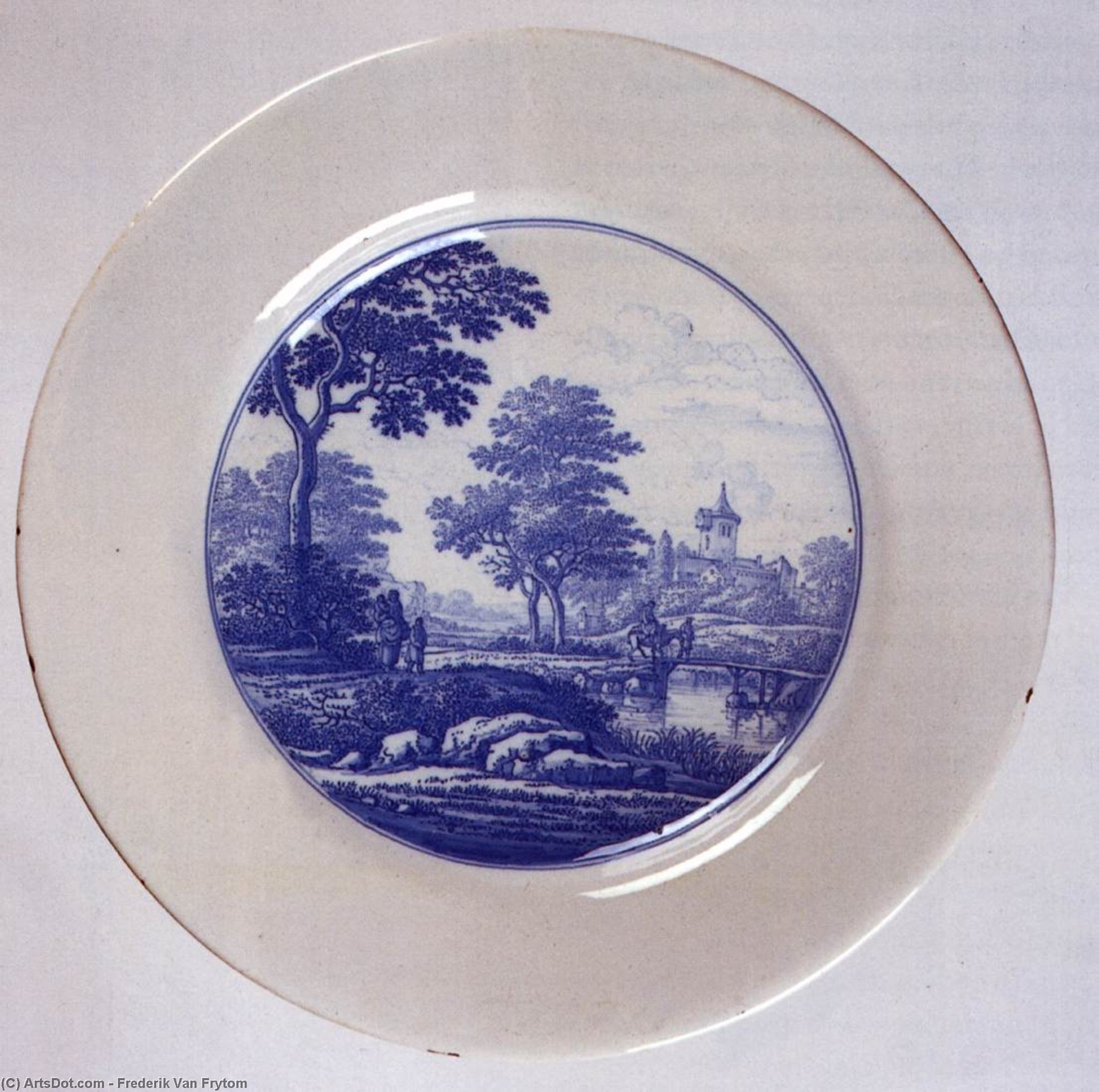
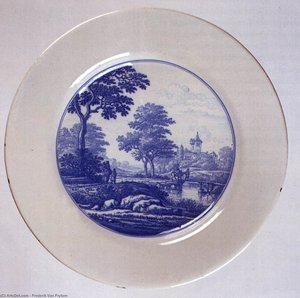
Dish with a Landscape by Frederik Van Frytom
Frederik van Frytom (1630 – 1702), though largely absent from the annals of art history, stands as an intriguing figure in the vibrant tapestry of Dutch Golden Age ceramics. Despite the scarcity of biographical details—a common predicament for artists of his era—Frytom’s indelible mark resides in his pioneering role in Radkersburg majolika, a revolutionary earthenware glaze originating from Puebla, Mexico, demonstrating a remarkable fusion of European artistic sensibilities with Mesoamerican influences.
Early Life & Training: Precise information regarding Frytom's formative years remains elusive. Records indicate he married in Delft around 1652, suggesting a stable domestic life alongside his prolific artistic pursuits. While his formal training is undocumented—a characteristic trait of artists during the period—Frytom’s exceptional skill and dedication undoubtedly honed his craft through observation and experimentation.
Radkersburg Majolika: A Bold Innovation – The Birth of Color
Frytom's contribution to Radkersburg majolika transcends mere technical proficiency; it represents a paradigm shift in ceramic decoration. Unlike prevailing techniques that relied on subdued palettes and meticulous monochrome renderings, Frytom embraced vibrant hues—primarily cobalt blue—applied directly onto the white feldspar base of the earthenware vessel. This audacious approach was unprecedented for its time, mirroring the burgeoning fascination with color theory and artistic exploration championed by Mannerist painters like Andrea Pozzo.
The Technique: Delicate Outline & Layered Glaze – Mastering Atmospheric Perspective
Frytom’s technique exemplifies the mastery of atmospheric perspective that defined Dutch landscape painting during the Baroque period. He skillfully delineated the contours of his depicted rural scene—rolling hills, scattered trees, and meandering waterways—using thin lines of cobalt blue to establish depth and spatial illusion. Subsequent layers of glaze further enhanced this effect, subtly modulating color intensity as viewed from afar, mirroring the visual principles espoused by artists like Johannes Vermeer.
Symbolism & Emotional Impact: Reflections on Tranquility & Pastoral Ideal
The “Dish with a Landscape” transcends mere representation; it embodies the pastoral ideals prevalent in Dutch art of the seventeenth century. The serene depiction of a tranquil countryside—characterized by lush vegetation and shimmering water—evokes feelings of peace, harmony, and contemplation. Frytom’s masterful use of color and line contributes to this emotive resonance, inviting viewers to immerse themselves in the beauty and serenity of the natural world.
Historical Context: Puebla & The European Avant-Garde – Bridging Cultures
Frytom's embrace of Radkersburg majolika coincided with a broader cultural dialogue between Europe and Mesoamerica. The glaze’s origins in Puebla, Mexico—a city renowned for its vibrant indigenous traditions—reflects the growing interest in exotic materials and artistic styles among European connoisseurs. Frytom’s innovation signaled a willingness to challenge established conventions and explore new aesthetic horizons, foreshadowing developments within the European avant-garde that would soon redefine artistic expression.
Conclusion: A Legacy of Quiet Brilliance
Though overshadowed by more celebrated contemporaries, Frederik van Frytom deserves recognition as a visionary artist who elevated Delft earthenware to unparalleled heights of beauty and sophistication. His “Dish with a Landscape” stands as a testament to his artistic genius—a captivating exemplar of Dutch Baroque landscape painting that continues to inspire admiration and contemplation centuries later.
Ähnliche Kunstwerke

Biografie des Künstlers
The Alchemist of Delft and Puebla: The Legacy of Frederik van Frytom
In the grand, sweeping tapestry of the Dutch Golden Age, certain names shine with an undeniable brilliance, while others linger like a soft, evocative shadow. Frederik van Frytom (1630–1702) belongs to that mysterious second group—an artist whose biographical footprints are light, yet whose creative impact left an indelible stain upon the history of ceramics. Born in the illustrious city of Delft, Netherlands, around 1630, Frytom emerged from a culture defined by meticulous detail and a burgeoning fascination with the natural world. While the precise details of his early training remain shrouded in the mists of time, his marriage in Delft circa 1652 suggests a man rooted in the stability of Dutch life, even as his artistic spirit prepared for a journey that would eventually bridge two much different worlds.
Frytom’s true historical significance lies not merely in what he painted, but in how he transformed the very medium of his craft. He was a pioneer of Radkersburg majolika, a revolutionary earthenware glaze technique that found its soul in Puebla, Mexico. This was no mere transplanting of European style; it was a profound artistic synthesis. Through a collaboration with the Mexican diplomat José María Martínez Sierra, Frytom moved beyond the traditional boundaries of Dutch pottery to embrace a new, vibrant aesthetic. In Puebla, he helped cultivate a workshop where European sensibilities met the ancient, symbolic echoes of Mesoamerican culture, creating a dialogue between the Old and New Worlds that resonated through the clay itself.
A Symphony of Cobalt and Earth
To behold a piece of Frytom’s work is to witness a masterclass in atmospheric perspective and color theory. Moving away from the subdued, monochrome palettes that dominated much of the era's ceramic decoration, Frytom embraced an audacious use of cobalt blue. He applied these rich pigments directly onto a pristine white feldspar base, creating a striking contrast that breathed life into his subjects. His technique was characterized by a delicate precision; he used fine lines to delineate the contours of rolling hills, meandering waterways, and scattered trees, much like the landscape painters of the Baroque period.
The technical brilliance of his work is most evident in the Radkersburg majolika process. By applying a layer of manganese dioxide to the earthenware before firing, Frytom achieved a distinctive, rich, reddish-brown hue often celebrated as “Mexican Red.” This warmth provided a perfect backdrop for his stylized depictions of flora and fauna. His designs were not merely decorative; they were narrative, often drawing inspiration from Aztec symbolism and integrating it with European landscape traditions. The result was a unique ceramic language—one that captured the vibrancy of the Mexican landscape through a lens of Dutch technical mastery.
An Enduring Artistic Synthesis
Though Frytom’s personal life remains largely undocumented, his prolific output—estimated at over 450 pieces—speaks to a lifetime of relentless experimentation and dedication. His ability to harmonize the meticulous, observational style of the Netherlands with the bold, symbolic energy of Mexico marks him as an essential figure in the evolution of global ceramics. He did not simply decorate vessels; he transformed them into windows through which one could view a fusion of continents.
The historical significance of Frederik van Frytom can be summarized through several key contributions:
- Technical Innovation: The development and refinement of the Radkersburg majolika glaze, introducing the iconic "Mexican Red" to the ceramic repertoire.
- Cultural Bridge-Building: Acting as a primary conduit for the exchange of artistic motifs between European landscape traditions and Mesoamerican symbolism.
- Mastery of Perspective: Bringing the sophisticated atmospheric perspective of Dutch Golden Age painting to the medium of earthenware.
- Aesthetic Revolution: Shifting ceramic decoration from muted, monochromatic tones toward a more vibrant, cobalt-driven palette.
Today, the works of Frytom stand as much more than mere artifacts of the 17th century; they are enduring testaments to the power of artistic migration and the beauty that arises when disparate cultures collide in the crucible of creativity.
frederik van frytom
1630 - 1702 , Netherlands
Kurzinfos
- Artistic Movement Or Style: Radkersburg Majolika
- Artists Or Movements Influenced By This Artist: ['Jan van Goyen']
- Date Of Death: 1702
- Full Name: Frederik van Frytom
- Nationality: Dutch
- Notable Artworks: ['Dish with a landscape']
- Place Of Birth: Delft