

 Vorschau anzeigen
 Versenden
 Teilen
 Details anzeigen

 Herunterladen
 Ähnliche Objekte
 Röntgenaufnahme
 Diashow
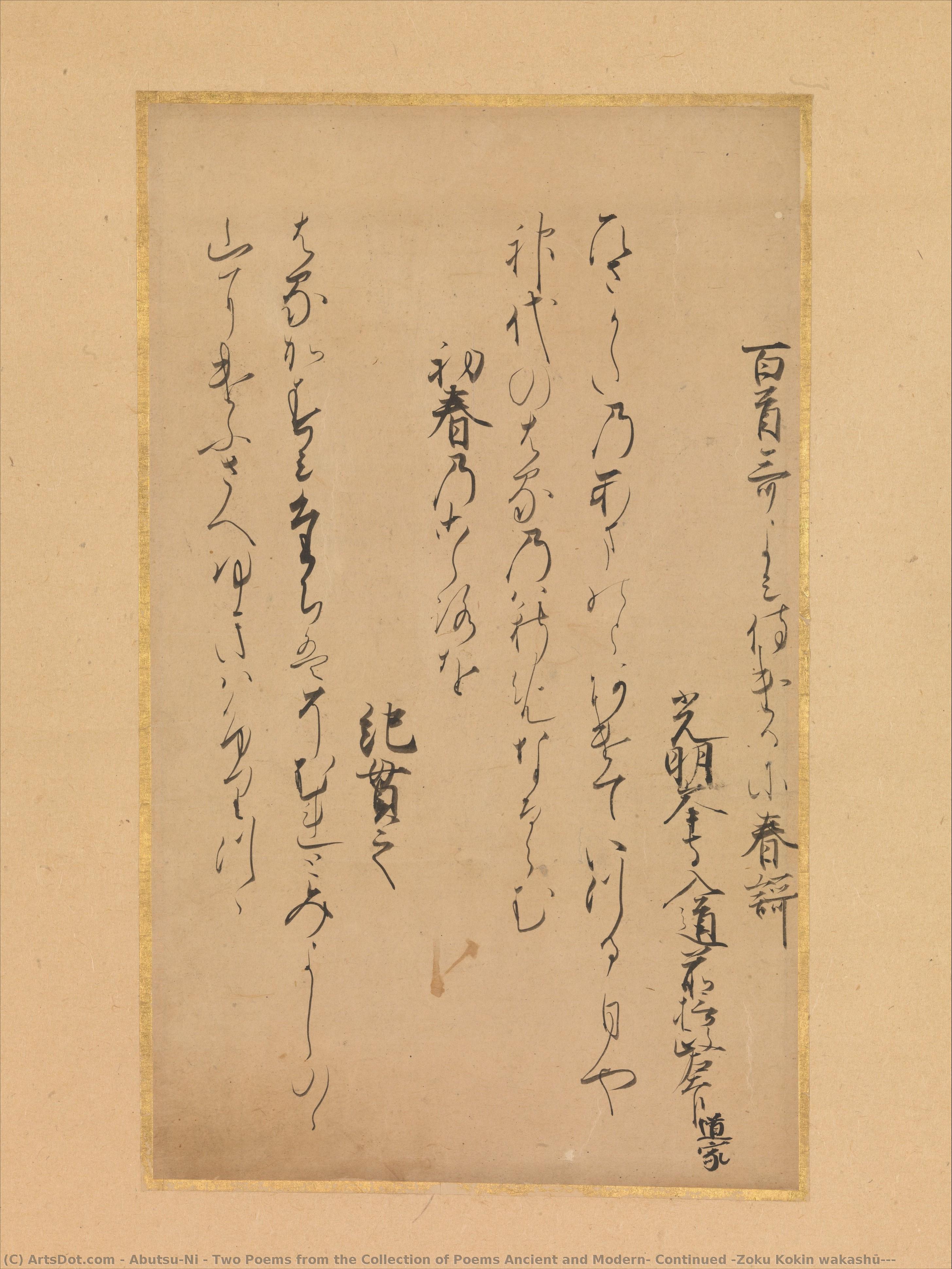
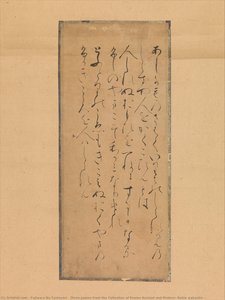
Two Poems from the Collection of Poems Ancient and Modern, Continued (Zoku Kokin wakashū)
 1201
1201 24.0 x 14.0 cm
 Weiterlesen
Giclée / Kunstdruck
Giclée- oder Leinwanddruck in Museumsqualität mit schneller Produktion und flexiblen Veredelungsoptionen. ( Handgemalte Reproduktion bestellen Bild kaufen)




































Wählen Sie aus unseren vordefinierten Formaten, die den ursprünglichen Proportionen des Kunstwerks entsprechen.

Sie können Ihre eigenen Maße eingeben, um ein bestimmtes Format oder einen speziellen Platz einzupassen. Wenn das von Ihnen gewählte Format nicht den Proportionen des Originalbildes entspricht, werden wir das Kunstwerk entweder beschneiden oder das Bild mit einem gespiegelten oder einfarbigen Rand erweitern. Ein digitaler Entwurf wird Ihnen zur Genehmigung zugesandt, bevor die Produktion beginnt.
Bitte beachten Sie, dass die Vorschau auf dem Bildschirm nicht den tatsächlichen Zuschnitt oder die Erweiterung widerspiegelt. Nur der Entwurf zeigt die endgültige Komposition präzise an.
Obwohl Sondermaße verfügbar sind, empfehlen wir die Auswahl eines Maßes aus der vordefinierten Liste, um die ursprünglichen Proportionen zu bewahren.
Weltweiter Versand () innerhalb von 2 Wochen statt der üblichen 4/5 Wochen. (6 September)

Kostenloser weltweiter Expressversand

Hochwertige Leinenleinwand

Umfassender Versicherungsschutz beim Versand

Zollgebühren-Rückerstattungsgarantie

Garantie für exakte Farbtreue

100 Tage Rückgaberecht (nur bei Mängeln)

100% Geld-zurück-Garantie

Mengenrabatt verfügbar
 Die Glasoption ist nur für Größen unter 110 cm verfügbar.

Two Poems from the Collection of Poems Ancient and Modern, Continued (Zoku Kokin wakashū)
Giclée / Kunstdruck
Format der Reproduktion
-


Gesamtpreis
$ 62
Ähnliche Kunstwerke
Über den Künstler
Fujiwara no Tameie’s Wife: A Nun Poet of the Kamakura Period
Fujiwara no Tameie’s wife, widely known as Abutsu-ni – a name reflecting her later role as a Buddhist nun – stands as a remarkable figure in 13th-century Japanese art and literature. Born around 1222 in Kyoto, she navigated the intricate world of the imperial court, eventually becoming intimately connected with the celebrated poet Fujiwara no Teika. Her life’s journey, marked by both privilege and profound personal loss, culminated in a legacy defined by poignant poetry and a unique artistic perspective deeply rooted in the Nanga (Bunjinga) tradition. Her story is not merely one of a noblewoman; it's a testament to resilience, creativity, and the enduring power of the written word amidst turbulent times.Early Life and Courtly Service
Abutsu-ni’s early life remains shrouded in some mystery, her birth name and parentage largely unknown. She entered the service of Princess Kuniko (later Empress Ankamon-in) around 1250, a pivotal moment that shaped her future trajectory. During this period, she was known by various titles – Ankamon'in no Shijō and Ankamon’in Emon no Suke – reflecting her duties as a lady-in-waiting within the imperial household. This association with the court exposed her to the refined aesthetics of the era, fostering an appreciation for calligraphy, poetry, and the broader artistic landscape. Crucially, she also gave birth to three children: two sons, Ajari and Rishi, who later embraced monastic life, and a daughter, Ki Naishi, who became a lady-in-waiting to Emperor Kameyama. These familial connections underscored her position within the complex social hierarchy of the time.Marriage, Loss, and the Journey to Kamakura
Around 1250, Abutsu-ni married Fujiwara no Tameie, a prominent member of the influential Fujiwara clan known for his mastery of *waka* poetry. Their union brought together two creative minds, and she became an integral part of his literary circle. Following Tameie’s death in 1275, a significant dispute arose concerning the inheritance of his literary works – a conflict that ultimately led Abutsu-ni to embark on a poignant journey from Kyoto to Kamakura in either 1277 or 1279. This arduous trip was undertaken to plead her son’s case for rightful ownership and to safeguard the legacy of Tameie's poetry. Her motivations were deeply personal, driven by a fierce determination to protect her family’s heritage and honor her husband’s memory. The resulting account of this journey, meticulously documented in her collection of poems and letters known as *Izayoi Nikki* (Diary of the Waning Moon), offers invaluable insights into the life experiences of a Japanese woman during the mid-Kamakura period – a time of political instability and social upheaval."Izayoi Nikki": A Poetic Chronicle
*Izayoi Nikki* is undoubtedly Abutsu-ni’s most celebrated work, serving as a window into her world and a testament to her poetic skill. The diary chronicles her travels from Kyoto to Kamakura, capturing the landscapes, encounters, and emotional reflections of her journey. More than simply a travelogue, *Izayoi Nikki* is imbued with profound philosophical and spiritual depth. The poems within the diary are characterized by their simplicity, elegance, and evocative imagery – qualities that align perfectly with the Nanga (Bunjinga) style of Japanese painting, which emphasized monochrome ink landscapes and a focus on capturing the essence of nature. The work’s themes of loss, resilience, and the search for meaning resonate deeply with readers even today. It's considered one of the most important works of Japanese literature from this period.Artistic Style and Influence
Abutsu-ni’s artistic style is inextricably linked to the Nanga (Bunjinga) tradition. Like many artists within this school, she favored a monochrome ink technique, drawing inspiration from Chinese literati painting. Her poetry often depicted scenes of nature – mountains, rivers, and forests – rendered with a sense of quiet contemplation and spiritual awareness. Her work demonstrates a remarkable sensitivity to the subtleties of light and shadow, mirroring the techniques employed by master landscape painters. While she didn’t create visual art in the same way as these painters, her poetry served as a powerful extension of their aesthetic principles. She is often compared to Yosa Buson, another prominent Japanese poet and painter known for his minimalist style and masterful use of ink. Her legacy extends beyond her individual works; she played a crucial role in preserving and promoting *waka* poetry during a period of significant cultural change.Historical Significance
Abutsu-ni’s life and work hold considerable historical significance. She represents a rare example of a woman actively participating in the intellectual and artistic circles of 13th-century Japan, defying societal expectations and leaving behind a substantial literary legacy. The protracted dispute over Tameie's literary inheritance – a conflict that spanned decades – underscores her influence and determination to protect the cultural heritage of her family and clan. Her journey to Kamakura, documented in *Izayoi Nikki*, provides a valuable historical record of daily life, social customs, and religious beliefs during this period. Abutsu-ni’s story serves as a reminder of the often-overlooked contributions of women to Japanese art and literature – a legacy that continues to inspire and captivate audiences today.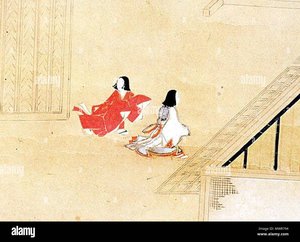
Fujiwara no Teika's Frau
1283 , Japan
Kurzinfos
- Artistic Movement Or Style: Nanga/Bunjinga (Monochromes)
- Artists Or Movements Influenced By This Artist: ['Yosa Buson']
- Artists Who Influenced This Artist: ['Fujiwara no Teika']
- Date Of Birth: c. 1222
- Date Of Death: 1283
- Full Name: Fujiwara no Teika's wife
- Nationality: Japanisch
- Notable Artworks: ['Izayoi Nikki']
- Place Of Birth: Kyoto, Japan