

 Vorschau anzeigen
 Versenden
 Teilen
 Details anzeigen

 Herunterladen
 Ähnliche Objekte
 Röntgenaufnahme
 Diashow
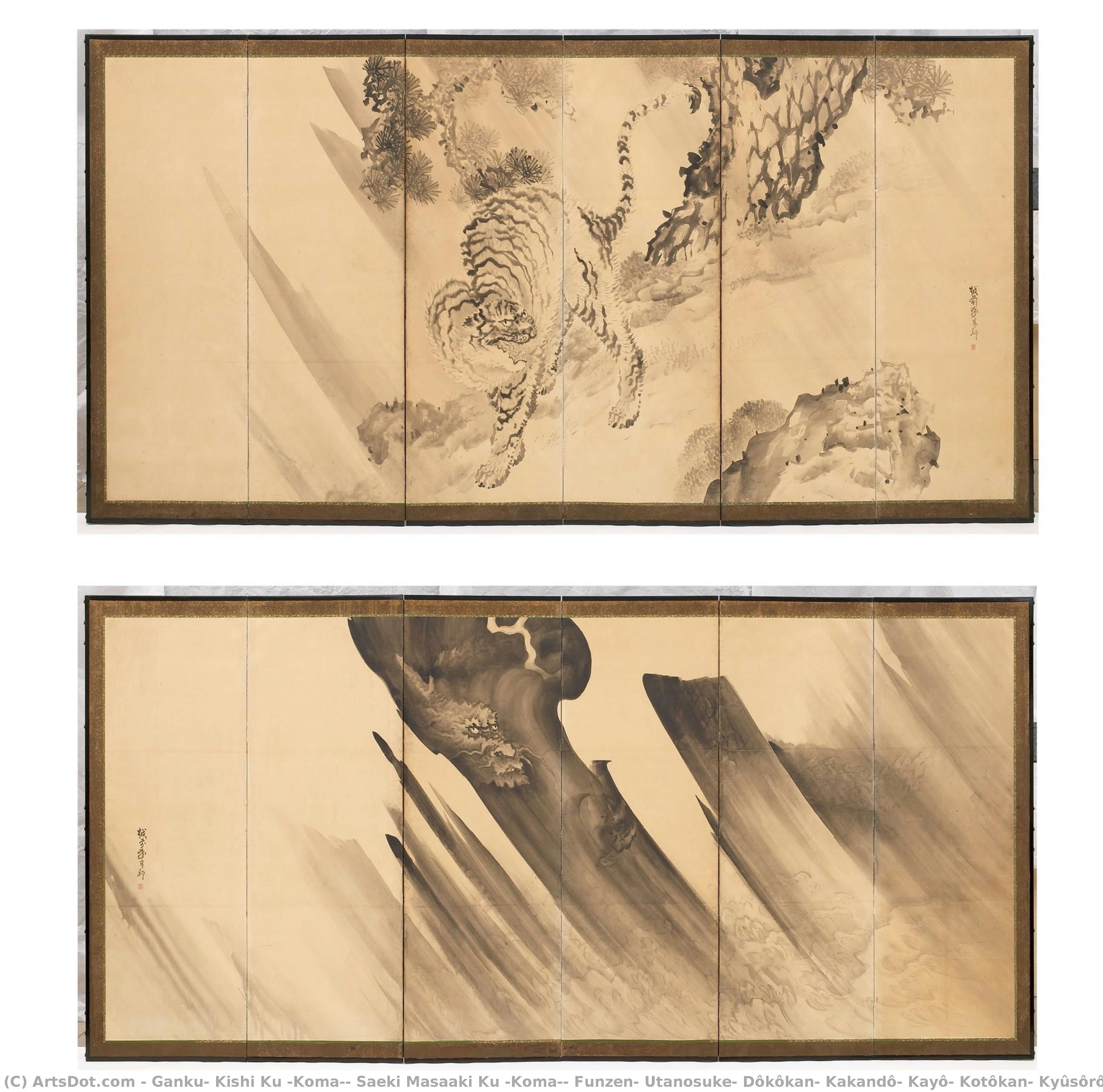
Tiger and dragon
 Ink
Ink 19th Century
 376.0 x 174.0 cm
 Museum of Oriental Art
 Weiterlesen
Erwerben Sie ein hochauflösendes, optimiertes digitales Bild, das der Online-Vorschau weit überlegen ist.
Jede Datei wird von unseren hauseigenen Spezialisten mit modernsten Werkzeugen und fachmännischer manueller Retusche sorgfältig vorbereitet. Wir stellen sicher, dass jedes Bild eine außergewöhnliche Klarheit, präzise Farbgenauigkeit und feinste Details aufweist.
Die endgültige Datei wird innerhalb von 72 Stunden per E-Mail zugestellt und ist für den sofortigen Einsatz in professionellen, redaktionellen und Druckumgebungen optimiert. Es handelt sich um dieselbe Qualität, der führende Designstudios, Verlage und Galerien vertrauen.
Digitales Bild
Laden Sie eine hochauflösende Datei für die persönliche Präsentation, den Druck und kreative Projekte herunter. ( Druck bestellen Handgemalte Reproduktion bestellen)
In jeder Bestellung digitaler Bilder enthalten
Professionelle digitale Bereitstellung, garantiert
Wenn Sie sich für ArtsDot.com entscheiden, erhalten Sie nicht nur ein Bild – Sie erhalten ein professionell aufbereitetes digitales Kunstwerk, das mit höchster Präzision erstellt und durch eine Zufriedenheitsgarantie abgesichert wird. Hier ist alles, was automatisch mit Ihrer Bestellung geliefert wird:

Schnelle E-Mail-Zustellung
Ihre hochauflösende digitale Bilddatei wird Ihnen innerhalb von 72 Stunden nach der Bestellung per E-Mail zugestellt – bereit zur sofortigen Verwendung.

KI-optimierte digitale Datei
Ihre Kunstwerke werden professionell mithilfe fortschrittlicher KI-Tools und manueller Bearbeitung optimiert, um maximale Detailtreue, Klarheit und Farbgenauigkeit zu gewährleisten.

Lebenslanger kostenloser Neudruckservice
Datei versehentlich gelöscht oder verloren? Keine Sorge – wir senden sie Ihnen jederzeit kostenlos erneut zu.

Keine Einfuhrgebühren – jemals
Genießen Sie Ihr Kunstwerk sofort ohne Zollgebühren, Einfuhrabgaben oder Versandkosten – digitale Downloads sind immer steuerfrei.

Garantierte Farbtreue
Wir garantieren, dass Ihr digitales Bild mithilfe professioneller Werkzeuge und Farbmanagement die Originalfarben so präzise wie möglich wiedergibt.

60-Tage-Zufriedenheitsgarantie
Sollten Sie mit Ihrem digitalen Bild nicht zufrieden sein, werden wir es überarbeiten oder Ihnen innerhalb von 60 Tagen 100% erstatten – ohne Wenn und Aber.

100% Geld-zurück-Garantie
Nicht zufrieden? Erhalten Sie innerhalb von 60 Tagen nach Erhalt Ihrer digitalen Datei eine vollständige Rückerstattung – ohne Angabe von Gründen.

Rabatte bei Großbestellungen
3 Bilder kaufen, 10% sparen – 5 Bilder kaufen, 15% sparen – Ab 10 Bildern 20% sparen. Ideal für kreative Projekte, Galerien und Agenturen.
A Celestial Encounter: The Primal Energy of Tiger and Dragon
In the grand tradition of Japanese screen painting, few subjects command as much visceral attention as the dual presence of the tiger and the dragon. This breathtaking pair of screens, attributed to the masterful hand of Kishi Ganku, serves as a profound meditation on the elemental forces of nature. The artwork presents a dramatic dichotomy: one screen captures the grounded, muscular intensity of a tiger navigating a rugged, mountainous terrain of pine and stone, while the other unveils a celestial dragon emerging from a turbulent sea of boiling waters and swirling clouds. Together, they create a cosmic dialogue between the earth and the heavens, inviting the viewer into a world where the boundaries between the physical and the spiritual are perpetually blurred.
The artistry behind these screens is rooted in the vigorous, expressive brushwork characteristic of the late Edo period. Ganku, a pivotal figure of the Kishi school, was celebrated for his ability to blend the refined elegance of the Maruyama-shijō school with the powerful, sweeping strokes of Chinese-inspired styles. In this particular work, one can feel the artist's pulse through every stroke; the tiger’s open maw and the dragon’s serpentine movement are rendered with a kinetic energy that feels almost alive. The use of broad, confident applications of pigment creates a sense of texture—from the rough, weathered surfaces of the mountain rocks to the ethereal, misty atmosphere surrounding the dragon—making the composition feel both monumental and deeply intimate.
Symbolism and the Harmony of Opposites
Beyond their visual splendor, these screens are steeped in profound Eastern symbolism. The tiger and the dragon are not merely creatures of myth; they represent the fundamental balance of the universe. Often associated with the seasons of autumn and spring, respectively, their pairing evokes the concept of yin and yang—the eternal dance between strength and fluidity, terrestrial power and celestial wisdom. The tiger, a symbol of earthly authority and ferocious courage, stands amidst the permanence of the mountains, while the dragon represents the unpredictable, transformative power of the heavens and the waters. For the discerning collector or interior designer, this piece offers more than decoration; it provides a focal point of philosophical depth, suggesting a space of balance, resilience, and cosmic order.
Integrating such a magnificent work into a contemporary setting offers an unparalleled opportunity for dramatic impact. Whether placed in a grand salon or a curated study, the sheer scale and movement of these paintings can transform the atmosphere of a room, lending it an air of historical prestige and cultural sophistication. A high-quality reproduction of this masterpiece allows the evocative power of Ganku’s vision to reside within your home, serving as a constant reminder of the sublime beauty found in the struggle and harmony of the natural world.
Ähnliche Kunstwerke


Biografie des Künstlers
Early Life and Artistic Foundations
Kishi Ganku (岸駒), a name synonymous with the majestic tiger and the serene beauty of Japanese landscapes, was born in Kanazawa in 1749 as Saeki Masaaki Ku (佐伯昌明). His early life, steeped in the traditions of his family’s craft – they were skilled paper-makers – provided an unexpected foundation for a career that would ultimately establish him as one of Kyoto's most celebrated painters. From a young age, Ganku displayed a remarkable talent for artistic expression, far exceeding the expectations of his profession. He wasn’t simply replicating patterns; he possessed a keen eye and a natural inclination to capture the essence of what he observed. Crucially, his training extended beyond the familiar techniques of Japanese craftsmanship. Recognizing this burgeoning potential, his family secured him an apprenticeship with prominent artists, exposing him to diverse styles – notably those of the influential Kano school, known for its meticulous realism, and the Maruyama-Shijō school, which championed a more naturalistic and atmospheric approach. This exposure to such varied artistic traditions laid the groundwork for Ganku’s unique synthesis of techniques and aesthetics, a hallmark of his distinctive style.Rise to Prominence and Imperial Patronage
Ganku's artistic talents quickly garnered recognition, leading him to secure a prestigious position under Prince Arisugawa (1780-1828) by the late 18th century. This patronage proved pivotal in establishing his reputation and providing access to the highest echelons of Kyoto society. His work was highly valued by the imperial family and other influential patrons, solidifying his place as a leading artist of his time. During this period, Ganku’s artistic output flourished, reflecting both his technical mastery and his deep understanding of Japanese aesthetics. He skillfully blended traditional elements with innovative approaches, creating works that were simultaneously familiar and strikingly original. The Prince's support not only provided financial stability but also offered invaluable guidance and exposure, propelling Ganku to the forefront of the Kyoto art scene.Notable Students and the Kishi School
Ganku’s influence extended far beyond his own creations; he played a crucial role in shaping the artistic landscape through his students. He nurtured the talents of several promising artists, including Gantai (1782–1865), his son, Ganryou (1797–1852), and his adopted son Yokoyama Kazan (1784–1837). These individuals, under Ganku’s tutelage, went on to establish their own artistic careers, carrying forward the principles and techniques he had instilled in them. This network of disciples formed the core of what would become known as the Kishi School of painting – a name derived from Ganku's family name (Kishi). The Kishi school distinguished itself through its emphasis on detailed depictions of animals, particularly tigers, alongside landscapes and floral motifs. It represented a synthesis of Chinese and Japanese artistic traditions, characterized by a refined elegance and a masterful command of brushwork.Artistic Style and Enduring Legacy
Ganku’s artistic style is immediately recognizable for its striking realism, dramatic compositions, and vibrant color palettes. He was particularly celebrated for his depictions of tigers – subjects that captivated audiences with their power, grace, and inherent symbolism. His approach to portraying these magnificent creatures involved a unique combination of observation, imagination, and technical skill. Rather than relying solely on direct observation (as was often the case during this period), Ganku drew upon traditional sources—household cats—and supplemented them with imported tiger pelts and a meticulously crafted tiger head, creating a composite image that embodied both reality and artistic interpretation. His works are characterized by bold brushstrokes, dynamic movement, and an evocative use of color to convey mood and atmosphere. Notable works include “Birds on a Plum Tree,” a delicate depiction of birds amidst blossoming branches, and the iconic “Tiger and Dragon,” a monumental pair of screens that exemplifies his mastery of composition and technique. Ganku’s legacy extends far beyond his individual creations; he remains a pivotal figure in Japanese art history, whose influence continues to resonate through the Kishi School and the broader artistic community. His work serves as a testament to the enduring power of observation, imagination, and technical skill.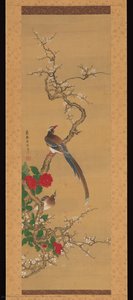
Kishi Ganku
1749 - 1839 , Japan
Kurzinfos
- Artistic Movement Or Style: Kishi Schule
- Artists Or Movements Influenced By This Artist:
- Gantai
- Renzan
- Artists Who Influenced This Artist:
- Shen Nanpin
- Maruyama-Shijō
- Date Of Birth: 1749, Kanazawa
- Date Of Death: 1839, Kyoto
- Full Name: Kishi Ganku (Saeki Masaaki Ku)
- Nationality: Japanisch
- Notable Artworks:
- Vogel auf Pflaumenbaum
- Tiger und Drache
- Place Of Birth: Kanazawa, Japan

