

 Vorschau anzeigen
 Versenden
 Teilen
 Details anzeigen

 Herunterladen
 Ähnliche Objekte
 Röntgenaufnahme
 Diashow
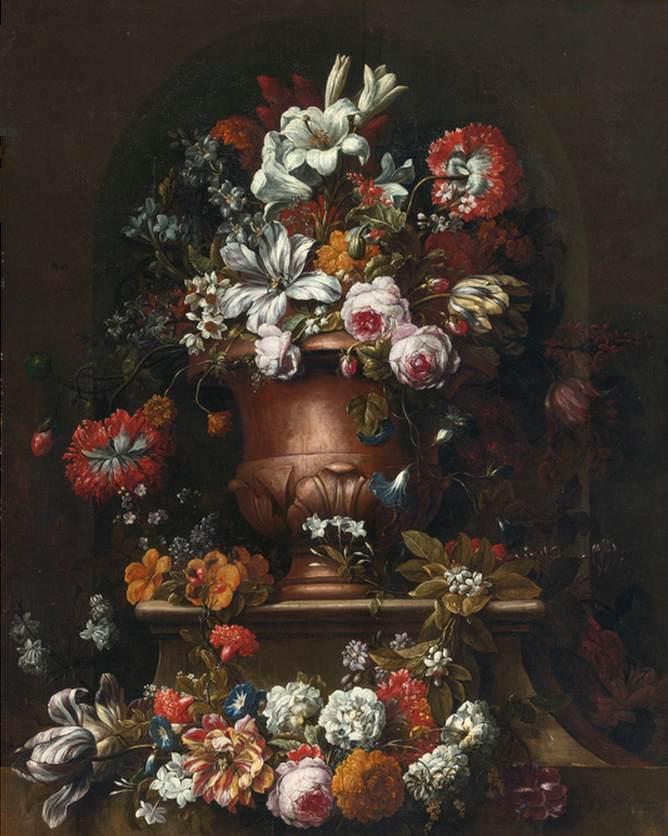
Flowers
 127.0 x 105.0 cm
 Weiterlesen
Erwerben Sie ein hochauflösendes, optimiertes digitales Bild, das der Online-Vorschau weit überlegen ist.
Jede Datei wird von unseren hauseigenen Spezialisten mit modernsten Werkzeugen und fachmännischer manueller Retusche sorgfältig vorbereitet. Wir stellen sicher, dass jedes Bild eine außergewöhnliche Klarheit, präzise Farbgenauigkeit und feinste Details aufweist.
Die endgültige Datei wird innerhalb von 72 Stunden per E-Mail zugestellt und ist für den sofortigen Einsatz in professionellen, redaktionellen und Druckumgebungen optimiert. Es handelt sich um dieselbe Qualität, der führende Designstudios, Verlage und Galerien vertrauen.
Digitales Bild
Laden Sie eine hochauflösende Datei für die persönliche Präsentation, den Druck und kreative Projekte herunter. ( Druck bestellen Handgemalte Reproduktion bestellen)
In jeder Bestellung digitaler Bilder enthalten
Professionelle digitale Bereitstellung, garantiert
Wenn Sie sich für ArtsDot.com entscheiden, erhalten Sie nicht nur ein Bild – Sie erhalten ein professionell aufbereitetes digitales Kunstwerk, das mit höchster Präzision erstellt und durch eine Zufriedenheitsgarantie abgesichert wird. Hier ist alles, was automatisch mit Ihrer Bestellung geliefert wird:

Schnelle E-Mail-Zustellung
Ihre hochauflösende digitale Bilddatei wird Ihnen innerhalb von 72 Stunden nach der Bestellung per E-Mail zugestellt – bereit zur sofortigen Verwendung.

KI-optimierte digitale Datei
Ihre Kunstwerke werden professionell mithilfe fortschrittlicher KI-Tools und manueller Bearbeitung optimiert, um maximale Detailtreue, Klarheit und Farbgenauigkeit zu gewährleisten.

Lebenslanger kostenloser Neudruckservice
Datei versehentlich gelöscht oder verloren? Keine Sorge – wir senden sie Ihnen jederzeit kostenlos erneut zu.

Keine Einfuhrgebühren – jemals
Genießen Sie Ihr Kunstwerk sofort ohne Zollgebühren, Einfuhrabgaben oder Versandkosten – digitale Downloads sind immer steuerfrei.

Garantierte Farbtreue
Wir garantieren, dass Ihr digitales Bild mithilfe professioneller Werkzeuge und Farbmanagement die Originalfarben so präzise wie möglich wiedergibt.

100-Tage-Zufriedenheitsgarantie
Sollten Sie mit Ihrem digitalen Bild nicht zufrieden sein, werden wir es überarbeiten oder Ihnen innerhalb von 100 Tagen 100% erstatten – ohne Wenn und Aber.

100% Geld-zurück-Garantie
Nicht zufrieden? Erhalten Sie innerhalb von 100 Tagen nach Erhalt Ihrer digitalen Datei eine vollständige Rückerstattung – ohne Angabe von Gründen.

Rabatte bei Großbestellungen
3 Bilder kaufen, 10% sparen – 5 Bilder kaufen, 15% sparen – Ab 10 Bildern 20% sparen. Ideal für kreative Projekte, Galerien und Agenturen.
Ähnliche Kunstwerke








Biografie des Künstlers
A Life Immersed in Blooms: The World of Gaspar Peeter Verbruggen the Younger
Gaspar Peeter Verbruggen the Younger, born in Antwerp in 1664 and passing away in the same city in 1730, was a Flemish still life painter whose name became synonymous with opulent floral arrangements and decorative artistry. He wasn’t merely recording flowers; he was crafting miniature worlds of beauty, imbued with symbolism and technical mastery. His story is one woven into the rich tapestry of Antwerp's artistic guilds, familial legacy, and the shifting tastes of 17th- and 18th-century Europe. Born into a family already steeped in the tradition of still life painting—his father, Gaspar Peeter Verbruggen the Elder, was a successful artist in his own right—the younger Verbruggen’s path seemed predetermined, yet he carved out a distinct style that resonated with both Flemish and Dutch sensibilities. From an incredibly young age, demonstrating exceptional talent, he entered the Antwerp Guild of Saint Luke in 1677-1678 at just thirteen years old, a testament to his precocious skill. This early entry signaled not only his aptitude but also the strong support system within his family that fostered his artistic development.The Flourishing Career and Collaborative Spirit
Verbruggen quickly established himself as a sought-after painter, becoming deacon of the Guild in 1691/1692. His success allowed him to live comfortably on Antwerp’s prestigious Meir street, but life took an unfortunate turn with the early death of his wife, Dymphna van der Voort, in 1702. Financial difficulties soon followed, forcing him to sell his possessions in 1703. This hardship prompted a relocation to the Dutch Republic in 1705, initially to Amsterdam and then settling in The Hague. It was here that he found renewed patronage, receiving commissions for decorating prominent residences. His membership in the Hague’s Guild of Saint Luke in 1708 further solidified his position within the artistic community. However, even with commercial success, Verbruggen struggled with financial instability, a recurring theme throughout his life. A return to Antwerp in 1723 saw him take on a humble role as a ‘knaap’ (boy) at the Guild of Saint Luke until his death in 1730. What is particularly striking about Verbruggen's career is his frequent collaboration with figure painters. He didn’t see still life as an isolated genre but rather as a component within larger, more complex compositions. Artists like Peter Ykens and Jacob Leyssens in Antwerp, and Matheus Terwesten in The Hague, often partnered with him, creating works where their figures were seamlessly integrated into Verbruggen's vibrant floral displays.Influences and the Evolution of Style
Verbruggen’s artistic style wasn’t born in a vacuum; it was shaped by the currents flowing through European art at the time. The broad, impasto brushstrokes characteristic of his work echo the innovations introduced by Italian artists Mario Nuzzi and Michele Pace del Campidoglio. He also drew inspiration from the French painter Jean-Baptiste Monnoyer, known for his lavish flower paintings. These influences coalesced into a uniquely Flemish aesthetic—a move towards greater decoration and monumentality in still life painting. His compositions often featured bouquets arranged within grand stone vases or cascading as garlands around garden ornaments, creating a sense of abundance and theatricality. He wasn’t simply replicating nature; he was elevating it, transforming flowers and fruit into symbols of wealth, beauty, and the fleeting nature of existence.Major Achievements and Lasting Legacy
While pinpointing specific “masterpieces” can be subjective, Verbruggen's enduring contribution lies in his ability to synthesize various influences into a cohesive and recognizable style. His *Flower garland surrounding a statue of Apollo*, gifted to the Antwerp Guild in 1694 as thanks for accepting his pupils without fee, exemplifies his technical skill and generosity. Beyond individual works, his impact is visible in the proliferation of decorative still lifes during the late 17th and early 18th centuries. He trained several pupils—including his half-brother Balthasar Hyacinth Verbruggen, Jacob Melchior van Herck, Frans d'Olivero, Peter Frans Casteels, and Gillis Vinck—ensuring that his techniques and aesthetic sensibilities were passed down to the next generation of artists.Historical Significance: A Reflection of an Era
Gaspar Peeter Verbruggen the Younger’s work provides a fascinating glimpse into the tastes and values of his time. The opulent displays of flowers and fruit reflected the prosperity of the merchant class, while the inclusion of classical motifs—like Apollo—hinted at a broader cultural appreciation for antiquity. His collaborative spirit speaks to the interconnectedness of the artistic world, where painters often worked together to create more ambitious and complex compositions. Though he faced personal hardships throughout his life, Verbruggen left behind a legacy of beauty and technical skill that continues to captivate audiences today. He stands as a testament to the enduring power of still life painting—a genre capable of conveying not only visual delight but also profound symbolism and emotional resonance.- Born: 11 April 1664, Antwerp
- Died: 14 March 1730, Antwerp
- Style: Flemish Still Life, Decorative Floral Paintings
- Influences: Mario Nuzzi, Michele Pace del Campidoglio, Jean-Baptiste Monnoyer
- Key Themes: Opulence, Symbolism, Collaboration
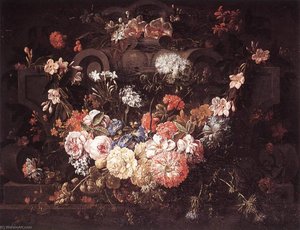
gaspar peeter the younger verbruggen
1664 - 1730