 Vorschau anzeigen
 Versenden
 Teilen
 Details anzeigen

 Herunterladen
 Ähnliche Objekte
 Röntgenaufnahme
 Diashow
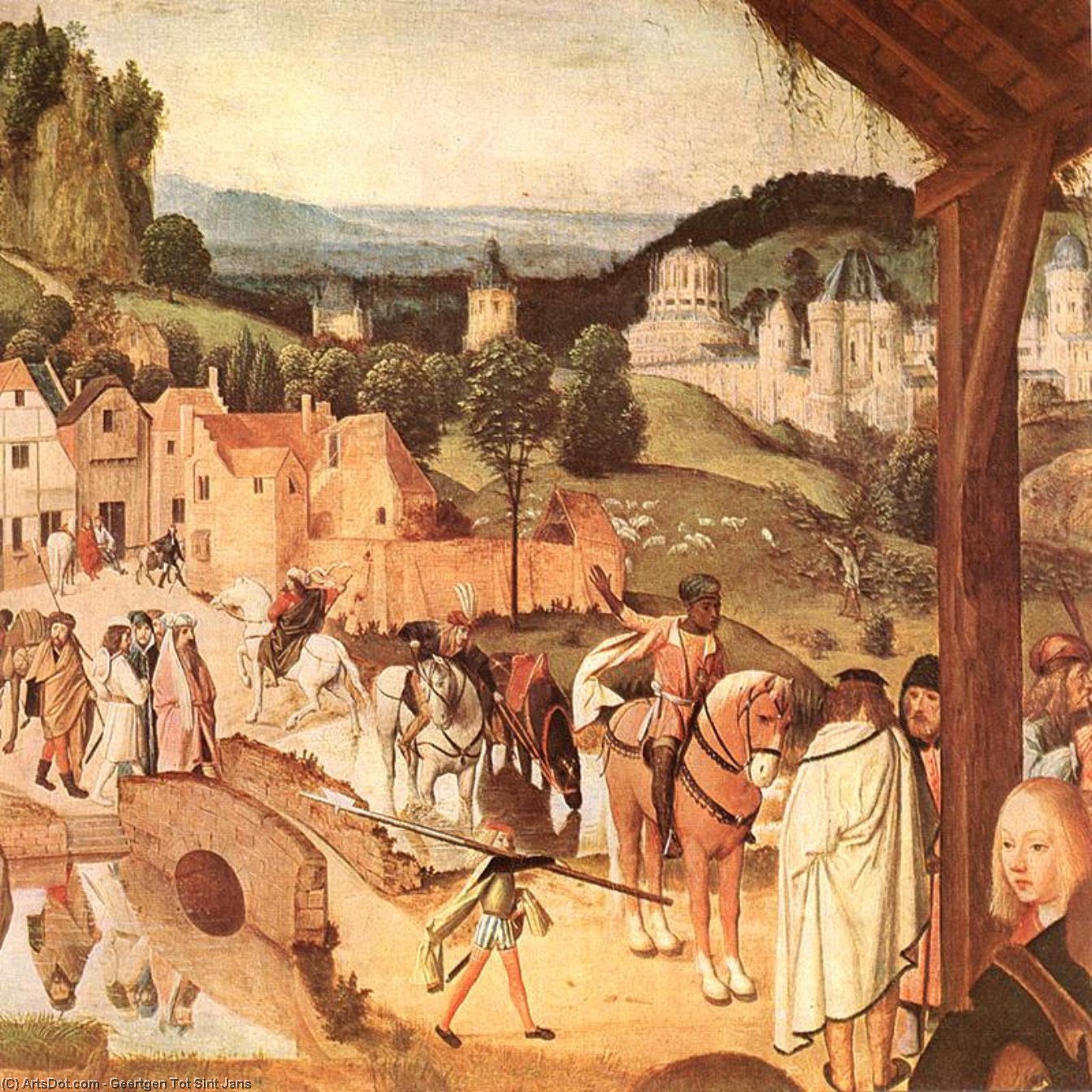
Adoration of the Magi (detail)


 Weiterlesen
Giclée / Kunstdruck
Giclée- oder Leinwanddruck in Museumsqualität mit schneller Produktion und flexiblen Veredelungsoptionen. ( Handgemalte Reproduktion bestellen Bild kaufen)




P118B $10

P118H $10

P118W $10

P438Z $10

P508JH $12

P508YH $12

P805H $10

P805Z $10

P919BZ $10

P919G $10

P919XJ $10

P959ZH $10

P968JZ $12

W106C $8

W218G $10

W218JH $8

W218Y $10

W307PJ $10

W316G $10

W316PJ $8

W316Y $10

W398PJ $8

W4111J $10

W500HY $15

W500JH $15

W692G $12

W849H $8

W940BG $15

W953PJ $8




Wählen Sie aus unseren vordefinierten Formaten, die den ursprünglichen Proportionen des Kunstwerks entsprechen.

Sie können Ihre eigenen Maße eingeben, um ein bestimmtes Format oder einen speziellen Platz einzupassen. Wenn das von Ihnen gewählte Format nicht den Proportionen des Originalbildes entspricht, werden wir das Kunstwerk entweder beschneiden oder das Bild mit einem gespiegelten oder einfarbigen Rand erweitern. Ein digitaler Entwurf wird Ihnen zur Genehmigung zugesandt, bevor die Produktion beginnt.
Bitte beachten Sie, dass die Vorschau auf dem Bildschirm nicht den tatsächlichen Zuschnitt oder die Erweiterung widerspiegelt. Nur der Entwurf zeigt die endgültige Komposition präzise an.
Obwohl Sondermaße verfügbar sind, empfehlen wir die Auswahl eines Maßes aus der vordefinierten Liste, um die ursprünglichen Proportionen zu bewahren.
Weltweiter Versand () innerhalb von 2 Wochen statt der üblichen 4/5 Wochen. (4 September)

Kostenloser weltweiter Expressversand

Hochwertige Leinenleinwand

Umfassender Versicherungsschutz beim Versand

Zollgebühren-Rückerstattungsgarantie

Garantie für exakte Farbtreue

60 Tage Rückgaberecht (nur bei Mängeln)

100% Geld-zurück-Garantie

Mengenrabatt verfügbar
 Die Glasoption ist nur für Größen unter 110 cm verfügbar.

Adoration of the Magi (detail)
Giclée / Kunstdruck
Format der Reproduktion
-


Gesamtpreis
$ 62
A Window Into Medieval Haarlem: Exploring Geertgen tot Sint Jans’s “The Adoration of the Magi”
Geertgen tot Sint Jans remains one of Early Netherlandish painting's most enigmatic figures, a beacon of artistic achievement shrouded in historical obscurity. Born around 1460 in Leiden—though his precise birthplace is debated—he established himself as a painter in Haarlem during the vibrant milieu of the late fifteenth century, leaving behind a legacy that continues to fascinate scholars and inspire artists alike. Our understanding of Jans’s life derives largely from Karel van Mander's magnum opus, *Het Pantheon der Nederlandsche Kunstenaers*, penned over sixty years after his death—a testament to the enduring power of artistic memory and the challenges inherent in reconstructing biographical details across time. While definitive answers regarding his religious affiliation remain elusive – Van Mander suggests a connection to the Knights Hospitaller – Jans’s output speaks volumes about the intellectual and spiritual currents shaping Northern Europe during this pivotal era.The Painting's Subject Matter: A Familiar Medieval Narrative
“The Adoration of the Magi,” completed circa 1480-1485, depicts a quintessential scene from Christian iconography: the arrival of the Magi—Caspar, Melchior, and Balthazar—bearing gifts of gold, frankincense, and myrrh to venerate the infant Jesus in Bethlehem. Jans’s depiction transcends mere illustration; it's an immersive tableau capturing not just the event itself but also its surrounding atmosphere – a bustling medieval village rendered with meticulous detail. The composition is carefully balanced, drawing the viewer’s eye towards the central figures of Mary and Joseph, flanked by kneeling Magi and shepherds—a deliberate echo of biblical depictions intended to convey piety and reverence.Style and Technique: Precision and Atmospheric Depth
Jans's artistic style embodies the hallmarks of Northern Renaissance painting – characterized by exceptional realism combined with profound psychological insight. Employing oil paint on panel—a technique gaining prominence during Jans’s time—he achieved remarkable tonal gradation, capturing subtle nuances of light and shadow that imbue the scene with palpable warmth and depth. Jans’s meticulous attention to detail extends beyond mere representation; he skillfully incorporates architectural elements – a castle dominating the distant horizon – to establish a sense of place and reinforce the painting's historical context. The artist’s brushstrokes are precise yet expressive, conveying both technical mastery and emotional resonance.Symbolism: Layers of Meaning Beyond the Visual Surface
“The Adoration of the Magi” is replete with symbolic references rooted in medieval Christian theology. The gifts themselves—gold representing royalty, frankincense symbolizing purification, and myrrh signifying immortality—represent divine grace and foreshadow Christ’s sacrificial death. Furthermore, Jans's depiction of Bethlehem reflects the theological concept of “mikveh,” a ritual bath symbolizing spiritual cleansing and rebirth – mirroring the transformative power of faith. The inclusion of shepherds underscores the universality of God’s compassion, extending His blessing to all humanity.Emotional Impact: A Moment Frozen in Time
Ultimately, Jans's masterpiece transcends its formal conventions to evoke a powerful emotional response in the viewer. The painting captures not merely an event but also the profound spiritual experience associated with it – awe, reverence, and gratitude for divine providence. Jans’s masterful use of color and light creates an atmosphere of serene contemplation, inviting viewers to immerse themselves in the timeless beauty of this iconic biblical narrative. “The Adoration of the Magi” stands as a testament to Jans’s artistic genius—a captivating glimpse into the soul of medieval Haarlem and a continuing source of inspiration for artists and collectors alike.Ähnliche Kunstwerke

Über den Künstler
Geertgen tot Sint Jans (c. 1460-1495) – A Life Shrouded in Mystery
Geertgen tot Sint Jans, also known as Gerrit van Haarlem, Gerrit Gerritsz, Gheertgen, Geerrit (* c. 1465; Leiden, Netherlands † before 1495; Haarlem), was a Dutch painter of the Early Netherlandish Renaissance. Despite the scarcity of contemporary documentation concerning his life, he remains one of the most enigmatic figures in Northern European art history—a testament to the challenges inherent in reconstructing artistic biographies from fragmentary evidence. Karel van Mander’s *Schilderboeck*, published over a century after Geertgen’s death, provides the primary account of his life and oeuvre, portraying him as a lay brother of Saint John’s Hospitaller Order in Haarlem—a connection that profoundly shaped his artistic output and imbued his work with spiritual significance.Early Life and Training
The precise circumstances surrounding Geertgen’s birth remain elusive, though Karel van Mander suggests Leiden as his birthplace, citing a print by Jacob Matham which refers to him as Gerardus Leydanus. This attribution is supported by scholarly research indicating that Matham’s engraving was produced around 1620—a considerable time after Geertgen’s demise. Van Mander describes Geertgen's artistic training as occurring under the tutelage of Albert van Ouwater, a pivotal figure in establishing oil painting techniques within Haarlem and arguably the most influential artist of his era. This formative relationship undoubtedly instilled in Geertgen a deep appreciation for realism and meticulous detail—characteristics that would become hallmarks of his distinctive style.The Art of Saint John’s Hospitaller Order
Geertgen's affiliation with Saint John’s Hospitaller Order played an instrumental role in shaping his artistic trajectory. As a lay brother, he was tasked with decorating the altar of the Order’s Haarlem chapel—a commission that resulted in two monumental paintings: *The Lamentation of Christ* and *The Legend of Saint John the Baptist*. These works exemplify Geertgen's mastery of chiaroscuro—the dramatic interplay of light and shadow—creating a palpable sense of emotional depth and conveying profound spiritual contemplation. The composition of *The Lamentation*, particularly, foreshadowed developments that would characterize Dutch painting in the decades to follow, marking him as a precursor to the artistic innovations of his successors.Stylistic Innovations and Notable Works
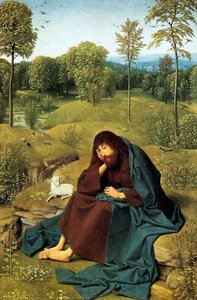
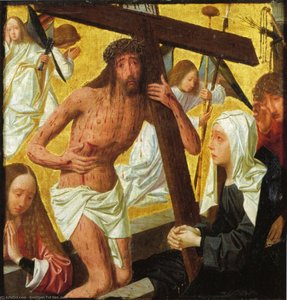
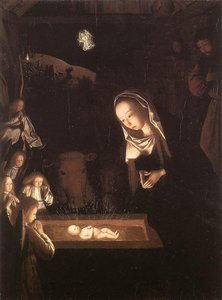
Geertgen tot Sint Jans distinguished himself through several stylistic breakthroughs—most notably his pioneering use of landscape as an integral component of narrative paintings. Unlike many artists of his time who employed landscapes merely as decorative backgrounds, Geertgen imbued them with symbolic meaning—reflecting the inner state of the figures depicted and contributing significantly to the overall artistic impact. His meticulous attention to detail—evident in every brushstroke—further solidified his reputation as a master craftsman. Among his surviving masterpieces are *John the Baptist in the Wilderness*, a serene depiction of spiritual isolation; *Man of Sorrows*, a powerfully emotive portrayal of Christ’s suffering; and *The Nativity at Night*, where Geertgen skillfully utilizes chiaroscuro to illuminate the scene—creating an atmosphere of solemn reverence.Legacy and Influence
Despite the paucity of biographical information, Geertgen tot Sint Jans occupies a significant position within the history of Early Netherlandish art. His innovative approach to landscape and his sensitive portrayal of human emotion profoundly influenced subsequent generations of Dutch painters—particularly those associated with the Haarlem school. The enduring fascination with *The Lamentation*—documented in Jacob Matham’s engraving and accompanying poetry—demonstrates Geertgen’s lasting impact on artistic sensibilities. Modern scholarship recognizes Geertgen as a crucial link between the International Gothic style and the burgeoning realism of the 16th century—a testament to his enduring legacy as one of the most remarkable artists of his time.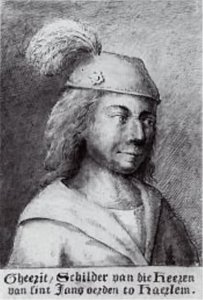
Geertgen tot Sint Jans
1460 - 1490 , Niederlande
Kurzinfos
- Artistic Movement Or Style: Early Netherlandish painting
- Artists Who Influenced This Artist: ['Albert van Ouwater']
- Date Of Birth: c. 1465
- Full Name: Geertgen tot Sint Jans
- Nationality: Dutch
- Notable Artworks:
- The Lamentation of Christ
- The Legend of St. John
- John the Baptist in Wilderness
- Man of Sorrows
- Place Of Birth: Leiden, Netherlands
Ähnliche Artikel
Meisterwerke des Hochmittelalters: 10 Kunstwerke für Ihr Zuhause | ArtsDot
Entdecken Sie die 10 bedeutendsten Meisterwerke des Hochmittelalters! Erfahren Sie Geschichten von Romanik, Gotik & berühmten Künstlern. Finden Sie hochwertige Reproduktionen für Ihr Zuhause auf ArtsDot.com.

Spätmittelalterliche Meisterwerke: 10 Kunstwerke für Ihr Zuhause | ArtsDot
Entdecken Sie die 10 bedeutendsten Meisterwerke des Spätmittelalters! Erfahren Sie die Geschichten hinter Jan van Eyck, Rogier van der Weyden & mehr. Hochwertige Kunst Reproduktionen für Ihr Zuhause – jetzt auf ArtsDot.com!

Frühniederländische Meisterwerke: 10 Gemälde, die eine Epoche prägten | ArtsDot
Entdecken Sie die 10 prägendsten Meisterwerke der Frühniederländischen Malerei! Von Jan van Eyck bis Rogier van der Weyden – erleben Sie Kunstgeschichte hautnah. Hochwertige Reproduktionen & Inspiration für Ihr Interieur auf ArtsDot.com.

Frühniederländische Renaissance: 10 Meisterwerke für Ihr Zuhause | ArtsDot
Entdecken Sie die 10 prägendsten Meisterwerke der Frühniederländischen Renaissance! Erfahren Sie mehr über Jan van Eyck, Rogier van der Weyden & Co. und ihre ikonischen Gemälde. Hochwertige Reproduktionen für Ihr Zuhause – jetzt auf ArtsDot.com!
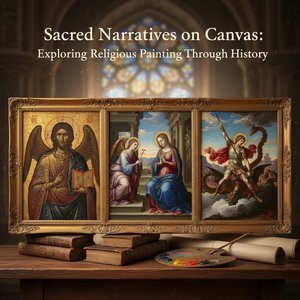
Sacred Narratives on Canvas: Exploring Religious Painting Through History
Explore the rich history of religious painting with ArtsDot.com! Discover iconic artworks, symbolism & techniques from antiquity to the Renaissance. Enhance your art appreciation today.