 Vorschau anzeigen
 Versenden
 Teilen
 Details anzeigen

 Herunterladen
 Ähnliche Objekte
 Röntgenaufnahme
 Diashow
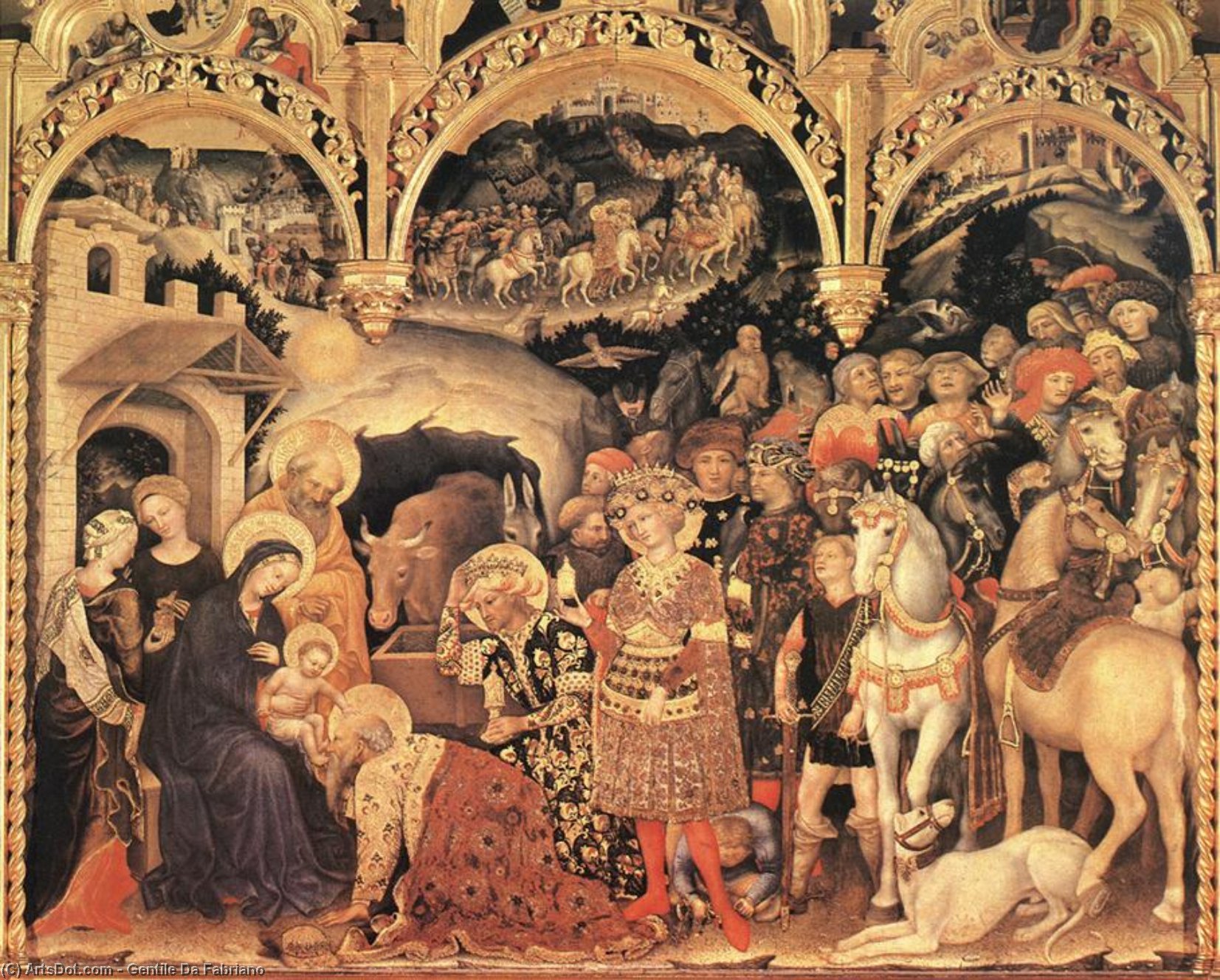
Adoration of the Magi (12)
 International Gothic
 1423
1423 300.0 x 282.0 cm
 Galleria degli Uffizi
 Weiterlesen
Handgefertigte Ölreproduktion
Handgemaltes Ölgemälde auf Leinwand in Ihrer Wunschgröße und mit Rahmen, auf Bestellung von unseren Künstlern angefertigt. ( Druck bestellen Bild kaufen)




P118B $10

P118H $10

P118W $10

P438Z $10

P508JH $12

P508YH $12

P805H $10

P805Z $10

P919BZ $10

P919G $10

P919XJ $10

P959ZH $10

P968JZ $12

W106C $8

W218G $10

W218JH $8

W218Y $10

W307PJ $10

W316G $10

W316PJ $8

W316Y $10

W398PJ $8

W4111J $10

W500HY $15

W500JH $15

W692G $12

W849H $8

W940BG $15

W953PJ $8




Wählen Sie aus unseren vordefinierten Formaten, die den ursprünglichen Proportionen des Kunstwerks entsprechen.

Sie können Ihre eigenen Maße eingeben, um einen bestimmten Rahmen oder Platz auszufüllen. Wenn die gewählte Größe nicht den Proportionen des Originalbildes entspricht, werden wir das Kunstwerk entweder beschneiden oder das Gemälde durch zusätzliche, handgemalte Elemente erweitern. Ein digitales Mockup wird Ihnen zur Genehmigung zugesandt, bevor die Produktion beginnt.
Bitte beachten Sie, dass die Bildschirmvorschau nicht die tatsächliche Beschneidung oder Erweiterung widerspiegelt. Nur das Mockup zeigt die endgültige Komposition exakt an.
Obwohl Sondermaße verfügbar sind, empfehlen wir, eine Größe aus der vordefinierten Liste zu wählen, um die ursprünglichen Proportionen beizubehalten.
Nach der Bestellung wird das ArtsDot.com-Team dem Kunden Anweisungen per E-Mail zusenden und eine Mockup-Vorschau bereitstellen.
Weltweiter Versand () in nur 3 bis 4 Wochen statt der üblichen 5 Wochen. (21 August). Keine Kompromisse bei der Qualität.

Kostenloser weltweiter Expressversand

Hochwertige Leinenleinwand

Umfassender Versicherungsschutz beim Versand

Zollgebühren-Rückerstattungsgarantie

Garantie für exakte Farbtreue

60 Tage Rückgaberecht (nur bei Mängeln)

100% Geld-zurück-Garantie

Mengenrabatt verfügbar
 Die Glasoption ist nur für Größen unter 110 cm verfügbar.

Adoration of the Magi (12)
Art der Reproduktion
Format der Reproduktion
-


Gesamtpreis
$ 263
Beschreibung des Kunstwerks
A Window into the Soul: Gentile da Fabriano’s ‘Adoration of the Magi’
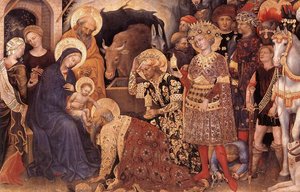
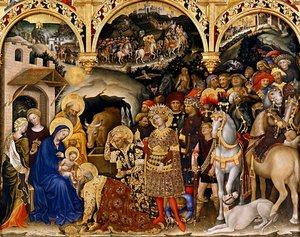
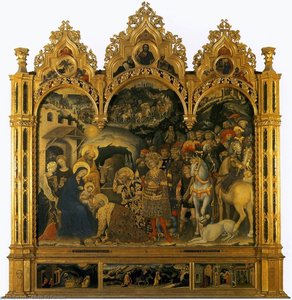
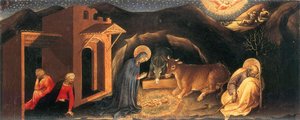
Gentile da Fabriano's “Adoration of the Magi” (1423) isn’t merely a depiction of a biblical scene; it’s an immersive experience, a vibrant tapestry woven with threads of opulent luxury, profound symbolism, and the nascent spirit of Renaissance humanism. Commissioned by the wealthy banker Palla Strozzi for his family chapel in Florence, this altarpiece transcends its function as devotional art to become a testament to wealth, status, and a burgeoning fascination with the natural world – all rendered with the exquisite detail that defines Gentile’s signature style. The painting immediately captivates with its sheer abundance: a dazzling array of gold leaf, shimmering fabrics, and meticulously crafted figures create an atmosphere of breathtaking richness, reflecting the patron's own considerable fortune. Yet, beneath this surface splendor lies a complex narrative brimming with theological significance and artistic innovation.The International Gothic Masterpiece – A Symphony of Detail
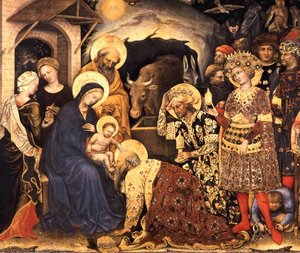
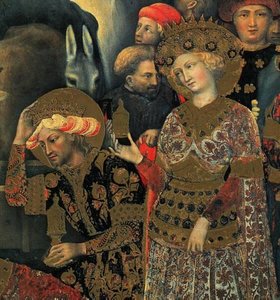
Gentile da Fabriano was a pivotal figure in the International Gothic movement, a style characterized by its refined elegance, intricate detail, and a profound sense of realism. “Adoration of the Magi” exemplifies these qualities to an extraordinary degree. Observe the painstaking rendering of each garment – the flowing robes of the Magi, adorned with elaborate embroidery and precious jewels; the delicate folds of Mary’s veil; even the texture of the animals beneath them. This level of detail wasn't simply decorative; it was a demonstration of the artist’s mastery and a reflection of the meticulous craftsmanship valued during this period. The use of *tempera* on panel, combined with the liberal application of gold leaf, creates a luminous surface that seems to radiate light – a technique particularly effective in conveying the scene’s otherworldly quality. The composition itself is remarkably complex, layering multiple narratives within a single frame: the arrival of the Magi, their homage to Christ, and the anticipation of the Nativity.Symbolism Woven into the Scene – A Language of Faith
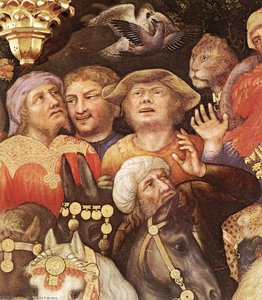
Beyond its technical brilliance, “Adoration of the Magi” is rich in symbolic meaning. The three wise men, representing the East, journey towards Bethlehem guided by a star—a potent symbol of divine guidance and hope. Their opulent attire, laden with jewels and silks, speaks to their wealth and status, but also subtly alludes to the treasures they bring to Christ – gifts that represent humility and devotion. The inclusion of exotic animals – monkeys, horses, camels, and lions – adds another layer of symbolism, referencing the distant lands from which the Magi originate and highlighting the universality of faith. The presence of a landscape in the background, depicting a rocky terrain and a distant sea, suggests both the earthly journey of the Magi and the eternal realm of heaven. Notably, the scene subtly incorporates elements of Arabic script, reflecting the influence of humanist scholarship on Gentile’s work and hinting at the burgeoning interest in Eastern cultures during this period.A Window to the Renaissance – Innovation and Legacy
“Adoration of the Magi” stands as a crucial bridge between the late Gothic and early Renaissance periods. While firmly rooted in the International Gothic style, it demonstrates a growing awareness of perspective, naturalism, and human emotion—elements that would become hallmarks of the Renaissance. Gentile’s innovative use of light and shadow creates a sense of depth and volume, moving beyond the flat, stylized figures of earlier medieval art. The scene's emotional resonance – the reverence of the Magi, the serenity of Mary, and the innocence of Christ – speaks to a deeper engagement with human experience. This masterpiece profoundly influenced subsequent generations of artists, including Botticelli and Leonardo da Vinci, cementing Gentile da Fabriano’s place as one of the most important figures in Italian Renaissance art.ArtsDot offers meticulously hand-painted reproductions of “Adoration of the Magi,” capturing the painting's breathtaking detail and vibrant colors with unparalleled accuracy. Each reproduction is created by skilled artists using archival-quality materials, ensuring that your artwork will last for generations to come. Explore our collection today and bring this iconic masterpiece into your home or office.
Ähnliche Kunstwerke
Über den Künstler
Frühes Leben und Werdegang
Gentile da Fabriano, ein italienischer Maler, wurde um 1370 in oder nahe Fabriano im Marche-Gebiet Italiens geboren. Seine Mutter verstarb vor 1380, und sein Vater, Niccolò di Giovanni Massi, zog 1385 in ein Kloster. Über Gentiles frühe künstlerische Ausbildung ist wenig bekannt, aber eines seiner ersten bekannten Werke, die Madonna mit Kind (ca. 1395-1400, heute in Berlin), zeigt den Einfluss der spätgotischen Malerei Norditaliens.Karrierehöhepunkte
* Um 1405 arbeitete Gentile da Fabriano in Venedig, wo er ein Tafelbild für die Kirche Santa Sofia malte (heute verloren). Er kooperierte auch mit Jacopo Bellini und kannte Pisanello und Michelino da Besozzo. * Zwischen 1410 und 1412 schuf er eines seiner Meisterwerke, das Valle Romita Polyptychon (heute in der Pinacoteca di Brera). * Im Jahr 1423 malte Gentile da Fabriano sein berühmtes Altarbild, die Anbetung der Heiligen Drei Könige, heute in den Uffizien, das als eines der Meisterwerke des Internationalen Gotischen Stils gilt.Wichtige Werke und Standorte
- Gentile da Fabriano: Anbetung der Heiligen Drei Könige (10) (300 x 282 cm, Galleria degli Uffizi, Florenz, Italien)
- Valle Romita Polyptychon (Pinacoteca di Brera)
- Madonna mit Kind (verloren, ehemals im Palazzo dei Notai auf der Piazza del Campo, Siena)
Stil und Bedeutung
Gentile da Fabriano gilt als einer der Hauptvertreter des Internationalen Gotischen Stils in Italien. Sein Stil zeichnet sich durch eine detailreiche Darstellung, elegante Figuren und eine harmonische Farbgebung aus. Er kombinierte naive Erzählfreude mit höfischer Eleganz. Gentiles Werke beeinflussten die florentinischen Maler und bildeten das Gegenstück zum kargen Realismus Masaccios. Er war der Erste in der Reihe glänzender Maler Umbriens. Zu seinen Schülern zählen bedeutende Maler wie Pisanello oder Jacopo Bellini.Tod und Vermächtnis
Gentile da Fabriano starb vor dem 14. Oktober 1427. Er wurde in der Kirche Santa Maria in Trastevere, Rom, oder möglicherweise in der heute als S. Francesca Romana bekannte Kirche in Florenz begraben, obwohl sein Grab verschwunden ist. Sein Einfluss auf die Malerei des 15. Jahrhunderts war bedeutend und seine Werke werden bis heute für ihre Schönheit und ihren Detailreichtum geschätzt.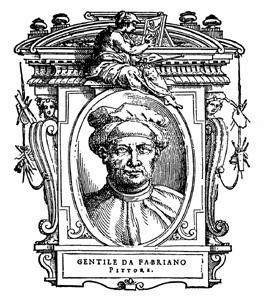
Gentile Da Fabriano
1370 - 1427 , Italien
Kurzinfos
- Bemerkenswerte Kunstwerke:
- Anbetung der Heiligen Drei Könige
- Valle Romita Polyptychon
- Madonna mit Kind (Berlin)
- Geburtsdatum: ca. 1370
- Geburtsort (Stadt, Land): Fabriano, Italien
- Künstler Oder Bewegungen, Die Von Diesem Künstler Beeinflusst Wurden:
- Florentinische Maler
- Frührenaissance
- Künstler, Die Diesen Künstler Beeinflussten: ['Norditalienische Gotik']
- Künstlerische Bewegung/Stil: International Gotik
- Nationalität: Italienisch
- Todatum: 1427
- Vollständiger Name: Gentile da Fabriano
Ähnliche Artikel
Leonardo da Vinci: Die 25 Meisterwerke für Ihr Zuhause | ArtsDot
Entdecken Sie die 25 Meisterwerke von Leonardo da Vinci! Erfahren Sie faszinierende Geschichten hinter Gemälden wie der Mona Lisa & Das letzte Abendmahl. Hochwertige Reproduktionen für Ihr Zuhause – jetzt bei ArtsDot entdecken!
Leonardo da Vinci: Synthese von Kunst, Wissenschaft und menschlicher Beobachtung – Eine Renaissance-Meisterleistung für den Kenner
Entdecken Sie Leonardo da Vincis revolutionäre Kunst und Wissenschaft! Expertenanalyse seiner Meisterwerke, Techniken wie Sfumato & Chiaroscuro. Für Kenner und Sammler.
Renaissance Humanismus: Die 10 Meisterwerke, die eine Epoche prägten – Kunst für Ihr Zuhause
Entdecken Sie die 10 Meisterwerke der Renaissance Humanismus! Von Leonardo da Vinci bis Michelangelo – erfahren Sie die Geschichten hinter ikonischen Gemälden & Skulpturen. Finden Sie Ihre perfekte Reproduktion auf ArtsDot.com.
Louvre Meisterwerke: Die Top 25 Kunstwerke für Ihr Zuhause | ArtsDot
Entdecken Sie die Top 25 Kunstwerke des Louvre! Von der Mona Lisa bis zur Venus von Milo – erleben Sie Geschichte, Künstler und Techniken. Hochwertige Reproduktionen für Ihr Zuhause auf ArtsDot.com.

Die 25 Meisterwerke der Uffizien: Kunstgeschichte für Ihr Zuhause | ArtsDot
Entdecken Sie die 25 berühmtesten Meisterwerke der Uffizien, Florenz! Von Botticelli bis Leonardo da Vinci – Kunstgeschichte erleben. Hochwertige Reproduktionen & Inspiration für Ihr Zuhause auf ArtsDot.com.