 Vorschau anzeigen
 Versenden
 Teilen
 Details anzeigen

 Herunterladen
 Ähnliche Objekte
 Röntgenaufnahme
 Diashow
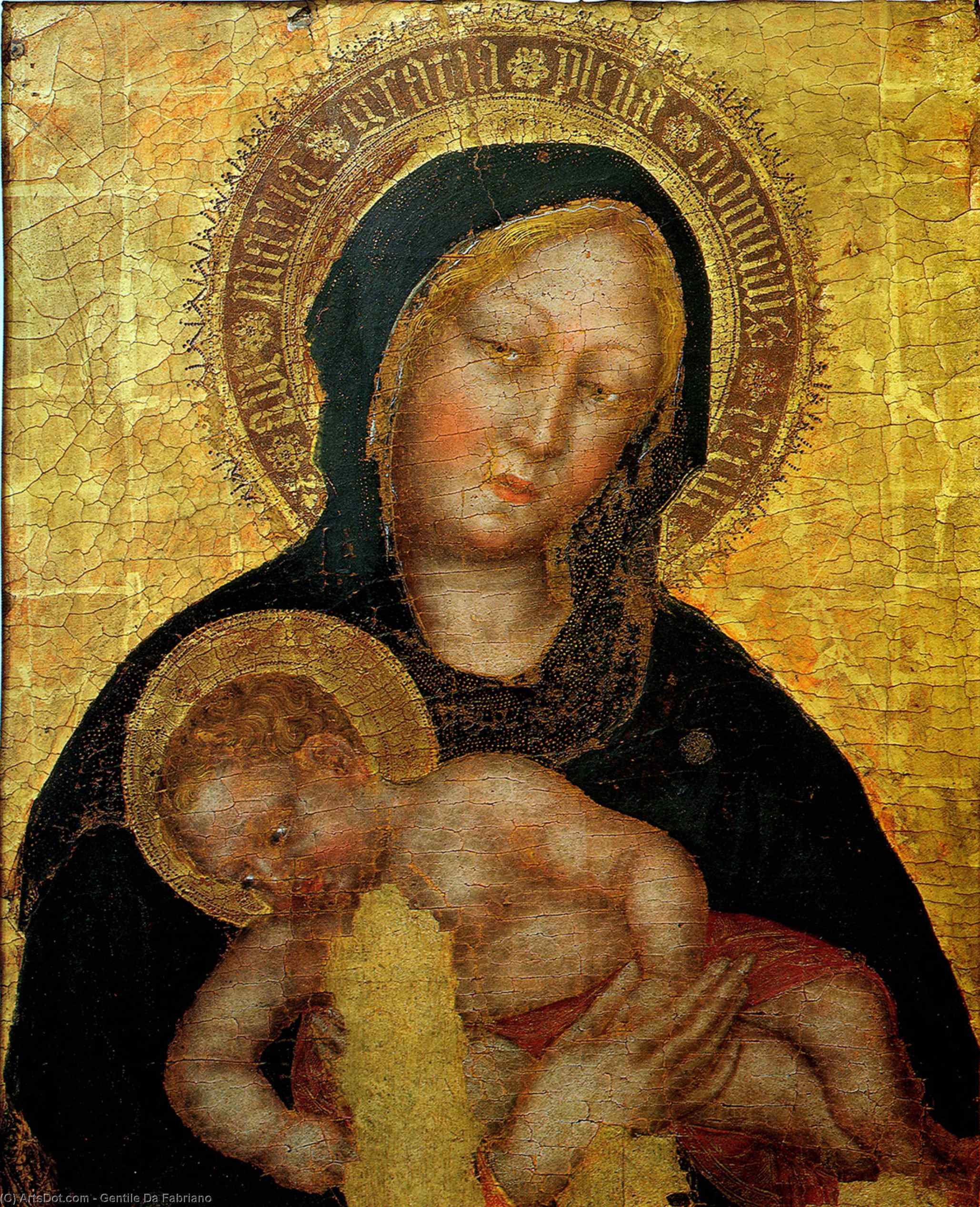
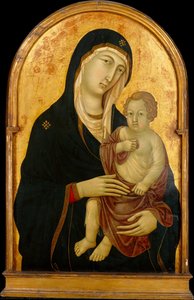
Madonna with Child Gentile da Fabriano


 Weiterlesen
Handgefertigte Ölreproduktion
Handgemaltes Ölgemälde auf Leinwand in Ihrer Wunschgröße und mit Rahmen, auf Bestellung von unseren Künstlern angefertigt. ( Druck bestellen Bild kaufen)




P118B $10

P118H $10

P118W $10

P438Z $10

P508JH $12

P508YH $12

P805H $10

P805Z $10

P919BZ $10

P919G $10

P919XJ $10

P959ZH $10

P968JZ $12

W106C $8

W218G $10

W218JH $8

W218Y $10

W307PJ $10

W316G $10

W316PJ $8

W316Y $10

W398PJ $8

W4111J $10

W500HY $15

W500JH $15

W692G $12

W849H $8

W940BG $15

W953PJ $8




Wählen Sie aus unseren vordefinierten Formaten, die den ursprünglichen Proportionen des Kunstwerks entsprechen.

Sie können Ihre eigenen Maße eingeben, um einen bestimmten Rahmen oder Platz auszufüllen. Wenn die gewählte Größe nicht den Proportionen des Originalbildes entspricht, werden wir das Kunstwerk entweder beschneiden oder das Gemälde durch zusätzliche, handgemalte Elemente erweitern. Ein digitales Mockup wird Ihnen zur Genehmigung zugesandt, bevor die Produktion beginnt.
Bitte beachten Sie, dass die Bildschirmvorschau nicht die tatsächliche Beschneidung oder Erweiterung widerspiegelt. Nur das Mockup zeigt die endgültige Komposition exakt an.
Obwohl Sondermaße verfügbar sind, empfehlen wir, eine Größe aus der vordefinierten Liste zu wählen, um die ursprünglichen Proportionen beizubehalten.
Nach der Bestellung wird das ArtsDot.com-Team dem Kunden Anweisungen per E-Mail zusenden und eine Mockup-Vorschau bereitstellen.
Weltweiter Versand () in nur 3 bis 4 Wochen statt der üblichen 5 Wochen. (19 August). Keine Kompromisse bei der Qualität.

Kostenloser weltweiter Expressversand

Hochwertige Leinenleinwand

Umfassender Versicherungsschutz beim Versand

Zollgebühren-Rückerstattungsgarantie

Garantie für exakte Farbtreue

60 Tage Rückgaberecht (nur bei Mängeln)

100% Geld-zurück-Garantie

Mengenrabatt verfügbar
 Die Glasoption ist nur für Größen unter 110 cm verfügbar.

Madonna with Child Gentile da Fabriano
Art der Reproduktion
Format der Reproduktion
-


Gesamtpreis
$ 263
Beschreibung des Kunstwerks
A Vision of Divine Grace
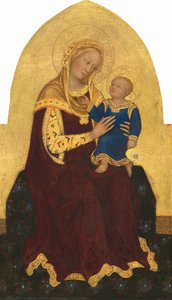
In the luminous realm of the International Gothic style, few works capture the ethereal tenderness of the divine as poignantly as Gentile da Fabriano’s Madonna with Child. Painted around 1405, this masterpiece serves as a window into a period where the earthly and the celestial were woven together through threads of gold and unparalleled delicacy. The painting presents the Virgin Mary not merely as a religious icon, but as a figure of profound maternal warmth and regal majesty. Adorned with a crown that signifies her status as the Queen of Heaven, she holds the Christ Child with a gentle strength, her gaze directed downward in a moment of quiet, soulful contemplation. The composition is anchored by a breathtaking gold background, which does not merely serve as a backdrop but acts as an infinite, divine light, enveloping the figures in a timeless, sacred atmosphere.
The artistry of Gentile da Fabriano is revealed in the meticulous attention to texture and ornamentation that defines this era. As a master of the International Gothic, he possessed a unique ability to blend opulent decorative elements with a burgeoning sense of naturalism. One can observe the intricate details of her necklace and the regal weight of the scepter, each stroke of the brush contributing to a sense of tactile luxury. The way the light interacts with the gilded surfaces creates a shimmering effect that would have captivated the eyes of 15th-century devotees, much as it does for the modern admirer. This technique transforms the panel into more than just a painting; it becomes a precious object of devotion, where every glint of gold reinforces the sanctity of the scene.
Symbolism and Emotional Resonance
Beyond its visual splendor, the artwork is a profound study in emotional intimacy. The relationship between the Mother and Child is depicted with a soft, rhythmic grace that invites the viewer into their private sanctuary. There is a palpable sense of tranquility and peace—a stillness that transcends the centuries. The Christ Child, resting peacefully in his mother's arms, embodies innocence, while Mary’s serene expression suggests a deep, knowing love that carries both joy and a hint of divine melancholy. For collectors and lovers of fine art, this piece offers a rare opportunity to possess a fragment of history that speaks to the universal themes of protection, nurturing, and the sacred bond between parent and child.
For those looking to integrate such a masterpiece into a curated interior, the Madonna with Child offers unparalleled versatility. Its rich palette of gold, deep tones, and soft flesh tints provides a sophisticated focal point that complements both classical and contemporary settings. Whether placed in a grand hall or a quiet study, a high-quality reproduction of this work brings an air of historical prestige and spiritual calm to any space. It is an investment in beauty that transcends mere decoration, offering instead a profound sense of peace and a timeless connection to the golden age of Italian painting.
Ähnliche Kunstwerke

Über den Künstler
Frühes Leben und Werdegang
Gentile da Fabriano, ein italienischer Maler, wurde um 1370 in oder nahe Fabriano im Marche-Gebiet Italiens geboren. Seine Mutter verstarb vor 1380, und sein Vater, Niccolò di Giovanni Massi, zog 1385 in ein Kloster. Über Gentiles frühe künstlerische Ausbildung ist wenig bekannt, aber eines seiner ersten bekannten Werke, die Madonna mit Kind (ca. 1395-1400, heute in Berlin), zeigt den Einfluss der spätgotischen Malerei Norditaliens.Karrierehöhepunkte
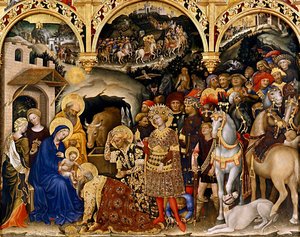
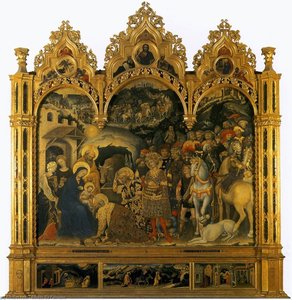
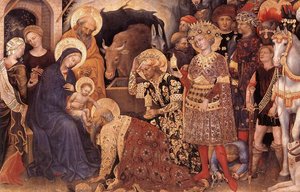
* Um 1405 arbeitete Gentile da Fabriano in Venedig, wo er ein Tafelbild für die Kirche Santa Sofia malte (heute verloren). Er kooperierte auch mit Jacopo Bellini und kannte Pisanello und Michelino da Besozzo. * Zwischen 1410 und 1412 schuf er eines seiner Meisterwerke, das Valle Romita Polyptychon (heute in der Pinacoteca di Brera). * Im Jahr 1423 malte Gentile da Fabriano sein berühmtes Altarbild, die Anbetung der Heiligen Drei Könige, heute in den Uffizien, das als eines der Meisterwerke des Internationalen Gotischen Stils gilt.Wichtige Werke und Standorte
- Gentile da Fabriano: Anbetung der Heiligen Drei Könige (10) (300 x 282 cm, Galleria degli Uffizi, Florenz, Italien)
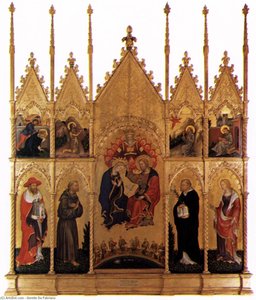
- Valle Romita Polyptychon (Pinacoteca di Brera)
- Madonna mit Kind (verloren, ehemals im Palazzo dei Notai auf der Piazza del Campo, Siena)
Stil und Bedeutung
Gentile da Fabriano gilt als einer der Hauptvertreter des Internationalen Gotischen Stils in Italien. Sein Stil zeichnet sich durch eine detailreiche Darstellung, elegante Figuren und eine harmonische Farbgebung aus. Er kombinierte naive Erzählfreude mit höfischer Eleganz. Gentiles Werke beeinflussten die florentinischen Maler und bildeten das Gegenstück zum kargen Realismus Masaccios. Er war der Erste in der Reihe glänzender Maler Umbriens. Zu seinen Schülern zählen bedeutende Maler wie Pisanello oder Jacopo Bellini.Tod und Vermächtnis
Gentile da Fabriano starb vor dem 14. Oktober 1427. Er wurde in der Kirche Santa Maria in Trastevere, Rom, oder möglicherweise in der heute als S. Francesca Romana bekannte Kirche in Florenz begraben, obwohl sein Grab verschwunden ist. Sein Einfluss auf die Malerei des 15. Jahrhunderts war bedeutend und seine Werke werden bis heute für ihre Schönheit und ihren Detailreichtum geschätzt.
Gentile Da Fabriano
1370 - 1427 , Italien
Kurzinfos
- Bemerkenswerte Kunstwerke:
- Anbetung der Heiligen Drei Könige
- Valle Romita Polyptychon
- Madonna mit Kind (Berlin)
- Geburtsdatum: ca. 1370
- Geburtsort (Stadt, Land): Fabriano, Italien
- Künstler Oder Bewegungen, Die Von Diesem Künstler Beeinflusst Wurden:
- Florentinische Maler
- Frührenaissance
- Künstler, Die Diesen Künstler Beeinflussten: ['Norditalienische Gotik']
- Künstlerische Bewegung/Stil: International Gotik
- Nationalität: Italienisch
- Todatum: 1427
- Vollständiger Name: Gentile da Fabriano
Ähnliche Artikel
Beyond Borders: The Spiritual & Stylistic Innovations of International Gothic Art
Explore the exquisite beauty & spiritual depth of International Gothic art. Discover key artists like Simone Martini & Pol de Limbourg, its origins, symbolism, and lasting influence on European painting. Expert insights at ArtsDot.

Golden Glow: How to Use Metallic Gold Artworks to Elevate Your Home Decor with Timeless Luxury
Discover how to elevate your home with the timeless elegance of metallic gold artworks. From sculptural metal pieces to gilded oil paintings, learn expert interior design tips for integrating luxurious gold accents into your space with sophistication and grace.

The Allure of Gold in Art History: Symbolism, Technique & Cultural Significance
Explore the rich history of gold in art! Discover symbolism, techniques & cultural significance from ancient civilizations to Klimt's masterpieces. Expert insights for collectors at ArtsDot.

The Radiant Dusk of Medieval Vision: Exploring Late Gothic Art's Synthesis of Faith, Form & Emotionality (c. 1300-1500)
Explore the exquisite beauty & spiritual depth of Late Gothic art (c. 1300-1500). Discover key artists, symbolism, and its lasting influence on the Renaissance. Expert insights at ArtsDot.

Goldene Meisterwerke: Die Top 10 berühmtesten Gemälde mit Blattgold – ArtsDot
Entdecken Sie die Top 10 Gemälde, die von Blattgold verzaubern! Von Klimt bis zur Renaissance – erfahren Sie die Geschichten hinter ikonischen Kunstwerke & lassen Sie sich für Ihre Wohnraumgestaltung inspirieren. Hochwertige Reproduktionen auf ArtsDot.com.