 Vorschau anzeigen
 Versenden
 Teilen
 Details anzeigen

 Herunterladen
 Ähnliche Objekte
 Röntgenaufnahme
 Diashow
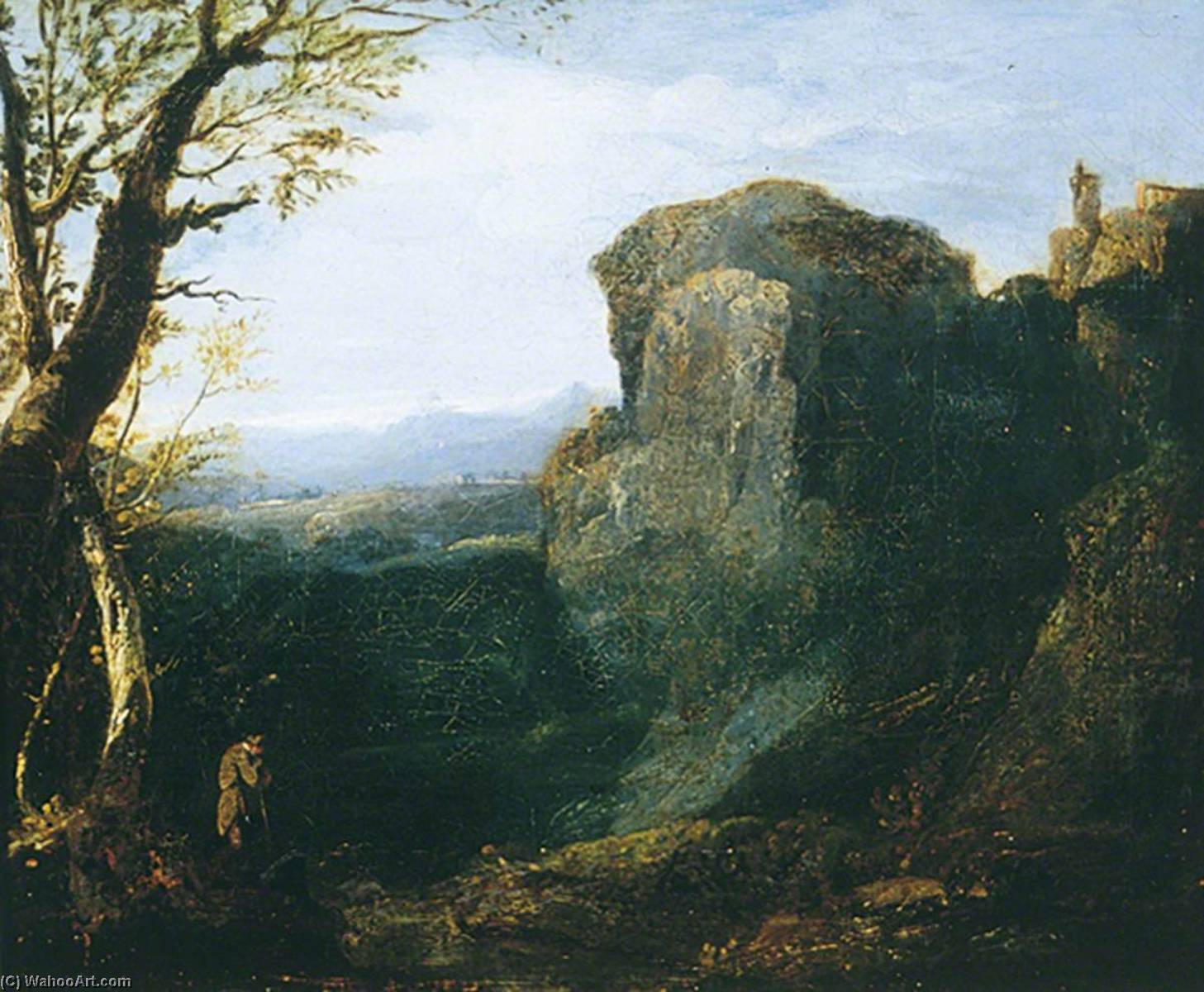
The Falls of Tivoli
 Oil On Canvas
- WallArt
- Romanticism
 65.0 x 76.0 cm
 Temple Newsam House
 Weiterlesen
Giclée / Kunstdruck
Giclée- oder Leinwanddruck in Museumsqualität mit schneller Produktion und flexiblen Veredelungsoptionen. ( Handgemalte Reproduktion bestellen Bild kaufen)




P118B $10

P118H $10

P118W $10

P438Z $10

P508JH $12

P508YH $12

P805H $10

P805Z $10

P919BZ $10

P919G $10

P919XJ $10

P959ZH $10

P968JZ $12

W106C $8

W218G $10

W218JH $8

W218Y $10

W307PJ $10

W316G $10

W316PJ $8

W316Y $10

W398PJ $8

W4111J $10

W500HY $15

W500JH $15

W692G $12

W849H $8

W940BG $15

W953PJ $8




Wählen Sie aus unseren vordefinierten Formaten, die den ursprünglichen Proportionen des Kunstwerks entsprechen.

Sie können Ihre eigenen Maße eingeben, um ein bestimmtes Format oder einen speziellen Platz einzupassen. Wenn das von Ihnen gewählte Format nicht den Proportionen des Originalbildes entspricht, werden wir das Kunstwerk entweder beschneiden oder das Bild mit einem gespiegelten oder einfarbigen Rand erweitern. Ein digitaler Entwurf wird Ihnen zur Genehmigung zugesandt, bevor die Produktion beginnt.
Bitte beachten Sie, dass die Vorschau auf dem Bildschirm nicht den tatsächlichen Zuschnitt oder die Erweiterung widerspiegelt. Nur der Entwurf zeigt die endgültige Komposition präzise an.
Obwohl Sondermaße verfügbar sind, empfehlen wir die Auswahl eines Maßes aus der vordefinierten Liste, um die ursprünglichen Proportionen zu bewahren.
Weltweiter Versand () innerhalb von 2 Wochen statt der üblichen 4/5 Wochen. (21 August)

Kostenloser weltweiter Expressversand

Hochwertige Leinenleinwand

Umfassender Versicherungsschutz beim Versand

Zollgebühren-Rückerstattungsgarantie

Garantie für exakte Farbtreue

60 Tage Rückgaberecht (nur bei Mängeln)

100% Geld-zurück-Garantie

Mengenrabatt verfügbar
 Die Glasoption ist nur für Größen unter 110 cm verfügbar.

The Falls of Tivoli
Giclée / Kunstdruck
Format der Reproduktion
-


Gesamtpreis
$ 62
Sammlerstück-Beschreibung
A Symphony of Stone and Mist: George Barret’s “The Falls of Tivoli”
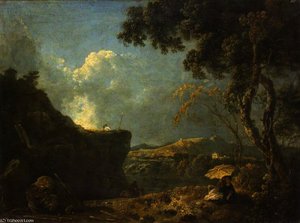
George Barret the Elder's "The Falls of Tivoli" isn’t merely a landscape painting; it’s an immersion into a realm where the grandeur of nature intertwines with a profound sense of melancholy and contemplative beauty. Completed around 1770, this oil on canvas captures a dramatic vista overlooking the Aniene River cascading through the Sabine Hills near Tivoli, Italy – a location steeped in Roman history and imbued with a timeless allure. Barret’s masterful command of atmospheric perspective and his keen eye for detail transport the viewer to a place both familiar and profoundly distant, evoking a powerful emotional response rooted in the Romantic sensibility.
The painting immediately establishes a strong sense of scale through its composition. A towering rock formation dominates the right side of the canvas, acting as an anchor and drawing the gaze into the hazy depths of the valley below. This imposing structure is juxtaposed with a winding path that snakes its way towards the unseen horizon, inviting the viewer to imagine themselves traversing this rugged terrain. Foreground elements – a gnarled tree and a solitary figure, likely a shepherd or traveler – provide a crucial human scale, emphasizing the immensity of the landscape and hinting at the vulnerability of humankind in the face of nature’s overwhelming power. The use of muted browns, greens, and blues creates a cool, almost somber palette, contributing to the painting's overall mood of quiet contemplation.
The Romantic Echoes: Influences and Artistic Context
Barret’s work is deeply rooted in the burgeoning Romantic movement, an artistic and intellectual reaction against the Enlightenment’s emphasis on reason. Edmund Burke’s philosophical treatise, *A Philosophical Enquiry into the Origin of Our Ideas of the Sublime and Beautiful*, profoundly influenced Barret's approach to landscape painting. Burke argued that sublime experiences – those evoking awe, terror, and a sense of insignificance – were essential for human understanding. Barret translates this philosophy visually by depicting a scene of overwhelming natural grandeur, suggesting a humbling encounter with the forces beyond human control. The hazy atmosphere, the dramatic lighting, and the solitary figure all contribute to this feeling of sublime wonder.
Furthermore, Barret’s artistic lineage is traceable back to classical landscape painters like Claude Lorrain, whom he skillfully reworked into his own style. He adopted the techniques of creating illusionistic depth through atmospheric perspective – softening distant forms and diminishing their detail – a hallmark of both classical and Romantic painting. The careful rendering of textures, particularly on the rocks, reveals Barret’s meticulous attention to detail and his ability to capture the tactile qualities of the natural world.
A Symbol of Human Vulnerability
Beyond its technical brilliance, “The Falls of Tivoli” is rich in symbolic meaning. The solitary figure in the foreground represents humanity's inherent vulnerability when confronted with the vastness and power of nature. It’s a poignant reminder of our smallness within the grand scheme of things – a theme central to Romantic art. The waterfall itself, a symbol of constant motion and renewal, suggests the cyclical nature of life and the enduring beauty of the natural world. The distant ruins, barely discernible through the haze, hint at the passage of time and the impermanence of human endeavors.
Technical Details & Historical Significance
Executed in oil on canvas, “The Falls of Tivoli” showcases Barret’s mastery of layering and brushwork. Noticeable impasto – thick application of paint – is particularly evident in the rock formations, lending them a sense of solidity and age. The painting's dimensions are 65 x 76 cm, making it a relatively intimate work despite its expansive subject matter. It was originally part of the collection of Temple Newsam House in Leeds, England, and now resides at the National Gallery of Ireland. George Barret Sr.’s legacy extends beyond this single masterpiece; he played a pivotal role in establishing the Royal Academy, furthering the development of landscape painting in Britain, and leaving behind a body of work that continues to resonate with viewers today.
Ähnliche Kunstwerke
Über den Künstler
George Barret Sr.: Leben & Vermächtnis
- Geboren: Zwischen 1728 und 1732 in Libertyville, Irland, Sohn eines Tuchhändlers.
- Zunächst als Stayschnitter ausgelernt, bevor er sein künstlerisches Talent entdeckte.
- Um 1747 begann er eine formelle Zeichenausbildung an der Robert West’s Academy in Dublin, gefördert von der Royal Dublin Society.
- Er unterrichtete anschließend selbst Zeichnen an derselben Akademie und zeigte frühzeitig vielversprechendes Talent.
- Eine prägende Freundschaft mit Edmund Burke, die während Burkes Zeit am Trinity College, Dublin, entstand, sollte später im Leben entscheidend sein.
Frühe künstlerische Entwicklung & Einflüsse
- Barrets frühe Gemälde zeigten oft klassische Landschaften und mythologische Figuren.
- Beeinflusst von: Den philosophischen Schriften Edmund Burkes, insbesondere *A Philosophical Enquiry into the Origin of Our Ideas of the Sublime and Beautiful*, die seinen künstlerischen Ansatz für Landschaftsbilder prägten.
- Er arbeitete zunächst mit der Überarbeitung von Stichen klassischer italienischer Szenen von Künstlern wie Claude Lorrain und demonstrierte damit eine starke Grundlage in etablierten Stilen.
- Obwohl er italienische Landschaften darstellte, gibt es keine Beweise dafür, dass er jemals selbst Italien bereist hat.
Umzug nach London und Aufstieg zum Erfolg
- 1762 zog Barret nach London, um größere künstlerische Möglichkeiten zu suchen.
- Er erlangte schnell Anerkennung als einer der führenden Landschaftskünstler seiner Zeit.
- Er stellte auf der Society of Artists of Great Britain aus und gewann die Unterstützung bedeutender Kunstsammler.
- Wichtiges Ereignis: 1768 gehörte Barret zu den Gründungsmitgliedern, die die Society of Artists verließen, um die Royal Academy zu gründen – ein entscheidender Moment in der britischen Kunstgeschichte.
Künstlerischer Stil und Themen
- Barrets Stil entwickelte sich von idealisierten italienischen Landschaften hin zu naturalistischen Darstellungen englischer und irischer Szenerien.
- Er reiste ausgiebig durch England, Wales, Schottland und Irland, um Aufträge anzunehmen und die Schönheit verschiedener Landschaften festzuhalten.
- Häufige Themen waren idyllische Ansichten, malerisches Landleben, Wasserfälle (wie sein berühmtes *The Powerscourt Waterfall*) und topografische Darstellungen von Gütern und Anwesen.
- Seine Gemälde enthielten oft Figuren in der Landschaft, die ein Gefühl für Maßstab und Erzählung hinzufügten.
Späteres Leben & Förderung
- Litt an Asthma, was ihn 1772 aus gesundheitlichen Gründen nach Westbourne Green führte.
- Obwohl er beträchtliche Einnahmen erzielte, wurde er als „leichtsinnig“ mit Geld beschrieben und hatte gelegentlich finanzielle Schwierigkeiten.
- Fortwährende Unterstützung: Edmund Burke blieb ein treuer Freund und unterstützte Barret finanziell und beruflich.
- 1782 empfahl Burke ihn für die Stelle des Master Painter von Chelsea Hospital, die er bis zu seinem Tod 1784 innehatte.
Vermächtnis & Historische Bedeutung
- Obwohl seine Witwe und Kinder nach seinem Tod mittellos zurückblieben, gewährte die Royal Academy eine kleine Rente.
- Barrets Werk stellt einen bedeutenden Übergang in der britischen Landschaftsmalerei dar, weg von der klassischen Nachahmung hin zu einem stärker nationalen Stil.
- Seine Gemälde geben wertvolle Einblicke in Landschaften und das aristokratische Leben des 18. Jahrhunderts.
- Viele seiner Werke befinden sich heute in bedeutenden Sammlungen, darunter die National Gallery of Ireland und das Yale Center for British Art.
George Barrett der Ältere
1732 - 1784 , Irland
Kurzinfos
- Beeinflusste Künstler: ['Claude Lorrain']
- Bemerkenswerte Werke:
- The Powerscourt Waterfall
- A Prospect of Southwick Park
- Llyn Nantlle
- North Side of Danson
- Geburtsdatum: 1732
- Geburtsort: Libertyville, Irland
- Künstlerische Richtung: Romantik
- Nationalität: Irisch
- Sterbedatum: 1784
- Vollständiger Name: George Barret der Ältere
Ähnliche Artikel

Georges Braque: Die 25 Meisterwerke des Kubismus für Ihr Zuhause | ArtsDot
Entdecken Sie die 25 bedeutendsten Kunstwerke von Georges Braque – vom Kubismus bis zum Fauvismus. Erfahren Sie die Geschichten hinter den Meisterwerken und finden Sie hochwertige Reproduktionen für Ihr Zuhause auf ArtsDot.com.

Georges Seurat: Die 25 Meisterwerke des Pointillismus für Ihr Zuhause | ArtsDot
Entdecken Sie die 25 ikonischsten Meisterwerke von Georges Seurat! Tauchen Sie ein in die Welt des Pointillismus, der Farbtheorie und des Impressionismus. Hochwertige Kunst reproduzieren für Ihr Zuhause – jetzt auf ArtsDot.com!

Romantische Landschaften: Die 10 Meisterwerke, die eine Epoche prägten | ArtsDot
Entdecken Sie die 10 Meisterwerke der Romantischen Landschaftsmalerei! Von Caspar David Friedrich bis Turner – erleben Sie die Kunst, Emotion & Natur. Hochwertige Reproduktionen auf ArtsDot.com
George Barret der Ältere und die Entstehung der britischen Landschaftsmalerei: Ein Pionier des pastoralen Stils
Entdecken Sie das Werk von George Barret der Ältere, einem Pionier der britischen Landschaftsmalerei! Erfahren Sie mehr über seinen pastoralen Stil, Einfluss und die Entwicklung des Genres. Kunstgeschichte für Kenner.

Evocations of Place: A Historical Journey Through Landscape Art
Explore the rich history of landscape art with ArtsDot. Discover renowned artists, movements like Impressionism & Romanticism, and expert guidance for collecting timeless pieces. Find your perfect serene escape today!