 Vorschau anzeigen
 Versenden
 Teilen
 Details anzeigen

 Herunterladen
 Ähnliche Objekte
 Röntgenaufnahme
 Diashow
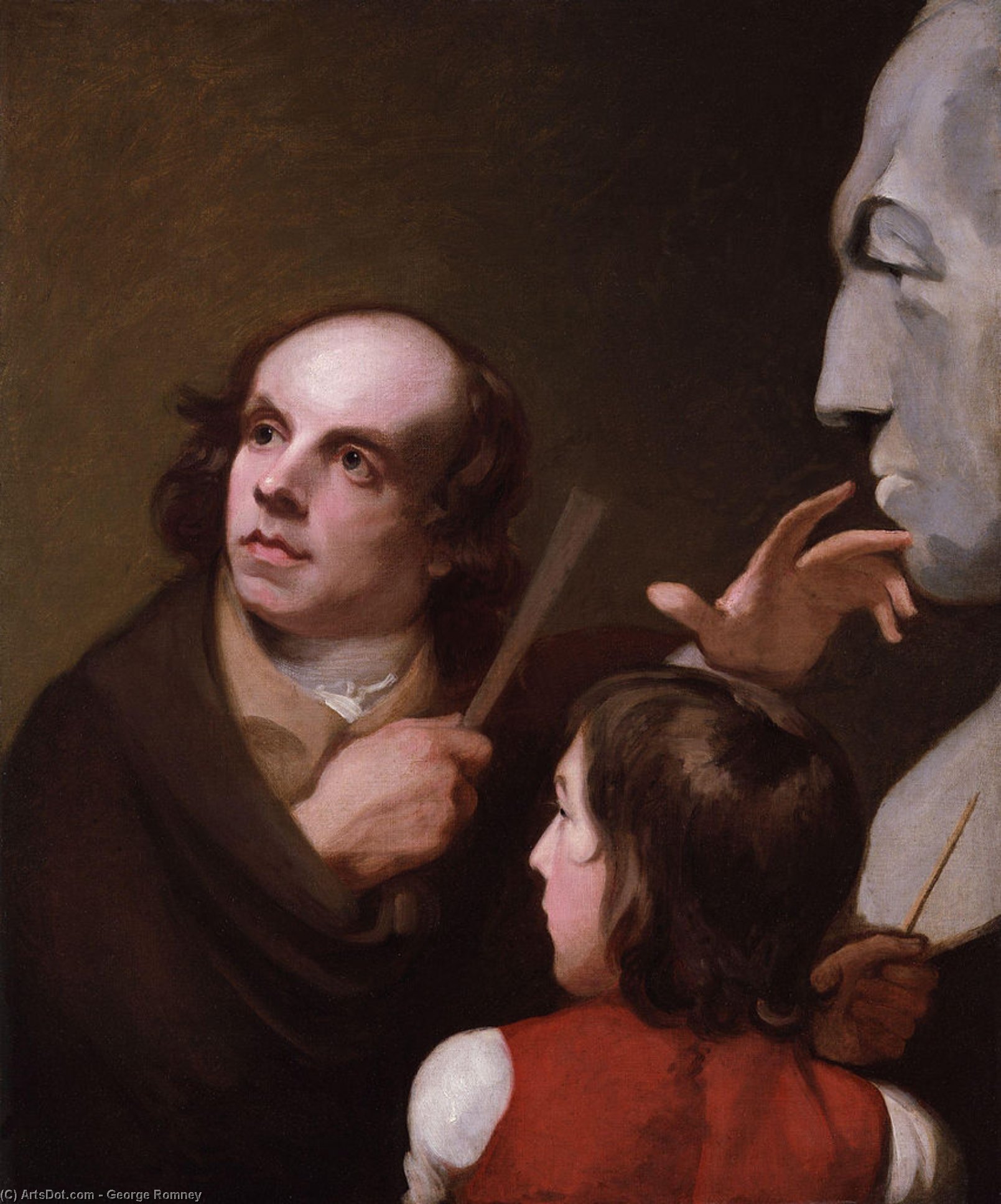
John Flaxman and Thomas Alphonso Hayley


 Weiterlesen
Handgefertigte Ölreproduktion
Handgemaltes Ölgemälde auf Leinwand in Ihrer Wunschgröße und mit Rahmen, auf Bestellung von unseren Künstlern angefertigt. ( Druck bestellen Bild kaufen)




P118B $10

P118H $10

P118W $10

P438Z $10

P508JH $12

P508YH $12

P805H $10

P805Z $10

P919BZ $10

P919G $10

P919XJ $10

P959ZH $10

P968JZ $12

W106C $8

W218G $10

W218JH $8

W218Y $10

W307PJ $10

W316G $10

W316PJ $8

W316Y $10

W398PJ $8

W4111J $10

W500HY $15

W500JH $15

W692G $12

W849H $8

W940BG $15

W953PJ $8




Wählen Sie aus unseren vordefinierten Formaten, die den ursprünglichen Proportionen des Kunstwerks entsprechen.

Sie können Ihre eigenen Maße eingeben, um einen bestimmten Rahmen oder Platz auszufüllen. Wenn die gewählte Größe nicht den Proportionen des Originalbildes entspricht, werden wir das Kunstwerk entweder beschneiden oder das Gemälde durch zusätzliche, handgemalte Elemente erweitern. Ein digitales Mockup wird Ihnen zur Genehmigung zugesandt, bevor die Produktion beginnt.
Bitte beachten Sie, dass die Bildschirmvorschau nicht die tatsächliche Beschneidung oder Erweiterung widerspiegelt. Nur das Mockup zeigt die endgültige Komposition exakt an.
Obwohl Sondermaße verfügbar sind, empfehlen wir, eine Größe aus der vordefinierten Liste zu wählen, um die ursprünglichen Proportionen beizubehalten.
Nach der Bestellung wird das ArtsDot.com-Team dem Kunden Anweisungen per E-Mail zusenden und eine Mockup-Vorschau bereitstellen.
Weltweiter Versand () in nur 3 bis 4 Wochen statt der üblichen 5 Wochen. (29 August). Keine Kompromisse bei der Qualität.

Kostenloser weltweiter Expressversand

Hochwertige Leinenleinwand

Umfassender Versicherungsschutz beim Versand

Zollgebühren-Rückerstattungsgarantie

Garantie für exakte Farbtreue

60 Tage Rückgaberecht (nur bei Mängeln)

100% Geld-zurück-Garantie

Mengenrabatt verfügbar
 Die Glasoption ist nur für Größen unter 110 cm verfügbar.

John Flaxman and Thomas Alphonso Hayley
Art der Reproduktion
Format der Reproduktion
-


Gesamtpreis
$ 263
A Dialogue of Minds: The Intellectual Soul of Romney’s Masterpiece
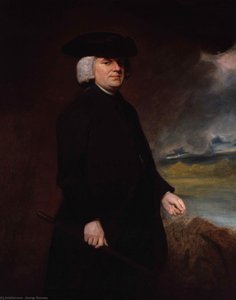
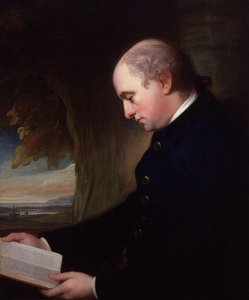
In the quiet, opulent corners of Georgian England, where the flicker of candlelight met the sharp edge of Enlightenment thought, George Romney captured more than mere likenesses; he captured the very pulse of human connection. His 1795 portrait, John Flaxman and Thomas Alphonso Hayley, serves as a profound window into an era defined by the pursuit of reason and the beauty of classical ideals. This is not simply a painting of two men, but a staged symphony of intellectual companionship. As we gaze upon the neoclassical sculptor John Flaxman and the poet Thomas Alphonso Hayley, we are invited to eavesdrop on a conversation that transcends time, witnessing a moment where art, poetry, and philosophy converge within an elegantly appointed interior.
The composition breathes with a palpable sense of immediacy. Romney moves beyond the stiff, formal portraiture of previous generations to embrace a psychological realism that feels startlingly modern. The subjects are caught in a state of animated engagement, their gestures and facial expressions suggesting a depth of character that invites the viewer to wonder about the words exchanged between them. For the discerning collector or interior designer, this piece offers more than visual prestige; it provides an emotional anchor, a narrative centerpiece that brings a sense of cultured history and contemplative warmth to any sophisticated space.
Technique and the Radiance of Neoclassical Grace
Romney’s technical mastery is on full display through his exquisite use of oil on canvas, where he achieves a remarkable tonal depth that seems to glow from within. While the painting adheres to the meticulous draughtsmanship and precision characteristic of the neoclassical movement, there is an unmistakable infusion of Romanticism in the way light dances across the scene. The artist employs sophisticated layering techniques to capture the tactile reality of the era—the soft sheen of a white shirt, the rich, textured weight of a red waistcoat, and the delicate play of shadows within the drapery.
The luminosity of the work is particularly striking, as Romney utilizes light not just to illuminate, but to sculpt. The way light reflects off the surfaces suggests a room filled with the soft, diffused glow of an afternoon salon, creating an atmosphere of intimacy and warmth. This careful manipulation of light and shadow—chiaroscuro in its most refined, English form—lends the portrait a three-dimensional presence, making the figures feel as though they might step forward from the canvas into the room itself. It is this breathtaking attention to detail that makes a high-quality reproduction of this work such a captivating addition to a curated art collection.
Symbolism and the Spirit of an Age
Beyond the aesthetic splendor, the painting is rich with the symbolic language of the late 18th century. The presence of knives held by the subjects serves as a fascinating, perhaps even provocative, metaphor for the precision and intellectual rigor required in the arts of sculpture and poetry. Flaxman, a titan of neoclassical form, represents the structural integrity and moral virtue of the classical tradition, while the interaction itself hints at the burgeoning tension between the era's devotion to reason and its emerging fascination with raw emotion.
The inclusion of secondary figures in the periphery adds layers of social context, suggesting the bustling, interconnected nature of the London artistic circles. This portrait is a tribute to the "Age of Reason," embodying the spirit of thinkers like Voltaire and Rousseau who sought to reshape the world through intellect. To possess or display a reproduction of this work is to celebrate this enduring legacy of human achievement. It is an invitation to surround oneself with the elegance of the past, fostering an environment of inspiration, scholarly depth, and timeless sophistication.
Ähnliche Kunstwerke
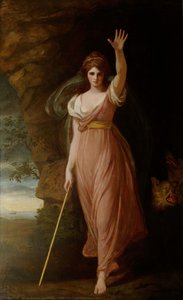
Über den Künstler
George Romney: Ein Leben in der Porträtkunst
Frühes Leben und künstlerische Anfänge
- Geboren: 26. Mai 1734 in Beckside, Dalton-in-Furness, Lancashire (heute Cumbria), Vereinigtes Königreich.
- Romney war das dritte von elf Kindern von John Romney, einem Kabinentischler, und Anne Simpson.
- Frühe künstlerische Ausbildung: Er zeigte früh eine Neigung zur Kunst, was zu einer Lehrzeit bei Christopher Steele führte, einem Porträtmaler, der unter Carlo Vanloo in Paris studiert hatte. Diese grundlegende Ausbildung vermittelte ihm wichtige Fähigkeiten und Einblicke in europäische Kunsttraditionen.
Künstlerische Entwicklung und Durchbruch
- Romney zog um 1760 nach London, um dort größere Möglichkeiten für seine wachsende Karriere zu finden.
- Er etablierte sich schnell als geschickter Porträtmaler und konkurrierte mit namhaften Künstlern wie Thomas Gainsborough und Joshua Reynolds.
- Stil & Technik: Romneys Stil entwickelte sich im Laufe der Zeit weiter, anfänglich beeinflusst von Steele und Vanloo, aber er entwickelte einen unverwechselbaren Ansatz, der durch elegante Posen, weiches Licht und den Fokus auf die Persönlichkeit seiner Modelle gekennzeichnet war.
Die Muse: Emma Hamilton
- Eine entscheidende Beziehung: Romneys künstlerisches Leben wurde tiefgreifend von seiner Beziehung zu Emma Hamilton (geborene Amy Lyon) beeinflusst. Sie wurde zu seinem Lieblingsmodell und zur Muse, die eine Reihe fesselnder Porträts inspirierte.
- Hamiltons Schönheit, Intelligenz und dramatische Ausstrahlung faszinierten Romney. Er porträtierte sie in verschiedenen Rollen – als Spinnerin, Miranda aus Shakespeares *Der Sturm* und in zahlreichen anderen allegorischen Szenen.
- Künstlerische Erkundung: Durch seine Arbeit mit Hamilton erforschte Romney Themen der klassischen Mythologie, Theatralik und weiblichen Anmut.
Bemerkenswerte Werke und Leistungen
- Porträt von James Brudenell, Earl of Cardigan (1776): Ein Paradebeispiel für Romneys Fähigkeit, den Charakter und den Status seiner Modelle einzufangen.
- Emma Hamilton als Spinnerin: Demonstriert Romneys Geschicklichkeit beim Porträtieren sowohl von Schönheit als auch von Erzählungen in einer einzigen Komposition.
- Lady Emma Hamilton als Miranda: Zeigt Romneys Faszination für theatralische Posen und klassische Anspielungen.
- Ariel (Somerville College, Oxford): Ein auffälliges Porträt von Emma Hamilton, das den Geist aus Shakespeares *Der Sturm* verkörpert.
- Breite Auftragslage: Romney erfreute sich einer erfolgreichen Karriere und zog Aufträge von prominenten Mitgliedern der britischen Gesellschaft an, darunter Aristokraten, Politiker und Literaten.
Einflüsse und historische Bedeutung
- Künstlerische Einflüsse: Carlo Vanloo und Christopher Steele vermittelten Romney eine frühe Ausbildung. Er ließ sich auch von den Werken von Peter Paul Rubens und anderen Barockmeistern inspirieren.
- Auswirkung auf die britische Porträtmalerei: Romneys Arbeit trug dazu bei, die Entwicklung der britischen Porträtmalerei im späten 18. Jahrhundert zu prägen und einen Stil zu fördern, der Eleganz, psychologische Einsicht und künstlerisches Flair betonte.
- Seine Porträts bieten wertvolle Einblicke in das Leben und den Geschmack des britischen Adels seiner Zeit.
- Späteres Leben & Vermächtnis: Romney litt im späteren Leben unter psychischen Problemen, was zu einem Rückgang seiner Produktivität führte. Er starb 1802 und hinterließ eine bedeutende Anzahl von Werken, die bis heute bewundert und studiert werden.

George Romney
1734 - 1802 , Vereinigtes Königreich
Kurzinfos
- Beeinflusste Künstler:
- Carlo Vanloo
- Christopher Steele
- Bemerkenswerte Werke:
- Porträt von George Cowper
- Emma Hamilton als Spinnerin
- Lady Emma Hamilton als Miranda
- Ariel (Somerville College)
- Geburtsdatum: 26. Mai 1734
- Geburtsort: Dalton-in-Furness, Vereinigtes Königreich
- Künstlerische Richtung: Portraitmalerei, Romantik
- Nationalität: Britisch
- Todatum: 1802
- Vollständiger Name: George Romney
Ähnliche Artikel

Georges Braque: Die 25 Meisterwerke des Kubismus für Ihr Zuhause | ArtsDot
Entdecken Sie die 25 bedeutendsten Kunstwerke von Georges Braque – vom Kubismus bis zum Fauvismus. Erfahren Sie die Geschichten hinter den Meisterwerken und finden Sie hochwertige Reproduktionen für Ihr Zuhause auf ArtsDot.com.

Georges Seurat: Die 25 Meisterwerke des Pointillismus für Ihr Zuhause | ArtsDot
Entdecken Sie die 25 ikonischsten Meisterwerke von Georges Seurat! Tauchen Sie ein in die Welt des Pointillismus, der Farbtheorie und des Impressionismus. Hochwertige Kunst reproduzieren für Ihr Zuhause – jetzt auf ArtsDot.com!

Crimson Threads of Narrative: Exploring Symbolism & Representation in Artworks Featuring the Red Dress
Explore the rich symbolism of the red dress in art history! From ancient power displays to iconic portraits like Cézanne’s 'Madame Cezanne', discover the cultural and artistic significance behind this captivating color. Expert analysis & insights.
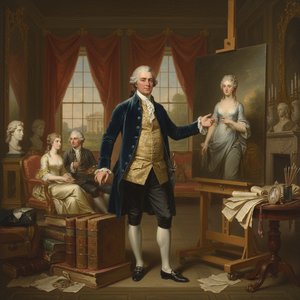
George Romney: Portraiture, Patronage & the Shaping of Georgian Society
Explore the life & art of George Romney, leading portraitist of Georgian England. Discover his style, famous patrons like Emma Hamilton, and legacy in British society. Expert insights for collectors.

10 Iconic Neoclassical Masterpieces That Changed Art History Forever
Journey through history with 10 Neoclassical masterpieces. From Jacques-Louis David to Ingres, explore the stories behind these timeless icons. Find museum-quality art reproductions and elegant decor inspiration at ArtsDot.com. Discover all masterpieces on ArtsDot.com