

 Vorschau anzeigen
 Versenden
 Teilen
 Details anzeigen

 Herunterladen
 Ähnliche Objekte
 Röntgenaufnahme
 Diashow
 Statistiken
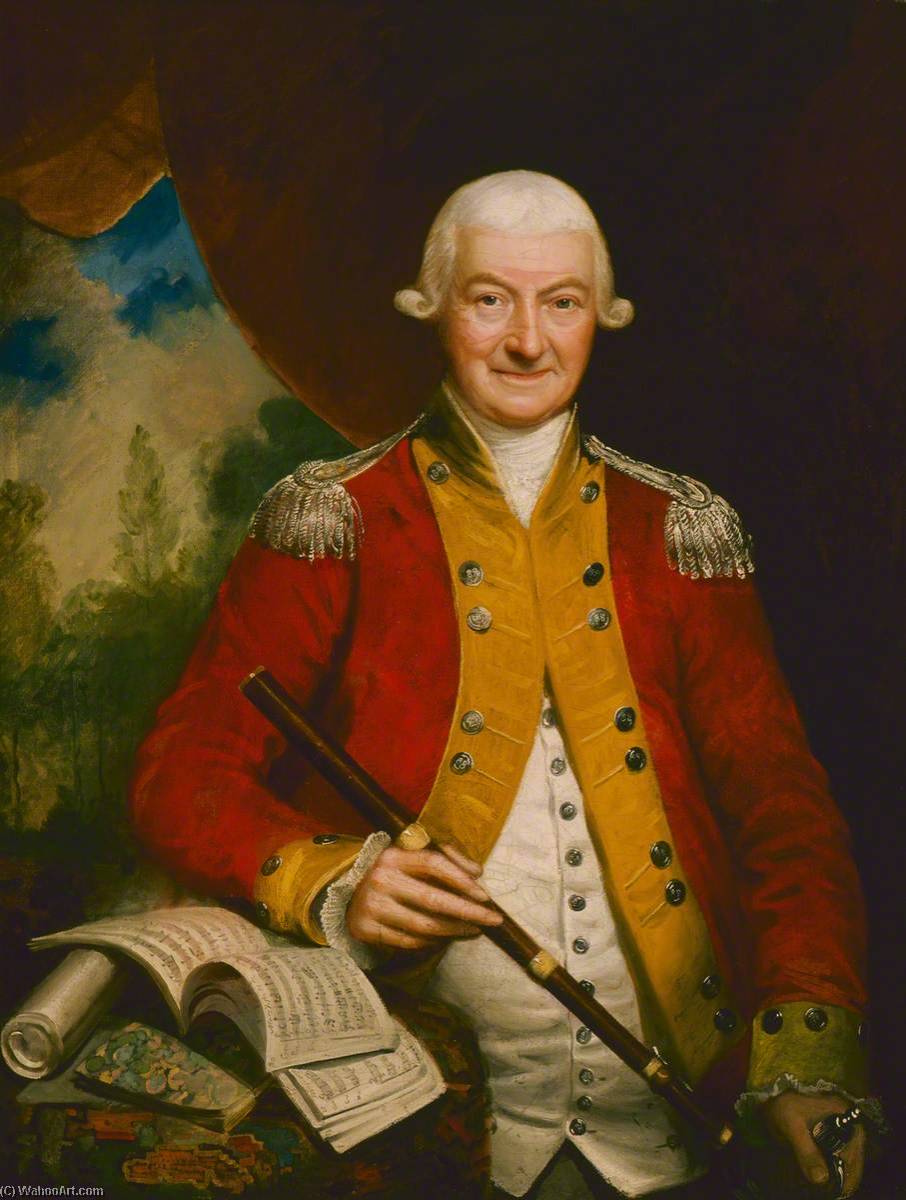
General John Reid (1721–1807)
 Historical Portraiture
 1806
1806 102.0 x 86.0 cm
 Weiterlesen
Handgefertigte Ölreproduktion
Handgemaltes Ölgemälde auf Leinwand in Ihrer Wunschgröße und mit Rahmen, auf Bestellung von unseren Künstlern angefertigt. ( Zu Druck wechseln Zum digitalen Bild wechseln)




































Wählen Sie aus unseren vordefinierten Formaten, die den ursprünglichen Proportionen des Kunstwerks entsprechen.

Sie können Ihre eigenen Maße eingeben, um einen bestimmten Rahmen oder Platz auszufüllen. Wenn die gewählte Größe nicht den Proportionen des Originalbildes entspricht, werden wir das Kunstwerk entweder beschneiden oder das Gemälde durch zusätzliche, handgemalte Elemente erweitern. Ein digitales Mockup wird Ihnen zur Genehmigung zugesandt, bevor die Produktion beginnt.
Bitte beachten Sie, dass die Bildschirmvorschau nicht die tatsächliche Beschneidung oder Erweiterung widerspiegelt. Nur das Mockup zeigt die endgültige Komposition exakt an.
Obwohl Sondermaße verfügbar sind, empfehlen wir, eine Größe aus der vordefinierten Liste zu wählen, um die ursprünglichen Proportionen beizubehalten.
Nach der Bestellung wird das ArtsDot.com-Team dem Kunden Anweisungen per E-Mail zusenden und eine Mockup-Vorschau bereitstellen.
Weltweiter Versand () in nur 3 bis 4 Wochen statt der üblichen 5 Wochen. (9 September). Keine Kompromisse bei der Qualität.

Kostenloser weltweiter Expressversand

Hochwertige Leinenleinwand

Umfassender Versicherungsschutz beim Versand

Zollgebühren-Rückerstattungsgarantie

Garantie für exakte Farbtreue

100-Tage-Rückgaberecht (nur bei Mängeln)

100% Geld-zurück-Garantie

Mengenrabatt verfügbar
 Die Glasoption ist nur für Größen unter 110 cm verfügbar.

General John Reid (1721–1807)
Art der Reproduktion
Format der Reproduktion
-


Gesamtpreis
$ 263
Ähnliche Kunstwerke
Über den Künstler
A Pioneer of Scottish Portraiture: The Life and Legacy of George Watson
In the vibrant artistic landscape of late Georgian and early Victorian Scotland, few names commanded as much respect for their precision and psychological depth as George Watson. Born in Edinburgh around 1767, Watson emerged as a pivotal figure whose career spanned over seven decades, bridging the gap between the refined traditions of the eighteenth century and the burgeoning realism of the nineteenth. He possessed an innate, almost intuitive talent for capturing the human likeness with a remarkable degree of accuracy and subtlety, a gift that allowed him to ascend quickly within the competitive Scottish art scene. His work was not merely about the surface of a face; it was about the quiet dignity and the internal character of his subjects, rendered through a lens of profound technical mastery.
Watson’s artistic journey began under the mentorship of John Ramsay, a celebrated landscape painter whose influence left an indelible mark on Watson’s approach to the canvas. From Ramsay, Watson inherited a deep appreciation for tonal harmony and the delicate use of atmospheric perspective. While Watson would eventually focus his energies on portraiture, this early training in landscape allowed him to bring a unique sense of depth and environmental nuance to his human subjects. To further refine his craft, he sought the broader horizons offered by the Royal Academy in London, where he was exposed to the sweeping stylistic innovations flowing from across Europe. This blend of Scottish sensibility and international academic rigor formed the foundation of a style that was both classically grounded and strikingly modern for its era.
Mastery of Tone and the Art of Subtlety
What truly distinguished Watson from his contemporaries was his sophisticated commitment to tonal gradation. In an age where many artists sought impact through vibrant, often jarring palettes, Watson embraced a more restrained and elegant aesthetic. He favored a palette of muted hues—rich browns, soft greys, and warm ochres—which allowed him to create illusions of immense volume and three-dimensional presence within his portraits. Through the meticulous application of glazing techniques, he layered thin, translucent washes of color to build a luminous skin tone that seemed to glow from within, capturing the very essence of life.
His technical prowess extended beyond mere color to the painstaking rendering of texture. A viewer might find themselves lost in the heavy weave of a military uniform or the delicate sheen of silk, as Watson applied his brush with a precision that bordered on the scientific. This dedication to detail served a higher purpose: it anchored his subjects in a tangible reality, making their presence feel immediate and enduring. His ability to balance this meticulous realism with an understated elegance ensured that his portraits never felt cluttered, but rather possessed a solemn, dignified grace that perfectly complemented the social standing of his patrons.
Historical Significance and Lasting Influence
The historical importance of George Watson extends far beyond his individual canvases. As a prominent member of the artistic community in Edinburgh, he played a vital role in the institutional development of Scottish art. His career was marked by significant professional milestones that solidified his status as a leader of his generation:
- Foundational Role: He served as a cornerstone of the burgeoning Scottish art scene, helping to establish Edinburgh as a center for high-quality portraiture.
- Institutional Leadership: His influence was felt deeply within the Royal Scottish Academy, where his standards of excellence helped shape the direction of local artistic practice.
- Mentorship and Legacy: Through his work and his position in society, he influenced subsequent generations of painters, including figures like William Smellie Watson, who carried forward the tradition of meticulous Scottish portraiture.
Today, the works of George Watson stand as windows into a bygone era of British history. Whether depicting the stern resolve of military leaders like General John Reid or the quiet intensity of his own self-portraits, his paintings capture the social and psychological complexities of the late Georgian period. He remains a master of the understated, an artist who understood that true greatness in portraiture lies not in the loudness of color, but in the profound truth of the human spirit captured through light, shadow, and an unwavering devotion to detail.
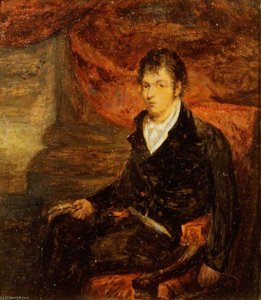
george watson
1767 - 1837
Kurzinfos
- Artistic Movement Or Style: Neoclassical
- Artists Who Influenced This Artist:
- Joshua Reynolds
- Benjamin West
- Date Of Birth: 1767
- Date Of Death: 1837
- Full Name: George Watson
- Nationality: Scottish
- Notable Artworks:
- The Duchess of Sutherland
- Portrait of William Lyon Mackenzie
- Place Of Birth: Edinburgh, Scotland
Ähnliche Artikel

John Constable: Die 25 Meisterwerke des englischen Landschaftsgenies – ArtsDot
Entdecken Sie die 25 Meisterwerke von John Constable! Erleben Sie englische Landschaftsmalerei vom Hay Wain bis zur Stour Valley. Hochwertige Reproduktionen & Kunst für Ihr Zuhause auf ArtsDot.com.

George Agnew Reid: Licht, Farbe und nationale Identität im Werk eines kanadischen Impressionisten
Entdecken Sie das faszinierende Werk von George Agnew Reid, einem Pionier des kanadischen Impressionismus! Erfahren Sie mehr über seine Genre-Malerei, seinen Einsatz von Licht und Farbe sowie seinen Beitrag zur Entwicklung der nationalen Kunstidentität Kanadas.

John Singer Sargent: Die 25 Meisterwerke des Porträts – Kunst für Ihr Zuhause | ArtsDot
Entdecken Sie die 25 Meisterwerke von John Singer Sargent! Tauchen Sie ein in die Welt der Porträtmalerei, des Impressionismus & der Belle Époque. Hochwertige Kunstdrucke & Reproduktionen für Ihr Zuhause – jetzt auf ArtsDot.com!

Georges Braque: Die 25 Meisterwerke des Kubismus für Ihr Zuhause | ArtsDot
Entdecken Sie die 25 bedeutendsten Kunstwerke von Georges Braque – vom Kubismus bis zum Fauvismus. Erfahren Sie die Geschichten hinter den Meisterwerken und finden Sie hochwertige Reproduktionen für Ihr Zuhause auf ArtsDot.com.

Georges Seurat: Die 25 Meisterwerke des Pointillismus für Ihr Zuhause | ArtsDot
Entdecken Sie die 25 ikonischsten Meisterwerke von Georges Seurat! Tauchen Sie ein in die Welt des Pointillismus, der Farbtheorie und des Impressionismus. Hochwertige Kunst reproduzieren für Ihr Zuhause – jetzt auf ArtsDot.com!