 Vorschau anzeigen
 Versenden
 Teilen
 Details anzeigen

 Herunterladen
 Ähnliche Objekte
 Röntgenaufnahme
 Diashow
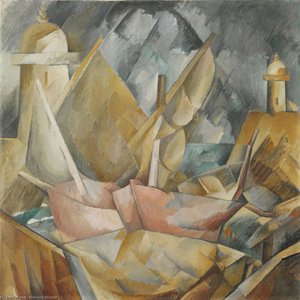
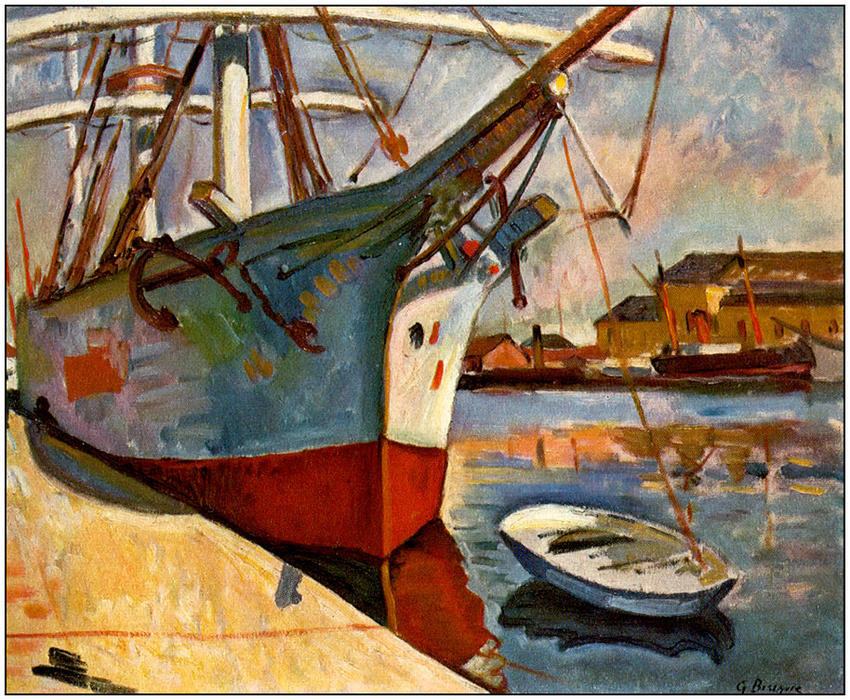
Schiff in Le Havre (auch bekannt als Schiff im Hafen, Le Havre)


 Weiterlesen
Giclée / Kunstdruck
Giclée- oder Leinwanddruck in Museumsqualität mit schneller Produktion und flexiblen Veredelungsoptionen. ( Handgemalte Reproduktion bestellen Bild kaufen)




P118B $10

P118H $10

P118W $10

P438Z $10

P508JH $12

P508YH $12

P805H $10

P805Z $10

P919BZ $10

P919G $10

P919XJ $10

P959ZH $10

P968JZ $12

W106C $8

W218G $10

W218JH $8

W218Y $10

W307PJ $10

W316G $10

W316PJ $8

W316Y $10

W398PJ $8

W4111J $10

W500HY $15

W500JH $15

W692G $12

W849H $8

W940BG $15

W953PJ $8




Wählen Sie aus unseren vordefinierten Formaten, die den ursprünglichen Proportionen des Kunstwerks entsprechen.

Sie können Ihre eigenen Maße eingeben, um ein bestimmtes Format oder einen speziellen Platz einzupassen. Wenn das von Ihnen gewählte Format nicht den Proportionen des Originalbildes entspricht, werden wir das Kunstwerk entweder beschneiden oder das Bild mit einem gespiegelten oder einfarbigen Rand erweitern. Ein digitaler Entwurf wird Ihnen zur Genehmigung zugesandt, bevor die Produktion beginnt.
Bitte beachten Sie, dass die Vorschau auf dem Bildschirm nicht den tatsächlichen Zuschnitt oder die Erweiterung widerspiegelt. Nur der Entwurf zeigt die endgültige Komposition präzise an.
Obwohl Sondermaße verfügbar sind, empfehlen wir die Auswahl eines Maßes aus der vordefinierten Liste, um die ursprünglichen Proportionen zu bewahren.
Weltweiter Versand () innerhalb von 2 Wochen statt der üblichen 4/5 Wochen. (27 August)

Kostenloser weltweiter Expressversand

Hochwertige Leinenleinwand

Umfassender Versicherungsschutz beim Versand

Zollgebühren-Rückerstattungsgarantie

Garantie für exakte Farbtreue

60 Tage Rückgaberecht (nur bei Mängeln)

100% Geld-zurück-Garantie

Mengenrabatt verfügbar
 Die Glasoption ist nur für Größen unter 110 cm verfügbar.

Schiff in Le Havre (auch bekannt als Schiff im Hafen, Le Havre)
Giclée / Kunstdruck
Format der Reproduktion
-


Gesamtpreis
$ 62
Sammlerstück-Beschreibung
Georges Braque's *Ship At Le Havre*: A Harbinger of Modernity
Ship At Le Havre (also known as *Ship In Harbort, Le Havre*) offers a deceptively simple yet profoundly significant glimpse into the nascent world of Cubism, courtesy of one of its pioneers, Georges Braque. Painted around 1907 – a pivotal year in the development of this revolutionary movement – the artwork captures a scene of maritime activity within the bustling port city of Le Havre, France. More than just a depiction of a ship and dock, it represents a radical shift in artistic perception, challenging traditional notions of perspective and representation that had dominated Western art for centuries.
- Subject Matter: The painting’s subject is straightforward – a large blue vessel navigating the waters alongside a working harbor. However, Braque's treatment of this familiar scene elevates it to something far more complex.
- Cubist Techniques: Braque employs key Cubist strategies: fragmentation of form, multiple viewpoints presented simultaneously, and an emphasis on geometric shapes. The ship is not rendered as a single, unified object but rather dissected into its constituent parts, with overlapping planes and angles creating a dynamic and unsettling effect.
- Color Palette: The predominantly blue tones – ranging from deep navy to lighter shades – contribute significantly to the painting’s mood. Blue has long been associated with water, tranquility, and reflection, yet here it is used in conjunction with fractured forms to evoke a sense of disorientation and uncertainty.
The Context of Innovation: Braque and the Rise of Cubism
Braque's work during this period was deeply influenced by Paul Cézanne’s exploration of form and space, as well as his own experiences with Primitivism – particularly African masks and sculptures – which he encountered through collectors like Ambroise Vollard. These influences combined to push Braque towards a radically new approach to painting. He collaborated closely with Pablo Picasso during this time, the two artists essentially developing Cubism together, often experimenting with similar ideas simultaneously. *Ship At Le Havre* stands as a testament to this collaborative spirit and the shared desire to break free from traditional artistic constraints.
The year 1907 was crucial; it marked the official birth of Cubism, with Braque’s and Picasso's works being exhibited together in 1908. This exhibition shocked the Parisian art world, prompting immediate debate and controversy. Critics struggled to comprehend the seemingly chaotic and fragmented images, but the seeds of a new artistic language had been sown.
Decoding the Symbolism: Beyond Representation
While ostensibly depicting a ship in a harbor, *Ship At Le Havre* transcends mere representation. The fractured forms can be interpreted as reflecting the anxieties and uncertainties of the modern age – a period marked by rapid industrialization, social upheaval, and a growing sense of alienation. The multiple viewpoints suggest that there is no single ‘true’ perspective; rather, reality itself is subjective and multifaceted.
- The Ship: The ship itself can be seen as a symbol of progress, industry, and the relentless forces of modernity.
- The Dock: The dock represents the intersection of commerce, labor, and transportation – key elements of the burgeoning industrial economy.
- Fragmentation: The fragmented forms symbolize the breakdown of traditional values and the disorientation experienced by individuals in a rapidly changing world.
A Legacy of Innovation: Braque's Enduring Influence
Georges Braque’s *Ship At Le Havre* is more than just a beautiful painting; it is a foundational work of modern art. Its innovative techniques and challenging perspective paved the way for subsequent movements, including Futurism, Constructivism, and Abstract Expressionism. Today, this artwork continues to fascinate and inspire, offering a powerful reminder of Braque’s pivotal role in transforming the course of Western art history. A hand-painted reproduction offers an unparalleled opportunity to experience the power and complexity of this seminal work firsthand.
Ähnliche Kunstwerke
Über den Künstler
**frühes Leben und Ausbildung**
Georges Braque, ein prominenter französischer Maler, Kollagist, Bleistrichzeichner, Grafiker und Bildhauer, wurde am 13. Mai 1882 in Argenteuil, Val-d'oise, geboren. Er wuchs in Le Havre auf und erhielt zunächst eine Ausbildung als Hausmaler und Dekorateur wie sein Vater und Großvater. Braques künstlerische Neigungen führten ihn jedoch dazu, von 1897 bis 1899 an der École des Beaux-Arts in Le Havre Malerei zu studieren.**Künstlerische Entwicklung und Fauvisme**
Im Jahr 1902, nachdem er seine Lehre bei einem Dekorateur in Paris abgeschlossen hatte, besuchte Braque bis 1904 die Académie Humbert. Dieser Zeitraum markierte seine Einführung ins Fauvismus, einen Stil, der durch lebendige Farben und emotionale Reaktionen gekennzeichnet ist. Beeinflusst von den Werken von Henri Matisse und André Derain, übernahm Braque einen fauvistischen Ansatz, wie in seinem Gemälde The Patience (Fauvismus, Öl auf Leinwand).**Beitrag zum Kubismus**
Braques Zusammenarbeit mit Pablo Picasso von 1908 bis 1912 führte zur Entwicklung des Kubismus. Ihre analytischen kubistischen Werke, wie z.B. Georges Braque: The Patience und Pablo Picasso: Clarinet(analytischer Kubismus, Öl auf Leinwand), gelten heute als Meilensteine der Kunstgeschichte.**Erbe und bemerkenswerte Werke**
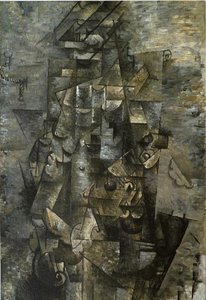
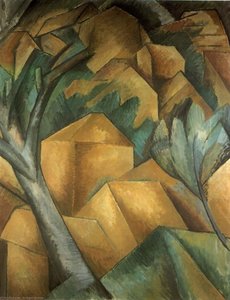
* Houses at L'Estaques: Ein Zeugnis für Braques innovatives Einsatz von Geometrie und simultaner Perspektive. * The Patience(Fauvismus, Öl auf Leinwand): Demonstriert Braques fauvistischen Stil. * Clarinet(analytischer Kubismus, Öl auf Leinwand): Eine kollaborative kubistische Arbeit mit Picasso.**Museen und Sammlungen**
* Musée d'Orsay: Bietet eine umfangreiche Sammlung impressionistischer und postimpressionistischer Kunst, darunter Werke von Braque. * Musée de l'Orangerie: Zeigt eine breite Palette von Kunstwerken, darunter Werke von Braque und anderen bedeutenden Künstlern.- Erfahren Sie mehr über Georges Braques Leben und Werk auf ArtsDot.com
- Entdecken Sie die Sammlung des Musée d'Orsay, die Werke von Braque und anderen Künstlern umfasst, unter Musée d'Orsay - Wikipedia
- Erfahren Sie mehr über den Fauvismus und seinen Einfluss auf die Entwicklung des Kubismus mit Fauvismus Kunstbewegung auf ArtsDot.com
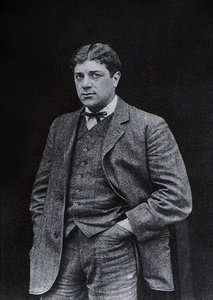
Georges Braque
1882 - 1963 , Frankreich
Kurzinfos
- Beeinflusste Künstler: ['Pablo Picasso']
- Bemerkenswerte Werke:
- Häuser in L'Estaque
- Die Geduld (Fauvismus)
- Stillleben mit Pfeife
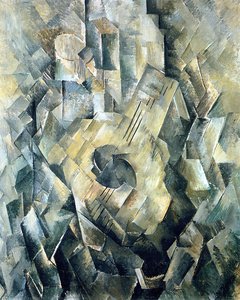
- Mandola
- Einflussreiche Künstler:
- Henri Matisse
- André Derain
- Paul Cézanne
- Geburtsdatum: 13. Mai 1882
- Geburtsort: Argenteuil, Frankreich
- Künstlerischer Stil: Kubismus, Fauvismus
- Nationalität: Französisch
- Sterbedatum: 1963
- Vollständiger Name: Georges Braque
Ähnliche Artikel

Georges Braque: Die 25 Meisterwerke des Kubismus für Ihr Zuhause | ArtsDot
Entdecken Sie die 25 bedeutendsten Kunstwerke von Georges Braque – vom Kubismus bis zum Fauvismus. Erfahren Sie die Geschichten hinter den Meisterwerken und finden Sie hochwertige Reproduktionen für Ihr Zuhause auf ArtsDot.com.
Die Top 10 Gemälde in Schattierungen von 'Slate Blue': Kunst für Ihr Zuhause
Entdecken Sie die Top 10 Gemälde in faszinierenden 'Slate Blue' Tönen! Von Monet bis Manet – erleben Sie Kunstgeschichte und lassen Sie sich von Meisterwerken inspirieren. Hochwertige Kunstdrucke auf

Versand und Rückgabe
APS bietet weltweiten Kunstversand auf Expertenniveau mit museumsgerechter Sorgfalt, vollständiger Sendungsverfolgung und einer 30-tägigen Geld-zurück-Garantie. Von Zollabwicklung bis Priority Production vertrauen Sie auf transparenten Service, sichere Verpackung und zuverlässige Lieferung für Sammler, Designer und Galerien.

Giclée Prints: Archival Quality & Aesthetic Nuances for the Discerning Collector
Explore the world of giclée prints with ArtsDot. Learn about archival quality, aesthetic nuances & investment potential. Expert guidance for discerning art collectors seeking museum-quality reproductions and lasting value.
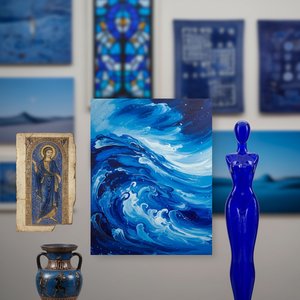
The Allure of Azure: Exploring the Symbolic & Aesthetic Depths of Blue in Art History
Explore the rich history of blue in art! Discover its symbolism, from ancient pigments to modern masterpieces by Kandinsky & Seurat. Uncover the psychological impact and cultural meanings behind this captivating hue.