 Vorschau anzeigen
 Versenden
 Teilen
 Details anzeigen

 Herunterladen
 Ähnliche Objekte
 Röntgenaufnahme
 Diashow
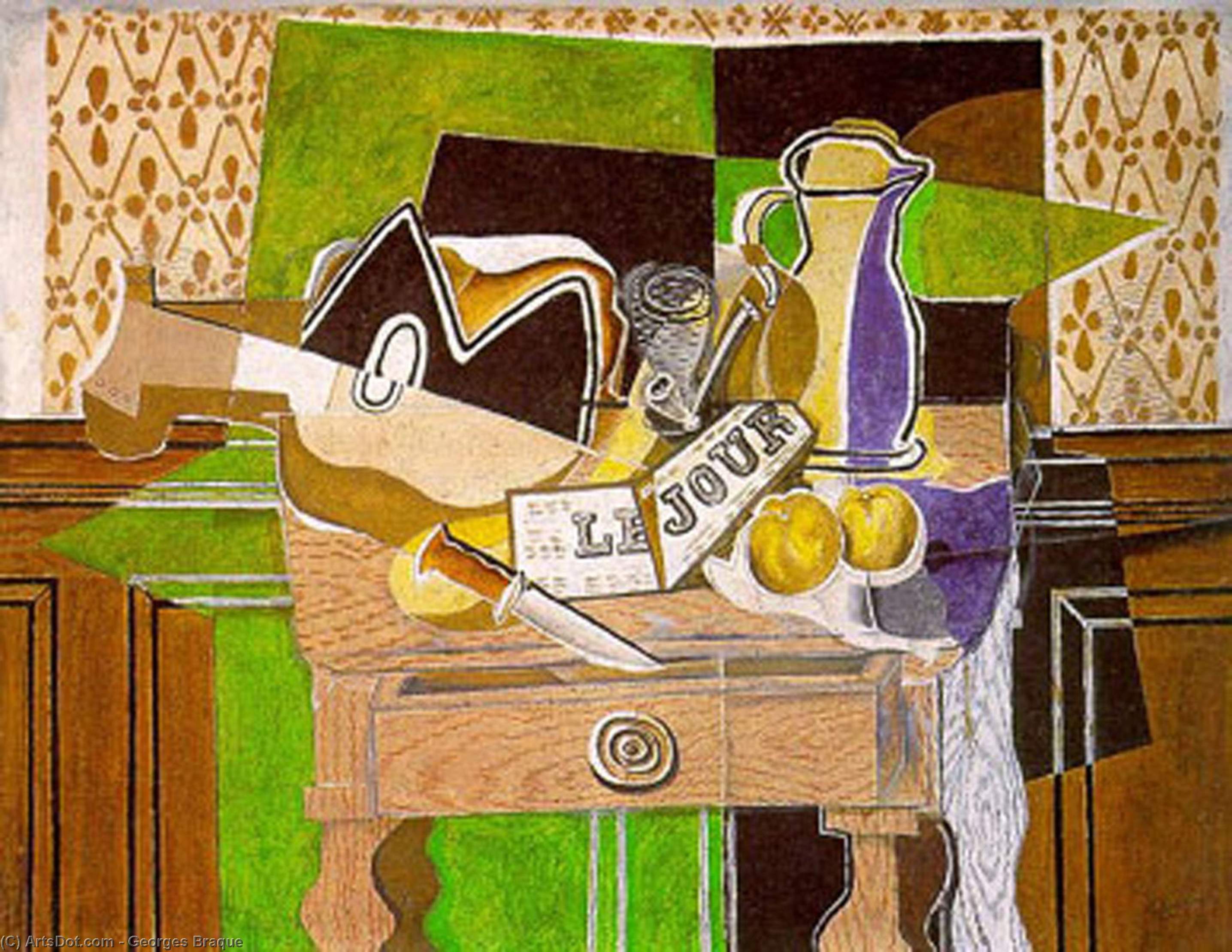
Still-Life Le Jour


 Weiterlesen
Handgefertigte Ölreproduktion
Handgemaltes Ölgemälde auf Leinwand in Ihrer Wunschgröße und mit Rahmen, auf Bestellung von unseren Künstlern angefertigt. ( Druck bestellen Bild kaufen)




































Wählen Sie aus unseren vordefinierten Formaten, die den ursprünglichen Proportionen des Kunstwerks entsprechen.

Sie können Ihre eigenen Maße eingeben, um einen bestimmten Rahmen oder Platz auszufüllen. Wenn die gewählte Größe nicht den Proportionen des Originalbildes entspricht, werden wir das Kunstwerk entweder beschneiden oder das Gemälde durch zusätzliche, handgemalte Elemente erweitern. Ein digitales Mockup wird Ihnen zur Genehmigung zugesandt, bevor die Produktion beginnt.
Bitte beachten Sie, dass die Bildschirmvorschau nicht die tatsächliche Beschneidung oder Erweiterung widerspiegelt. Nur das Mockup zeigt die endgültige Komposition exakt an.
Obwohl Sondermaße verfügbar sind, empfehlen wir, eine Größe aus der vordefinierten Liste zu wählen, um die ursprünglichen Proportionen beizubehalten.
Nach der Bestellung wird das ArtsDot.com-Team dem Kunden Anweisungen per E-Mail zusenden und eine Mockup-Vorschau bereitstellen.
Weltweiter Versand () in nur 3 bis 4 Wochen statt der üblichen 5 Wochen. (23 August). Keine Kompromisse bei der Qualität.

Kostenloser weltweiter Expressversand

Hochwertige Leinenleinwand

Umfassender Versicherungsschutz beim Versand

Zollgebühren-Rückerstattungsgarantie

Garantie für exakte Farbtreue

60 Tage Rückgaberecht (nur bei Mängeln)

100% Geld-zurück-Garantie

Mengenrabatt verfügbar
 Die Glasoption ist nur für Größen unter 110 cm verfügbar.

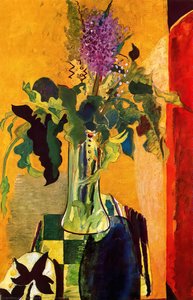
Still-Life Le Jour
Art der Reproduktion
Format der Reproduktion
-


Gesamtpreis
$ 263
Beschreibung des Kunstwerks
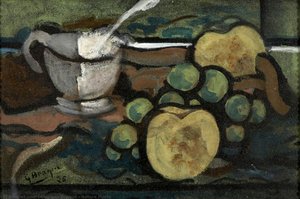
A Bold Exploration of Form and Color: Still Life Le Jour
Georges Braque’s “Still Life Le Jour,” painted in 1929, stands as a cornerstone of Fauvist art—a movement that irrevocably altered the course of twentieth-century painting. More than just an arrangement of objects on a tabletop; it's a deliberate challenge to traditional artistic conventions, embodying the spirit of experimentation and emotional expression championed by artists like Henri Matisse.
- Subject Matter: The canvas presents a deceptively simple tableau—a bottle, flanked by two apples, a knife, and three oranges. These commonplace items are rendered with an astonishing disregard for photographic realism.
- Style & Technique: Braque’s masterful application of Fauvist principles is immediately apparent. Thick, impasto brushstrokes dominate the composition, saturating the surfaces with vibrant hues—deep reds, brilliant yellows, and intense oranges—that defy naturalistic color palettes. The artist employs a technique known as “synthetische Farbe,” prioritizing color over accurate representation to convey feeling rather than visual accuracy.
Historical Context: Fauvism’s Rebellion Against Impressionism
Born in Argenteuil, France, in 1882, Georges Braque initially pursued a path rooted in craftsmanship—following his father's profession as a house painter and decorator. However, his artistic inclinations swiftly propelled him toward formal training at the École des Beaux-Arts in Le Havre, where he encountered influential figures like Marie Laurencin and Francis Picabia.
Fauvism emerged in Paris during the early 1900s as a reaction against Impressionism’s focus on capturing fleeting moments of light. Artists sought to liberate color from its subservience to form, prioritizing emotional impact over meticulous detail. This bold aesthetic was driven by a desire to express inner feelings and sensations directly—a radical departure from the academic traditions that preceded it.
Decoding Symbolism: Layers of Meaning Beyond Appearance
Beyond its striking visual qualities, “Still Life Le Jour” is laden with symbolic significance. The bottle, positioned centrally, serves as a focal point, drawing the viewer’s gaze and suggesting stability amidst the dynamic interplay of color and texture. The apples and oranges—often associated with fertility and abundance—are arranged in ways that create tension and movement, mirroring the artist's own exploration of artistic innovation.
The knife, resting near the middle-left area of the painting, adds a subtle element of realism, grounding the fantastical color scheme in everyday life. It’s a deliberate gesture—a reminder that even seemingly mundane objects can hold profound emotional resonance.
Emotional Impact & Legacy
"Still Life Le Jour" continues to inspire artists and art enthusiasts alike. Its audacious use of color and expressive brushwork exemplifies the transformative power of Fauvist aesthetics, demonstrating how art can transcend mere representation to communicate emotion and provoke contemplation. As showcased at the Museum of the Annunciation in France—a testament to Fauvist’s enduring influence—this painting remains a captivating glimpse into the artistic fervor of its time.
A remarkable reproduction by ArtsDot.com allows you to experience the brilliance of Braque's vision firsthand, bringing this seminal artwork into your home or studio.
Ähnliche Kunstwerke

Über den Künstler
**frühes Leben und Ausbildung**
Georges Braque, ein prominenter französischer Maler, Kollagist, Bleistrichzeichner, Grafiker und Bildhauer, wurde am 13. Mai 1882 in Argenteuil, Val-d'oise, geboren. Er wuchs in Le Havre auf und erhielt zunächst eine Ausbildung als Hausmaler und Dekorateur wie sein Vater und Großvater. Braques künstlerische Neigungen führten ihn jedoch dazu, von 1897 bis 1899 an der École des Beaux-Arts in Le Havre Malerei zu studieren.**Künstlerische Entwicklung und Fauvisme**
Im Jahr 1902, nachdem er seine Lehre bei einem Dekorateur in Paris abgeschlossen hatte, besuchte Braque bis 1904 die Académie Humbert. Dieser Zeitraum markierte seine Einführung ins Fauvismus, einen Stil, der durch lebendige Farben und emotionale Reaktionen gekennzeichnet ist. Beeinflusst von den Werken von Henri Matisse und André Derain, übernahm Braque einen fauvistischen Ansatz, wie in seinem Gemälde The Patience (Fauvismus, Öl auf Leinwand).**Beitrag zum Kubismus**
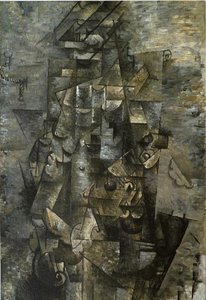
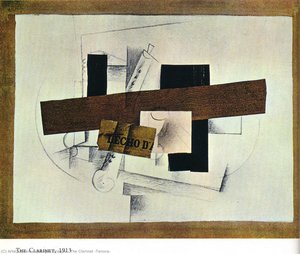
Braques Zusammenarbeit mit Pablo Picasso von 1908 bis 1912 führte zur Entwicklung des Kubismus. Ihre analytischen kubistischen Werke, wie z.B. Georges Braque: The Patience und Pablo Picasso: Clarinet(analytischer Kubismus, Öl auf Leinwand), gelten heute als Meilensteine der Kunstgeschichte.**Erbe und bemerkenswerte Werke**
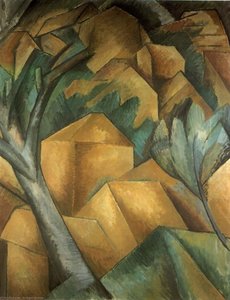
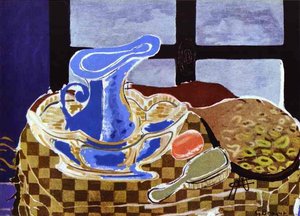
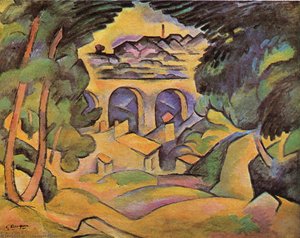
* Houses at L'Estaques: Ein Zeugnis für Braques innovatives Einsatz von Geometrie und simultaner Perspektive. * The Patience(Fauvismus, Öl auf Leinwand): Demonstriert Braques fauvistischen Stil. * Clarinet(analytischer Kubismus, Öl auf Leinwand): Eine kollaborative kubistische Arbeit mit Picasso.**Museen und Sammlungen**
* Musée d'Orsay: Bietet eine umfangreiche Sammlung impressionistischer und postimpressionistischer Kunst, darunter Werke von Braque. * Musée de l'Orangerie: Zeigt eine breite Palette von Kunstwerken, darunter Werke von Braque und anderen bedeutenden Künstlern.- Erfahren Sie mehr über Georges Braques Leben und Werk auf ArtsDot.com
- Entdecken Sie die Sammlung des Musée d'Orsay, die Werke von Braque und anderen Künstlern umfasst, unter Musée d'Orsay - Wikipedia
- Erfahren Sie mehr über den Fauvismus und seinen Einfluss auf die Entwicklung des Kubismus mit Fauvismus Kunstbewegung auf ArtsDot.com
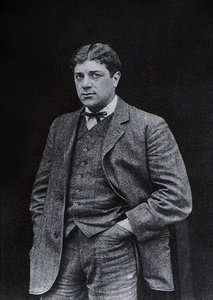
Georges Braque
1882 - 1963 , Frankreich
Kurzinfos
- Beeinflusste Künstler: ['Pablo Picasso']
- Bemerkenswerte Werke:
- Häuser in L'Estaque
- Die Geduld (Fauvismus)
- Stillleben mit Pfeife
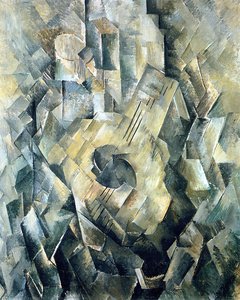
- Mandola
- Einflussreiche Künstler:
- Henri Matisse
- André Derain
- Paul Cézanne
- Geburtsdatum: 13. Mai 1882
- Geburtsort: Argenteuil, Frankreich
- Künstlerischer Stil: Kubismus, Fauvismus
- Nationalität: Französisch
- Sterbedatum: 1963
- Vollständiger Name: Georges Braque
Ähnliche Artikel

Georges Braque: Die 25 Meisterwerke des Kubismus für Ihr Zuhause | ArtsDot
Entdecken Sie die 25 bedeutendsten Kunstwerke von Georges Braque – vom Kubismus bis zum Fauvismus. Erfahren Sie die Geschichten hinter den Meisterwerken und finden Sie hochwertige Reproduktionen für Ihr Zuhause auf ArtsDot.com.

Georges Seurat: Die 25 Meisterwerke des Pointillismus für Ihr Zuhause | ArtsDot
Entdecken Sie die 25 ikonischsten Meisterwerke von Georges Seurat! Tauchen Sie ein in die Welt des Pointillismus, der Farbtheorie und des Impressionismus. Hochwertige Kunst reproduzieren für Ihr Zuhause – jetzt auf ArtsDot.com!
Georges Braque: Pionier des Kubismus und die Evolution moderner Formensprache
Entdecken Sie Georges Braques revolutionären Einfluss auf den Kubismus und die moderne Kunstgeschichte. Expertenanalyse seiner Formensprache, Werke & Bedeutung. Jetzt lesen!
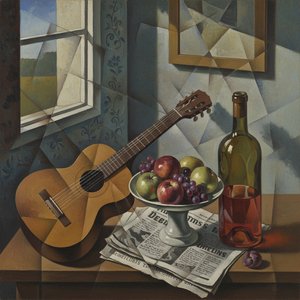
Deconstructing Reality: A Comprehensive Exploration of Cubist Still Life
Explore the revolutionary world of Cubist Still Life with ArtsDot. Discover Picasso & Braque's groundbreaking techniques, its philosophical roots, and lasting impact on modern art. Expert insights for collectors.
Deconstructing Reality: Cubism's Revolutionary Impact on 20th-Century Art
Explore the revolutionary world of Cubism with ArtsDot. Discover Picasso & Braque's groundbreaking techniques, its philosophical roots, and lasting impact on modern art. Expert insights for collectors.