 Vorschau anzeigen
 Versenden
 Teilen
 Details anzeigen

 Herunterladen
 Ähnliche Objekte
 Röntgenaufnahme
 Diashow
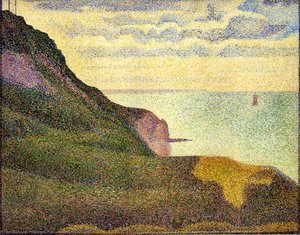
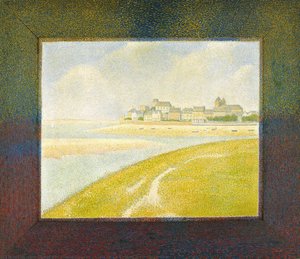
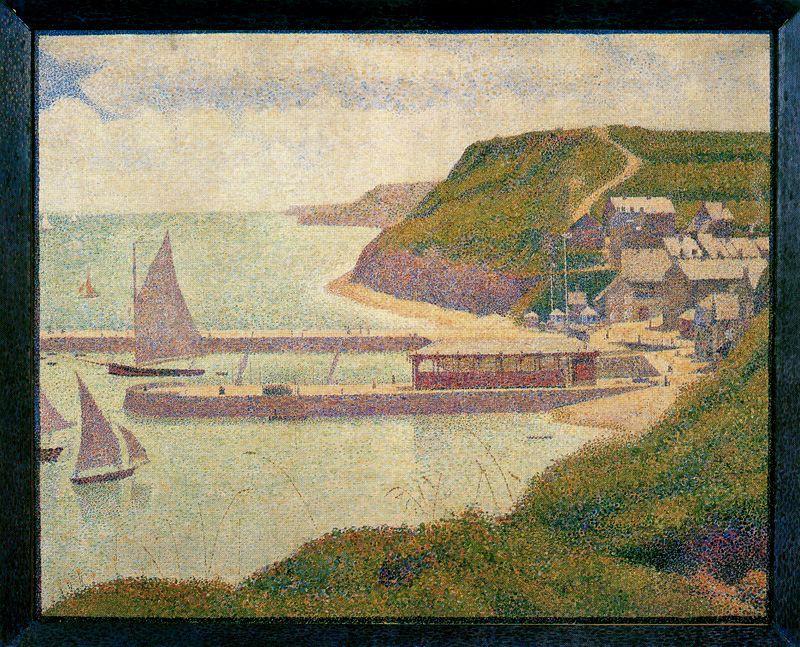
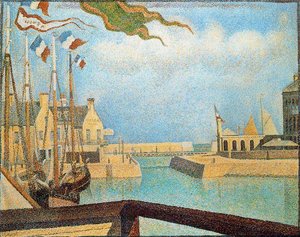
Port-en-Bessin, Outer Harbor, High Tide


 Weiterlesen
Handgefertigte Ölreproduktion
Handgemaltes Ölgemälde auf Leinwand in Ihrer Wunschgröße und mit Rahmen, auf Bestellung von unseren Künstlern angefertigt. ( Druck bestellen Bild kaufen)




P118B $10

P118H $10

P118W $10

P438Z $10

P508JH $12

P508YH $12

P805H $10

P805Z $10

P919BZ $10

P919G $10

P919XJ $10

P959ZH $10

P968JZ $12

W106C $8

W218G $10

W218JH $8

W218Y $10

W307PJ $10

W316G $10

W316PJ $8

W316Y $10

W398PJ $8

W4111J $10

W500HY $15

W500JH $15

W692G $12

W849H $8

W940BG $15

W953PJ $8




Wählen Sie aus unseren vordefinierten Formaten, die den ursprünglichen Proportionen des Kunstwerks entsprechen.

Sie können Ihre eigenen Maße eingeben, um einen bestimmten Rahmen oder Platz auszufüllen. Wenn die gewählte Größe nicht den Proportionen des Originalbildes entspricht, werden wir das Kunstwerk entweder beschneiden oder das Gemälde durch zusätzliche, handgemalte Elemente erweitern. Ein digitales Mockup wird Ihnen zur Genehmigung zugesandt, bevor die Produktion beginnt.
Bitte beachten Sie, dass die Bildschirmvorschau nicht die tatsächliche Beschneidung oder Erweiterung widerspiegelt. Nur das Mockup zeigt die endgültige Komposition exakt an.
Obwohl Sondermaße verfügbar sind, empfehlen wir, eine Größe aus der vordefinierten Liste zu wählen, um die ursprünglichen Proportionen beizubehalten.
Nach der Bestellung wird das ArtsDot.com-Team dem Kunden Anweisungen per E-Mail zusenden und eine Mockup-Vorschau bereitstellen.
Weltweiter Versand () in nur 3 bis 4 Wochen statt der üblichen 5 Wochen. (27 August). Keine Kompromisse bei der Qualität.

Kostenloser weltweiter Expressversand

Hochwertige Leinenleinwand

Umfassender Versicherungsschutz beim Versand

Zollgebühren-Rückerstattungsgarantie

Garantie für exakte Farbtreue

60 Tage Rückgaberecht (nur bei Mängeln)

100% Geld-zurück-Garantie

Mengenrabatt verfügbar
 Die Glasoption ist nur für Größen unter 110 cm verfügbar.

Port-en-Bessin, Outer Harbor, High Tide
Art der Reproduktion
Format der Reproduktion
-


Gesamtpreis
$ 263
Beschreibung des Kunstwerks
A Symphony of Light and Color: The Luminous World of Seurat
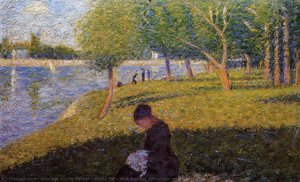
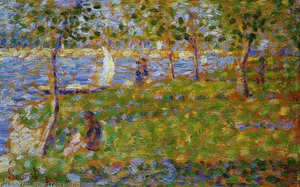
To stand before Georges Seurat’s Port-en-Bessin, Outer Harbor, High Tide is to witness the very moment where the fleeting magic of Impressionism met the rigorous precision of science. Completed during a pivotal era in the late 19th century, this masterpiece serves as a breathtaking bridge between the spontaneous brushwork of his predecessors and the structured modernism that would follow. The canvas does not merely depict a coastal scene; it vibrates with an almost palpable energy, as if the air itself is shimmering under the midday sun. Seurat invites us into the bustling maritime life of the French coast, where the rhythmic movement of fishing boats and the quiet industry of the harbor are captured not through heavy strokes, but through a delicate, rhythmic dance of light.
The subject matter captures the essence of Brittany's coastline with an intimate, observational grace. Within the horizontal expanse of the composition, one finds a vibrant tableau of life: fishing vessels jostling for position amidst the glistening seawater, and small figures—fishermen tending to their nets and children exploring the shoreline—that ground the grand landscape in the everyday realities of coastal existence. There is a profound sense of stability in the way Seurat utilizes the horizon line, yet this stillness is constantly challenged by the perceived movement of the tide and the play of light upon the waves. For the collector or interior designer, this piece offers a unique balance of serene atmosphere and dynamic vitality, making it an ideal focal point for spaces that require both tranquility and intellectual depth.
The Science of Perception: The Magic of Pointillism
What truly distinguishes this work is Seurat’s revolutionary technique, known as Pointillism or Chromoluminarism. Moving away from the traditional method of blending pigments on a palette, Seurat applied thousands upon thousands of tiny, individual dots of pure color directly onto the canvas. This was not merely an aesthetic choice but a scientific endeavor rooted in the optical theories of his time. He believed that by placing complementary colors side-by-side, the viewer's eye would perform the blending process internally, creating a luminosity and brilliance that traditional mixing could never achieve. When viewed from a distance, these meticulous points of pigment coalesce into a seamless, glowing landscape where the water seems to sparkle and the greenery appears lush and breathing.
This painstaking approach imbues the artwork with a structural permanence that sets it apart from the ephemeral sketches of typical Impressionism. Every dot is a deliberate decision, contributing to a larger, mathematical precision that reflects Seurat's fascination with logic and abstraction. For those seeking to bring a piece of art history into a contemporary home, a high-quality reproduction of this work allows one to appreciate this intricate texture up close. The way the light interacts with the perceived depth of the painted sea provides an immersive experience, turning a simple wall into a window onto a luminous, reconstructed reality.
An Emotional Resonance for the Modern Collector
Beyond its technical brilliance, Port-en-Bessin, Outer Harbor, High Tide carries a profound emotional weight. It evokes a sense of nostalgia for a vanishing way of life, capturing the dignity of labor and the timeless beauty of the natural world. There is a certain peacefulness found in the repetition of the dots, a meditative quality that can soothe a modern living space, yet the underlying complexity of the color theory ensures the painting remains intellectually stimulating. It is a work that rewards long periods of contemplation, revealing new nuances of shade and light each time it is observed.
For the discerning decorator, this painting offers unparalleled versatility. Its palette of coastal blues, earthy greens, and sun-drenched highlights can complement a wide array of interior styles, from the understated elegance of a minimalist gallery setting to the rich, textured warmth of a classical study. Owning a reproduction of such a cornerstone of modern art is more than an aesthetic choice; it is an invitation to experience the transformative power of light and the enduring legacy of one of history's most visionary artists.
Ähnliche Kunstwerke
Über den Künstler
Georges Seurat: Ein Pionier des Neoimpressionismus
Frühes Leben und Ausbildung
- Geboren: 2. Dezember 1859 in Paris, Frankreich.
- Seurats Familie zog kurz nach seiner Geburt auf den Boulevard de Magenta um.
- Sein Vater, Antoine Chrysostome Seurat, war ein ehemaliger Jurist, der durch Immobilienhandel reich wurde.
- Er begann seine künstlerische Ausbildung an der École Municipale de Sculpture et Dessin, in der Nähe seines Zuhauses, unter dem Bildhauer Justin Lequien.
- Im Jahr 1878 meldete er sich an der renommierten École des Beaux-Arts an und studierte bei Henri Lehmann.
Künstlerische Entwicklung und Einflüsse
- Seurats künstlerliche Persönlichkeit war eine einzigartige Mischung aus Sensibilität und logischer Abstraktion. Er verband zarte Empfindsamkeit mit mathematischer Präzision.
- Einflüsse: Obwohl spezifische Einflüsse diskutiert werden, studierte er die Farbbtheorien von Wissenschaftlern wie Michel Eugène Chevreul und Ogden Rood.
- Er experimentierte zunächst mit traditionellen Zeichentechniken, bevor er seinen charakteristischen Stil entwickelte.
- Seine frühen Werke zeigen ein Interesse an akademischer Malerei, ging aber allmählich zu einem innovativeren Ansatz über.
Chromoluminarismus und Pointillismus
- Seurat entwickelte die Techniken des Chromoluminarismus (die Wissenschaft der Farbe) und des Pointillismus, indem er kleine, deutliche Punkte reiner Farbe auf eine Leinwand auftrug.
- Er verwendete Conté-Kreide für detaillierte Zeichnungen auf rauer Papiersubstanz als Teil seines Prozesses.
- Ziel des Pointillismus: Die Idee war, dass das Auge des Betrachters diese Farben optisch miteinander mischen und so einen lebendigen und leuchtenden Effekt erzeugt.
Wichtige Leistungen und bemerkenswerte Werke
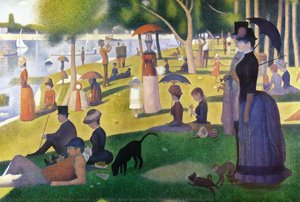
- Ein Sonntagnachmittag auf der Île de la Grande Jatte (1884-1886): Sein berühmtestes Werk, das den Beginn des Neoimpressionismus markiert. Es veranschaulicht seine Pointillist-Technik und seinen methodischen Ansatz.
- Alfalfa, Saint-Denis (1886-1887): Demonstriert seine Anwendung der Farbbtheorie auf eine ländliche Landschaft.
- Landschaft bei Saint-Ouen (1882-1883): Ein frühes Beispiel, das seinen sich entwickelnden Stil und sein Interesse an Licht und Atmosphäre zeigt.
- Der Eiffelturm (1889): Eine Darstellung des ikonischen Pariser Wahrzeichens, dargestellt mit Pointillist-Techniken.
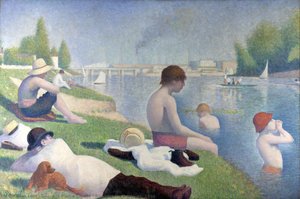
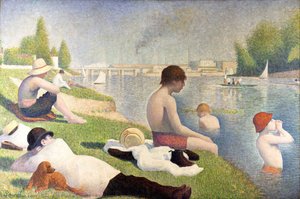
- Bäderer in Asnières (1884): Ein weiteres bedeutendes Werk, das Freizeit und modernen Lebensstil mit seinem unverwechselbaren Stil erforscht.
Historische Bedeutung und Vermächtnis
- Seureats Werk beeinflusste die Entwicklung der modernen Kunst nachhaltig, insbesondere durch seinen Schwerpunkt auf subjektivem Ausdruck und die Erforschung neuer Techniken.
- Legte den Grundstein: Er legte den Grundstein für Bewegungen wie Fauvismus, Kubismus und Expressionismus.
- Sein wissenschaftlicher Ansatz in der Malerei stellte traditionelle künstlerische Konventionen in Frage.
- Trotz seines kurzen Lebens (er starb im Alter von 31 Jahren) hinterließ Seurat einen unauslöschlichen Eindruck in der Kunstgeschichte und inspirierte Generationen von Künstlern mit seiner innovativen Vision.
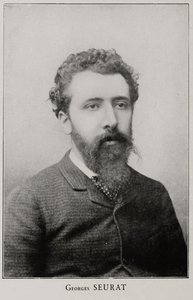
Georges Pierre Seurat
1859 - 1891 , Frankreich
Kurzinfos
- Beeinflusste Künstler:
- Fauvismus
- Kubismus
- Bemerkenswerte Werke:
- Ein Sonntagnachmittag...
- Bäufer in Asnières
- Der Eiffelturm
- Einflüsse:
- Michel Eugène Chevreul
- Ogden Rood
- Geburtsdatum: 2. Dezember 1859
- Geburtsort: Paris, Frankreich
- Künstlerische Bewegung: Neo-Impressionismus
- Nationalität: Französisch
- Sterbedatum: 1891
- Vollständiger Name: Georges Pierre Seurat
Ähnliche Artikel

Georges Seurat: Die 25 Meisterwerke des Pointillismus für Ihr Zuhause | ArtsDot
Entdecken Sie die 25 ikonischsten Meisterwerke von Georges Seurat! Tauchen Sie ein in die Welt des Pointillismus, der Farbtheorie und des Impressionismus. Hochwertige Kunst reproduzieren für Ihr Zuhause – jetzt auf ArtsDot.com!
Georges Seurat und der Pointillismus: Eine Revolution der Wahrnehmung
Entdecken Sie die faszinierende Welt des Pointillismus! Erfahren Sie alles über Georges Seurat, seine revolutionäre Maltechnik und die wissenschaftlichen Grundlagen dieser bedeutenden Kunstrichtung. Expertenwissen auf ArtsDot.
Chromatic Islands: Exploring the Theory & Legacy of Pointillism in 19th-Century Art
Explore the revolutionary world of Pointillism! Discover Georges Seurat's color theory, techniques & lasting impact on art history. Learn about Signac, Luce & Neo-Impressionism’s scientific approach to painting.

Evoking the Horizon: A Historical & Artistic Exploration of Coastal Scenes in Painting
Explore the rich history of coastal scenes in painting! Discover Impressionist masterpieces, American realism & contemporary visions. Learn about renowned artists and find your perfect seascape at ArtsDot.
Paul Signac: Pointillismus, Politik und die Suche nach Harmonie in der modernen Kunst
Entdecken Sie Paul Signacs revolutionären Pointillismus! Erfahren Sie mehr über die wissenschaftlichen Grundlagen, politischen Engagements und das künstlerische Vermächtnis dieses Meisters des Neo-Impressionismus. Jetzt lesen!