 Vorschau anzeigen
 Versenden
 Teilen
 Details anzeigen

 Herunterladen
 Ähnliche Objekte
 Röntgenaufnahme
 Diashow
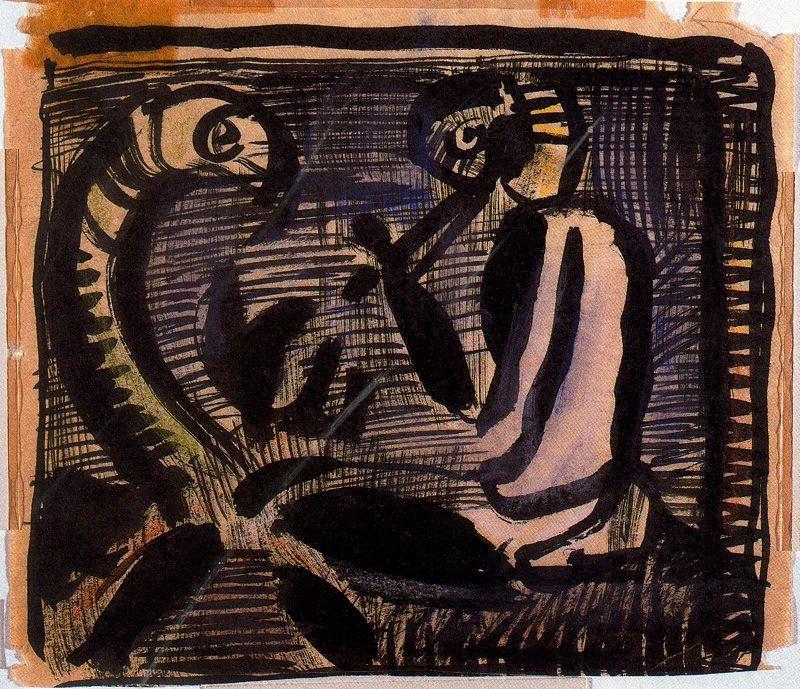
Project for the reincarnation of Father Ubu 3

 Weiterlesen
Giclée / Kunstdruck
Giclée- oder Leinwanddruck in Museumsqualität mit schneller Produktion und flexiblen Veredelungsoptionen. ( Handgemalte Reproduktion bestellen Bild kaufen)




P118B $10

P118H $10

P118W $10

P438Z $10

P508JH $12

P508YH $12

P805H $10

P805Z $10

P919BZ $10

P919G $10

P919XJ $10

P959ZH $10

P968JZ $12

W106C $8

W218G $10

W218JH $8

W218Y $10

W307PJ $10

W316G $10

W316PJ $8

W316Y $10

W398PJ $8

W4111J $10

W500HY $15

W500JH $15

W692G $12

W849H $8

W940BG $15

W953PJ $8




Wählen Sie aus unseren vordefinierten Formaten, die den ursprünglichen Proportionen des Kunstwerks entsprechen.

Sie können Ihre eigenen Maße eingeben, um ein bestimmtes Format oder einen speziellen Platz einzupassen. Wenn das von Ihnen gewählte Format nicht den Proportionen des Originalbildes entspricht, werden wir das Kunstwerk entweder beschneiden oder das Bild mit einem gespiegelten oder einfarbigen Rand erweitern. Ein digitaler Entwurf wird Ihnen zur Genehmigung zugesandt, bevor die Produktion beginnt.
Bitte beachten Sie, dass die Vorschau auf dem Bildschirm nicht den tatsächlichen Zuschnitt oder die Erweiterung widerspiegelt. Nur der Entwurf zeigt die endgültige Komposition präzise an.
Obwohl Sondermaße verfügbar sind, empfehlen wir die Auswahl eines Maßes aus der vordefinierten Liste, um die ursprünglichen Proportionen zu bewahren.
Weltweiter Versand () innerhalb von 2 Wochen statt der üblichen 4/5 Wochen. (29 August)

Kostenloser weltweiter Expressversand

Hochwertige Leinenleinwand

Umfassender Versicherungsschutz beim Versand

Zollgebühren-Rückerstattungsgarantie

Garantie für exakte Farbtreue

60 Tage Rückgaberecht (nur bei Mängeln)

100% Geld-zurück-Garantie

Mengenrabatt verfügbar
 Die Glasoption ist nur für Größen unter 110 cm verfügbar.

Project for the reincarnation of Father Ubu 3
Giclée / Kunstdruck
Format der Reproduktion
-


Gesamtpreis
$ 62
Project for the Reincarnation of Father Ubu: A Descent into Rouault’s Grotesque Vision
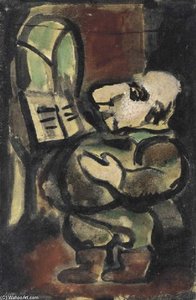
Georges Rouault's “Project for the Reincarnation of Father Ubu 3” presents not merely a depiction, but an immersion into a world sculpted by anxiety and unsettling satire. This powerful work, executed in a style deeply rooted in Expressionism and informed by printmaking techniques, immediately confronts the viewer with a figure – undeniably inspired by Alfred Jarry’s grotesque character – rendered with a raw intensity rarely encountered in art history. The composition is dominated by this central figure, a study in controlled chaos, set against an orange-toned wash that subtly amplifies the artwork's inherent unease. It’s a piece designed to provoke, to challenge perceptions of beauty and morality, and to linger long after initial observation.
The artist’s deliberate use of heavy, bold black lines is paramount to understanding Rouault’s vision. These aren’t the clean, precise lines of academic art; instead, they possess a rough, almost violent quality, contributing significantly to the artwork's unsettling atmosphere. The simplification of forms – blocky figures and geometric shapes – further enhances this sense of distortion, echoing the Expressionist movement’s rejection of naturalism in favor of emotional truth. The technique itself, clearly rooted in woodcut methods, is evident in the visible texture created by the uneven application of ink and the deliberate carving that defines the figure's contours. This isn’t a polished surface; it’s an artifact of the process, a testament to Rouault’s meticulous yet unrestrained approach.
The Language of Darkness: Color, Line, and Symbolism
Rouault’s color palette is deliberately stark – a dramatic contrast between the deep blacks and browns of the figure and the luminous orange wash. This juxtaposition isn't accidental; it serves to heighten the sense of drama and isolation. The orange, applied as a wash, creates subtle variations in tone and texture, adding another layer of complexity to the composition. The heavy lines aren’t simply outlining the figure; they are actively shaping our emotional response, drawing us into the character's world of suspicion and perhaps even despair. Consider the circular elements within the eyes – a recurring motif in Rouault’s work – suggesting a penetrating gaze, an awareness that transcends simple observation.
Beyond its formal qualities, “Project for the Reincarnation of Father Ubu 3” is laden with symbolic weight. The figure itself embodies themes of societal corruption, religious hypocrisy, and the inherent darkness within human nature—themes central to Rouault’s deeply held Catholic beliefs. The distorted features and exaggerated pose are not merely stylistic choices; they are deliberate attempts to confront viewers with uncomfortable truths. It's a work that invites contemplation on morality, power, and the fragility of faith – elements powerfully explored in Jarry’s original character.
A Legacy of Expression: Rouault’s Artistic Context
Georges Rouault was a pivotal figure within the artistic landscape of early 20th-century France. His apprenticeship as a glass painter instilled a lifelong fascination with color and texture, informing his mature style – characterized by dark contours framing luminous fields, reminiscent of medieval stained glass. Influenced by artists like Van Gogh and Moreau, Rouault developed a unique voice that blended religious fervor with social critique. The “Reincarnation of Father Ubu” series reflects this complex interplay, demonstrating Rouault’s ability to synthesize diverse influences into a powerfully expressive vision. His dedication to capturing the essence of human suffering—particularly within marginalized communities—solidifies his place as one of the most significant artists of his time.
ArtsDot offers a meticulously crafted hand-painted reproduction of this extraordinary artwork, allowing you to experience Rouault’s unsettling genius firsthand. This is more than just an image; it's a tangible connection to a pivotal moment in art history – a testament to the power of Expressionism and the enduring relevance of Jarry’s grotesque vision.
Ähnliche Kunstwerke

Über den Künstler
Frühes Leben und Ausbildung
Georges Henri Rouault, ein französischer Maler, Zeichner und Grafiker, wurde am 27. Mai 1871 in Paris aus einer armen Familie geboren. Seine Mutter förderte seine Liebe zur Kunst, und im Alter von 14 Jahren begann er eine Lehrstelle als Glasmaler und Restaurator, die bis 1890 dauerte. Diese frühe Erfahrung beeinflusste wahrscheinlich seinen späteren Malstil, der durch starke schwarze Konturen und leuchtende Farben gekennzeichnet ist, was an Blei-verglaste Scheiben erinnert.Künstlerische Laufbahn
Während seiner Lehrzeit besuchte Rouault Abendschulkurse an der École des Beaux-Arts und trat 1891 in die École des Beaux-Arts ein, wo er unter Gustave Moreau studierte. Rouaults früheste Werke zeigen einen Symbolismus in der Farbgebung, was Moreaus Einfluss widerspiegelt. Nach Moreaus Tod im Jahr 1898 wurde Rouault zum Kurator des Moreau Museums in Paris ernannt.Fauvismus und Expressionismus
Rouault lernte bedeutende Künstler wie Henri Matisse, Albert Marquet, Henri Manguin und Charles Camoin kennen, was ihn zur Fauvismus-Bewegung führte, wobei Matisse als ihr Anführer galt. Rouaults Einsatz von starken Kontrasten und Emotionalität wurde von Vincent van Gogh beeinflusst. Seine Charakterisierungen überbetonter, grotesker Persönlichkeiten inspirierten expressionistische Maler.Wichtige Werke und Ausstellungen
* 1891 malte Rouault „Der Weg nach Kalvarienberg“. * Ab 1895 nahm er an wichtigen öffentlichen Ausstellungen teil, darunter dem Salon d'Automne, den er mitbegründete. * 1907 begann Rouault eine Reihe von Gemälden, die sich den Höfen, Clowns und Prostituierten widmeten, die als moralische und soziale Kritik interpretiert wurden.Vermächtnis und spätes Leben
Ab 1917 widmete sich Rouault der Malerei, wobei sein christlicher Glaube seine Arbeit prägte. Er entwarf 1929 Designs für Diaghilevs Ballett „Der verlorene Sohn“. Ab 1930 begann er in ausländischen Ländern, hauptsächlich in London, New York und Chicago, auszustellen. Rouault starb am 13. Februar 1958 in Paris und hinterließ ein Vermächtnis als einer der leidenschaftlichsten christlichen Künstler des 20. Jahrhunderts. Wichtig: Gegen Ende seines Lebens verbrannte Rouault etwa 300 seiner Bilder, deren Wert auf über fünfhundert Millionen Francs geschätzt wird.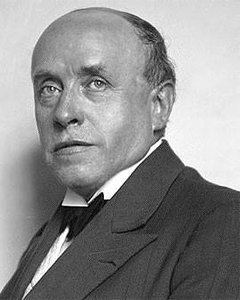
Georges Rouault
1871 - 1958 , Frankreich
Kurzinfos
- Beeinflusste Künstler:
- Vincent van Gogh
- Gustave Moreau
- Bemerkenswerte Werke:
- Der Weg nach Kalvarien
- Porträts von Clowns und Huren
- Geburtsdatum: 27. Mai 1871
- Geburtsort: Paris, Frankreich
- Künstlerische Bewegung: Expressionismus, Fauvismus
- Nationalität: Französisch
- Sterbedatum: 13. Februar 1958
- Vollständiger Name: Georges Rouault
- Von Ihm Beeinflusste Künstler: ['Expressionistische Maler']