 Vorschau anzeigen
 Versenden
 Teilen
 Details anzeigen

 Herunterladen
 Ähnliche Objekte
 Röntgenaufnahme
 Diashow
 Statistiken
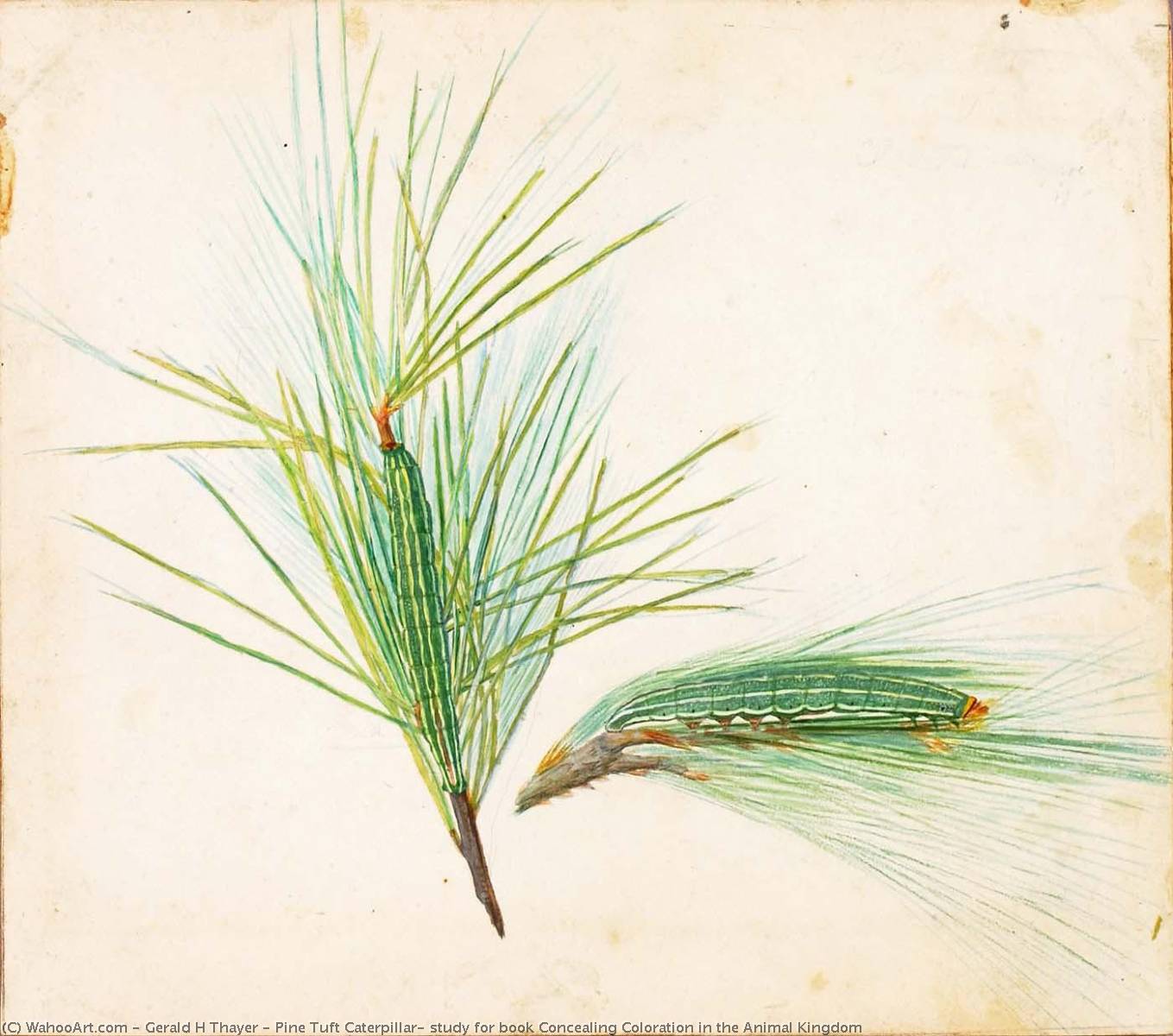
Pine Tuft Caterpillar, study for book Concealing Coloration in the Animal Kingdom
 Weiterlesen
Erwerben Sie ein hochauflösendes, optimiertes digitales Bild, das der Online-Vorschau weit überlegen ist.
Jede Datei wird von unseren hauseigenen Spezialisten mit modernsten Werkzeugen und fachmännischer manueller Retusche sorgfältig vorbereitet. Wir stellen sicher, dass jedes Bild eine außergewöhnliche Klarheit, präzise Farbgenauigkeit und feinste Details aufweist.
Die endgültige Datei wird innerhalb von 72 Stunden per E-Mail zugestellt und ist für den sofortigen Einsatz in professionellen, redaktionellen und Druckumgebungen optimiert. Es handelt sich um dieselbe Qualität, der führende Designstudios, Verlage und Galerien vertrauen.
Digitales Bild
Laden Sie eine hochauflösende Datei für die persönliche Präsentation, den Druck und kreative Projekte herunter. ( Zu Druck wechseln Handgemalte Reproduktion bestellen)
In jeder Bestellung digitaler Bilder enthalten
Professionelle digitale Bereitstellung, garantiert
Wenn Sie sich für ArtsDot.com entscheiden, erhalten Sie nicht nur ein Bild – Sie erhalten ein professionell aufbereitetes digitales Kunstwerk, das mit höchster Präzision erstellt und durch eine Zufriedenheitsgarantie abgesichert wird. Hier ist alles, was automatisch mit Ihrer Bestellung geliefert wird:

Schnelle E-Mail-Zustellung
Ihre hochauflösende digitale Bilddatei wird Ihnen innerhalb von 72 Stunden nach der Bestellung per E-Mail zugestellt – bereit zur sofortigen Verwendung.

KI-optimierte digitale Datei
Ihre Kunstwerke werden professionell mithilfe fortschrittlicher KI-Tools und manueller Bearbeitung optimiert, um maximale Detailtreue, Klarheit und Farbgenauigkeit zu gewährleisten.

Lebenslanger kostenloser Neudruckservice
Datei versehentlich gelöscht oder verloren? Keine Sorge – wir senden sie Ihnen jederzeit kostenlos erneut zu.

Keine Einfuhrgebühren – jemals
Genießen Sie Ihr Kunstwerk sofort ohne Zollgebühren, Einfuhrabgaben oder Versandkosten – digitale Downloads sind immer steuerfrei.

Garantierte Farbtreue
Wir garantieren, dass Ihr digitales Bild mithilfe professioneller Werkzeuge und Farbmanagement die Originalfarben so präzise wie möglich wiedergibt.

100-Tage-Zufriedenheitsgarantie
Wenn Sie mit Ihrem digitalen Bild nicht zufrieden sind, werden wir es überarbeiten oder 100% innerhalb von 100 Tagen erstatten – ohne Wenn und Aber.

100% Geld-zurück-Garantie
Nicht zufrieden? Erhalten Sie innerhalb von 100 Tagen nach Erhalt Ihrer digitalen Datei eine vollständige Rückerstattung – ohne Wenn und Aber.

Rabatte bei Großbestellungen
3 Bilder kaufen, 10% sparen – 5 Bilder kaufen, 15% sparen – Ab 10 Bildern 20% sparen. Ideal für kreative Projekte, Galerien und Agenturen.
Ähnliche Kunstwerke
Biografie des Künstlers
The Quiet Revolution of Gerald H. Thayer: A Master of Avian Camouflage
Gerald H. Thayer (1837-1934) wasn't a name shouted from the rooftops during his lifetime, yet his influence on ornithological illustration and our understanding of nature’s artistry is profound. He was a self-taught artist who eschewed formal training in favor of direct observation, spending decades immersed in the American landscape meticulously documenting birds not as static specimens, but as living creatures seamlessly integrated into their environments. This dedication to portraying birds *in situ*, highlighting their camouflage and adaptive coloration, marked a quiet revolution in wildlife art, shifting focus from purely taxonomic representation towards an appreciation of ecological harmony. Born in New York City, Thayer’s early life offered little indication of the path he would forge. He initially pursued a career in business, but a growing fascination with birds—fueled by hunting expeditions and a keen eye for detail—led him to abandon commerce and dedicate himself entirely to painting.From Sporting Art to Scientific Observation
Thayer’s artistic journey began with sporting art, depicting game birds in dynamic scenes popular amongst wealthy collectors. However, he quickly became dissatisfied with the conventional approach of showcasing trophies. He noticed something others often overlooked: how remarkably difficult it was to spot a bird against its natural backdrop. This observation wasn't merely aesthetic; it sparked a scientific curiosity. Thayer believed that understanding and accurately portraying this camouflage was crucial to appreciating the evolutionary pressures shaping avian forms. He began experimenting with watercolor, mastering techniques to render subtle gradations of color and texture that mimicked the interplay of light and shadow in natural settings. His early works, while still rooted in sporting traditions, demonstrate a growing emphasis on realism and an increasing sensitivity to environmental context. He wasn’t simply painting *birds*; he was painting birds as they *were experienced* in nature – often barely visible, blending into foliage, bark, or the dappled light of the forest floor. This pursuit led him to develop his theories about disruptive coloration, which would later become a cornerstone of camouflage research.The Development of Thayer’s Distinctive Style
Thayer's style evolved through relentless practice and a unique methodology. He famously worked outdoors in all weather conditions, often sketching directly from life for hours on end. He eschewed the use of prepared backgrounds or studio settings, believing that only direct observation could capture the nuances of natural light and color. His watercolors are characterized by their extraordinary detail, delicate washes, and masterful rendering of texture – feathers appear soft and ruffled, eyes gleam with lifelike intensity, and plumage blends seamlessly into its surroundings. He developed a technique of layering thin glazes of watercolor to create depth and luminosity, achieving an almost photographic realism without sacrificing artistic expression. His compositions are often unconventional, eschewing symmetrical arrangements in favor of dynamic perspectives that emphasize the bird’s integration with its environment. He wasn't interested in creating idealized portraits; he sought to capture the essence of each species as it existed within its ecological niche. This dedication to authenticity set him apart from many of his contemporaries.Major Achievements and Lasting Legacy
Thayer’s most significant achievement was arguably his series of watercolor paintings depicting birds in their natural habitats, culminating in the publication of *The Birds of North America* (1903). This monumental work wasn't simply a collection of beautiful illustrations; it was a groundbreaking study of avian camouflage and adaptation. His accompanying text detailed his theories about disruptive coloration, explaining how patterns and colors evolved to conceal birds from predators and prey. While initially met with skepticism by some in the scientific community, Thayer’s observations were later validated by advancements in evolutionary biology and ecology. His work profoundly influenced subsequent generations of ornithological illustrators, inspiring them to adopt a more realistic and ecologically sensitive approach. Beyond his artistic contributions, Thayer played a crucial role in raising awareness about the importance of conservation. He believed that appreciating the beauty and complexity of nature was essential for protecting it, and his paintings served as powerful advocates for wildlife preservation.- Published *The Birds of North America* (1903), a landmark study of avian camouflage.
- Developed theories about disruptive coloration that anticipated modern ecological research.
- Influenced generations of ornithological illustrators with his realistic and ecologically sensitive style.
- Advocated for wildlife preservation through his art and writings.