 Vorschau anzeigen
 Versenden
 Teilen
 Details anzeigen

 Herunterladen
 Ähnliche Objekte
 Röntgenaufnahme
 Diashow
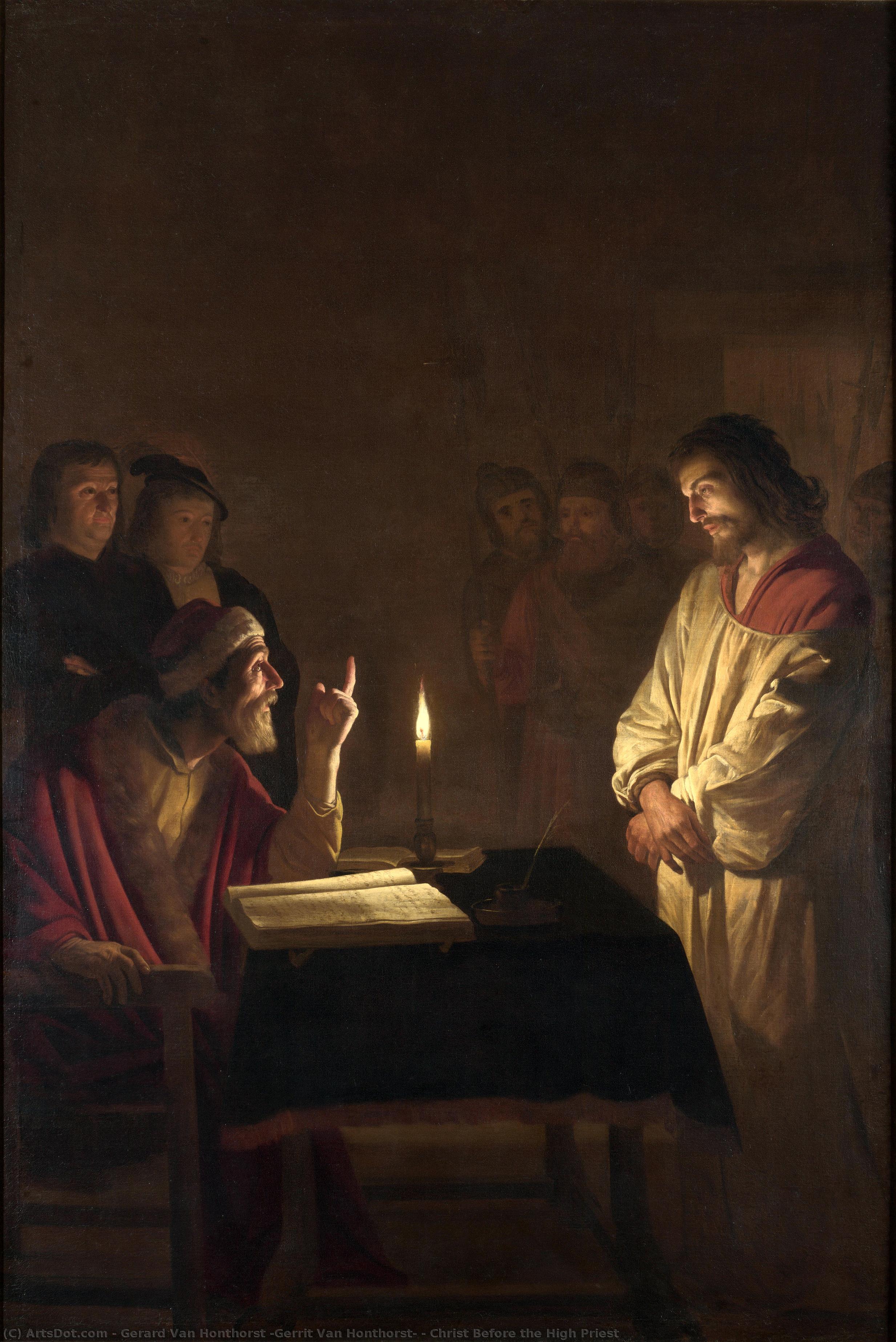
Christ Before the High Priest


 Weiterlesen
Handgefertigte Ölreproduktion
Handgemaltes Ölgemälde auf Leinwand in Ihrer Wunschgröße und mit Rahmen, auf Bestellung von unseren Künstlern angefertigt. ( Druck bestellen Bild kaufen)




P118B $10

P118H $10

P118W $10

P438Z $10

P508JH $12

P508YH $12

P805H $10

P805Z $10

P919BZ $10

P919G $10

P919XJ $10

P959ZH $10

P968JZ $12

W106C $8

W218G $10

W218JH $8

W218Y $10

W307PJ $10

W316G $10

W316PJ $8

W316Y $10

W398PJ $8

W4111J $10

W500HY $15

W500JH $15

W692G $12

W849H $8

W940BG $15

W953PJ $8




Wählen Sie aus unseren vordefinierten Formaten, die den ursprünglichen Proportionen des Kunstwerks entsprechen.

Sie können Ihre eigenen Maße eingeben, um einen bestimmten Rahmen oder Platz auszufüllen. Wenn die gewählte Größe nicht den Proportionen des Originalbildes entspricht, werden wir das Kunstwerk entweder beschneiden oder das Gemälde durch zusätzliche, handgemalte Elemente erweitern. Ein digitales Mockup wird Ihnen zur Genehmigung zugesandt, bevor die Produktion beginnt.
Bitte beachten Sie, dass die Bildschirmvorschau nicht die tatsächliche Beschneidung oder Erweiterung widerspiegelt. Nur das Mockup zeigt die endgültige Komposition exakt an.
Obwohl Sondermaße verfügbar sind, empfehlen wir, eine Größe aus der vordefinierten Liste zu wählen, um die ursprünglichen Proportionen beizubehalten.
Nach der Bestellung wird das ArtsDot.com-Team dem Kunden Anweisungen per E-Mail zusenden und eine Mockup-Vorschau bereitstellen.
Weltweiter Versand () in nur 3 bis 4 Wochen statt der üblichen 5 Wochen. (19 August). Keine Kompromisse bei der Qualität.

Kostenloser weltweiter Expressversand

Hochwertige Leinenleinwand

Umfassender Versicherungsschutz beim Versand

Zollgebühren-Rückerstattungsgarantie

Garantie für exakte Farbtreue

60 Tage Rückgaberecht (nur bei Mängeln)

100% Geld-zurück-Garantie

Mengenrabatt verfügbar
 Die Glasoption ist nur für Größen unter 110 cm verfügbar.

Christ Before the High Priest
Art der Reproduktion
Format der Reproduktion
-


Gesamtpreis
$ 363
Beschreibung des Kunstwerks
A Dramatic Encounter: Gerard van Honthorst’s “Christ Before the High Priest”
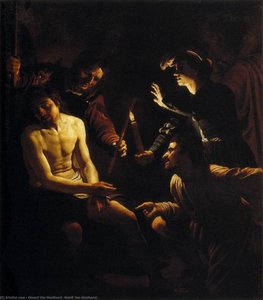
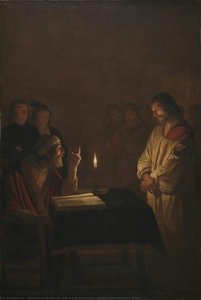
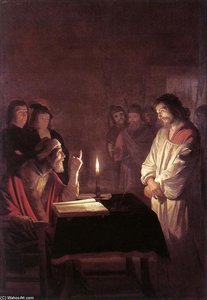
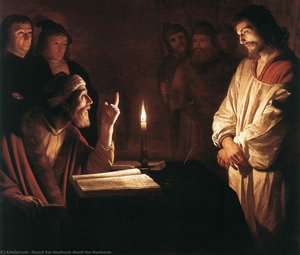
Gerard van Honthorst's "Christ Before the High Priest," painted around 1617, is not merely a biblical scene; it’s a masterclass in Baroque drama and an intimate portrayal of spiritual tension. This oil on canvas, now residing within the hallowed halls of London’s National Gallery, immediately commands attention with its masterful use of chiaroscuro – the dramatic interplay of light and shadow that defines the artist's signature style. Honthorst, deeply influenced by the revolutionary techniques of Caravaggio, transports us to a dimly lit chamber, thick with secrecy and foreboding, where the fate of Jesus hangs precariously in the balance.
The composition is strikingly vertical, drawing the viewer’s eye inexorably towards the central figures: Christ and Caiaphas. The single candle flame, strategically positioned between them, acts as a potent symbol – not just illuminating their faces but also highlighting the chasm separating their perspectives. Jesus, rendered in serene composure, appears almost otherworldly amidst the gathering of shadowy witnesses behind him, suggesting an inner strength and acceptance of his impending destiny. Caiaphas, by contrast, is depicted with forceful gestures and a furrowed brow, embodying the resistance to Christ’s claims and the weight of judgment.
The Baroque Masterstroke: Light, Shadow, and Emotional Intensity
Honthorst's technical prowess is immediately evident in the meticulous detail and rich textures of the painting. The brushstrokes are deliberately visible, creating an impasto effect – a raised surface of paint that adds tactile quality to the scene. The use of linear perspective, while somewhat flattened as is typical of Baroque art, effectively guides the eye through the composition, layering figures and details with subtle precision. Notice how the folds of the drapery, rendered with remarkable realism, seem to ripple and flow, adding depth and movement to the otherwise static scene.
The artist’s deep understanding of light is particularly noteworthy. It's not simply illumination; it’s a carefully orchestrated tool for conveying emotion and highlighting key elements. The stark contrast between the brightly lit faces of Christ and Caiaphas, juxtaposed against the enveloping darkness, amplifies their conflict and underscores the gravity of the moment. This dramatic lighting technique, characteristic of Caravaggio and embraced by Honthorst, is what truly elevates this painting beyond a simple historical depiction.
Symbolism and Spiritual Resonance
Beyond its immediate visual impact, “Christ Before the High Priest” is laden with symbolic meaning. The scroll held by Caiaphas represents Jewish law and prophecy – the very framework within which Jesus’s teachings challenged established norms. The candle itself serves as a powerful emblem of truth and enlightenment, casting a fragile light upon the unfolding drama. The gathering of witnesses in the background speaks to the broader community's role in Christ’s trial and the weight of their collective judgment.
Furthermore, the painting resonates with themes of betrayal, judgment, and divine authority – core tenets of Christian theology. It captures a pivotal moment from scripture, offering viewers an intimate glimpse into the events leading up to Jesus’ crucifixion. The overall mood is one of solemnity, suspense, and profound spiritual significance, inviting contemplation on faith, sacrifice, and the nature of truth.
A Timeless Masterpiece: Reproduction Possibilities
ArtsDot offers meticulously crafted hand-painted reproductions of Gerard van Honthorst’s “Christ Before the High Priest,” allowing you to bring this iconic Baroque masterpiece into your home or office. Our skilled artists faithfully recreate every detail, from the subtle nuances of light and shadow to the rich textures of the paint, ensuring an authentic representation of this extraordinary work. Whether you're a seasoned art collector, an interior designer seeking to add a touch of historical grandeur, or simply an admirer of Baroque artistry, our reproductions provide a beautiful and accessible way to experience the enduring power of Honthorst’s dramatic vision.
Ähnliche Kunstwerke
Über den Künstler
Frühes Leben und Ausbildung
Gerard van Honthorst, ein bedeutender niederländischer Maler des Goldenen Zeitalters, wurde am 4. November 1590 in Utrecht geboren. Er war der Sohn eines dekorativen Malers und erhielt zunächst die Anleitung seines Vaters. Später setzte er seine künstlerische Ausbildung unter Abraham Bloemaert fort.Karriere und Einflüsse
Van Honthorsts frühe Karriere umfasste einen Besuch in Rom, wo er stark von dem Stil Caravaggios beeinflusst wurde. Dieser Einfluss ist besonders in seinen späteren Werken erkennbar, vor allem durch die Verwendung künstlich beleuchteter Szenen, was ihm den Spitznamen "Gherardo delle Notti" oder "Gerard der Nachts" einbrachte. Nach seiner Rückkehr in die Niederlande wurde van Honthorst zu einem führenden Porträtmaler.Wichtige Aufträge und Patrone
Van Honthorsts Arbeit war sehr gefragt, wobei er bedeutende Patrone hatte, darunter Vincenzo Giustiniani, der ihn beauftragte, "Christus vor dem Hohenpriester" zu malen, das sich heute in der National Gallery in London befindet. Er arbeitete auch für Cosimo II de' Medici, den Großherzog von Toskana, und genoss große Beliebtheit sowohl in der Republik als auch im Ausland.Künstlerische Entwicklung und Vermächtnis
Im Jahr 1620 kehrte van Honthorst nach Utrecht zurück, wo er sich einen beträchtlichen Ruf erwarb. Bereits 1623, im Jahr seiner Hochzeit, war er Präsident der Zunft des Heiligen Lukas in Utrecht geworden. Sein Erfolg führte zu Empfehlungen von Sir Dudley Carleton für den Earl of Arundel und Lord Dorchester. Er entwickelte seinen eigenen Stil, der Elemente des Caravaggismo mit niederländischen Traditionen verband. Seine Fähigkeit, dramatische Lichteffekte einzusetzen und lebendige Szenen darzustellen, machte ihn zu einem gefragten Künstler. Van Honthorst starb 1656 in Utrecht und hinterließ ein bedeutendes Werk, das die Kunst des Goldenen Zeitalters bereicherte.Wichtige Werke und Zusammenarbeit
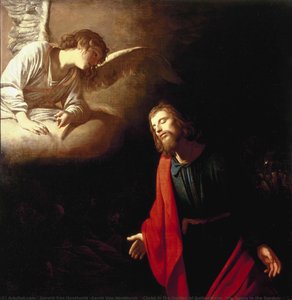
- Die Ölbergszene: Ein frühes Beispiel für van Honthorsts Caravaggismo mit starkem Lichtkontrast.
- Christus vor dem Hohenpriester: Eine Auftragsarbeit von Vincenzo Giustiniani, die seine Fähigkeit zeigt, künstlich beleuchtete Szenen darzustellen.
- Zusammenarbeiten mit anderen Künstlern wie Peter Paul Rubens: Diese Kooperationen zeugen von seinem Einfluss auf den flämischen Barockstil und demonstrieren seinen Stellenwert in der europäischen Kunstszene.
Künstlerische Bewegung und Stil
Van Honthorst war Teil der Utrechter Caravaggisti-Bewegung, die sich durch die Verwendung dramatischer Beleuchtung und intensiver emotionaler Tiefe auszeichnete. Seine Arbeit spiegelt den Einfluss des italienischen Barock wider, während er gleichzeitig zur Entwicklung des niederländischen Goldenen Zeitalters beitrug. Sein Stil zeichnete sich durch eine Kombination aus Caravaggios Licht- und Schattenspiel mit der Klarheit und Detailgenauigkeit der niederländischen Malerei aus.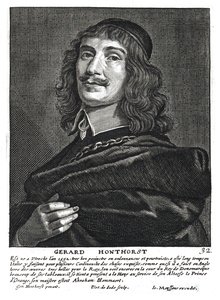
Gerard van Honthorst
1590 - 1656 , Niederlande
Kurzinfos
- Beeinflusste Künstler:
- Caravaggio
- Abraham Bloemaert
- Bemerkenswerte Werke:
- Christus vor dem Hohenpriester
- Die Abnahme Christi
- Anbetung der Hirten
- Geburtsdatum: 4. November 1590
- Geburtsort: Utrecht, Niederlande
- Künstlerische Bewegung: Utrechter Caravaggisten
- Nationalität: Niederländisch
- Sterbedatum: 27. April 1656
- Vollständiger Name: Gerard van Honthorst
- Von Ihm Beeinflusste Künstler:
- Rembrandt van Rijn
- Georges de la Tour
Ähnliche Artikel
Van Goghs Meisterwerke: Die Top 25 für Kunstliebhaber & Ihr Zuhause
Entdecken Sie die Top 25 Gemälde von Vincent van Gogh! Erleben Sie die Geschichten hinter Sternennacht, Sonnenblumen & mehr. Hochwertige Van Gogh Reproduktionen für Ihr Zuhause – jetzt auf ArtsDot.com!
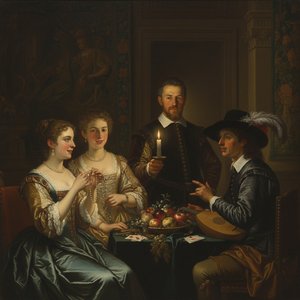
Gerard van Honthorst: Licht und Schatten der niederländischen Goldenen Ära – Caravaggismus und höfische Eleganz
Entdecken Sie das faszinierende Werk von Gerard van Honthorst! Erfahren Sie mehr über den niederländischen Meister des Caravaggismus, seine einzigartigen Lichteffekte und seinen Einfluss auf die Kunstgeschichte. Jetzt lesen!

Rembrandts Meisterwerke: Die Top 25 Kunstwerke für Ihr Zuhause | ArtsDot
Entdecken Sie Rembrandts 25 berühmteste Kunstwerke! Tauchen Sie ein in die Welt des Barock, Licht und Schatten & historischer Porträts. Hochwertige Reproduktionen für Ihr Zuhause – jetzt auf ArtsDot.com!

Die 10 Meisterwerke der niederländischen Barockmalerei – Kunst für Ihr Zuhause | ArtsDot
Entdecken Sie die 10 prägendsten Meisterwerke der niederländischen Barockmalerei! Von Rembrandt bis Vermeer – erleben Sie Kunstgeschichte, Techniken & Emotionen. Hochwertige Reproduktionen für Ihr Zuhause auf ArtsDot.com.
Frühniederländische Meisterwerke: 10 Gemälde, die eine Epoche prägten | ArtsDot
Entdecken Sie die 10 prägendsten Meisterwerke der Frühniederländischen Malerei! Von Jan van Eyck bis Rogier van der Weyden – erleben Sie Kunstgeschichte hautnah. Hochwertige Reproduktionen & Inspiration für Ihr Interieur auf ArtsDot.com.