 Vorschau anzeigen
 Versenden
 Teilen
 Details anzeigen

 Herunterladen
 Ähnliche Objekte
 Röntgenaufnahme
 Diashow
 Statistiken
Ludorff


 Weiterlesen
Giclée / Kunstdruck
Giclée- oder Leinwanddruck in Museumsqualität mit schneller Produktion und flexiblen Veredelungsoptionen. ( Handgemalte Reproduktion bestellen Zum digitalen Bild wechseln)




P118B $10

P118H $10

P118W $10

P438Z $10

P508JH $12

P508YH $12

P805H $10

P805Z $10

P919BZ $10

P919G $10

P919XJ $10

P959ZH $10

P968JZ $12

W106C $8

W218G $10

W218JH $8

W218Y $10

W307PJ $10

W316G $10

W316PJ $8

W316Y $10

W398PJ $8

W4111J $10

W500HY $15

W500JH $15

W692G $12

W849H $8

W940BG $15

W953PJ $8




Wählen Sie aus unseren vordefinierten Formaten, die den ursprünglichen Proportionen des Kunstwerks entsprechen.

Sie können Ihre eigenen Maße eingeben, um ein bestimmtes Format oder einen speziellen Platz einzupassen. Wenn das von Ihnen gewählte Format nicht den Proportionen des Originalbildes entspricht, werden wir das Kunstwerk entweder beschneiden oder das Bild mit einem gespiegelten oder einfarbigen Rand erweitern. Ein digitaler Entwurf wird Ihnen zur Genehmigung zugesandt, bevor die Produktion beginnt.
Bitte beachten Sie, dass die Vorschau auf dem Bildschirm nicht den tatsächlichen Zuschnitt oder die Erweiterung widerspiegelt. Nur der Entwurf zeigt die endgültige Komposition präzise an.
Obwohl Sondermaße verfügbar sind, empfehlen wir die Auswahl eines Maßes aus der vordefinierten Liste, um die ursprünglichen Proportionen zu bewahren.
Weltweiter Versand () innerhalb von 2 Wochen statt der üblichen 4/5 Wochen. (9 September)

Kostenloser weltweiter Expressversand

Hochwertige Leinenleinwand

Umfassender Versicherungsschutz beim Versand

Zollgebühren-Rückerstattungsgarantie

Garantie für exakte Farbtreue

100-Tage-Rückgaberecht (nur bei Mängeln)

100% Geld-zurück-Garantie

Mengenrabatt verfügbar
 Die Glasoption ist nur für Größen unter 110 cm verfügbar.

Ludorff
Giclée / Kunstdruck
Format der Reproduktion
-


Gesamtpreis
$ 62
A Fragmented Landscape of Color
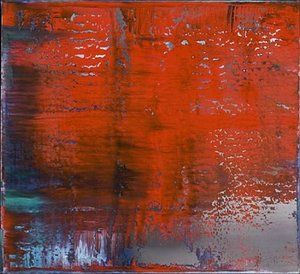
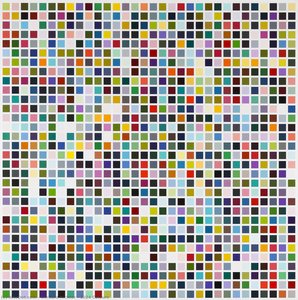
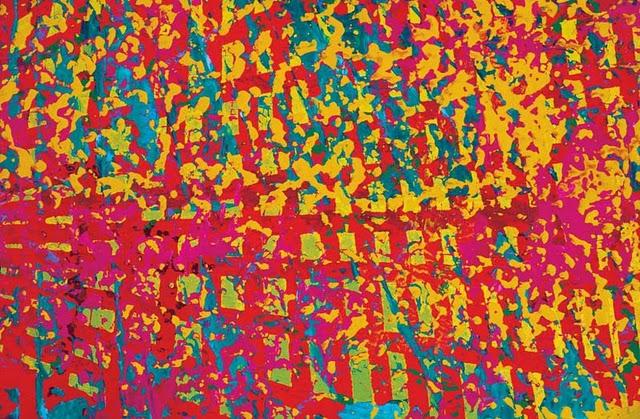
In the vast and often turbulent landscape of contemporary art, few works capture the ephemeral nature of human thought as poignantly as Gerhard Richter’s “Ludorff.” Created in 1968, this striking masterpiece serves as a vibrant window into the soul of Abstract Expressionism. At first glance, the viewer is met with an arresting arrangement of squares that seem to burst from the canvas with an almost rhythmic energy. Yet, beneath this seemingly simple geometric structure lies a profound exploration of memory and perception. The painting does not merely present colors; it presents a sensation—a kaleidoscopic reconstruction of a world that is simultaneously present and fading.
Richter’s approach in “Ludorff” transcends mere decoration, offering a complex interplay of light and shadow through color. The palette is dominated by warm, glowing shades of orange, which act as a luminous foundation for sudden, electric splashes of yellow, blue, green, pink, purple, and red. This meticulous charting of color relationships—where complementary hues are juxtaposed against analogous tones—creates a composition that is both harmoniously balanced and dynamically restless. For the collector or interior designer, such a piece offers a transformative presence, capable of anchoring a room with its sophisticated chromatic depth.
Technique and the Illusion of Memory
The technical brilliance of “Ludorff” lies in Richter’s unique ability to manipulate the surface of the canvas to mimic the way we experience reality. Utilizing a method often associated with his “Photographic Painting,” Richter layers pigments in a semi-transparent manner, creating an illusionistic effect that feels both layered and translucent. This technique allows for subtle variations in tone that capture the fleeting quality of visual experience. The surface is not flat; it possesses a textured, breathing quality that invites the eye to wander through its many strata.
This method serves a deeper symbolic purpose. Richter himself has described this work as a “landscape of memory.” The fragmented squares and blurred edges are not accidental; they symbolize the fractured nature of recollection—the inherent impossibility of perfectly recreating a moment in time. Just as our memories are often composed of disconnected, vivid impressions rather than continuous narratives, “Ludorff” presents a world that is reconstructed from fragments. It is an invitation to contemplate the beauty found within the incomplete and the ephemeral.
Historical Resonance and Emotional Depth
To understand the emotional weight of “Ludorff,” one must consider the historical backdrop of post-war Germany. Born in Dresden in 1932, Richter’s early life was shaped by the profound uncertainties of a divided nation. The tension between idyllic childhood recollections and the harsh realities of political division is woven into the very fabric of his abstraction. In “Ludorff,” we see the artist attempting to reconcile these disparate truths through the language of color and form.
For those seeking to bring a piece of art history into their personal spaces, this work offers more than just aesthetic pleasure; it provides an emotional anchor. It is a piece that speaks to the resilience of the human spirit and our enduring desire to find order within chaos. Whether displayed in a modern gallery setting or as a centerpiece in a curated home, a high-quality reproduction of “Ludorff” brings with it a sense of intellectual rigor and profound, colorful beauty that continues to captivate the global art community.
Ähnliche Kunstwerke
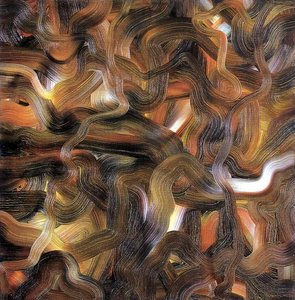
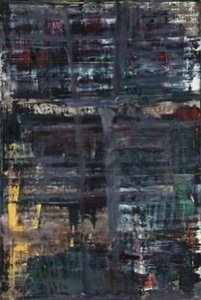
Über den Künstler
**frühes Leben und Ausbildung**
Gerhard Richter, ein renommierter deutscher visueller Künstler, wurde am 9. Februar 1932 in einem Krankenhaus in Dresden-Neustadt, Dresden, Sachsen, geboren. Er wuchs in Reichenau, Niederschlesien (heute Bogatynia, Polen), und Waltersdorf (Zittauer Gebirge) im oberen Lusatianenländischen Land auf. Richards Vater, Horst Richter, war Mathematik- und Physikstudent an der Technischen Hochschule in Dresden.**Künstlerische Karriere**
Richter begann seine künstlerische Reise als Geselle für einen Schaukunstmaler und studierte später an der Dresdner Kunstakademie. Seine frühen Arbeiten wurden von den Stilen von Picasso und Jean Arp beeinflusst, was sich in seinen abstrakten und fotorealistischen Gemälden zeigt. Im Jahr 1957 arbeitete Richter als Meisterschüler an der Akademie und nahm Aufträge für das damalige Staatliche Gebiet der DDR entgegen.**Bekannte Werke und Leistungen**
* Abstraktes Bild (2012) erzielte einen Rekordverkaufspreis für ein Gemälde eines lebenden Künstlers von 34 Millionen Dollar (£21 Millionen). * Domplatz, Mailand (Kathedralplatz, Mailand) (1968) wurde in New York für 37,1 Millionen Dollar (£24,4 Millionen) verkauft. * Abstraktes Bild (2015) wurde bei der Sotheby's Contemporary Evening Sale für 44,52 Millionen Dollar (£30,4 Millionen) versteigert.**Künstlerischer Stil und Bewegung**
Richards Werke zeichnen sich durch ihre Vielseitigkeit aus, die abstrakte und fotorealistische Stile verbindet. Zusammen mit Sigmar Polke führte er den Begriff Kapitalistischer Realismus, einen Anti-Stil der Kunst, der die bildliche Kürze des Werbebildes übernimmt.**Privatleben**
Richter heiratete Marianne Eufinger im Jahr 1957 und hatte eine Tochter. Später heiratete er Isa Genzken im Jahr 1982 und Sabine Moritz im Jahr 1995, mit der er zwei Söhne und eine Tochter hatte. **Hinweis:** Dieser Artikel basiert auf den bereitgestellten Informationen und ist möglicherweise keine umfassende Biografie. Für detailliertere Informationen besuchen Sie bitte die verlinkten Quellen.
Gerhard Richter
1932 - , Deutschland
Kurzinfos
- Bemerkenswerte Werke:
- Abstraktes Bild (2012)
- Domplatz, Mailand (1968)
- S. mit Kind (1995)
- Geburtsdatum: 09. Februar 1932
- Geburtsort (Stadt, Land): Dresden, Deutschland
- Künstler Oder Bewegungen, Die Von Diesem Künstler Beeinflusst Wurden: ['Zeitgenössische Maler']
- Künstler, Die Diesen Künstler Beeinflussten:
- Pablo Picasso
- Jean Arp
- Künstlerische Bewegung/Stil:
- Abstrakte Kunst
- Fotorealismus
- Nationalität: Deutsch
- Vollständiger Name: Gerhard Richter
Ähnliche Artikel

Kandinsky: Die 25 Meisterwerke des Abstrakten – Kunst für Ihr Zuhause | ArtsDot
Entdecken Sie die 25 bedeutendsten Gemälde von Wassily Kandinsky! Tauchen Sie ein in die Welt der abstrakten Kunst, des Expressionismus und der Farbkomposition. Hochwertige Kunstdrucke & Inspiration für Ihr Zuhause auf ArtsDot.com.

Geometrische Abstraktion: Die 10 Meisterwerke, die Kunstgeschichte prägten | ArtsDot.com
Entdecken Sie die 10 Meisterwerke der geometrischen Abstraktion! Von Kandinsky bis Mondrian – erleben Sie die Geschichte, Farben & Formen dieser revolutionären Kunstrichtung. Hochwertige Kunstreproduktionen auf ArtsDot.com
Gerhard Richter: A Retrospective on Abstraction, Memory & the Photographic Source
Explore the profound world of Gerhard Richter's abstract paintings. Discover his techniques, influences, and lasting impact on contemporary art – a guide for discerning collectors.
Abstrakter Expressionismus: Die 10 Meisterwerke, die eine Kunstbewegung prägten |
Entdecken Sie die 10 Meisterwerke des Abstrakten Expressionismus! Von Jackson Pollock bis Mark Rothko – erfahren Sie die Geschichten hinter ikonischen Gemälde und finden Sie hochwertige Reproduktionen für Ihr Zuhause. Jetzt bei entdecken!
Beyond Form & Color: Geometric Abstraction's Evolution in 20th/21st Century Art
Explore the evolution of geometric abstraction from Cubism to contemporary art. Discover key artists like Malevich & Mondrian, investment insights, and expert collecting advice at ArtsDot.