 Vorschau anzeigen
 Versenden
 Teilen
 Details anzeigen

 Herunterladen
 Ähnliche Objekte
 Röntgenaufnahme
 Diashow
Untitled
 Oil On Canvas
- WallArt
- Abstract Expressionism
 1968
1968- Contemporary
 80.0 x 40.0 cm
 Weiterlesen
Giclée / Kunstdruck
Giclée- oder Leinwanddruck in Museumsqualität mit schneller Produktion und flexiblen Veredelungsoptionen. ( Handgemalte Reproduktion bestellen Bild kaufen)




P118B $10

P118H $10

P118W $10

P438Z $10

P508JH $12

P508YH $12

P805H $10

P805Z $10

P919BZ $10

P919G $10

P919XJ $10

P959ZH $10

P968JZ $12

W106C $8

W218G $10

W218JH $8

W218Y $10

W307PJ $10

W316G $10

W316PJ $8

W316Y $10

W398PJ $8

W4111J $10

W500HY $15

W500JH $15

W692G $12

W849H $8

W940BG $15

W953PJ $8




Wählen Sie aus unseren vordefinierten Formaten, die den ursprünglichen Proportionen des Kunstwerks entsprechen.

Sie können Ihre eigenen Maße eingeben, um ein bestimmtes Format oder einen speziellen Platz einzupassen. Wenn das von Ihnen gewählte Format nicht den Proportionen des Originalbildes entspricht, werden wir das Kunstwerk entweder beschneiden oder das Bild mit einem gespiegelten oder einfarbigen Rand erweitern. Ein digitaler Entwurf wird Ihnen zur Genehmigung zugesandt, bevor die Produktion beginnt.
Bitte beachten Sie, dass die Vorschau auf dem Bildschirm nicht den tatsächlichen Zuschnitt oder die Erweiterung widerspiegelt. Nur der Entwurf zeigt die endgültige Komposition präzise an.
Obwohl Sondermaße verfügbar sind, empfehlen wir die Auswahl eines Maßes aus der vordefinierten Liste, um die ursprünglichen Proportionen zu bewahren.
Weltweiter Versand () innerhalb von 2 Wochen statt der üblichen 4/5 Wochen. (25 August)

Kostenloser weltweiter Expressversand

Hochwertige Leinenleinwand

Umfassender Versicherungsschutz beim Versand

Zollgebühren-Rückerstattungsgarantie

Garantie für exakte Farbtreue

60 Tage Rückgaberecht (nur bei Mängeln)

100% Geld-zurück-Garantie

Mengenrabatt verfügbar
 Die Glasoption ist nur für Größen unter 110 cm verfügbar.

Untitled
Giclée / Kunstdruck
Format der Reproduktion
-


Gesamtpreis
$ 62
Sammlerstück-Beschreibung
A Fragmented Landscape of Emotion
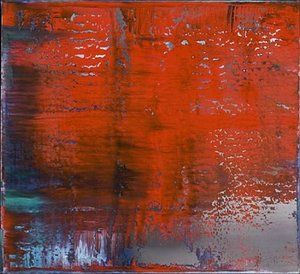
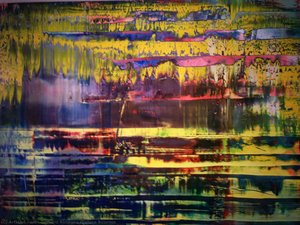
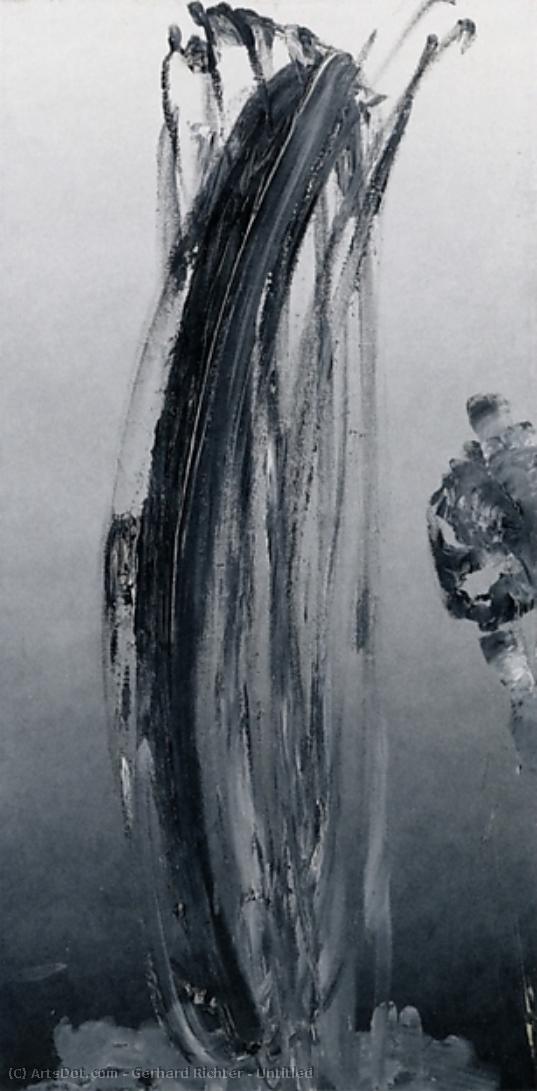
In the vast, often turbulent landscape of contemporary art, few works command the room with such quiet, brooding intensity as Gerhard Richter’s Untitled (1968). This masterpiece is far more than a mere arrangement of pigment on canvas; it is a visceral distillation of experience, a visual echo of an era defined by political upheaval and profound uncertainty. Measuring a striking 80 x 40 cm, the painting presents a verticality that feels both monumental and intimate, pulling the viewer into a rhythmic, flowing composition that resembles a dark waterfall or a cascading ribbon of shadow. The palette is masterfully restrained, dominated by deep greys and somber blacks, yet it is within these subtle tonal variations that the true soul of the work resides. For the discerning collector or interior designer, this piece offers a sophisticated anchor—a way to introduce depth, gravity, and a sense of contemplative luxury into any curated space.
The power of this work lies in its masterful execution of the wet-on-wet technique, a method that allows for an astonishing fluidity. Richter does not merely paint; he orchestrates a dance of textures. Through thick, heavy impasto strokes, the artist creates a palpable surface that invites tactile engagement, where layers of oil paint overlap and bleed into one another to create a sense of perpetual motion. This spontaneous, gestural approach—reminant of the Abstract Expressionist movement—eschews precise control in favor of raw, emotional impact. The way the light catches the ridges of the dried paint creates soft shadows and highlights, ensuring that the artwork transforms as the ambient lighting of a room shifts throughout the day, making it a dynamic presence in any gallery or private residence.
Echoes of History and the Beauty of Abstraction
To look upon this painting is to witness the visual language of a fractured world. Created in 1968, the work emerged from a Germany still grappling with the traumatic legacies of World War II and the ideological divisions of the Cold War. Richter’s upbringing in Dresden, marked by displacement and the shadows of authoritarianism, instilled in him a lifelong preoccupation with fragmentation and the questioning of reality. In this piece, the absence of recognizable imagery is a deliberate, profound choice. By stripping away the literal, Richter forces us to confront the abstract essence of feeling—the chaos, the flow, and the search for stability amidst a landscape of change.
For those seeking to decorate with intention, Untitled (1968) serves as an exquisite focal point that transcends mere decoration. It embodies a sophisticated minimalism that complements both modern architectural settings and classic, traditional interiors. Its monochromatic elegance allows it to integrate seamlessly with diverse color schemes, while its heavy texture provides the necessary "soul" to prevent a room from feeling sterile. Owning a high-quality reproduction of this work is an opportunity to possess a piece of art history—a fragment of a larger narrative about resilience, memory, and the enduring power of the human spirit to find beauty within the void.
Ähnliche Kunstwerke

Über den Künstler
**frühes Leben und Ausbildung**
Gerhard Richter, ein renommierter deutscher visueller Künstler, wurde am 9. Februar 1932 in einem Krankenhaus in Dresden-Neustadt, Dresden, Sachsen, geboren. Er wuchs in Reichenau, Niederschlesien (heute Bogatynia, Polen), und Waltersdorf (Zittauer Gebirge) im oberen Lusatianenländischen Land auf. Richards Vater, Horst Richter, war Mathematik- und Physikstudent an der Technischen Hochschule in Dresden.**Künstlerische Karriere**
Richter begann seine künstlerische Reise als Geselle für einen Schaukunstmaler und studierte später an der Dresdner Kunstakademie. Seine frühen Arbeiten wurden von den Stilen von Picasso und Jean Arp beeinflusst, was sich in seinen abstrakten und fotorealistischen Gemälden zeigt. Im Jahr 1957 arbeitete Richter als Meisterschüler an der Akademie und nahm Aufträge für das damalige Staatliche Gebiet der DDR entgegen.**Bekannte Werke und Leistungen**
* Abstraktes Bild (2012) erzielte einen Rekordverkaufspreis für ein Gemälde eines lebenden Künstlers von 34 Millionen Dollar (£21 Millionen). * Domplatz, Mailand (Kathedralplatz, Mailand) (1968) wurde in New York für 37,1 Millionen Dollar (£24,4 Millionen) verkauft. * Abstraktes Bild (2015) wurde bei der Sotheby's Contemporary Evening Sale für 44,52 Millionen Dollar (£30,4 Millionen) versteigert.**Künstlerischer Stil und Bewegung**
Richards Werke zeichnen sich durch ihre Vielseitigkeit aus, die abstrakte und fotorealistische Stile verbindet. Zusammen mit Sigmar Polke führte er den Begriff Kapitalistischer Realismus, einen Anti-Stil der Kunst, der die bildliche Kürze des Werbebildes übernimmt.**Privatleben**
Richter heiratete Marianne Eufinger im Jahr 1957 und hatte eine Tochter. Später heiratete er Isa Genzken im Jahr 1982 und Sabine Moritz im Jahr 1995, mit der er zwei Söhne und eine Tochter hatte. **Hinweis:** Dieser Artikel basiert auf den bereitgestellten Informationen und ist möglicherweise keine umfassende Biografie. Für detailliertere Informationen besuchen Sie bitte die verlinkten Quellen.
Gerhard Richter
1932 - , Deutschland
Kurzinfos
- Bemerkenswerte Werke:
- Abstraktes Bild (2012)
- Domplatz, Mailand (1968)
- S. mit Kind (1995)
- Geburtsdatum: 09. Februar 1932
- Geburtsort (Stadt, Land): Dresden, Deutschland
- Künstler Oder Bewegungen, Die Von Diesem Künstler Beeinflusst Wurden: ['Zeitgenössische Maler']
- Künstler, Die Diesen Künstler Beeinflussten:
- Pablo Picasso
- Jean Arp
- Künstlerische Bewegung/Stil:
- Abstrakte Kunst
- Fotorealismus
- Nationalität: Deutsch
- Vollständiger Name: Gerhard Richter
Ähnliche Artikel
Jenseits der Oberfläche: Die sinnliche Dimension abstrakter Malerei – Textur, Licht und emotionale Tiefe
Entdecken Sie die sinnliche Welt abstrakter Malerei! Expertenanalysen zu Rothko, Pollock & Richter. Hochwertige Reproduktionen für Ihre Sammlung – jetzt informieren!
Gerhard Richter: A Retrospective on Abstraction, Memory & the Photographic Source
Explore the profound world of Gerhard Richter's abstract paintings. Discover his techniques, influences, and lasting impact on contemporary art – a guide for discerning collectors.

Kandinsky: Die 25 Meisterwerke des Abstrakten – Kunst für Ihr Zuhause | ArtsDot
Entdecken Sie die 25 bedeutendsten Gemälde von Wassily Kandinsky! Tauchen Sie ein in die Welt der abstrakten Kunst, des Expressionismus und der Farbkomposition. Hochwertige Kunstdrucke & Inspiration für Ihr Zuhause auf ArtsDot.com.
Abstrakter Expressionismus: Die 10 Meisterwerke, die eine Kunstbewegung prägten |
Entdecken Sie die 10 Meisterwerke des Abstrakten Expressionismus! Von Jackson Pollock bis Mark Rothko – erfahren Sie die Geschichten hinter ikonischen Gemälde und finden Sie hochwertige Reproduktionen für Ihr Zuhause. Jetzt bei entdecken!

Die Top 10 berühmter Gemälde im Reich der dunklen Töne |
Entdecken Sie die Top 10 berühmter Gemälde, beherrscht von dunklen Tönen! Von Caravaggio bis Manet – erfahren Sie die Geschichten hinter Meisterwerken der Kunstgeschichte. Finden Sie Ihre perfekte Reproduktion auf .