


 Vorschau anzeigen
 Versenden
 Teilen
 Details anzeigen

 Herunterladen
 Ähnliche Objekte
 Röntgenaufnahme
 Diashow
 Statistiken
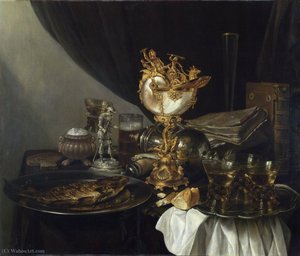
Still life with nautilus, silver tableware and blackberry pie (1646)

 Weiterlesen
Handgefertigte Ölreproduktion
Handgemaltes Ölgemälde auf Leinwand in Ihrer Wunschgröße und mit Rahmen, auf Bestellung von unseren Künstlern angefertigt. ( Zu Druck wechseln Zum digitalen Bild wechseln)
































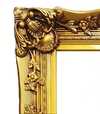
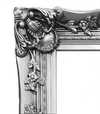
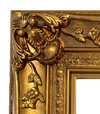
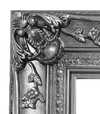
Wählen Sie aus unseren vordefinierten Formaten, die den ursprünglichen Proportionen des Kunstwerks entsprechen.

Sie können Ihre eigenen Maße eingeben, um einen bestimmten Rahmen oder Platz auszufüllen. Wenn die gewählte Größe nicht den Proportionen des Originalbildes entspricht, werden wir das Kunstwerk entweder beschneiden oder das Gemälde durch zusätzliche, handgemalte Elemente erweitern. Ein digitales Mockup wird Ihnen zur Genehmigung zugesandt, bevor die Produktion beginnt.
Bitte beachten Sie, dass die Bildschirmvorschau nicht die tatsächliche Beschneidung oder Erweiterung widerspiegelt. Nur das Mockup zeigt die endgültige Komposition exakt an.
Obwohl Sondermaße verfügbar sind, empfehlen wir, eine Größe aus der vordefinierten Liste zu wählen, um die ursprünglichen Proportionen beizubehalten.
Nach der Bestellung wird das ArtsDot.com-Team dem Kunden Anweisungen per E-Mail zusenden und eine Mockup-Vorschau bereitstellen.
Weltweiter Versand () in nur 3 bis 4 Wochen statt der üblichen 5 Wochen. (14 September). Keine Kompromisse bei der Qualität.

Kostenloser weltweiter Expressversand

Hochwertige Leinenleinwand

Umfassender Versicherungsschutz beim Versand

Zollgebühren-Rückerstattungsgarantie

Garantie für exakte Farbtreue

100-Tage-Rückgaberecht (nur bei Mängeln)

100% Geld-zurück-Garantie

Mengenrabatt verfügbar
 Die Glasoption ist nur für Größen unter 110 cm verfügbar.

Still life with nautilus, silver tableware and blackberry pie (1646)
Art der Reproduktion
Format der Reproduktion
-


Gesamtpreis
$ 263
Ähnliche Kunstwerke
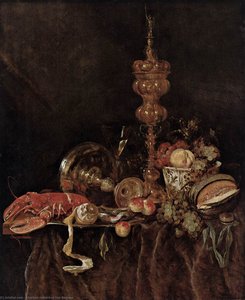
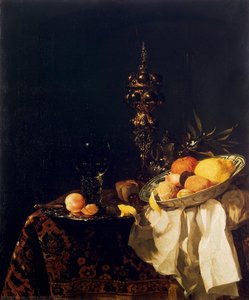
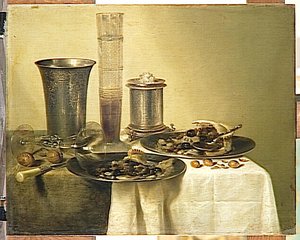
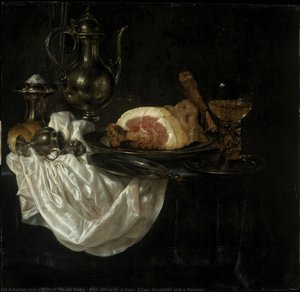
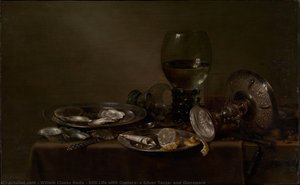

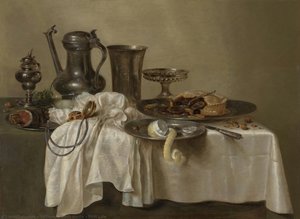
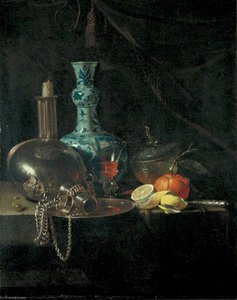
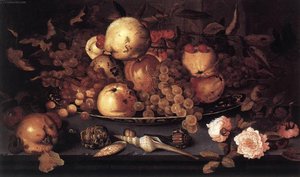
Über den Künstler
The Quiet Brilliance of Gerrit Willemsz Heda
In the golden, amber-hued light of the seventeenth-century Dutch Republic, few artists captured the delicate tension between abundance and decay as poignantly as Gerrit Willemsz Heda. A master of the still life, Heda’s brief but luminous career allowed him to leave an indelible mark on the Haarlem school of painting. While much of his personal history remains shrouded in the mists of time, his artistic lineage is clear and profound. Born around 1625 in the vibrant city of Haarlem, he was the son of the celebrated Willem Claesz Heda, a titan of the monochrome banquet piece. Growing up within the walls of a master’s studio, Gerrit did more than merely learn a trade; he inherited a visual language of precision, texture, and profound stillness that would become his lifelong pursuit.
The early records of his life offer glimpses into a young man deeply embedded in the civic and artistic fabric of his home. By 1642, the register of the Saint Luke’s Guild of Haarlem officially noted him as a pupil under his father's tutelage, alongside other rising talents of the era. This period of apprenticeship was foundational, as he absorbed the meticulous techniques required to render the glint of silver, the velvet skin of a peach, and the translucent pulp of a grape. His entry into Haarlem’s civic guard in 1642 further suggests a man of standing and responsibility, even as his artistic identity began to coalesce around the themes of vanitas—the philosophical meditation on the fleeting nature of earthly life.
A Symphony of Light and Texture
Heda’s mature style is a masterclass in restraint and atmospheric depth. Unlike the more flamboyant Baroque painters who sought to overwhelm the viewer with dramatic movement, Heda found power in the quietude of the tabletop. His compositions are often characterized by an understated elegance, where every element—a nautilus shell, a silver platter, or a stray piece of fruit—is placed with intentionality. He utilized chiaroscuro not merely for dramatic effect, but to sculpt form out of shadow, creating a palpable sense of three-dimensionality that invites the viewer to reach out and touch the canvas.
The technical prowess displayed in his works, such as his celebrated Still Life with Nautilus, Silver Tableware and Blackberry Pie, reveals an artist obsessed with the tactile. He possessed a singular ability to differentiate between surfaces:
- The cold, reflective sheen of polished pewter and silver.
- The organic, rugged texture of a nautilus shell.
- The soft, yielding matte of ripening fruit.
- The delicate, translucent quality of glass vessels catching the light.
Legacy and the Vanitas Tradition
Though his life was tragically short, ending around 1649, Heda’s contribution to the Dutch Golden Age remains significant. He bridged the gap between the austere monochrome traditions of his father and a more nuanced, colorful exploration of the still life genre. His work stands as a cornerstone of the vanitas tradition, a genre designed to provoke contemplation on mortality and the transience of worldly pleasures. In every carefully rendered shadow and every bruised piece of fruit, Heda whispered a reminder of the passage of time.
Today, his masterpieces reside in some of the world's most prestigious institutions, including the National Gallery in London and the National Gallery of Art in Washington, D.C. These works continue to captivate modern audiences, offering a window into a period where art was used to navigate the complex relationship between material wealth and spiritual permanence. Gerrit Willemsz Heda remains a vital figure for any student of the Baroque, a painter who found the infinite within the infinitesimal, and who taught us to find beauty in the fleeting moments of our existence.
Kurzinfos
- Artistic Movement Or Style: Golden Age
- Artists Or Movements Influenced By This Artist: ['Jan Jansz Treck']
- Artists Who Influenced This Artist: ['Willem Claesz Heda']
- Date Of Death: 1649
- Full Name: Gerrit Willemsz Heda
- Nationality: Dutch
- Notable Artworks:
- Still life with nautilus
- Still Life with Ham
- Place Of Birth: Haarlem, Netherlands
Ähnliche Artikel

Illuminating Innovation: Exploring the Dutch Golden Age of Painting
Explore the Dutch Golden Age of painting with ArtsDot. Discover Rembrandt, Vermeer & other Masters. Learn about key characteristics, iconic artworks, and lasting influence. Expert insights for collectors & enthusiasts.
Illuminating Realism: Exploring the Dutch Golden Age of Painting (1600-1700)
Explore the Dutch Golden Age of painting (1600-1700) with ArtsDot. Discover Rembrandt, Vermeer & other masters. Learn about techniques, history & find museum-quality reproductions.

Die 10 Meisterwerke des Goldenen Zeitalters der niederländischen Malerei |
Entdecken Sie die 10 Meisterwerke des Niederländischen Goldenen Zeitalters! Von Rembrandt bis Vermeer – erleben Sie Kunstgeschichte, Techniken & Emotionen. Hochwertige Gemäldereproduktionen für Ihr Zuhause auf .

Golden Age Reflections: Dutch Baroque Painting & Cultural Innovation
Explore the Dutch Golden Age of painting! Discover key artists like Vermeer & ter Borch, their innovative techniques, and the rich cultural context behind these Baroque masterpieces. Learn about collecting & appreciating this iconic art period.

Die 10 Meisterwerke der niederländischen Barockmalerei – Kunst für Ihr Zuhause | ArtsDot
Entdecken Sie die 10 prägendsten Meisterwerke der niederländischen Barockmalerei! Von Rembrandt bis Vermeer – erleben Sie Kunstgeschichte, Techniken & Emotionen. Hochwertige Reproduktionen für Ihr Zuhause auf ArtsDot.com.