 Vorschau anzeigen
 Versenden
 Teilen
 Details anzeigen

 Herunterladen
 Ähnliche Objekte
 Röntgenaufnahme
 Diashow
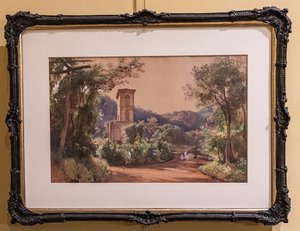
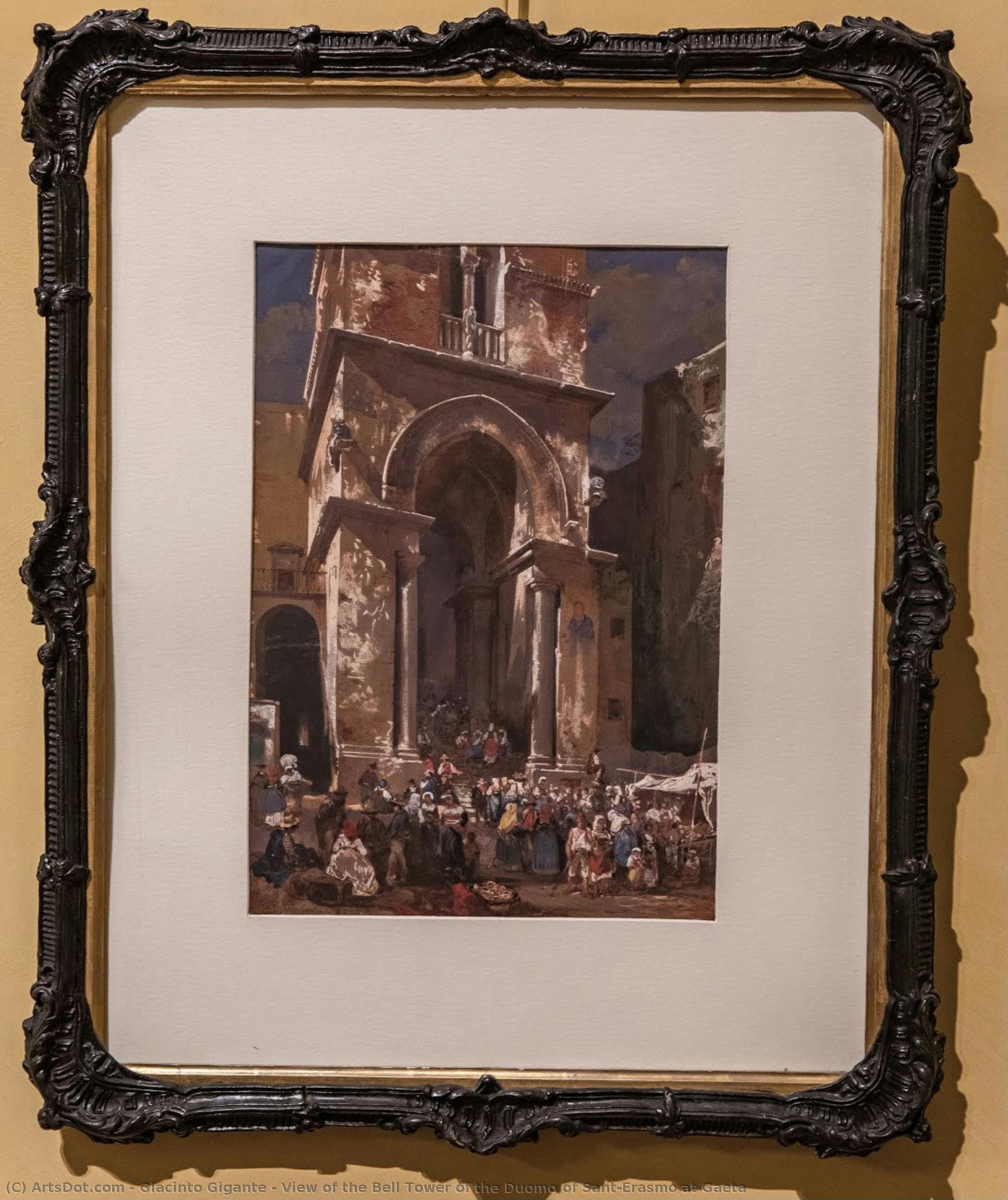
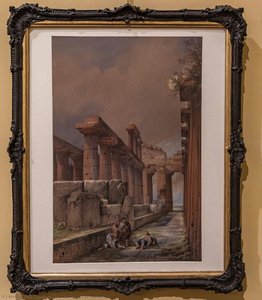
View of the Bell Tower of the Duomo of Sant’Erasmo at Gaeta


 Weiterlesen
Handgefertigte Ölreproduktion
Handgemaltes Ölgemälde auf Leinwand in Ihrer Wunschgröße und mit Rahmen, auf Bestellung von unseren Künstlern angefertigt. ( Druck bestellen Bild kaufen)




P118B $10

P118H $10

P118W $10

P438Z $10

P508JH $12

P508YH $12

P805H $10

P805Z $10

P919BZ $10

P919G $10

P919XJ $10

P959ZH $10

P968JZ $12

W106C $8

W218G $10

W218JH $8

W218Y $10

W307PJ $10

W316G $10

W316PJ $8

W316Y $10

W398PJ $8

W4111J $10

W500HY $15

W500JH $15

W692G $12

W849H $8

W940BG $15

W953PJ $8




Wählen Sie aus unseren vordefinierten Formaten, die den ursprünglichen Proportionen des Kunstwerks entsprechen.

Sie können Ihre eigenen Maße eingeben, um einen bestimmten Rahmen oder Platz auszufüllen. Wenn die gewählte Größe nicht den Proportionen des Originalbildes entspricht, werden wir das Kunstwerk entweder beschneiden oder das Gemälde durch zusätzliche, handgemalte Elemente erweitern. Ein digitales Mockup wird Ihnen zur Genehmigung zugesandt, bevor die Produktion beginnt.
Bitte beachten Sie, dass die Bildschirmvorschau nicht die tatsächliche Beschneidung oder Erweiterung widerspiegelt. Nur das Mockup zeigt die endgültige Komposition exakt an.
Obwohl Sondermaße verfügbar sind, empfehlen wir, eine Größe aus der vordefinierten Liste zu wählen, um die ursprünglichen Proportionen beizubehalten.
Nach der Bestellung wird das ArtsDot.com-Team dem Kunden Anweisungen per E-Mail zusenden und eine Mockup-Vorschau bereitstellen.
Weltweiter Versand () in nur 3 bis 4 Wochen statt der üblichen 5 Wochen. (7 September). Keine Kompromisse bei der Qualität.

Kostenloser weltweiter Expressversand

Hochwertige Leinenleinwand

Umfassender Versicherungsschutz beim Versand

Zollgebühren-Rückerstattungsgarantie

Garantie für exakte Farbtreue

100-Tage-Rückgaberecht (nur bei Mängeln)

100% Geld-zurück-Garantie

Mengenrabatt verfügbar
 Die Glasoption ist nur für Größen unter 110 cm verfügbar.

View of the Bell Tower of the Duomo of Sant’Erasmo at Gaeta
Art der Reproduktion
Format der Reproduktion
-


Gesamtpreis
$ 263
A Tranquil Glimpse into Neapolitan Life
Giacinto Gigante’s "View of the Bell Tower of the Duomo of Sant’Erasmo at Gaeta" transports the viewer to a moment suspended in time, capturing the serene rhythm of life around a sacred architectural centerpiece. This watercolor is more than just a depiction of a church; it is an immersion into the atmosphere of 19th-century Italian coastal community life. The Duomo itself stands as the steadfast anchor of the composition, its bell tower rising against the backdrop of Gaeta, suggesting permanence amidst the gentle flow of daily existence. One can almost hear the distant tolling of bells and feel the warm Mediterranean breeze carrying the scent of salt and stone.
Mastery of Light and Atmosphere
Gigante, a master deeply rooted in the traditions of Neapolitan painting, employed his skill to render light not merely as illumination, but as an emotional presence. The watercolor medium itself lends an ethereal quality to the scene; the washes of color allow the atmosphere to breathe around the figures and structures. Observe how the sunlight interacts with the pale stone of the church, creating subtle gradations of shadow that give the entire vista a palpable depth. His technique speaks to his rigorous training, blending the observational precision learned from masters like Jacob Wilhelm Hüber with the delicate handling characteristic of watercolorists.
The Human Element and Daily Ritual
What elevates this piece beyond mere architectural study is the inclusion of its inhabitants. The figures scattered near the church—some gathered in quiet conversation, others perhaps moving about their daily errands—lend a vital sense of narrative to the scene. They are not posed for posterity but seem caught mid-moment. The presence of the horse on the left adds a touch of rustic vitality, grounding the spiritual focus of the Duomo within the tangible reality of local commerce and movement. These details invite contemplation on community, routine, and the enduring relationship between humanity and faith.
A Timeless Echo for Modern Spaces
For the collector or designer seeking to infuse a space with history and soulful tranquility, this artwork offers profound resonance. Its palette—soft blues, warm ochres, and muted earth tones—is inherently calming, making it a perfect focal point for drawing rooms, studies, or coastal-inspired interiors. Owning a reproduction of this view allows one to curate a piece of Italian nostalgia, bringing the quiet dignity of an old Mediterranean town into a contemporary setting. It is a visual poem about peace, beautifully rendered by a master who understood how to capture not just what was seen, but what was felt.
Ähnliche Kunstwerke
Über den Künstler
Frühes Leben und Ausbildung
- Geboren: Neapel, Italien (1806)
- Gestorben: 1876
- Giacinto Gigante wurde 1806 in Neapel geboren. Er stammte aus einer Künstlerfamilie; sein Vater, Gaetano Gigante, war ebenfalls Maler.
- Die frühe Ausbildung begann um 1818 unter der Anleitung seines Vaters.
- Im Jahr 1820 studierte er bei dem deutschen Maler Jakob Wilhelm Hüber und lernte dabei technische Zeichnung und die Verwendung der "Camera lucida" für Panoramablicke.
- Ab 1821 absolvierte er eine Lehre beim niederländischen Maler Antonie Sminck Pitloo und entwickelte seine Fähigkeiten in der Landschaftsmalerei weiter.
Künstlerischer Stil und Einflüsse
- Posillipo-Schule: Gigante war ein wichtiger Vertreter der neapolitanischen "Posillipo-Schule" des Malens, die sich auf Landschaften und Außenansichten konzentrierte.
- Einflüsse: Sein Stil wurde von mehreren Künstlern beeinflusst, darunter Jacob Philipp Hackert, Antonie Sminck Pitloo und Huber. Er lernte Aquarelltechniken von Pitloo.
- Technische Zeichnung: Die Ausbildung am Royal Institute of Fine Arts betonte die technische Zeichnung, was seinen Ansatz zur Landschaftsdarstellung maßgeblich beeinflusste.
- Romantische Interpretation: Gigante verband technische Fähigkeiten mit einer romantischen Interpretation der Landschaften und fing Bewegung, Licht und Atmosphäre ein.
Karriere und bemerkenswerte Werke
- Frühe Anerkennung: Im Jahr 1823 gewann er einen Zeichenwettbewerb am Naples Royal Institute of Fine Arts.
- Ausstellungen: Er stellte Arbeiten auf der ersten Esposizione di Belle Arti im Jahr 1826 aus.
- Königliche Aufträge: Gigante erlangte Anerkennung und erhielt Aufträge von Adeligen, darunter die russische Zarin und die Töchter Franz II.
- Wichtige Werke: Seine bemerkenswerten Werke finden sich auf ArtsDot.com (@/giacinto%20gigante).
- Kapelle San Gennaro: Er fertigte ein Temperagemälde für die Kapelle San Gennaro in Capodimonte an, das im Jahr 1861 in Auftrag gegeben wurde.
Vermächtnis und historische Bedeutung
- Meister der italienischen Malerei: Gigante gilt als Meister der italienischen Landschaftsmalerei.
- Einfluss auf andere Künstler: Er beeinflusste Künstler wie Giulio Cesare Amidano und Andrea Landini.
- Beitrag zur Posillipo-Schule: Seine Arbeit trug dazu bei, die Ästhetik und Prinzipien der Posillipo-Schule zu definieren, wobei der Schwerpunkt auf dem Plein-Air-Malen und einer romantischen Interpretation von Landschaften lag.
- Technische Innovation: Gigantes geschickter Einsatz von Aquarelltechniken und seine Anpassung der Camera lucida trugen zu Fortschritten in der Landschaftsdarstellung bei.
Weitere Informationen
- Wikipedia: Giacinto Gigante - https://en.wikipedia.org/wiki/Giacinto_Gigante
- Web Gallery of Art: Biography of GIGANTE, Giacinto - https://www.wga.hu/bio_m/g/gigante/biograph.html
- Correale Museum Sorrento: Giacinto Gigante - https://www.museocorreale.it/en/artists/giacinto-gigante/
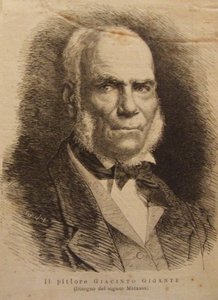
Giacinto Gigante
1806 - 1876 , Italien
Kurzinfos
- Beeinflusste Künstler:
- Jakob Wilhelm Hüber
- Antonie Sminck Pitloo
- Jacob Philipp Hackert
- Bemerkenswerte Werke:
- La veduta di Napoli
- La Tomba di Virgilio
- Geburtsdatum: 11. Juli 1806
- Geburtsort: Neapel, Italien
- Künstlerische Bewegung: Posillipo Schule
- Nationalität: Italienisch
- Sterbedatum: 29. November 1876
- Vollständiger Name: Giacinto Gigante
- Von Künstlern Beeinflusst:
- Giulio Cesare Amidano
- Andrea Landini
Ähnliche Artikel

Die 10 legendärsten Aquarellwerke der Kunstgeschichte – Meisterwerke für Ihr Zuhause
Entdecken Sie die 10 legendärsten Aquarellwerke der Kunstgeschichte! Von Turner bis Monet – erleben Sie die Geschichten, Techniken & Farben dieser Meisterwerke. Finden Sie hochwertige Kunstdrucke auf ArtsDot.com und gestalten Sie Ihr Zuhause mit zeitloser Eleganz.

Ephemeral Visions: Exploring the Artistic Legacy & Contemporary Practice of Watercolor Painting
Explore the captivating world of watercolor painting! Discover its rich history, essential techniques, influential artists & collecting tips. A comprehensive guide for art enthusiasts from ArtsDot.

Flüchtige Visionen: Die Geschichte und emotionale Resonanz der Aquarellmalerei
Entdecken Sie die faszinierende Welt der Aquarellmalerei! Von historischen Ursprüngen bis zu modernen Techniken – wir bieten Expertenwissen, Inspiration und Tipps für Anfänger & Fortgeschrittene.

Ephemeral Visions: Exploring the Artistic Legacy & Nuances of Watercolor Painting
Explore the captivating world of watercolor painting! Discover its rich history, essential techniques, influential artists & collecting tips from art experts. A comprehensive guide for enthusiasts.

Ephemeral Echoes: Exploring the Aesthetic & Historical Significance of Vintage Watercolor Painting
Explore the captivating world of vintage watercolor painting! Discover its rich history, techniques, influential artists & collecting tips. Expert insights for enthusiasts and collectors at ArtsDot.