

 Vorschau anzeigen
 Versenden
 Teilen
 Details anzeigen

 Herunterladen
 Ähnliche Objekte
 Röntgenaufnahme
 Diashow
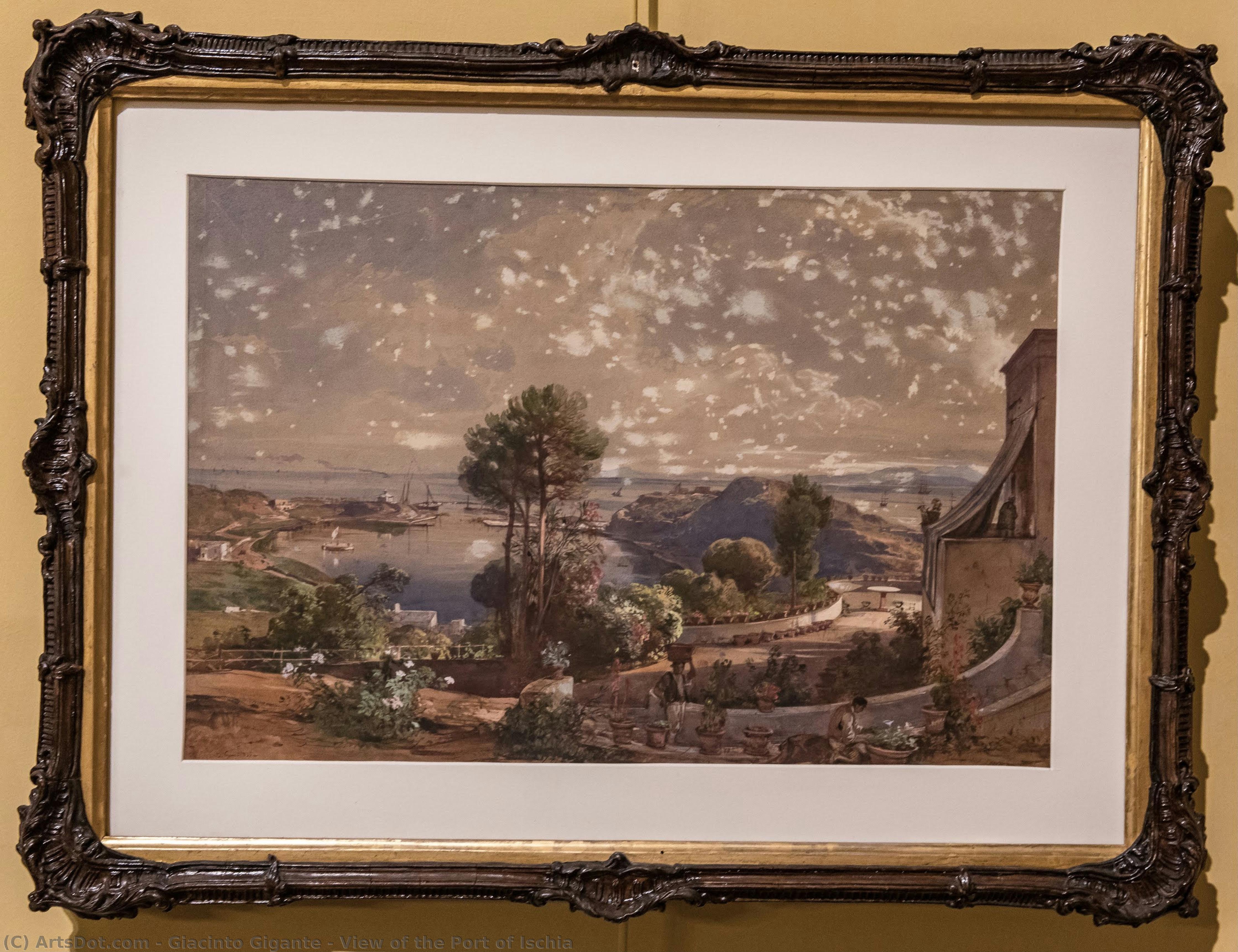
View of the Port of Ischia


 Weiterlesen
Erwerben Sie ein hochauflösendes, optimiertes digitales Bild, das der Online-Vorschau weit überlegen ist.
Jede Datei wird von unseren hauseigenen Spezialisten mit modernsten Werkzeugen und fachmännischer manueller Retusche sorgfältig vorbereitet. Wir stellen sicher, dass jedes Bild eine außergewöhnliche Klarheit, präzise Farbgenauigkeit und feinste Details aufweist.
Die endgültige Datei wird innerhalb von 72 Stunden per E-Mail zugestellt und ist für den sofortigen Einsatz in professionellen, redaktionellen und Druckumgebungen optimiert. Es handelt sich um dieselbe Qualität, der führende Designstudios, Verlage und Galerien vertrauen.
Digitales Bild
Laden Sie eine hochauflösende Datei für die persönliche Präsentation, den Druck und kreative Projekte herunter. ( Druck bestellen Handgemalte Reproduktion bestellen)
In jeder Bestellung digitaler Bilder enthalten
Professionelle digitale Bereitstellung, garantiert
Wenn Sie sich für ArtsDot.com entscheiden, erhalten Sie nicht nur ein Bild – Sie erhalten ein professionell aufbereitetes digitales Kunstwerk, das mit höchster Präzision erstellt und durch eine Zufriedenheitsgarantie abgesichert wird. Hier ist alles, was automatisch mit Ihrer Bestellung geliefert wird:

Schnelle E-Mail-Zustellung
Ihre hochauflösende digitale Bilddatei wird Ihnen innerhalb von 72 Stunden nach der Bestellung per E-Mail zugestellt – bereit zur sofortigen Verwendung.

KI-optimierte digitale Datei
Ihre Kunstwerke werden professionell mithilfe fortschrittlicher KI-Tools und manueller Bearbeitung optimiert, um maximale Detailtreue, Klarheit und Farbgenauigkeit zu gewährleisten.

Lebenslanger kostenloser Neudruckservice
Datei versehentlich gelöscht oder verloren? Keine Sorge – wir senden sie Ihnen jederzeit kostenlos erneut zu.

Keine Einfuhrgebühren – jemals
Genießen Sie Ihr Kunstwerk sofort ohne Zollgebühren, Einfuhrabgaben oder Versandkosten – digitale Downloads sind immer steuerfrei.

Garantierte Farbtreue
Wir garantieren, dass Ihr digitales Bild mithilfe professioneller Werkzeuge und Farbmanagement die Originalfarben so präzise wie möglich wiedergibt.

60-Tage-Zufriedenheitsgarantie
Sollten Sie mit Ihrem digitalen Bild nicht zufrieden sein, werden wir es überarbeiten oder Ihnen innerhalb von 60 Tagen 100% erstatten – ohne Wenn und Aber.

100% Geld-zurück-Garantie
Nicht zufrieden? Erhalten Sie innerhalb von 60 Tagen nach Erhalt Ihrer digitalen Datei eine vollständige Rückerstattung – ohne Angabe von Gründen.

Rabatte bei Großbestellungen
3 Bilder kaufen, 10% sparen – 5 Bilder kaufen, 15% sparen – Ab 10 Bildern 20% sparen. Ideal für kreative Projekte, Galerien und Agenturen.
A Window Into Naples’ Coastal Beauty: Exploring Giacinto Gigante's “View of the Port of Ischia”
The watercolor painting "View of the Port of Ischia" by Giacinto Gigante, completed in 1855, transcends mere depiction; it embodies the spirit of the Posillipo School and offers a captivating glimpse into Naples’ burgeoning maritime landscape during the reign of Ferdinando II. More than just capturing a harbor scene, Gigante's artwork speaks volumes about artistic innovation and the profound connection between artist and environment—a connection that continues to resonate with audiences today.The Poetic Precision of Atmospheric Perspective
Gigante’s mastery lies in his masterful manipulation of atmospheric perspective – a technique championed by Jacob Wilhelm Hüber and Antonie Sminck Pitloo during Gigante's formative years. Observing the coastline directly from Villa dè Bagni, Gigante skillfully employed the “camera lucida,” a device used to project an image onto paper, allowing him to accurately reproduce the hazy contours of distant hills against the azure expanse of the Tyrrhenian Sea. This meticulous approach wasn’t simply about technical accuracy; it was about conveying the very essence of Naples – its airiness, its vibrancy, and its breathtaking vistas. The subtle gradations of color create an illusion of depth that draws the viewer into the scene, fostering a feeling of immersion akin to standing on the shores of Ischia itself.A Reflection of Naples’ Industrial Transformation
The painting's subject matter – the newly constructed port of Ischia – reflects the significant industrial advancements occurring in Naples at the time. Ferdinando II commissioned this ambitious project to bolster the city’s economy and solidify its position as a major maritime hub. Gigante’s depiction captures not only the physical infrastructure but also the burgeoning activity surrounding it: boats bobbing gently on the water, figures bustling about their business, and even a bird soaring overhead—elements that contribute to the painting's lively atmosphere. This juxtaposition of natural beauty and industrial progress speaks to the broader cultural context of 1855 Naples – a city striving for modernization while retaining its artistic heritage.Symbolism Embedded in Color and Composition
Beyond its technical brilliance, “View of the Port of Ischia” is rich in symbolic undertones. Gigante’s palette leans heavily on blues and greens—colors traditionally associated with tranquility, openness, and connection to nature—underscoring the importance of observation and appreciation for the natural world. The placement of the bird – a symbol of freedom and aspiration – adds another layer of meaning, suggesting that Gigante wished to convey not just what he saw but also what he felt about Ischia’s beauty. Furthermore, the composition itself is carefully balanced, guiding the viewer's eye across the canvas and emphasizing the grandeur of the landscape.A Legacy Preserved at Capodimonte
Currently housed in the Palazzo di Capodimonte in Naples, Gigante’s masterpiece continues to inspire admiration for its artistic merit and historical significance. Its enduring appeal lies in its ability to transport viewers back to a pivotal moment in Italian art history—a testament to Gigante's dedication to capturing the sublime beauty of his surroundings and cementing his place as one of Naples’ most celebrated painters. Reproductions of “View of the Port of Ischia” offer collectors and interior designers alike an opportunity to experience this iconic artwork firsthand, bringing a touch of Neapolitan elegance and artistic vision into any space.Ähnliche Kunstwerke
Biografie des Künstlers
Frühes Leben und Ausbildung
- Geboren: Neapel, Italien (1806)
- Gestorben: 1876
- Giacinto Gigante wurde 1806 in Neapel geboren. Er stammte aus einer Künstlerfamilie; sein Vater, Gaetano Gigante, war ebenfalls Maler.
- Die frühe Ausbildung begann um 1818 unter der Anleitung seines Vaters.
- Im Jahr 1820 studierte er bei dem deutschen Maler Jakob Wilhelm Hüber und lernte dabei technische Zeichnung und die Verwendung der "Camera lucida" für Panoramablicke.
- Ab 1821 absolvierte er eine Lehre beim niederländischen Maler Antonie Sminck Pitloo und entwickelte seine Fähigkeiten in der Landschaftsmalerei weiter.
Künstlerischer Stil und Einflüsse
- Posillipo-Schule: Gigante war ein wichtiger Vertreter der neapolitanischen "Posillipo-Schule" des Malens, die sich auf Landschaften und Außenansichten konzentrierte.
- Einflüsse: Sein Stil wurde von mehreren Künstlern beeinflusst, darunter Jacob Philipp Hackert, Antonie Sminck Pitloo und Huber. Er lernte Aquarelltechniken von Pitloo.
- Technische Zeichnung: Die Ausbildung am Royal Institute of Fine Arts betonte die technische Zeichnung, was seinen Ansatz zur Landschaftsdarstellung maßgeblich beeinflusste.
- Romantische Interpretation: Gigante verband technische Fähigkeiten mit einer romantischen Interpretation der Landschaften und fing Bewegung, Licht und Atmosphäre ein.
Karriere und bemerkenswerte Werke
- Frühe Anerkennung: Im Jahr 1823 gewann er einen Zeichenwettbewerb am Naples Royal Institute of Fine Arts.
- Ausstellungen: Er stellte Arbeiten auf der ersten Esposizione di Belle Arti im Jahr 1826 aus.
- Königliche Aufträge: Gigante erlangte Anerkennung und erhielt Aufträge von Adeligen, darunter die russische Zarin und die Töchter Franz II.
- Wichtige Werke: Seine bemerkenswerten Werke finden sich auf ArtsDot.com (@/giacinto%20gigante).
- Kapelle San Gennaro: Er fertigte ein Temperagemälde für die Kapelle San Gennaro in Capodimonte an, das im Jahr 1861 in Auftrag gegeben wurde.
Vermächtnis und historische Bedeutung
- Meister der italienischen Malerei: Gigante gilt als Meister der italienischen Landschaftsmalerei.
- Einfluss auf andere Künstler: Er beeinflusste Künstler wie Giulio Cesare Amidano und Andrea Landini.
- Beitrag zur Posillipo-Schule: Seine Arbeit trug dazu bei, die Ästhetik und Prinzipien der Posillipo-Schule zu definieren, wobei der Schwerpunkt auf dem Plein-Air-Malen und einer romantischen Interpretation von Landschaften lag.
- Technische Innovation: Gigantes geschickter Einsatz von Aquarelltechniken und seine Anpassung der Camera lucida trugen zu Fortschritten in der Landschaftsdarstellung bei.
Weitere Informationen
- Wikipedia: Giacinto Gigante - https://en.wikipedia.org/wiki/Giacinto_Gigante
- Web Gallery of Art: Biography of GIGANTE, Giacinto - https://www.wga.hu/bio_m/g/gigante/biograph.html
- Correale Museum Sorrento: Giacinto Gigante - https://www.museocorreale.it/en/artists/giacinto-gigante/
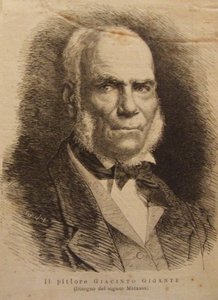
Giacinto Gigante
1806 - 1876 , Italien
Kurzinfos
- Beeinflusste Künstler:
- Jakob Wilhelm Hüber
- Antonie Sminck Pitloo
- Jacob Philipp Hackert
- Bemerkenswerte Werke:
- La veduta di Napoli
- La Tomba di Virgilio
- Geburtsdatum: 11. Juli 1806
- Geburtsort: Neapel, Italien
- Künstlerische Bewegung: Posillipo Schule
- Nationalität: Italienisch
- Sterbedatum: 29. November 1876
- Vollständiger Name: Giacinto Gigante
- Von Künstlern Beeinflusst:
- Giulio Cesare Amidano
- Andrea Landini

