

 Vorschau anzeigen
 Versenden
 Teilen
 Details anzeigen

 Herunterladen
 Ähnliche Objekte
 Röntgenaufnahme
 Diashow
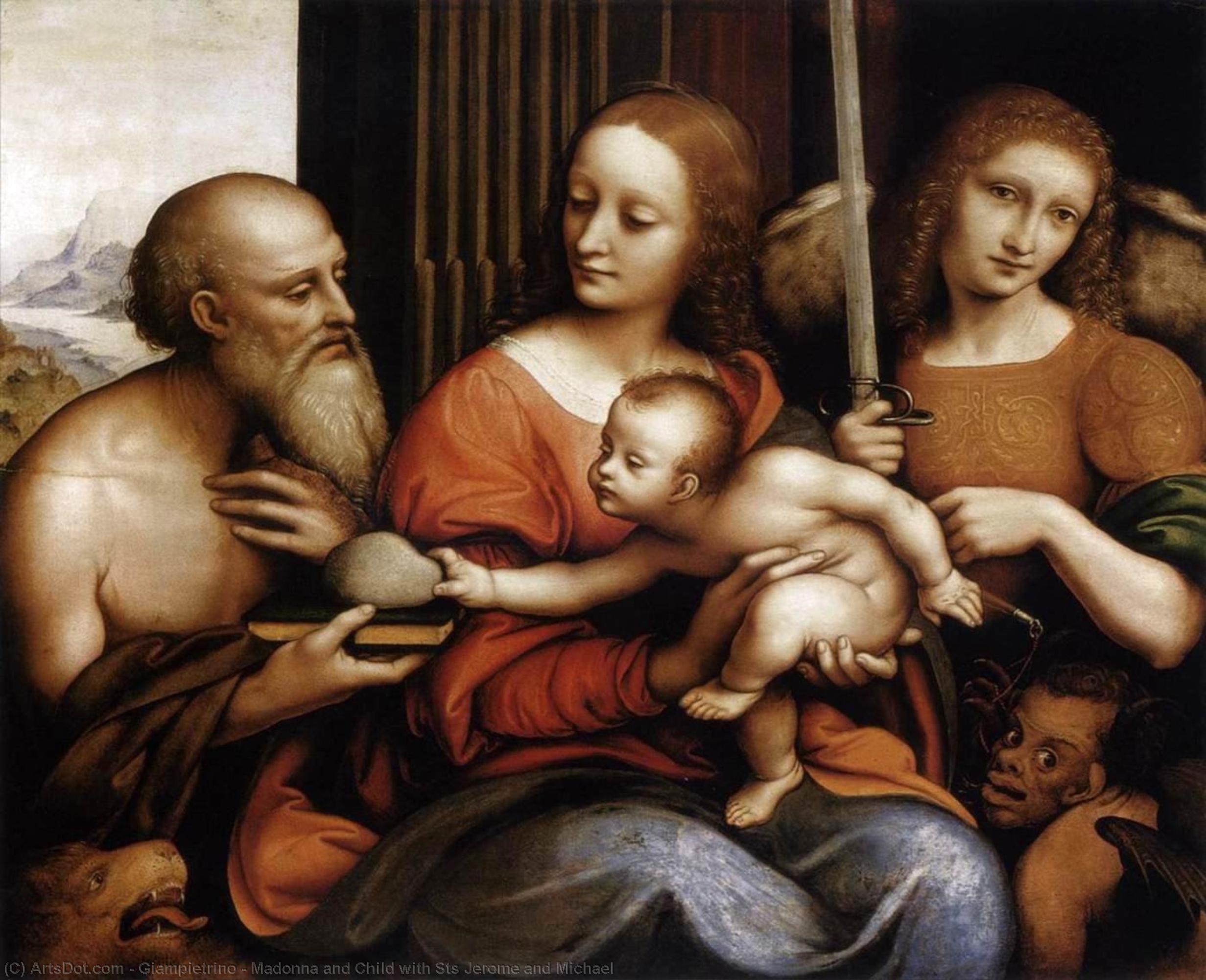
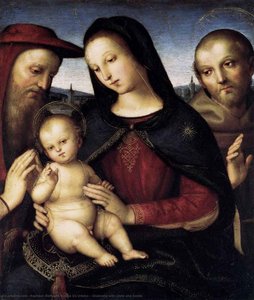
Madonna and Child with Sts Jerome and Michael
 Oil
Oil- WallArt
- High Renaissance
 1530
1530- Renaissance
 61.0 x 74.0 cm
 Szépművészeti Múzeum
 Weiterlesen
Erwerben Sie ein hochauflösendes, optimiertes digitales Bild, das der Online-Vorschau weit überlegen ist.
Jede Datei wird von unseren hauseigenen Spezialisten mit modernsten Werkzeugen und fachmännischer manueller Retusche sorgfältig vorbereitet. Wir stellen sicher, dass jedes Bild eine außergewöhnliche Klarheit, präzise Farbgenauigkeit und feinste Details aufweist.
Die endgültige Datei wird innerhalb von 72 Stunden per E-Mail zugestellt und ist für den sofortigen Einsatz in professionellen, redaktionellen und Druckumgebungen optimiert. Es handelt sich um dieselbe Qualität, der führende Designstudios, Verlage und Galerien vertrauen.
Digitales Bild
Laden Sie eine hochauflösende Datei für die persönliche Präsentation, den Druck und kreative Projekte herunter. ( Druck bestellen Handgemalte Reproduktion bestellen)
In jeder Bestellung digitaler Bilder enthalten
Professionelle digitale Bereitstellung, garantiert
Wenn Sie sich für ArtsDot.com entscheiden, erhalten Sie nicht nur ein Bild – Sie erhalten ein professionell aufbereitetes digitales Kunstwerk, das mit höchster Präzision erstellt und durch eine Zufriedenheitsgarantie abgesichert wird. Hier ist alles, was automatisch mit Ihrer Bestellung geliefert wird:

Schnelle E-Mail-Zustellung
Ihre hochauflösende digitale Bilddatei wird Ihnen innerhalb von 72 Stunden nach der Bestellung per E-Mail zugestellt – bereit zur sofortigen Verwendung.

KI-optimierte digitale Datei
Ihre Kunstwerke werden professionell mithilfe fortschrittlicher KI-Tools und manueller Bearbeitung optimiert, um maximale Detailtreue, Klarheit und Farbgenauigkeit zu gewährleisten.

Lebenslanger kostenloser Neudruckservice
Datei versehentlich gelöscht oder verloren? Keine Sorge – wir senden sie Ihnen jederzeit kostenlos erneut zu.

Keine Einfuhrgebühren – jemals
Genießen Sie Ihr Kunstwerk sofort ohne Zollgebühren, Einfuhrabgaben oder Versandkosten – digitale Downloads sind immer steuerfrei.

Garantierte Farbtreue
Wir garantieren, dass Ihr digitales Bild mithilfe professioneller Werkzeuge und Farbmanagement die Originalfarben so präzise wie möglich wiedergibt.

60-Tage-Zufriedenheitsgarantie
Sollten Sie mit Ihrem digitalen Bild nicht zufrieden sein, werden wir es überarbeiten oder Ihnen innerhalb von 60 Tagen 100% erstatten – ohne Wenn und Aber.

100% Geld-zurück-Garantie
Nicht zufrieden? Erhalten Sie innerhalb von 60 Tagen nach Erhalt Ihrer digitalen Datei eine vollständige Rückerstattung – ohne Angabe von Gründen.

Rabatte bei Großbestellungen
3 Bilder kaufen, 10% sparen – 5 Bilder kaufen, 15% sparen – Ab 10 Bildern 20% sparen. Ideal für kreative Projekte, Galerien und Agenturen.
Details zum Sammlerstück
A Divine Encounter in Lombardy
In the quiet, contemplative atmosphere of the early sixteenth century, the Italian Renaissance reached a peak of emotional intimacy and technical grace. Giampietrino, a master deeply embedded within the orbit of Leonardo da Vinci, captures this essence perfectly in his 1530 masterpiece, Madonna and Child with Sts Jerome and Michael. This painting is not merely a religious icon; it is a window into a celestial gathering where the earthly and the divine converge. The composition centers on the tender, maternal bond between Mary and the infant Jesus, yet the scene expands into a complex tapestry of saints and scholars, inviting the viewer to meditate on the layers of sanctity present in the work.
The painting’s subject matter is a profound study in devotion. As the eye wanders from the central figures, it encounters the rugged presence of Saint Jerome and the ethereal beauty of the Archangel Michael. The inclusion of books scattered throughout the composition serves as a brilliant symbolic bridge; they represent the wisdom of the Church Fathers and the intellectual rigor required to understand divine mysteries. This interplay between the physical weight of the scholarly texts and the weightless grace of the angelic figures creates a rhythmic tension that keeps the viewer’s gaze moving, discovering new details with every glance.
The Legacy of Leonardo's Circle
To understand the technique behind this work, one must look to Giampietrino’s lineage. As an artist often described as an "exploiter of Leonardo's repertory," he utilized the sfumato technique—that smoky, seamless transition between light and shadow—to breathe life into his subjects. In this piece, the soft modeling of the Madonna’s face and the delicate skin tones of the Christ child reflect a profound mastery of light. The shadows are not merely dark patches but are deep, atmospheric veils that provide volume and a sense of palpable reality to the figures.
The Lombard school's influence is evident in the rich, saturated palette and the meticulous attention to texture. From the heavy, dignified drapery of the saints to the intricate details of the background elements, every brushstroke serves to ground the spiritual subject in a tangible world. For the collector or interior designer, this painting offers more than just aesthetic beauty; it provides a sense of historical gravity. The way the light catches the edges of the figures creates a luminous quality that can transform a room, acting as a focal point that commands respect and invites quiet reflection.
An Eternal Presence for the Modern Collector
Integrating a high-quality reproduction of such a significant work into a contemporary space allows for a unique dialogue between history and modernity. Whether placed in a grand library, a formal dining room, or a curated gallery wall, Madonna and Child with Sts Jerome and Michael brings an air of timeless sophistication. The emotional impact of the piece lies in its ability to evoke peace; there is a stillness in the figures' expressions that counters the frantic pace of modern life.
For those seeking to adorn their homes with art that tells a story, this work offers a wealth of narrative depth. It is an investment in atmosphere. The subtle interplay of the holy figures, the scholarly symbols, and the masterful use of light ensures that the painting remains a captivating conversation piece for generations. Owning a reproduction of Giampietrino’s vision is an opportunity to surround oneself with the enduring elegance of the Italian Renaissance, bringing a touch of the sacred into the heart of the home.
Ähnliche Kunstwerke

Biografie des Künstlers
The Shadow of the Master: The Life and Legacy of Giampietrino
In the vibrant, transformative atmosphere of the Italian Renaissance, few artists captured the lingering essence of a legend as effectively as Giampietrino. Known to history by his more formal name, Giovanni Pietro Rizzoli, this North Italian painter emerged from the Lombard school during a period when the stylistic innovations of Leonardo da Vinci were sweeping through the peninsula. While much of his early life remains shrouded in the mists of time, his presence is indelibly etched into the annals of art history through his profound connection to Leonardo's circle. For decades, the artist was a phantom, known only by the moniker "Giampietrino" found in studio records, until scholars eventually linked this talented hand to the documented life of Rizzoli.
To study Giampietrino is to witness a masterful dialogue with greatness. He was often described by art historians as an "exploiter of Leonardo's repertory," a phrase that suggests not merely a follower, but a sophisticated interpreter of the High Renaissance style. His work serves as a vital bridge, helping to disseminate the subtle complexities of Leonardo’s late techniques—such as sfumato and the delicate interplay of light and shadow—to a wider audience across Lombardy and beyond. He did not simply mimic his predecessor; rather, he absorbed the master's vocabulary to create a body of work that felt both familiar in its grace and distinct in its execution.
A Tapestry of Devotion and Myth
The breadth of Giampietrino’s oeuvre is as impressive as it is varied, ranging from monumental altarpieances to intimate, evocative portraits. He possessed a remarkable ability to navigate between the sacred and the profane, moving seamlessly from the tender, maternal warmth of his Madonnas to the dramatic, tragic allure of mythological figures. His religious compositions, such as the Madonna with Child, are celebrated for their serene beauty and an exquisite attention to detail that captures a sense of timeless grace. In these works, one finds a profound emotional depth, where the soft rendering of flesh and the gentle gaze of the Virgin evoke a deep sense of piety and peace.
Beyond the altar, Giampietrino’s imagination flourished in the realm of classical legend. He was particularly adept at depicting powerful, singular women, imbuing them with a psychological complexity that foreshadowed later Renaissance developments. His explorations of figures such as Cleopatra and Mary Magdalene allow viewers to experience the fusion of Greek and Egyptian aesthetics through a Lombard lens. In his depiction of The Death of Cleopatra, for instance, the artist captures a tragic, cinematic quality, utilizing rich textures and a dramatic palette to tell a story of fallen royalty and enduring sorrow.
Artistic Evolution and Historical Significance
As Giampietrino’s career progressed through his active years between 1495 and 1549, his personal style began to assert itself more clearly against the heavy influence of his mentors. While he remained a faithful student of Leonardo's forms, contemporary observers noted a characteristic use of paler skin tones, a stylistic choice that lent his figures a luminous, almost ethereal quality. This subtle departure from the more robust shadows of the Leonardeschi allowed his work to possess a unique, delicate brilliance that became a hallmark of his mature period.
The historical significance of Giampietrino lies in his role as a cultural conduit. Through his prolific output—often producing multiple versions of the same subject—he ensured that the aesthetic revolution of the late 15th century reached every corner of the Italian landscape. His legacy is found not only in the surviving masterpieces housed in prestigious institutions like The Hermitage and the Uffizi Gallery but also in the way he helped define the visual language of the Lombard school. He remains a testament to the power of artistic continuity, proving that even those working in the shadow of giants can leave an indelible mark upon the light of history.
Giampietrino
1495 - 1549

