 Vorschau anzeigen
 Versenden
 Teilen
 Details anzeigen

 Herunterladen
 Ähnliche Objekte
 Röntgenaufnahme
 Diashow
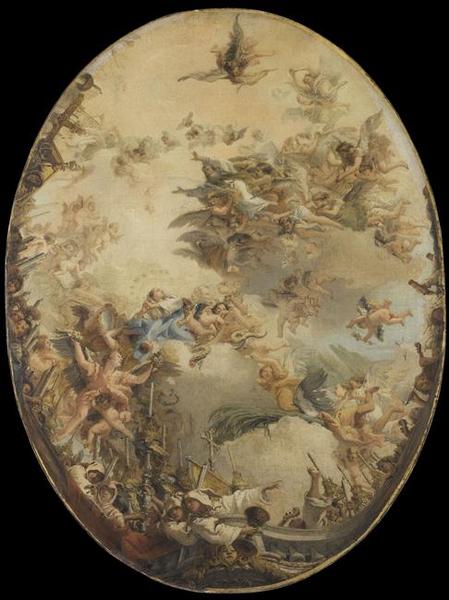
LE TRIOMPHE DE LA RELIGION


 Weiterlesen
Handgefertigte Ölreproduktion
Handgemaltes Ölgemälde auf Leinwand in Ihrer Wunschgröße und mit Rahmen, auf Bestellung von unseren Künstlern angefertigt. ( Druck bestellen Bild kaufen)




P118B $10

P118H $10

P118W $10

P438Z $10

P508JH $12

P508YH $12

P805H $10

P805Z $10

P919BZ $10

P919G $10

P919XJ $10

P959ZH $10

P968JZ $12

W106C $8

W218G $10

W218JH $8

W218Y $10

W307PJ $10

W316G $10

W316PJ $8

W316Y $10

W398PJ $8

W4111J $10

W500HY $15

W500JH $15

W692G $12

W849H $8

W940BG $15

W953PJ $8




Wählen Sie aus unseren vordefinierten Formaten, die den ursprünglichen Proportionen des Kunstwerks entsprechen.

Sie können Ihre eigenen Maße eingeben, um einen bestimmten Rahmen oder Platz auszufüllen. Wenn die gewählte Größe nicht den Proportionen des Originalbildes entspricht, werden wir das Kunstwerk entweder beschneiden oder das Gemälde durch zusätzliche, handgemalte Elemente erweitern. Ein digitales Mockup wird Ihnen zur Genehmigung zugesandt, bevor die Produktion beginnt.
Bitte beachten Sie, dass die Bildschirmvorschau nicht die tatsächliche Beschneidung oder Erweiterung widerspiegelt. Nur das Mockup zeigt die endgültige Komposition exakt an.
Obwohl Sondermaße verfügbar sind, empfehlen wir, eine Größe aus der vordefinierten Liste zu wählen, um die ursprünglichen Proportionen beizubehalten.
Nach der Bestellung wird das ArtsDot.com-Team dem Kunden Anweisungen per E-Mail zusenden und eine Mockup-Vorschau bereitstellen.
Weltweiter Versand () in nur 3 bis 4 Wochen statt der üblichen 5 Wochen. (19 August). Keine Kompromisse bei der Qualität.

Kostenloser weltweiter Expressversand

Hochwertige Leinenleinwand

Umfassender Versicherungsschutz beim Versand

Zollgebühren-Rückerstattungsgarantie

Garantie für exakte Farbtreue

60 Tage Rückgaberecht (nur bei Mängeln)

100% Geld-zurück-Garantie

Mengenrabatt verfügbar
 Die Glasoption ist nur für Größen unter 110 cm verfügbar.

LE TRIOMPHE DE LA RELIGION
Art der Reproduktion
Format der Reproduktion
-


Gesamtpreis
$ 613
Beschreibung des Kunstwerks
A Grandiose Allegory: Giandomenico Tiepolo’s “Le Triomphe de la Religion”
Giandomenico Tiepolo's "Le Triomphe de la Religion" is not merely a painting; it’s an immersive theatrical experience, a swirling vortex of figures and symbolism that transports the viewer to a realm where faith reigns supreme. Completed around 1760 for the Palazzo Labia in Venice, this monumental work embodies the height of Rococo artistry – a dazzling blend of dynamism, opulence, and profound theological contemplation. It’s a testament to Tiepolo's mastery of composition, his ability to capture movement and emotion with breathtaking precision, and his deep understanding of classical and Christian iconography.
Theatrical Composition and Dynamic Movement
The painting’s immediate impact lies in its overwhelming sense of movement. Tiepolo orchestrates a chaotic yet controlled scene, populated by hundreds of figures engaged in a complex dance of triumph. Angels, clad in shimmering gold and flowing robes, ascend amidst swirling clouds – not static forms, but active participants in the divine procession. Below them, a vibrant battle unfolds: soldiers, both human and angelic, clash with what appears to be a force of darkness, perhaps representing heresy or earthly opposition. The composition is deliberately shallow, creating a sense of immediacy and drawing the viewer directly into this tumultuous spectacle. The use of diagonal lines, particularly in the arrangement of figures and drapery, further enhances the feeling of dynamism, as if the entire scene is caught in a perpetual state of motion.
Color, Light, and Symbolism
Tiepolo’s palette is rich and warm, dominated by earthy tones – ochres, siennas, and browns – overlaid with shimmering gold accents. These colors evoke a sense of age and history, suggesting that this is not merely a depiction of a contemporary event but rather an allegory rooted in centuries of Christian tradition. Light plays a crucial role, emanating from multiple sources within the scene itself, bathing figures in a golden glow and highlighting key elements – the radiant halos of angels, the gleaming armor of soldiers. Symbolism abounds throughout the work. The presence of trumpets signifies divine proclamation; the banners bear emblems of faith and victory; and the very act of battle represents the ongoing struggle between good and evil. The composition itself can be interpreted as a visual representation of the Christian narrative – the triumph of Christ over sin and death.
A Masterpiece of Rococo Technique
Technically, “Le Triomphe de la Religion” is a remarkable achievement. Tiepolo employed oil paints on canvas with meticulous detail, layering colors to create depth and luminosity. His brushwork is generally smooth and blended, contributing to the painting’s overall sense of grandeur and refinement. The artist skillfully utilized techniques such as glazing – applying thin layers of translucent paint over dried underlayers – to achieve subtle color variations and atmospheric effects. The illusionistic quality of the scene—the depth, the movement, the sheer number of figures—is a testament to Tiepolo’s mastery of perspective and his ability to create a convincing sense of space. The painting's scale (approximately 360 cm x 480 cm) further enhances its impact, enveloping the viewer in its dramatic world.
A Legacy of Baroque Grandeur
“Le Triomphe de la Religion” stands as a pinnacle of Tiepolo’s career and a quintessential example of Rococo art. It reflects the era's fascination with mythology, allegory, and theatrical spectacle, while also drawing upon classical artistic traditions. The painting’s influence can be seen in subsequent generations of artists, and it continues to captivate viewers today with its sheer scale, dramatic composition, and profound symbolic meaning. Reproductions offer a remarkable opportunity to experience the beauty and power of this monumental work, bringing its vibrant world into any space.
Ähnliche Kunstwerke
Über den Künstler
Giandomenico Tiepolo: Venetian Painter of Myth and Movement
Giovanni Domenico Tiepolo (1727 – 1804) stands as a pivotal figure in the Rococo artistic landscape, inextricably linked to the legacy of his father, Giovanni Battista Tiepolo—a titan whose frescoes graced palaces across Europe. Born in Venice, Tiepolo’s artistic journey began under the watchful eye of his renowned progenitor, absorbing techniques and sensibilities that would define his own distinctive style. This formative influence is palpable throughout his oeuvre, characterized by a masterful blend of decorative grandeur and nuanced observation of human experience. Giovanni Domenico's artistic development was profoundly shaped by his father's groundbreaking approach to fresco painting—specifically, the invention of “oil sketch,” a technique that allowed for greater flexibility in capturing fleeting moments and conveying emotion. This method ensured that Tiepolo’s canvases retained an immediacy and vibrancy rarely achieved by contemporaries. He diligently assisted Giovanni Battista on ambitious projects like the Städelses Kunstinstitut frescoes depicting scenes from Virgil's Aeneas—a testament to his dedication and understanding of artistic innovation. Collaborations extended beyond mere technical support; Domenico absorbed his father’s philosophical perspective, fostering a deep appreciation for storytelling and visual drama. His career spanned across several prominent locations, including Wurzburg (1751-3), where he undertook the monumental task of decorating the Stairwell fresco—a project that cemented his reputation as a prodigious artist. Subsequently, he traveled to Vicenza’s Villa Valmarana, contributing significantly to its opulent interiors and furthering his exploration of mythological narratives. Madrid witnessed Tiepolo's involvement in the Royal Palace from 1762-70, where he produced breathtaking canvases reflecting the grandeur of Spanish Habsburg rule. The Influence of Giovanni Battista Tiepolo: Giovanni Battista Tiepolo revolutionized fresco painting with his “oil sketch” method, prioritizing emotional expression and capturing transient moments—a departure from traditional techniques that profoundly impacted his son’s artistic vision. Domenico internalized his father's humanist ideals, emphasizing narrative depth and dramatic visual impact. This transmission of artistic knowledge ensured that Giovanni Domenico’s work retained a dynamism and sensitivity unmatched by many of his contemporaries. Venetian Style & Symbolism: Tiepolo’s Venetian style is instantly recognizable for its opulent ornamentation, vibrant color palettes, and masterful illusionistic perspective—characteristics emblematic of the Rococo movement. His paintings frequently incorporated mythological themes, reflecting the humanist spirit of Venice during the Enlightenment, and imbued with symbolic references to classical antiquity and Christian faith. Recurring motifs included garlands of flowers, architectural grandeur, and idealized figures conveying moral virtue. Notable Commissions & Artistic Development: Giovanni Domenico’s artistic trajectory was marked by significant commissions—most notably the Stairwell fresco in Wurzburg and the Villa Valmarana interiors—which showcased his technical prowess and imaginative vision. He skillfully blended classical influences with Venetian traditions, creating artworks that captivated audiences and established him as a leading artist of his time. His meticulous attention to detail and compositional balance elevated his paintings beyond mere decoration, transforming them into powerful visual narratives. Legacy and Historical Significance: Giandomenico Tiepolo’s enduring legacy resides in his contribution to the Rococo artistic canon—a movement celebrated for its elegance, dynamism, and expressive power. He remains a pivotal figure in Venetian art history, embodying the spirit of innovation and humanist idealism that defined the eighteenth century. His paintings continue to inspire admiration for their beauty and intellectual depth, securing his place as one of the most influential artists of his era. Giovanni Domenico Tiepolo’s artistic output encompassed a remarkable range of subjects—from biblical scenes and mythological tales to portraits capturing the spirit of Venetian society. His canvases pulsate with movement, color, and carefully considered composition, reflecting his mastery of Rococo aesthetics. The Saint Ambrosius painting exemplifies this stylistic hallmark, portraying St. Ambrose in a dynamic pose amidst an elaborate architectural setting. Similarly, “The Agony in the Garden” captures the emotional intensity of biblical drama with remarkable precision. His depictions of Punchinello—the iconic character from Commedia dell’arte—are particularly noteworthy for their expressive portrayal of human interaction and theatrical flair.- Key Paintings:
- Technique & Style Characteristics:
- Recurring Themes & Symbolism:
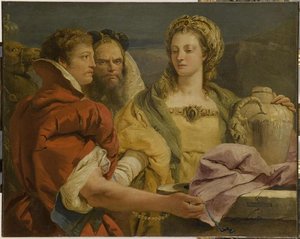
Giandomenico Tiepolo
1727 - 1804 , Italien
Kurzinfos
- Artistic Movement Or Style: Rokoko
- Artists Who Influenced This Artist: ['Giovanni Battista Tiepolo']
- Date Of Birth: 1727
- Full Name: Giovanni Domenico Tiepolo
- Nationality: Italienisch
- Notable Artworks:
- Die Agonie im Garten
- Untitled (AQR3XQ)
- St. Ambrosius Ansprache St. Augustinus
- Place Of Birth: Venice, Italien
Ähnliche Artikel
Giambattista Tiepolo: Licht und Illusion – Das Vermächtnis eines Rokoko-Meisters
Entdecken Sie das Vermächtnis Giambattista Tiepolos! Erfahren Sie mehr über den Meister des Rokoko, seine Fresken und seinen einzigartigen Stil. Kunsthistorische Analyse & Expertenwissen auf ArtsDot.

Jacopo Tintoretto: Die 25 Meisterwerke des venezianischen Dramatikers | ArtsDot
Entdecken Sie die 25 Meisterwerke von Jacopo Tintoretto! Tauchen Sie ein in die dramatische Welt der venezianischen Renaissance. Hochwertige Kunst-Reproduktionen & Inspiration für Ihr Zuhause – jetzt auf ArtsDot.com.
Pietro Longhi's Venetian Scenes: A Study of Rococo Society & Domestic Life
Explore the captivating world of Pietro Longhi's Venetian scenes! Discover insightful analysis of his Rococo masterpieces & social commentary on 18th-century life. Learn about this 'Venetian Hogarth' and his lasting artistic legacy.

Rococo Meisterwerke: Die Top 10, die eine Epoche prägten |
Entdecken Sie die Top 10 Rokoko Meisterwerke von Watteau, Boucher & Fragonard! Erfahren Sie die Geschichten hinter diesen ikonischen Gemälden und lassen Sie sich für Ihre Inneneinrichtung inspirieren. Hochwertige Kunstdrucke auf .

The Rococo Aesthetic: Opulence, Rebellion & the Pursuit of Pleasure in 18th-Century Art
Explore the opulent world of Rococo art! Discover its origins, key artists like Watteau & Boucher, and lasting influence on design. Expert insights for collectors & enthusiasts.