 Vorschau anzeigen
 Versenden
 Teilen
 Details anzeigen

 Herunterladen
 Ähnliche Objekte
 Röntgenaufnahme
 Diashow
 Statistiken
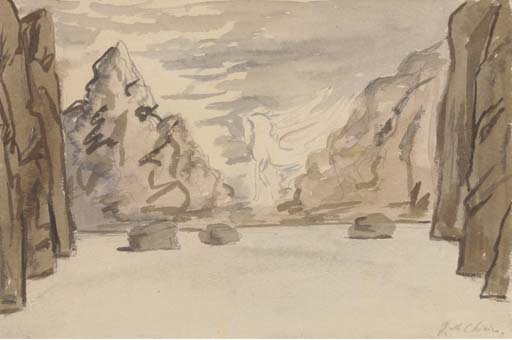
Scena per il Teatro di Atene 1


 Weiterlesen
Handgefertigte Ölreproduktion
Handgemaltes Ölgemälde auf Leinwand in Ihrer Wunschgröße und mit Rahmen, auf Bestellung von unseren Künstlern angefertigt. ( Zu Druck wechseln Zum digitalen Bild wechseln)




P118B $10

P118H $10

P118W $10

P438Z $10

P508JH $12

P508YH $12

P805H $10

P805Z $10

P919BZ $10

P919G $10

P919XJ $10

P959ZH $10

P968JZ $12

W106C $8

W218G $10

W218JH $8

W218Y $10

W307PJ $10

W316G $10

W316PJ $8

W316Y $10

W398PJ $8

W4111J $10

W500HY $15

W500JH $15

W692G $12

W849H $8

W940BG $15

W953PJ $8




Wählen Sie aus unseren vordefinierten Formaten, die den ursprünglichen Proportionen des Kunstwerks entsprechen.

Sie können Ihre eigenen Maße eingeben, um einen bestimmten Rahmen oder Platz auszufüllen. Wenn die gewählte Größe nicht den Proportionen des Originalbildes entspricht, werden wir das Kunstwerk entweder beschneiden oder das Gemälde durch zusätzliche, handgemalte Elemente erweitern. Ein digitales Mockup wird Ihnen zur Genehmigung zugesandt, bevor die Produktion beginnt.
Bitte beachten Sie, dass die Bildschirmvorschau nicht die tatsächliche Beschneidung oder Erweiterung widerspiegelt. Nur das Mockup zeigt die endgültige Komposition exakt an.
Obwohl Sondermaße verfügbar sind, empfehlen wir, eine Größe aus der vordefinierten Liste zu wählen, um die ursprünglichen Proportionen beizubehalten.
Nach der Bestellung wird das ArtsDot.com-Team dem Kunden Anweisungen per E-Mail zusenden und eine Mockup-Vorschau bereitstellen.
Weltweiter Versand () in nur 3 bis 4 Wochen statt der üblichen 5 Wochen. (8 September). Keine Kompromisse bei der Qualität.

Kostenloser weltweiter Expressversand

Hochwertige Leinenleinwand

Umfassender Versicherungsschutz beim Versand

Zollgebühren-Rückerstattungsgarantie

Garantie für exakte Farbtreue

100-Tage-Rückgaberecht (nur bei Mängeln)

100% Geld-zurück-Garantie

Mengenrabatt verfügbar
 Die Glasoption ist nur für Größen unter 110 cm verfügbar.

Scena per il Teatro di Atene 1
Art der Reproduktion
Format der Reproduktion
-


Gesamtpreis
$ 263
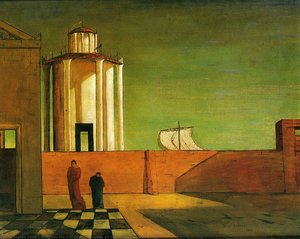
A Dreamscape of Antiquity: De Chirico’s *Scena per il Teatro di Atene 1*
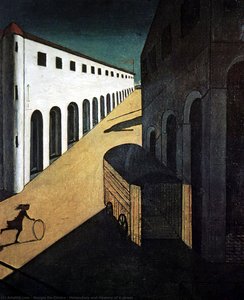
Giorgio de Chirico's *Scena per il Teatro di Atene 1*, a work often referred to as *Tempio*, is not merely a depiction of a classical Greek theatre; it’s an intensely evocative exploration of memory, alienation, and the unsettling beauty of the subconscious. Painted in 1937, during a period of profound personal and artistic transformation for the artist, this black-and-white composition transcends simple landscape painting, becoming a potent symbol of the anxieties inherent within modern existence. De Chirico, born in Volos, Greece, to Italian parents, possessed an early grounding in traditional academic techniques, yet it was his encounter with the burgeoning currents of European thought – particularly the philosophies of Nietzsche and Schopenhauer – that truly shaped his unique artistic vision. He sought to capture not just what he saw, but the *feeling* of seeing, a sensation he believed lay beneath the surface of reality.A World of Disjunction: Composition and Technique
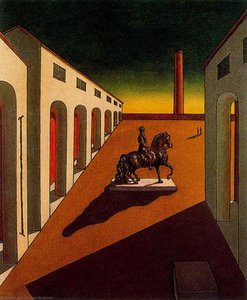
The painting immediately arrests the viewer with its unsettling spatial arrangement. The theatre itself is presented in a flattened perspective, devoid of traditional depth cues, creating an immediate sense of disorientation. Towering, vaguely menacing mountains dominate the background, their snow-capped peaks hinting at both grandeur and isolation. Scattered amongst them are sparse trees, rendered with meticulous detail yet contributing to the overall feeling of emptiness. A solitary boat rests on the water – a small point of contrast against the vastness of the landscape, perhaps representing human endeavor adrift in an indifferent universe. De Chirico’s technique is characterized by precise, almost photographic realism combined with deliberately skewed proportions and unsettling juxtapositions. The stark black-and-white palette amplifies this effect, stripping away color and focusing attention on form and shadow, further enhancing the painting's dreamlike quality. He employed a meticulous layering of paint, building up textures and details that invite close examination, revealing an underlying complexity beneath the seemingly simple surface.Symbolism and Philosophical Resonance
*Scena per il Teatro di Atene 1* is rich in symbolic meaning, deeply rooted in de Chirico’s philosophical concerns. The theatre itself represents a space of both performance and memory – a stage for human drama yet also a repository of the past. The solitary statue, positioned centrally within the scene, is particularly significant. Often interpreted as a representation of classical ideals or even a mannequin-like figure, it embodies an unsettling sense of detachment and artificiality. It’s a fragment of antiquity, seemingly disconnected from the present, mirroring de Chirico's own feelings about the loss of tradition in modern society. The boat on the water can be seen as a symbol of human ambition, struggling against the overwhelming forces of nature – or perhaps simply adrift in a world devoid of purpose. The overall composition evokes a sense of *déjà vu*, a feeling of having encountered this scene before but unable to recall its origin, reflecting de Chirico’s fascination with the subconscious and the power of memory.Influences and Legacy
De Chirico's work is inextricably linked to the broader artistic movements of his time, most notably Surrealism, though he predates its formal establishment. However, *Scena per il Teatro di Atene 1* stands apart as a distinctly “pre-Surrealist” expression – retaining a rigorous attention to detail and a classical sensibility that distinguishes it from the more overtly dreamlike works of later Surrealists like Magritte or Dalí. He was profoundly influenced by Arnold Böcklin’s evocative landscapes and Max Klinger's symbolic prints, as well as the philosophical writings of Nietzsche, Schopenhauer, and Weininger, which explored themes of existentialism, irrationality, and the subjective nature of reality. *Scena per il Teatro di Atene 1* is a testament to de Chirico’s ability to synthesize these diverse influences into a uniquely personal and profoundly unsettling vision. It remains a cornerstone of his oeuvre, exemplifying his enduring exploration of the intersection between memory, alienation, and the enigmatic beauty of the subconscious.Bringing *Scena per il Teatro di Atene 1* Home
ArtsDot offers meticulously crafted hand-painted reproductions of Giorgio de Chirico’s *Scena per il Teatro di Atene 1*, allowing you to experience the depth and complexity of this iconic artwork in your own space. Our skilled artists faithfully recreate de Chirico's distinctive style, capturing the painting's unsettling atmosphere and symbolic richness with exceptional detail. Choose from a range of sizes and framing options to perfectly complement your interior design. Whether you are an art collector, an admirer of Surrealism, or simply seeking a piece that evokes contemplation and wonder, a reproduction of *Scena per il Teatro di Atene 1* is sure to be a captivating addition to your collection.Ähnliche Kunstwerke
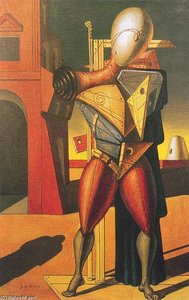
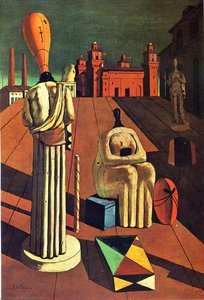

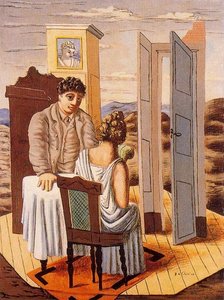
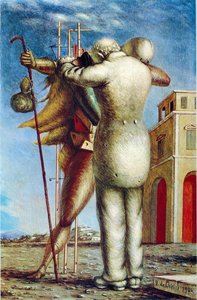
Über den Künstler
frühes Leben und Einflüsse
Giorgio de Chirico, ein renommierter italienischer Künstler, wurde am 10. Juli 1888 in Volos, Griechenland, geboren, der Mutter war eine Genueserin und der Vater sizilianisch. Sein frühes Leben war geprägt von der Beschäftigung mit Kunst an der Athener Polytechnik unter der Anleitung griechischer einflussreicher Maler Georgios Roilos und Georgios Jakobides. Diese Grundlage prägte später seinen einzigartigen künstlerischen Stil.Die Metaphysche Kunstbewegung
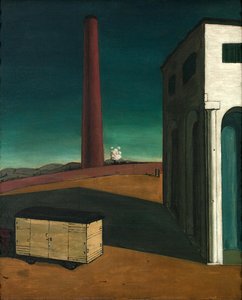
Im Jahr 1910 gründete de Chirico die Metaphysche Kunstbewegung, die den Surrealisten nachhaltig beeinflusste. Seine Werke aus dieser Zeit, die von unheimlichen Stimmungen und traumhaften Szenarien geprägt sind, werden in Gemälden wie die Verwirrungen des Denkers (verfügbar auf ArtsDot's Plattform) und das Rätsel der Stunde (anschaulich auf ArtsDot) dargestellt. Diese Werke erwecken ein Gefühl von Geheimnis, oft mit scharfen Kontrasten von Licht und Schatten.Postmetaphysche Periode
Nach 1919 verschob sich de Chiricos Interesse hin zu traditionellen Maltechniken und übernahm einen neoklassischen oder neobarocken Stil. Diese Veränderung ist in seinen späteren Werken erkennbar, die zwar nicht die gleiche Kritikerlob wie seine früheren Werke erhielten, aber eine reife Entwicklung in seinem künstlerischen Ansatz demonstrieren.Vermächtnis und Einfluss
De Chiricos Einfluss auf den Surrealismus ist unbestreitbar, wobei Künstler wie André Breton von seinen metaphysischen Gemälden beeinflusst wurden. Obwohl sein späteres Werk nicht so breit gefeiert wurde, bleibt de Chirico eine zentrale Figur in der Geschichte der modernen Kunst. Sein Vermächtnis inspiriert weiterhin, und seine Werke sind in Sammlungen auf der ganzen Welt zu finden, darunter das Museum von Giorgio de Chirico, das sich in der Nähe der Spanischen Treppe in Rom befindet.- Erforsche mehr Werke von Giorgio de Chirico auf ArtsDot
- Entdecke die Metaphysche Kunstbewegung und ihren Einfluss auf Surrealismus durch dieses informative Artikel auf ArtsDot
- Lerne mehr über de Chiricos Leben und Werke auf Wikipedia
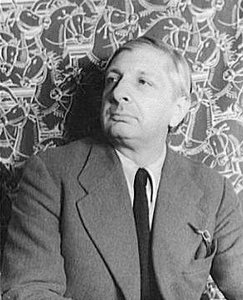
Giorgio de Chirico
1888 - 1978 , Griechenland
Kurzinfos
- Beeinflusste Künstler: ['André Breton']
- Bemerkenswerte Werke:
- Die Verwirrungen des Denkers
- Das Rätsel der Stunde
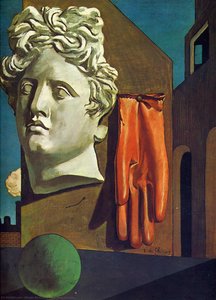
- Das Lied der Liebe
- Geburtsdatum: 10. Juli 1888
- Geburtsort: Volos, Griechenland
- Künstlerische Bewegung: Metaphysische Kunst
- Künstlerische Einflüsse:
- Arnold Böcklin
- Max Klinger
- Friedrich Nietzsche
- Arthur Schopenhauer
- Nationalität: Italienisch
- Vollständiger Name: Giorgio de Chirico
Ähnliche Artikel

Goya: Die 25 Meisterwerke des spanischen Genies – Kunst für Ihr Zuhause | ArtsDot
Entdecken Sie die 25 Meisterwerke von Francisco Goya! Tauchen Sie ein in die düstere Romantik spanischer Malerei, Porträts & Historienbilder. Hochwertige Kunstdrucke auf ArtsDot.com – für Kunstliebhaber und stilvolles Wohnen.

Beyond Reality's Veil: Exploring the Enigmatic World of Metaphysical Art
Explore the captivating world of Metaphysical art with ArtsDot. Discover Giorgio de Chirico's iconic paintings, philosophical influences & lasting impact on Surrealism. Expert insights for collectors.

Romantische Landschaften: Die 10 Meisterwerke, die eine Epoche prägten | ArtsDot
Entdecken Sie die 10 Meisterwerke der Romantischen Landschaftsmalerei! Von Caspar David Friedrich bis Turner – erleben Sie die Kunst, Emotion & Natur. Hochwertige Reproduktionen auf ArtsDot.com

Über uns
Entdecken Sie unsere Geschichte! Wir bringen Weltklasse-Kunst in Ihr Leben durch fachkundige Auswahl, individuelle Kreationen und kostenlose Vorschauen. Seit dem Jahr 2000 von Privatpersonen und Unternehmen geschätzt.
Giorgio de Chirico: Metaphysische Realitäten und die Poetik der Abwesenheit
Entdecken Sie Giorgio de Chiricos revolutionäre Metaphysische Malerei! Analysieren Sie seine Räume, Einflüsse und die Poetik der Abwesenheit. Expertenwissen & tiefe Kunstinterpretation.