 Vorschau anzeigen
 Versenden
 Teilen
 Details anzeigen

 Herunterladen
 Ähnliche Objekte
 Röntgenaufnahme
 Diashow
untitled (8478)


 Weiterlesen
Giclée / Kunstdruck
Giclée- oder Leinwanddruck in Museumsqualität mit schneller Produktion und flexiblen Veredelungsoptionen. ( Handgemalte Reproduktion bestellen Bild kaufen)




P118B $10

P118H $10

P118W $10

P438Z $10

P508JH $12

P508YH $12

P805H $10

P805Z $10

P919BZ $10

P919G $10

P919XJ $10

P959ZH $10

P968JZ $12

W106C $8

W218G $10

W218JH $8

W218Y $10

W307PJ $10

W316G $10

W316PJ $8

W316Y $10

W398PJ $8

W4111J $10

W500HY $15

W500JH $15

W692G $12

W849H $8

W940BG $15

W953PJ $8




Wählen Sie aus unseren vordefinierten Formaten, die den ursprünglichen Proportionen des Kunstwerks entsprechen.

Sie können Ihre eigenen Maße eingeben, um ein bestimmtes Format oder einen speziellen Platz einzupassen. Wenn das von Ihnen gewählte Format nicht den Proportionen des Originalbildes entspricht, werden wir das Kunstwerk entweder beschneiden oder das Bild mit einem gespiegelten oder einfarbigen Rand erweitern. Ein digitaler Entwurf wird Ihnen zur Genehmigung zugesandt, bevor die Produktion beginnt.
Bitte beachten Sie, dass die Vorschau auf dem Bildschirm nicht den tatsächlichen Zuschnitt oder die Erweiterung widerspiegelt. Nur der Entwurf zeigt die endgültige Komposition präzise an.
Obwohl Sondermaße verfügbar sind, empfehlen wir die Auswahl eines Maßes aus der vordefinierten Liste, um die ursprünglichen Proportionen zu bewahren.
Weltweiter Versand () innerhalb von 2 Wochen statt der üblichen 4/5 Wochen. (28 August)

Kostenloser weltweiter Expressversand

Hochwertige Leinenleinwand

Umfassender Versicherungsschutz beim Versand

Zollgebühren-Rückerstattungsgarantie

Garantie für exakte Farbtreue

60 Tage Rückgaberecht (nur bei Mängeln)

100% Geld-zurück-Garantie

Mengenrabatt verfügbar
 Die Glasoption ist nur für Größen unter 110 cm verfügbar.

untitled (8478)
Giclée / Kunstdruck
Format der Reproduktion
-


Gesamtpreis
$ 62
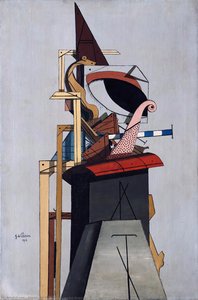
A Haunting Dialogue in Black and White: Exploring Giorgio de Chirico’s “Untitled (8478)”
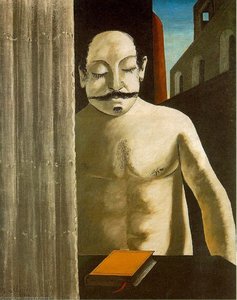
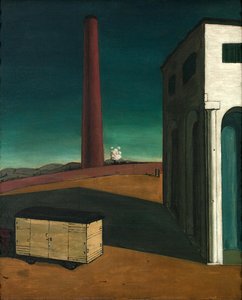
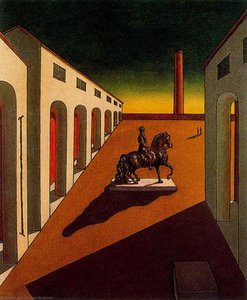
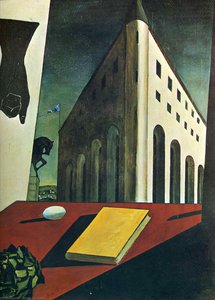
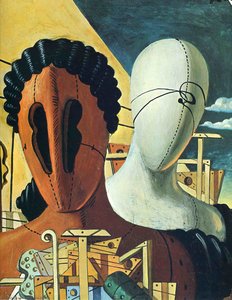
Giorgio de Chirico's "Untitled (8478)" is not merely a depiction of two women; it’s an immersion into the unsettling realm of the subconscious, a meticulously crafted dreamscape born from the anxieties and intellectual currents of early 20th-century Europe. Executed in stark black and white, the painting immediately commands attention with its deliberate ambiguity and profound sense of isolation. The figures, rendered with a precise yet subtly distorted realism, stand as enigmatic protagonists within a carefully constructed architectural stage – a space simultaneously familiar and profoundly alienating. This work exemplifies de Chirico’s pivotal role in establishing the tenets of what would become known as ‘metaphysical painting,’ a movement that sought to capture not objective reality but rather the subjective experience of perception, particularly its capacity for illusion and dread.
Style and Technique: The Birth of Metaphysical Art
- Cubistic Fragmentation: De Chirico’s technique is characterized by a deliberate fracturing of forms – a hallmark of early Cubism – but unlike Picasso or Braque, he employs this fragmentation not to analyze objects but to heighten their sense of unease and disorientation. The figures are presented from multiple viewpoints simultaneously, creating a visual tension that mirrors the psychological turmoil at the heart of the painting.
- Architectural Setting: The meticulously rendered architectural backdrop – reminiscent of Italianate buildings with sharp angles and receding planes – is crucial to the work’s impact. These spaces, often devoid of human presence beyond the figures themselves, contribute to a feeling of emptiness and detachment, amplifying the sense of loneliness and existential questioning.
- Monochromatic Palette: The restricted use of black and white intensifies the emotional weight of the image, stripping away any potential for distraction or beauty and focusing solely on form and shadow. This deliberate choice echoes the austerity and intellectual rigor that defined de Chirico’s artistic vision.
Symbolism and Historical Context: Nietzschean Echoes
“Untitled (8478)” is deeply rooted in the philosophical landscape of its time. De Chirico was profoundly influenced by thinkers like Friedrich Nietzsche, Arthur Schopenhauer, and Otto Weininger, whose ideas about the irrationality of human desire, the subjective nature of reality, and the potential for illusion permeated his work. The two women, positioned close together yet seemingly detached, can be interpreted as representing conflicting forces – perhaps reason versus emotion, or the conscious and unconscious mind. The objects scattered throughout the scene—the clock, bowl, chair, and vase—are not merely decorative elements; they are symbolic reminders of time, material possessions, and the fleeting nature of existence, further reinforcing the painting’s themes of alienation and decay.
Emotional Impact and Legacy
De Chirico's work evokes a powerful sense of melancholy and unease. The painting’s unsettling atmosphere stems from its ability to tap into primal fears about isolation, mortality, and the fragility of human perception. “Untitled (8478)” remains a seminal example of metaphysical art, influencing generations of artists who sought to explore the hidden depths of the human psyche. Its enduring appeal lies in its capacity to provoke contemplation and challenge our assumptions about reality – a testament to de Chirico’s genius as a visionary artist.
Ähnliche Kunstwerke
Über den Künstler
frühes Leben und Einflüsse
Giorgio de Chirico, ein renommierter italienischer Künstler, wurde am 10. Juli 1888 in Volos, Griechenland, geboren, der Mutter war eine Genueserin und der Vater sizilianisch. Sein frühes Leben war geprägt von der Beschäftigung mit Kunst an der Athener Polytechnik unter der Anleitung griechischer einflussreicher Maler Georgios Roilos und Georgios Jakobides. Diese Grundlage prägte später seinen einzigartigen künstlerischen Stil.Die Metaphysche Kunstbewegung
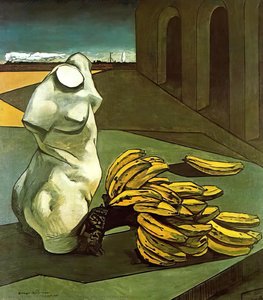
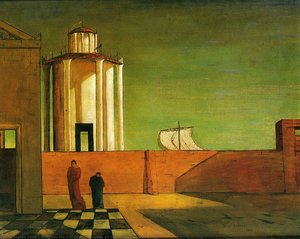
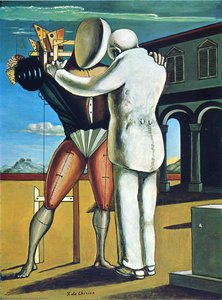
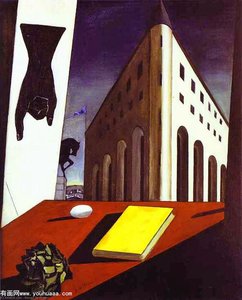
Im Jahr 1910 gründete de Chirico die Metaphysche Kunstbewegung, die den Surrealisten nachhaltig beeinflusste. Seine Werke aus dieser Zeit, die von unheimlichen Stimmungen und traumhaften Szenarien geprägt sind, werden in Gemälden wie die Verwirrungen des Denkers (verfügbar auf ArtsDot's Plattform) und das Rätsel der Stunde (anschaulich auf ArtsDot) dargestellt. Diese Werke erwecken ein Gefühl von Geheimnis, oft mit scharfen Kontrasten von Licht und Schatten.Postmetaphysche Periode
Nach 1919 verschob sich de Chiricos Interesse hin zu traditionellen Maltechniken und übernahm einen neoklassischen oder neobarocken Stil. Diese Veränderung ist in seinen späteren Werken erkennbar, die zwar nicht die gleiche Kritikerlob wie seine früheren Werke erhielten, aber eine reife Entwicklung in seinem künstlerischen Ansatz demonstrieren.Vermächtnis und Einfluss
De Chiricos Einfluss auf den Surrealismus ist unbestreitbar, wobei Künstler wie André Breton von seinen metaphysischen Gemälden beeinflusst wurden. Obwohl sein späteres Werk nicht so breit gefeiert wurde, bleibt de Chirico eine zentrale Figur in der Geschichte der modernen Kunst. Sein Vermächtnis inspiriert weiterhin, und seine Werke sind in Sammlungen auf der ganzen Welt zu finden, darunter das Museum von Giorgio de Chirico, das sich in der Nähe der Spanischen Treppe in Rom befindet.- Erforsche mehr Werke von Giorgio de Chirico auf ArtsDot
- Entdecke die Metaphysche Kunstbewegung und ihren Einfluss auf Surrealismus durch dieses informative Artikel auf ArtsDot
- Lerne mehr über de Chiricos Leben und Werke auf Wikipedia
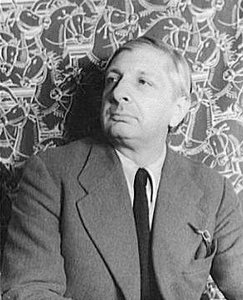
Giorgio de Chirico
1888 - 1978 , Griechenland
Kurzinfos
- Beeinflusste Künstler: ['André Breton']
- Bemerkenswerte Werke:
- Die Verwirrungen des Denkers
- Das Rätsel der Stunde
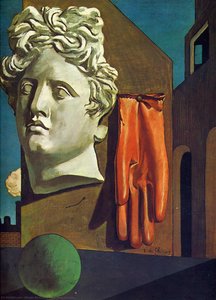
- Das Lied der Liebe
- Geburtsdatum: 10. Juli 1888
- Geburtsort: Volos, Griechenland
- Künstlerische Bewegung: Metaphysische Kunst
- Künstlerische Einflüsse:
- Arnold Böcklin
- Max Klinger
- Friedrich Nietzsche
- Arthur Schopenhauer
- Nationalität: Italienisch
- Vollständiger Name: Giorgio de Chirico
Ähnliche Artikel

Goya: Die 25 Meisterwerke des spanischen Genies – Kunst für Ihr Zuhause | ArtsDot
Entdecken Sie die 25 Meisterwerke von Francisco Goya! Tauchen Sie ein in die düstere Romantik spanischer Malerei, Porträts & Historienbilder. Hochwertige Kunstdrucke auf ArtsDot.com – für Kunstliebhaber und stilvolles Wohnen.

Die Top 10 berühmter Gemälde im Reich der dunklen Töne |
Entdecken Sie die Top 10 berühmter Gemälde, beherrscht von dunklen Tönen! Von Caravaggio bis Manet – erfahren Sie die Geschichten hinter Meisterwerken der Kunstgeschichte. Finden Sie Ihre perfekte Reproduktion auf .
Die Top 10 Gemälde der Kunstgeschichte – Dominiert von tiefem Schwarz
Entdecken Sie die Top 10 Gemälde, die von tiefem Schwarz und dramatischer Atmosphäre geprägt sind. Von Caravaggio bis Manet – Kunstgeschichte erleben & hochwertige Reproduktionen auf finden! Jetzt entdecken.

Giclée Prints: Archival Quality & Aesthetic Nuances for the Discerning Collector
Explore the world of giclée prints with ArtsDot. Learn about archival quality, aesthetic nuances & investment potential. Expert guidance for discerning art collectors seeking museum-quality reproductions and lasting value.

Über uns
Entdecken Sie unsere Geschichte! Wir bringen Weltklasse-Kunst in Ihr Leben durch fachkundige Auswahl, individuelle Kreationen und kostenlose Vorschauen. Seit dem Jahr 2000 von Privatpersonen und Unternehmen geschätzt.