 Vorschau anzeigen
 Versenden
 Teilen
 Details anzeigen

 Herunterladen
 Ähnliche Objekte
 Röntgenaufnahme
 Diashow
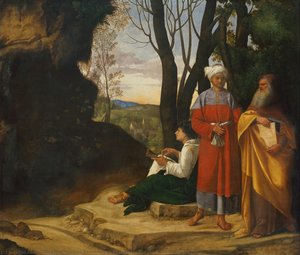
Die drei Lebenszeiten des Menschen


 Weiterlesen
Giclée / Kunstdruck
Giclée- oder Leinwanddruck in Museumsqualität mit schneller Produktion und flexiblen Veredelungsoptionen. ( Handgemalte Reproduktion bestellen Bild kaufen)




P118B $10

P118H $10

P118W $10

P438Z $10

P508JH $12

P508YH $12

P805H $10

P805Z $10

P919BZ $10

P919G $10

P919XJ $10

P959ZH $10

P968JZ $12

W106C $8

W218G $10

W218JH $8

W218Y $10

W307PJ $10

W316G $10

W316PJ $8

W316Y $10

W398PJ $8

W4111J $10

W500HY $15

W500JH $15

W692G $12

W849H $8

W940BG $15

W953PJ $8




Wählen Sie aus unseren vordefinierten Formaten, die den ursprünglichen Proportionen des Kunstwerks entsprechen.

Sie können Ihre eigenen Maße eingeben, um ein bestimmtes Format oder einen speziellen Platz einzupassen. Wenn das von Ihnen gewählte Format nicht den Proportionen des Originalbildes entspricht, werden wir das Kunstwerk entweder beschneiden oder das Bild mit einem gespiegelten oder einfarbigen Rand erweitern. Ein digitaler Entwurf wird Ihnen zur Genehmigung zugesandt, bevor die Produktion beginnt.
Bitte beachten Sie, dass die Vorschau auf dem Bildschirm nicht den tatsächlichen Zuschnitt oder die Erweiterung widerspiegelt. Nur der Entwurf zeigt die endgültige Komposition präzise an.
Obwohl Sondermaße verfügbar sind, empfehlen wir die Auswahl eines Maßes aus der vordefinierten Liste, um die ursprünglichen Proportionen zu bewahren.
Weltweiter Versand () innerhalb von 2 Wochen statt der üblichen 4/5 Wochen. (24 August)

Kostenloser weltweiter Expressversand

Hochwertige Leinenleinwand

Umfassender Versicherungsschutz beim Versand

Zollgebühren-Rückerstattungsgarantie

Garantie für exakte Farbtreue

60 Tage Rückgaberecht (nur bei Mängeln)

100% Geld-zurück-Garantie

Mengenrabatt verfügbar
 Die Glasoption ist nur für Größen unter 110 cm verfügbar.

Die drei Lebenszeiten des Menschen
Giclée / Kunstdruck
Format der Reproduktion
-


Gesamtpreis
$ 62
Sammlerstück-Beschreibung
A Venetian Rhapsody: Exploring Giorgione’s ‘The Three Ages of Man’
Introduction: Created around 1500-1501, ‘The Three Ages of Man’ by Giorgione (Giorgio Barbarelli da Castelfranco) stands as a cornerstone of High Renaissance Venetian painting. This enigmatic work transcends simple portraiture, offering instead a poetic meditation on life's journey and the pursuit of knowledge – a testament to Giorgione’s mastery of allegory and atmosphere. It remains one of his most celebrated, yet debated, compositions. Its enduring fascination stems from its deliberate ambiguity and the profound questions it poses about human experience.The Artist: A Pioneer of Venetian Color
Giorgione was a pivotal figure in shaping the distinctive character of Venetian art. Born in Castel Franco Veneto around 1477/78 (or potentially earlier, in 1473/74), his tragically short life – he died in 1510 – belies his profound influence. He, alongside Titian, moved away from the Florentine emphasis on line and form, prioritizing instead the expressive power of color, light, and a hazy, atmospheric *sfumato* effect. His works are characterized by their lyrical quality and often ambiguous narratives, inviting contemplation rather than offering definitive answers. This revolutionary approach to painting established Venice as a beacon of artistic innovation during its golden age.Decoding the Allegory: Youth, Maturity, and Wisdom
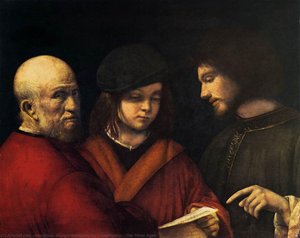
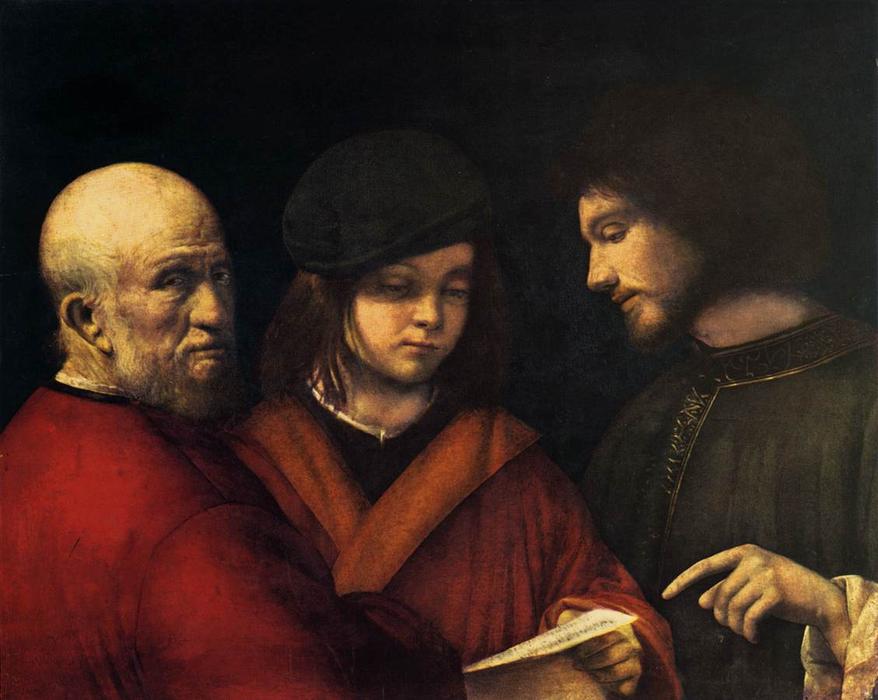
The painting presents three male figures against a dark, undefined background. A youthful man occupies the central position, intently studying a musical score – two lines of a staff are clearly visible. An older man to his left gestures towards the music, seemingly offering instruction or guidance. The third figure, an elderly man, gazes directly out at the viewer with a knowing expression. This arrangement is widely interpreted as an allegory representing the three stages of life: youth, maturity, and old age. The musical score symbolizes intellectual refinement and perhaps the fleeting beauty of earthly pleasures, mirroring the humanist ideals prevalent in Renaissance Venice. The gesture of the older man embodies wisdom gained through experience, prompting viewers to consider their own lives’ journey.Technique and Style: A Masterclass in *Sfumato*
Giorgione's technical skill is evident in his masterful use of oil paint. He employs a delicate *sfumato* technique – borrowed from Leonardo da Vinci – to create soft transitions between light and shadow, lending the figures an ethereal quality. The subtle modeling of forms and the rich chromatic choices contribute to the painting’s atmospheric depth. This painstaking process involved layering thin glazes of pigment over each other, achieving remarkable luminosity and capturing the nuances of human emotion. The composition is carefully balanced, with the triangular arrangement drawing the eye towards the central figure and emphasizing the interconnectedness of the three ages.Historical Context: Venice at the Height of its Power
‘The Three Ages of Man’ was created during a period of immense prosperity and cultural flourishing in Venice. The city was a major center for trade, art, and learning, attracting artists and intellectuals from across Europe. Giorgione's work reflects this vibrant atmosphere, embodying the Renaissance humanist ideals that celebrated human potential and intellectual curiosity. Venetian society fostered patronage—wealthy families commissioned artworks to adorn their palaces and demonstrate their status—creating an environment conducive to artistic experimentation and innovation. The painting stands as a symbol of Venice’s cultural dominance during its zenith.- Style: High Renaissance
- Medium: Oil on canvas
- Current Location: Kunsthistorisches Museum, Vienna
Ähnliche Kunstwerke
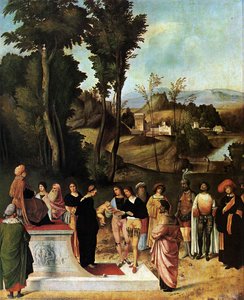
Über den Künstler
Ein kurzer, aber brillanter Werdegang im Hochrenaissance
Giorgio (1477/78 oder 1473/74 – 1510), ein illustrer Maler der Hochrenaissance aus der venezianischen Schule, hat trotz seiner kurzen Karriere und begrenzter bestätigter Werke einen unauslöschlichen Eindruck in der Kunstwelt hinterlassen. Seine Gemälde werden für ihre lyrischen und rätselhaften Qualitäten gelobt, wobei nur eine Handvoll zweifelsfrei ihm zugeschrieben werden können.Beitrag zum venezianischen Malstil
Giorgios Beitrag, zusammen mit dem legendären Tizian, legte die Grundlagen für den venezianischen Malstil, der sich durch seinen Schwerpunkt auf Farbe und Atmosphäre im Gegensatz zum linienorientierten Ansatz florentinischer Kunst auszeichnete. Dieser innovative Ansatz ebnete den Weg für zukünftige Generationen von Künstlern.Bekannte Werke und ihre Bedeutung
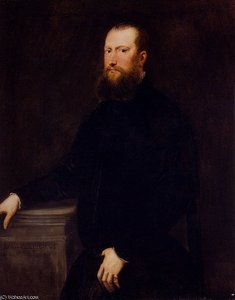
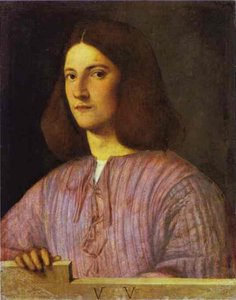
- Porträt eines venezianischen Herrn (76 x 64 cm, Hochrenaissance, Öl auf Leinwand): Ein Meisterwerk, das Giorgios Können bei der Erfassung der Essenz seiner Sujets demonstriert.
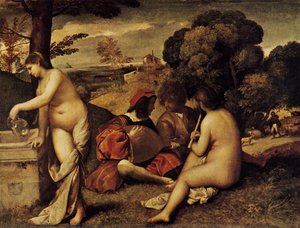
- Pastoraler Konzert (Fête Champêtre) (110 x 138 cm, Musée du Louvre, Paris, Frankreich, Hochrenaissance, Öl auf Leinwand): Demonstriert Giorgios Fähigkeit, Emotionen durch seine Arbeit hervorzurufen.
- Judith (1504) (Öl auf Leinwand, von einer Platte übertragen, 144 x 68 cm, Hermitage, St. Petersburg): Ein frühes Gemälde des Künstlers, das ursprünglich Raffael zugeschrieben wurde, und zeigt Giorgios Wachstum und Experimentierfreude.
Vermächtnis und Einfluss
Giorgio bleibt eine rätselhafte Figur in der Kunstgeschichte, wobei sein Leben und seine Werke im Dunkeln liegen, was die Faszination und Tiefe seines künstlerischen Erbes verstärkt. Sein Einfluss ist in den Werken nachfolgender Künstlerinnen und Künstler zu sehen, die auf den Grundstein aufbauten, den er in der venezianischen Schule legte. Erfahren Sie mehr über Giorgios Werke auf ArtsDot: * Giorgio (Giorgio Barbarelli da Castelfranco) * Porträt eines venezianischen Herrn * Pastoraler Konzert (Fête Champêtre) Entdecken Sie die venezianische Malbewegung auf ArtsDot: * Die venezianische Malbewegung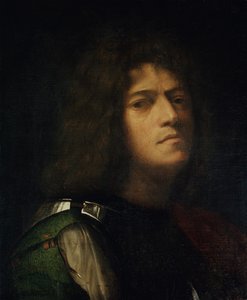
Giorgione
1477 - 1510 , Italien
Kurzinfos
- Beeinflusste Künstler: ['Titian']
- Bemerkenswerte Werke:
- Der Sturm
- Landliches Konzert
- Schlafende Venus
- Judith
- Porträt eines Venezianers
- Geburtsdatum: 1477/78 oder 1473/74
- Geburtsort: Castel Franco Veneto, Italien
- Künstlerische Bewegung: Hochrenaissance, Venetianischer Stil
- Künstlerische Einflüsse:
- Giovanni Bellini
- Mantegna
- Nationalität: Italienisch
- Sterbedatum: 1510
- Vollständiger Name: Giorgione (Giorgio Barbarelli)
Ähnliche Artikel
Giorgione: Rätsel und Innovation der frühen venezianischen Renaissance-Malerei
Entdecken Sie das faszinierende Werk Giorgiones und seinen Einfluss auf die venezianische Renaissance-Malerei. Analysen, Hintergrundinformationen & Meisterwerke – jetzt lesen!

Jacopo Tintoretto: Die 25 Meisterwerke des venezianischen Dramatikers | ArtsDot
Entdecken Sie die 25 Meisterwerke von Jacopo Tintoretto! Tauchen Sie ein in die dramatische Welt der venezianischen Renaissance. Hochwertige Kunst-Reproduktionen & Inspiration für Ihr Zuhause – jetzt auf ArtsDot.com.
The Golden Light of Innovation: Exploring the Venetian Renaissance Art Movement (1430–1580)
Explore the Golden Age of Venetian art (1430–1580). Discover Giorgione, Titian & Tintoretto's techniques, the 'colorito' revolution, and lasting influence. Expert insights for collectors & enthusiasts.
Die 10 Meisterwerke der Hochrenaissance: Kunstgeschichte für Ihr Zuhause |
Entdecken Sie die 10 prägendsten Meisterwerke der Hochrenaissance! Erfahren Sie die Geschichten von Leonardo da Vinci, Michelangelo & Raffael. Finden Sie Ihre perfekte Kunst für Zuhause bei – Museumqualität und exklusive Reproduktionen online entdecken.
Pietro Longhi's Venetian Scenes: A Study of Rococo Society & Domestic Life
Explore the captivating world of Pietro Longhi's Venetian scenes! Discover insightful analysis of his Rococo masterpieces & social commentary on 18th-century life. Learn about this 'Venetian Hogarth' and his lasting artistic legacy.